Skip to content
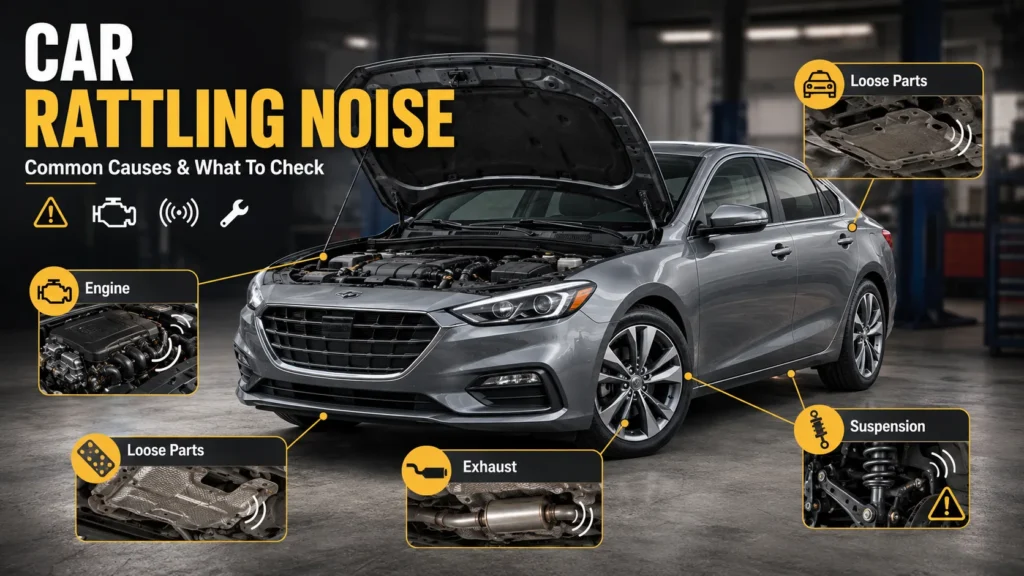
A car rattling noise can come from something simple, such as loose trim or a heat shield, but it can also point to an engine, exhaust, suspension, or drivetrain problem. I find the best way to narrow it down is to pay attention to when the rattle happens, where it comes from, and what the sound is like.
Quick Answer: Why Is My Car Making a Rattling Noise?
A car rattling noise usually means something is loose, worn, damaged, or vibrating against another part. Common causes include a loose heat shield, exhaust problem, damaged catalytic converter, worn engine mount, suspension part, belt pulley, or low engine oil. The timing and location of the noise can help you find the likely source.
What Does a Rattling Noise in a Car Mean?
A rattle is usually caused by a part moving or vibrating when it should stay in place. The sound can come from almost anywhere on the vehicle, and sound can travel through metal, so the place where you hear it is not always the place where the problem starts.
I usually start with three questions:
- When does the rattle happen?
- Where does the sound seem to come from?
- Does the sound change with engine RPM, road speed, bumps, turning, or braking?
These clues can narrow the problem much faster than simply looking under the hood.
For example, a metallic rattle that gets louder when you accelerate may point toward an exhaust heat shield or another exhaust part. A rattle that appears mainly over bumps is more likely to involve the suspension or a loose part under the vehicle.
What Is Causing My Car Rattling Noise?

There are many possible causes, but some appear much more often than others.
Loose or Damaged Heat Shield
A loose heat shield is one of the common causes of a car rattling noise.
Heat shields protect nearby parts from the high heat produced by the exhaust system. Over time, rust, vibration, broken fasteners, or damage can leave the shield loose.
The result is often a thin, metallic buzzing or rattling sound. You may notice it when starting the car, idling, or accelerating.
A heat shield can also get bent after an impact and touch the exhaust pipe. That can create a rattle even when the shield itself is not badly damaged.
Loose Exhaust Parts
The exhaust system has several pipes, brackets, hangers, and other parts. If one becomes loose or damaged, it can move and hit the body of the car.
I would pay close attention if the rattle seems to come from underneath the vehicle.
A damaged exhaust hanger can allow the exhaust pipe or muffler to move more than it should. You may hear the noise when accelerating, going over bumps, or starting the engine.
Damaged Catalytic Converter
A catalytic converter can also cause a rattling sound when its internal material breaks apart.
Instead of coming from a loose piece outside the exhaust, the noise can come from broken material moving inside the converter housing. It may sound deeper than a thin heat shield rattle, sometimes like small pieces moving inside a metal container.
A bad catalytic converter can also cause other problems, such as reduced engine performance or an engine warning light.
Low Engine Oil or Oil Pressure
Low engine oil can cause unusual noises from the engine.
If the oil level is too low, some internal engine parts may not receive the lubrication they need. This can lead to ticking or rattling noises, especially from the upper part of the engine.
If I hear a new engine rattle, checking the oil level is one of the first simple checks I would make.
If the oil level is correct but the engine still makes a serious rattling or knocking sound, the problem may involve oil pressure or an internal engine part. That needs proper testing.
Worn Engine or Transmission Mount
Engine and transmission mounts hold these components in place while also reducing vibration.
When a mount wears or breaks, the engine can move more than it should. You may hear a rattle, clunk, or thump when accelerating, shifting gears, or changing from Park to Drive.
The sound may also come with noticeable vibration.
Belt Tensioner or Pulley Problem
The serpentine belt drives several accessories on many vehicles. The system includes parts such as tensioners and idler pulleys.
A worn bearing or damaged pulley can create rattling, buzzing, or grinding sounds from the engine bay.
If the noise changes as engine RPM changes, the accessory drive system is worth checking.
Water Pump or Other Engine Accessories
Some engine accessories contain bearings that can wear over time.
Depending on the vehicle, a failing water pump, alternator, A/C compressor, or another accessory can create unusual noise.
This type of problem can be difficult to identify by ear because several components sit close together under the hood. I would avoid putting my hands near moving belts or pulleys while the engine is running.
Engine Knock or Combustion Problems
Engine knock is different from a simple loose-part rattle.
It can sound like a sharp metallic pinging or knocking noise and may become noticeable during acceleration or when the engine is under load.
Low oil, fuel or combustion problems, and certain engine faults can contribute to unusual engine noises. Because internal engine damage can become expensive, I would take a new or severe engine rattle seriously.
Suspension Components
If your car rattles when driving over bumps or rough roads, look at the suspension as a possible source.
Worn or loose parts can include:
- Sway bar links
- Sway bar bushings
- Control arm bushings
- Ball joints
- Strut mounts
- Tie rod ends
- Shocks or struts
Suspension rattles often come from the wheel area and may sound more like a clunk than a light metallic buzz. Worn suspension parts can also affect handling, so I would not ignore a noise that comes with loose steering or unusual vehicle movement.
CV Joints and Drivetrain Parts
A worn CV joint or another drivetrain component can also create noise during acceleration or turning.
The exact sound depends on the failed part. Some drivetrain problems cause clicking, while others create clunks or vibration.
If the rattle comes with vibration, difficulty accelerating, or noise during turns, I would have the drivetrain inspected rather than guessing at the cause.
Loose Interior or Exterior Parts
Before assuming the engine has a serious problem, check the simple things.
A loose door panel, dashboard trim piece, glove box item, trunk tool, spare tire cover, or piece of cargo can create a surprising amount of noise.
I would remove loose items from the cabin and trunk first. If the noise disappears, you may have found the problem without touching a mechanical component.
Where Is the Rattling Noise Coming From?

Finding the general location can make the diagnosis much easier.
Rattle Inside the Car
A rattling sound from the cabin may come from:
- Dashboard trim
- Door panels
- Glove box
- Center console
- Loose tools
- Items under the seats
- Trunk cargo
- Spare tire equipment
Start with these simple checks before looking for a mechanical problem.
Rattle Under the Hood
A rattle from the engine bay may involve:
- Engine mounts
- Belt tensioner
- Idler pulley
- Alternator
- Water pump
- Other accessories
- Timing components
- Low engine oil
- Internal engine parts
If the sound changes directly with engine RPM, that is useful information for diagnosis.
Rattle Under the Car
A rattling noise under the car often points toward:
- Heat shields
- Exhaust pipes
- Exhaust hangers
- Muffler
- Catalytic converter
- Underbody panels
- Loose brackets
A metallic sound from underneath is especially worth checking if it gets louder when the engine vibrates.
Rattle Near a Wheel
A noise near one wheel can involve:
- Suspension links
- Control arm bushings
- Strut mounts
- Ball joints
- Brake hardware
- Dust shields
- CV joints
- Other wheel-related parts
A wheel-area rattle that appears over bumps deserves more attention than a loose item inside the cabin.
Why Does My Car Rattle When I Accelerate?

A car rattling when accelerating can have several causes because acceleration changes engine load and vehicle vibration.
Common possibilities include:
- Loose heat shield
- Loose exhaust component
- Damaged catalytic converter
- Worn engine mount
- Low engine oil
- Engine knock
- Belt tensioner or pulley
- Drivetrain problem
- CV joint
- Certain suspension problems
A loose heat shield is a common cause of a metallic rattle during acceleration. The extra engine vibration can make a loose shield move against another part.
If the noise sounds more like a sharp knock from inside the engine, I would treat it differently from a thin metallic heat shield rattle.
Why Does My Car Rattle at Idle?
A car rattling at idle can come from an exhaust component, heat shield, engine mount, belt-driven accessory, or engine component.
At idle, the engine produces a steady vibration. A loose shield or exhaust part may vibrate at that specific engine speed and create a noticeable rattle.
The noise may change or disappear when you increase the RPM.
If the rattle comes from inside the engine and continues after you confirm the oil level is correct, I would have the vehicle checked rather than assuming it is a harmless vibration.
Why Does My Car Rattle Over Bumps?
A car that rattles mainly over bumps may have a loose or worn suspension component.
Common possibilities include:
- Sway bar links
- Sway bar bushings
- Control arm bushings
- Strut mounts
- Ball joints
- Tie rod ends
- Loose underbody panels
- Exhaust components
Suspension noise often sounds like a clunk or light rattle and may become more noticeable on rough roads.
If the car also pulls to one side, feels unstable, or has loose steering, I would arrange an inspection soon.
What Does the Type of Rattle Tell You?

The sound itself can give you useful clues.
Metallic Rattle
A thin metallic rattle often points toward:
- Heat shield
- Exhaust bracket
- Exhaust hanger
- Loose metal panel
This type of noise often changes with engine vibration.
Tinny or Buzzing Rattle
A light buzzing sound can come from a heat shield, plastic trim, or another loose panel.
If it appears at one specific RPM, that can be a useful clue.
Deep Rattle or Clunk
A deeper noise may point toward:
- Engine mount
- Suspension
- Exhaust movement
- Drivetrain
Pay attention to whether the sound comes with vibration or changes in vehicle movement.
Rattle Like Rocks in a Can
If you hear pieces moving inside an exhaust component, a damaged catalytic converter or muffler may be one possible cause.
A muffler can also develop internal rattling when its internal parts break or come loose.
Pinging or Knocking Sound
A sharp ping or knock from the engine should not be treated as the same thing as a loose heat shield.
Engine knock can be linked to combustion problems or other engine issues. If the noise appears under load or acceleration, I would have it checked promptly.
How to Find the Source of a Car Rattling Noise

I find it easier to diagnose a rattle by collecting clues instead of replacing parts based on a guess.
1. Notice When It Happens
Ask yourself:
- Does it happen at idle?
- Does it happen when accelerating?
- Does it happen when braking?
- Does it happen over bumps?
- Does it happen while turning?
- Does it happen only at a certain speed?
- Does it happen only when the engine is cold?
Write down the pattern if the noise is difficult to repeat.
2. Find Where It Comes From
Try to decide whether the noise comes from:
- Inside the cabin
- Under the hood
- Under the car
- Near a wheel
Keep in mind that sound can travel through the vehicle, so this is only a starting point.
3. Listen to the Type of Sound
Try to describe the noise.
Is it:
- Metallic?
- Tinny?
- Buzzing?
- Clicking?
- Ticking?
- Clunking?
- Deep knocking?
- Grinding?
This description can help a mechanic narrow down the problem.
4. Check Simple Loose Items
Check the trunk, glove box, door pockets, center console, and areas under the seats.
Also look for obvious loose trim or panels.
It sounds basic, but I would always rule out these simple causes before assuming the worst.
5. Check the Engine Oil
Park the vehicle safely and check the engine oil using the procedure recommended for your vehicle.
If the level is low, use the correct oil and follow the vehicle manufacturer’s instructions.
If the oil level is normal but you still hear a serious engine rattle, do not assume the oil system is fine. Low oil pressure can exist even when the oil level looks correct.
6. Look for Warning Lights
Pay attention to dashboard warning lights.
A rattling noise combined with an oil pressure warning, overheating, a flashing engine warning light, or another serious warning needs more attention than a simple cabin rattle.
7. Have the Car Inspected
If you cannot find the source, a professional inspection can save you from replacing the wrong part.
This is especially true for noises coming from the engine, suspension, steering, or drivetrain.
Is It Safe to Drive With a Rattling Noise?

It depends on what is causing the noise.
A loose piece of interior trim is very different from an engine rattle, damaged suspension component, or serious exhaust problem.
I would stop driving when it is safe to do so and arrange an inspection if the rattle comes with:
- Oil pressure warning
- Overheating
- Smoke
- Burning smell
- Strong vibration
- Loss of engine power
- Difficult steering
- Serious braking problems
- Loud grinding
- Major fluid leak
- A rapidly worsening noise
A suspension or steering problem can affect vehicle control. An engine-related rattle can also become much more expensive if you continue driving after a serious fault develops.
How Much Does It Cost to Fix a Rattling Noise?
There is no single price for fixing a car rattling noise.
The cost depends entirely on the source.
A loose interior panel may cost very little to fix. A loose heat shield may also be a relatively simple repair. On the other hand, a catalytic converter, suspension system, drivetrain, or internal engine problem can cost much more.
I would diagnose the source before worrying about the repair price. Paying for a proper diagnosis is often better than replacing several parts that were never causing the noise.
How Can I Prevent Car Rattling Noises?
You cannot prevent every rattle, but regular maintenance can help you catch problems early.
I would keep up with:
- Engine oil checks and changes
- Exhaust inspections
- Suspension inspections
- Belt and pulley checks
- Tire and wheel maintenance
- Regular underbody inspections
- Prompt repairs for loose or damaged parts
I would also pay attention to small changes in sound. A minor rattle that gets louder over several weeks is worth checking before it turns into a larger problem.
Final Takeaway
A car rattling noise does not always mean a major repair. A loose heat shield, exhaust bracket, trim panel, or piece of cargo can create a lot of noise.
The best way to narrow it down is to focus on when the rattle happens, where you hear it, and what it sounds like. If the noise comes with warning lights, engine problems, steering changes, overheating, or strong vibration, I would not ignore it.
Frequently Asked Questions
Why is my car making a rattling noise?
A car can make a rattling noise because of a loose heat shield, exhaust part, underbody panel, engine mount, pulley, suspension component, low engine oil, or internal engine problem. The timing and location of the noise help narrow down the cause.
Why does my car rattle at idle?
A rattle at idle may come from a heat shield, exhaust system, engine mount, belt-driven accessory, or engine component. If it comes from inside the engine, check the oil level and have persistent noise inspected.
Why does my car rattle over bumps?
A rattle over bumps often points toward suspension parts such as sway bar links, bushings, strut mounts, or ball joints. Loose underbody panels and exhaust components can also move when the vehicle hits rough pavement.
Can low oil cause a rattling noise?
Yes. Low engine oil can contribute to ticking or rattling from engine components because proper lubrication is needed for many moving parts. If the oil level is low or an oil warning appears, address it promptly.
Can a bad heat shield cause a rattle?
Yes. A loose, cracked, rusted, or bent heat shield can vibrate against the exhaust or another part and create a metallic rattling or buzzing sound.
Is a rattling catalytic converter serious?
It can be. A damaged catalytic converter may have broken internal material that moves inside the housing. Other symptoms may include reduced engine performance or an engine warning light.
Can I drive with a rattling noise?
Sometimes a minor rattle is safe to drive with for a short time, but you should identify the cause first. If the rattle comes with overheating, warning lights, smoke, strong vibration, steering problems, loss of power, or other serious symptoms, stop driving when safe and get the vehicle checked.