Skip to content
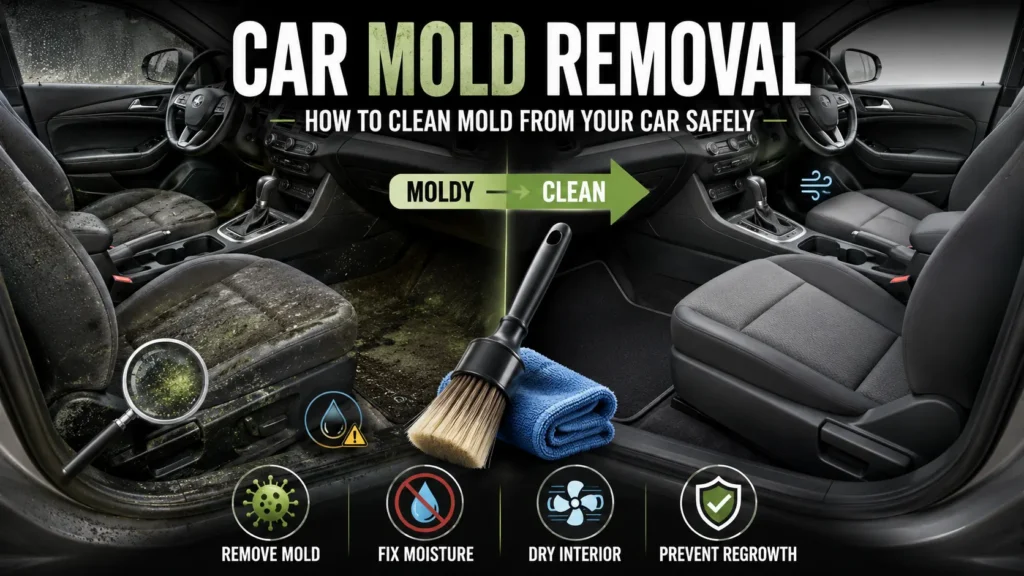
Finding mold inside your car is more than a cleaning problem. Mold usually means moisture has been trapped somewhere in the vehicle, and simply wiping away the visible spots may leave the real problem behind.
I would start by finding where the moisture came from before cleaning anything. Then you can remove loose mold carefully, clean the affected surfaces, dry the interior fully, and deal with any hidden moisture that could cause the mold to return.
Quick Answer
Car mold removal starts with finding and fixing the moisture source, then safely cleaning the affected surfaces and drying the interior completely. Small areas of surface mold may be manageable at home, but extensive growth, flood damage, wet seat foam, or mold inside the HVAC system may require professional cleaning.
What Causes Mold in a Car?
Mold needs moisture and a suitable surface to grow. A car interior can provide both, especially when water becomes trapped under carpet, seats, floor mats, or other materials.
Common causes include:
- Leaking door or window seals
- A leaking sunroof
- Blocked sunroof drains
- A damaged windshield seal
- Flood or water damage
- Spilled drinks
- Wet clothing, shoes, or sports gear
- Leaving windows open during rain
- High humidity
- Poor ventilation
- Moisture trapped under floor mats
- Water collecting in the trunk or spare tire area
- Condensation from the air conditioning system
If you clean the mold but leave the moisture source alone, the problem can return.
That is why I would treat the leak or moisture problem as part of the mold removal process rather than as a separate job.
How Do You Know if Your Car Has Mold?
Visible mold is the easiest sign, but it is not the only one.
Look for:
- Black, green, white, gray, or fuzzy spots
- A musty smell
- Damp carpet
- Discolored upholstery
- Mold around seat seams
- Mold under floor mats
- Spots inside the trunk
- Damp areas under seats
- Recurring odor after cleaning
- Condensation that keeps appearing inside the vehicle
A musty smell with no visible mold deserves extra attention. Mold or moisture may be hidden beneath the carpet, inside seat materials, or in another area that you cannot see easily.
Where Does Mold Hide in a Car?

Mold does not always stay on the surface where you first notice it.
Check these areas carefully:
- Under floor mats
- Beneath seats
- Seat seams
- Carpet and carpet backing
- Seat foam
- Trunk carpet
- Spare tire well
- Door pockets
- Door panels
- Headliner
- Floor insulation
- Around door seals
- Around window seals
- Under removable trim
- HVAC and cabin filter areas
If the carpet feels damp underneath, do not assume the surface is the whole problem. Padding and other materials below the carpet can hold moisture for a long time.
Is It Safe to Remove Car Mold Yourself?
It depends on how much mold is present and how deeply it has affected the vehicle.
A small area of surface mold may be suitable for careful DIY cleaning. A vehicle with widespread mold, major water damage, soaked interior materials, or mold inside difficult-to-access systems is a different situation.
Cleaning mold can disturb spores and put them into the air. I would use appropriate protective equipment and work outside or in a well-ventilated area for a small cleanup.
If the mold covers a large area, keeps returning, or has reached porous materials that remain wet, professional help is the safer choice.
What Do You Need for Car Mold Removal?
You do not need a huge collection of products to start a small car mold cleanup.
Useful supplies include:
- Disposable gloves
- Eye protection
- A suitable respirator or mask
- HEPA-filtered vacuum, if available
- Microfiber cloths
- Soft or medium cleaning brushes
- Automotive-safe interior cleaner
- Appropriate mold-cleaning product
- Wet/dry vacuum or extractor
- Clean towels
- Fans
- Dehumidifier, if available
- Garbage bags for contaminated disposable materials
Choose a cleaner based on the surface you are treating. Always read the product label first.
Do not mix cleaning chemicals. Some combinations can create dangerous fumes.
How to Remove Mold From a Car Step by Step

The order matters. I would not start by soaking every moldy surface with cleaner.
Follow this sequence instead.
Step 1: Find and Fix the Moisture Source

Before cleaning, look for the reason the car became damp.
Check:
- Door seals
- Window seals
- Windshield edges
- Sunroof drains
- Trunk seals
- Floor areas
- Carpet beneath mats
- Spare tire well
- Air conditioning drainage
- Areas affected by spills
Feel beneath the floor mats and inspect the carpet for dampness.
If water is entering through a damaged seal or drain, fix that problem first. Otherwise, the interior can become damp again after you clean it.
Step 2: Remove Everything From the Interior
Take out:
- Floor mats
- Trash
- Personal items
- Seat covers
- Removable organizers
- Wet clothing
- Other removable items
Place moldy removable items somewhere separate from clean items.
If an item is heavily contaminated and cannot be cleaned properly, replacing it may make more sense than trying to save it.
Step 3: Ventilate the Car
Move the vehicle to a suitable outdoor or well-ventilated location.
Open the doors, windows, and trunk when it is safe to do so.
Good airflow helps reduce trapped moisture and makes the cleaning area easier to work in.
Avoid cleaning mold in a small, closed space with poor ventilation.
Step 4: Protect Yourself
Put on your protective equipment before disturbing the mold.
Gloves help protect your hands. Eye protection helps prevent particles and cleaning products from reaching your eyes. A suitable respirator or mask can reduce exposure to airborne particles.
Avoid unnecessary aggressive brushing at the start because it can spread loose material.
Step 5: Remove Loose Mold Carefully
If you have access to a HEPA-filtered vacuum, use it carefully on dry affected surfaces.
Work gently rather than pressing the vacuum hard into the material.
Start with higher areas and move down toward the floor. Pay attention to:
- Seat seams
- Carpet edges
- Floor mats
- Under-seat areas
- Door pockets
- Trunk carpet
A regular vacuum can release fine particles back into the air, so a HEPA-filtered model is preferable for this type of work.
Step 6: Clean the Affected Surfaces
Choose an automotive-safe cleaning product that is suitable for the material.
Apply it according to the manufacturer’s instructions.
Do not assume that one cleaner is safe for every surface inside the vehicle. Fabric, leather, vinyl, plastic, and headliners can react differently to cleaning products.
Test the product on a small hidden area first.
Avoid soaking the interior. Too much liquid can move moisture deeper into carpet, foam, and padding.
Step 7: Scrub and Extract
For suitable fabric and carpet surfaces, use a soft or appropriate upholstery brush to work the cleaner into the affected area.
After cleaning, remove as much moisture as possible with clean towels or a suitable wet/dry extractor.
The goal is to remove the contamination without leaving the material soaked.
This step is especially important for carpet because moisture can remain below the surface.
Step 8: Dry the Interior Completely

Drying is one of the most important parts of car mold removal.
Open the doors and windows when conditions allow. Use fans to move air through the cabin.
A dehumidifier can also help in a suitable enclosed space.
Check the carpet, seat surfaces, mats, and other cleaned areas before closing the vehicle.
If the material still feels damp, keep drying it.
Cleaning mold while leaving the interior wet can create conditions for more growth.
Step 9: Inspect for Remaining Mold
After the interior dries, inspect the areas you cleaned.
Look under:
- Mats
- Seats
- Carpet edges
- Seat seams
- Trunk liners
- Spare tire covers
Also check for a remaining musty odor.
If mold is still visible or the odor returns quickly, look for hidden moisture or deeper contamination.
Step 10: Check the Cabin Air Filter
A cabin air filter exposed to moisture or contamination may need attention.
The filter location varies by vehicle, so check your vehicle’s service information before removing it.
If the filter is damp, visibly contaminated, or has a strong musty smell, replacement may be appropriate.
If the odor seems to come from the HVAC system itself, do not simply spray a random cleaner into the vents. The source may be deeper inside the system.
How to Remove Mold From Different Car Surfaces

Different interior materials need different cleaning methods.
| Surface | Recommended approach | Main caution |
| Fabric seats | Automotive upholstery cleaner and gentle brushing | Avoid excessive water |
| Carpet | Suitable carpet cleaner and moisture extraction | Check padding underneath |
| Leather | Leather-safe cleaner | Avoid harsh products |
| Vinyl | Interior-safe cleaner and microfiber cloth | Avoid aggressive scrubbing |
| Plastic | Automotive interior cleaner | Keep liquid away from electronics |
| Headliner | Light application of suitable cleaner | Do not saturate the material |
| Floor mats | Remove and clean separately | Dry completely before reinstalling |
Fabric Seats
Fabric can trap moisture and mold below the visible surface.
Use a cleaner made for automotive upholstery and follow its directions.
Work gently and avoid soaking the seat. If the foam underneath is heavily contaminated or remains wet, surface cleaning may not solve the problem.
Car Carpet
Carpet can be more difficult than it looks because the material often has padding underneath.
Clean the affected area with a suitable automotive carpet product and remove excess moisture with an extractor when appropriate.
Then check underneath the carpet if you suspect water has reached the padding.
Leather Seats
Leather requires more care than fabric.
Use a cleaner specifically made for automotive leather and follow the product instructions.
Do not assume that a cleaner safe for carpet is also safe for leather. Test any product in a hidden area first.
After cleaning, keep the leather away from prolonged moisture.
Vinyl and Plastic
Hard surfaces are generally easier to clean because they do not absorb moisture in the same way fabric does.
Use an automotive-safe interior cleaner and a microfiber cloth.
Do not spray large amounts of liquid near switches, electrical connections, screens, speakers, or other electronic components.
Headliner
The headliner needs special care.
Its fabric is attached to a backing material, and excessive moisture can weaken the adhesive.
Apply only the amount of cleaner recommended for the material. Avoid soaking or aggressively scrubbing the headliner.
If mold is widespread inside the headliner, professional cleaning may be a better option.
Floor Mats
Remove floor mats from the vehicle before cleaning them.
Clean them separately using a product suitable for their material.
Let them dry completely before putting them back inside the vehicle.
How to Remove Mold Smell From a Car
A musty smell often means moisture or contamination remains somewhere in the vehicle.
I would not try to cover the smell with an air freshener and call the job finished.
Instead:
- Find the moisture source.
- Remove visible mold.
- Clean affected surfaces.
- Dry the interior fully.
- Check beneath carpets and mats.
- Inspect the trunk and spare tire well.
- Check the cabin air filter.
- Investigate the HVAC system if the smell comes from the vents.
Odor treatment works best after the underlying source has been dealt with.
If the smell returns after cleaning, there may still be moisture or mold in a hidden area.
What About Mold in the Car’s HVAC System?
A musty smell from the vents can point to moisture or contamination in the HVAC system.
This area can be difficult to clean properly without knowing exactly where the problem is.
Start by checking the cabin air filter if your vehicle has one that you can access easily.
If the odor continues or you suspect mold deeper inside the HVAC system, I would consider professional inspection rather than spraying household chemicals into the vents.
The HVAC system can spread air throughout the cabin, so treating only the visible dashboard or vents may not solve the source.
How to Prevent Mold From Coming Back

The best way to prevent car mold is to keep moisture out and dry the interior quickly.
Fix leaks
Repair damaged door seals, window seals, sunroof drains, windshield seals, or other sources of water entry.
Dry spills quickly
A small spill can become a bigger problem if liquid reaches carpet padding or seat foam.
Remove wet items
Do not leave wet towels, clothing, umbrellas, shoes, or sports equipment inside the car for long periods.
Check under floor mats
Lift the mats occasionally and feel the carpet underneath.
Keep the trunk dry
Check the trunk and spare tire well after heavy rain or washing the vehicle.
Improve airflow
If the interior becomes damp, ventilate it when conditions are safe.
Maintain the cabin air filter
Replace the filter according to the vehicle’s maintenance schedule and inspect it if you notice unusual odors.
Deal with condensation
If the windows frequently fog or the cabin stays damp, look for the reason rather than simply wiping the glass.
How Much Does Car Mold Removal Cost?
The cost varies widely depending on the size of the affected area and how deeply the mold has spread.
A small surface cleanup may require only cleaning supplies and your own time.
A professional job can cost much more if the vehicle needs:
- Deep interior cleaning
- Carpet extraction
- Seat cleaning
- Extensive drying
- Odor treatment
- Carpet or padding replacement
- Water-leak repair
- HVAC inspection
- Flood-damage cleanup
I would avoid treating any single price as a standard cost for every vehicle. A small spot on a seat and a flooded vehicle with mold under the carpet are very different jobs.
When Should You Hire a Professional?

DIY cleaning may not be the right choice for every moldy vehicle.
Consider professional help if:
- Mold covers a large portion of the interior
- The vehicle has flood damage
- Carpet padding or seat foam is heavily affected
- Mold keeps returning after cleaning
- You cannot find the moisture source
- The HVAC system may be contaminated
- The interior remains damp after repeated drying
- You have concerns about exposure during cleanup
- Mold has reached areas that are difficult to remove or clean
A professional can also determine whether contaminated porous materials should be cleaned or replaced.
Can a Moldy Car Be Saved?
In many cases, yes, but it depends on the severity of the contamination and the amount of water damage.
A car with a small amount of surface mold may be cleaned successfully if the moisture source is fixed and the interior is dried properly.
A vehicle with extensive mold, soaked padding, flood damage, or repeated regrowth is much harder to restore.
The key question is not just how much mold you can see. You also need to know how far the moisture and contamination have reached.
Final Thoughts on Car Mold Removal
Car mold removal is not just about making the seats and carpet look clean again.
The real job is to remove the moisture source, clean the affected areas, dry the interior completely, and check for hidden contamination.
If the problem is small and limited to surface areas, careful DIY cleaning may be possible. If the vehicle has extensive mold, flood damage, wet foam, or an ongoing HVAC problem, professional help can make more sense.
Most importantly, do not ignore the reason the mold appeared. If water keeps getting into the car, the mold can return even after a thorough cleaning.
FAQs
Can I remove mold from a car with vinegar?
Vinegar is commonly used for some cleaning jobs, but it is not automatically suitable for every car surface. Check the material and product guidance first, and never mix vinegar with bleach or other cleaning chemicals.
Does sunlight kill mold in a car?
Sunlight and heat can help dry the interior, but sunlight alone should not be treated as a complete mold removal method. Visible mold and the moisture source still need to be addressed.
Can baking soda remove car mold?
Baking soda can help with odors and light cleaning, but it should not be treated as a complete solution for established mold growth. Cleaning and drying the affected material are still necessary.
How long does car mold removal take?
A small cleanup may take several hours once cleaning and drying are included. Extensive mold or water damage can take much longer, especially if carpet, padding, or seat materials need deep cleaning or replacement.
Can mold grow inside car seats?
Yes. Mold can grow on upholstery and may also reach deeper materials when seats remain damp. If the seat foam has been heavily exposed to water, surface cleaning may not be enough.
Should I replace carpet after mold?
Not always. Carpet may be cleanable when the contamination is limited and the material can be dried fully. Replacement may make more sense if the carpet backing or padding is heavily contaminated, damaged, or remains wet.
Can a car with mold make you sick?
Mold exposure can irritate the eyes, skin, nose, throat, and respiratory system, and some people are more sensitive than others. If you have concerns about symptoms related to mold exposure, seek medical advice.
Does car insurance cover mold damage?
Coverage depends on the cause of the moisture, your policy, and the circumstances that led to the damage. Water damage from a covered event may be treated differently from mold caused by poor maintenance or an unrepaired leak.