Skip to content
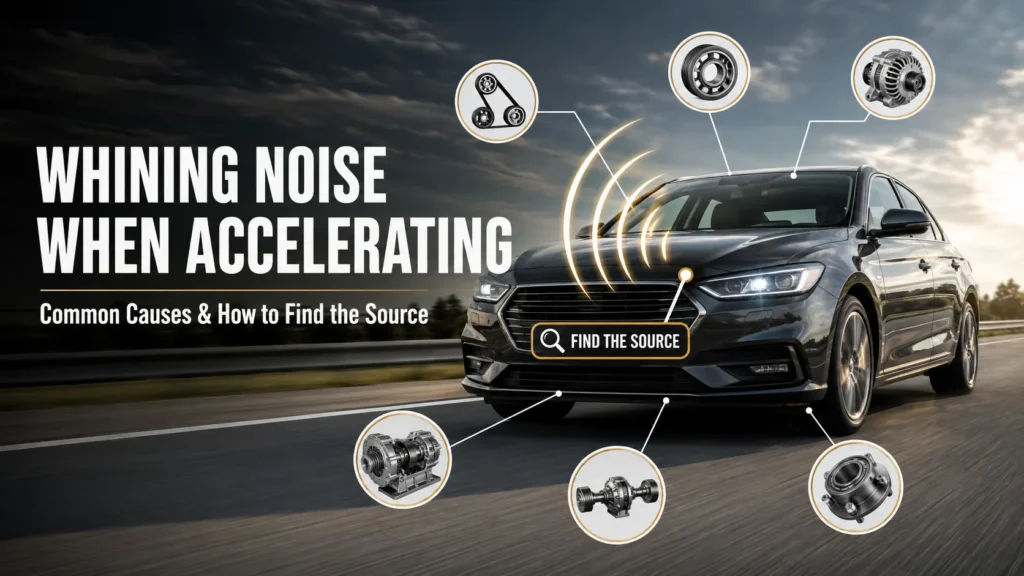
A whining noise when accelerating can come from several parts of a car. A serpentine belt, pulley, alternator, transmission, differential, wheel bearing, power steering system, or turbocharger can all make similar sounds.
I usually start with one simple clue: does the noise follow engine RPM or vehicle speed? That can quickly narrow down where to look.
Quick Answer: Why Is My Car Whining When I Accelerate?
A car can make a whining sound during acceleration because a rotating part is working harder as engine RPM, vehicle speed, or drivetrain load increases. Common causes include a worn serpentine belt, bad pulley, alternator, transmission problem, differential wear, wheel bearing, power steering issue, turbocharger, or air leak. The sound pattern helps identify the likely source.
Why Does My Car Make a Whining Noise When I Accelerate?
Acceleration puts more work on many parts of the car. Engine accessories spin faster, the transmission transfers more torque, and the drivetrain sends more force to the wheels.
A worn bearing, low fluid level, damaged gear, loose belt, or failing pump may become louder under this extra load.
The first thing I would check is whether the sound changes with engine RPM or road speed. This simple clue can separate engine-related problems from many drivetrain and wheel-related problems.
The First Clue: Does the Whine Follow RPM or Vehicle Speed?

This is one of the best ways to narrow down a whining sound.
| What the noise does | Possible source |
| Gets louder as engine RPM rises | Belt, pulley, alternator, pump |
| Happens while parked when you raise RPM | Engine accessory or belt system |
| Gets louder as road speed rises | Wheel bearing, differential, tire, drivetrain |
| Happens mainly under acceleration | Transmission, differential, turbo, drivetrain |
| Changes when you turn | Wheel bearing or power steering |
| Changes during gear changes | Transmission |
| Appears when boost builds | Turbocharger or intake |
This is not a final diagnosis. Several parts can make similar sounds, so the pattern should guide the inspection rather than replace it.
Common Causes of a Whining Noise When Accelerating

Serpentine Belt
A worn, loose, glazed, cracked, or misaligned serpentine belt can make a high-pitched sound.
The belt drives several engine accessories on many vehicles. If it slips as engine load rises, the noise may become more noticeable during acceleration.
I would inspect the belt with the engine off. Look for cracks, damage, unusual wear, or a shiny surface. Never put your hands near a moving belt or pulley.
Belt Tensioner or Idler Pulley
The tensioner keeps the belt tight, while idler pulleys help guide the belt.
Both contain moving parts and bearings. If a bearing starts to wear, it can create a whining or humming noise that follows engine RPM.
This type of problem can sound very similar to an alternator or other belt-driven accessory, so a proper inspection may be needed to identify the exact part.
Alternator
The alternator charges the battery and supplies electrical power while the engine runs.
A worn alternator bearing can create a high-pitched whine that rises with engine RPM. You may also notice electrical symptoms if the alternator itself is having trouble.
If the noise comes with a battery warning light, flickering lights, starting problems, or other electrical issues, I would have the charging system checked promptly.
Power Steering Pump
Some cars use a hydraulic power steering system with a pump. If the fluid is low or the pump is worn, it can make a whining sound.
One useful clue is whether the noise changes when you turn the steering wheel. If it becomes louder during steering, the power steering system deserves closer attention.
Do not hold the steering wheel hard against its full-lock position just to test the noise. A quick change in sound during normal steering is enough to give a technician a useful clue.
Water Pump or A/C Compressor
Other belt-driven accessories can also create a whine.
A worn bearing inside a water pump or air conditioning compressor can produce a sound that follows engine RPM.
If the noise becomes stronger when you switch the A/C on, the compressor and its pulley become more likely sources.
Transmission Problems
The transmission is another common source of a whining sound when accelerating.
Low or degraded transmission fluid can affect lubrication and cooling. Internal bearings, gears, pumps, torque converters, and other parts can also produce a whine when they are worn.
Pay attention to whether the noise changes during gear shifts.
For example, if the whine is much louder in one gear or changes sharply as the transmission shifts, I would have the transmission checked rather than assuming the belt is the problem.
Differential Problems
The differential transfers engine power to the wheels while allowing the wheels to rotate at different speeds during turns.
A worn differential can produce a whine or howl, especially under acceleration. Low or incorrect differential fluid can also contribute to gear noise and wear.
A useful clue is what happens when you release the accelerator. A differential noise may change or become quieter when the drivetrain load drops.
Wheel Bearing
A worn wheel bearing can make a humming, humming-whine, or growling sound.
The key difference is that wheel bearing noise usually follows vehicle speed, not engine RPM.
The sound may also change when you turn because the load on the bearing changes. If the noise gets louder as the car moves faster and remains present even when you are no longer accelerating, a wheel bearing deserves attention.
Driveshaft or Driveline Bearing
Rear-wheel-drive and all-wheel-drive vehicles have more drivetrain parts that can create noise.
A worn driveshaft bearing, carrier bearing, axle component, or related part can make a whine or vibration during acceleration.
The location of the noise can help. A sound that seems to come from under the floor or rear of the vehicle may point more toward the drivetrain than the engine bay.
Turbocharger or Boost Leak
Turbocharged cars can naturally make some high-pitched sounds as the turbo builds boost.
A new or unusually loud whine deserves more attention. A damaged turbocharger or air leak in the intake or boost system can also create a high-pitched whistle or whine.
Look for other signs such as reduced engine performance, unusual smoke, or a new change in the way the turbo sounds.
Do not assume every turbo whine means the turbo has failed. Some vehicles naturally produce a noticeable turbo sound.
Intake or Vacuum Leak
A small air leak can sometimes sound more like a whistle than a mechanical whine.
The noise may become stronger as engine load and airflow increase. You may also notice rough running, poor acceleration, or other engine symptoms.
This is one reason it helps to describe the sound carefully. A sharp whistle and a deep mechanical whine can point to very different systems.
What Does the Whining Sound Tell You?

The exact sound matters. I would pay attention to when it starts, how quickly it gets louder, and what makes it change.
High-Pitched Whining Noise
A high-pitched whine that rises with engine RPM can point to a belt-driven accessory, pulley, alternator, or pump.
A high-pitched sound during boost can also come from a turbocharged engine.
Whine That Gets Louder With RPM
If you can hear the noise while the car is stationary and it rises as engine RPM rises, engine accessory components become a strong area to inspect.
The serpentine belt, tensioner, idler pulley, alternator, A/C compressor, water pump, and power steering pump can all be relevant.
Whine That Gets Louder With Road Speed
If the car must be moving before the noise appears, look more closely at parts that rotate with the wheels and drivetrain.
Possible sources include:
- Wheel bearings
- Differential
- Tires
- Driveshaft
- Axles
- Transmission
This does not prove which part has failed, but it helps narrow the search.
Whine Only Under Acceleration
A noise that appears only when you press the accelerator can point to a component that is reacting to increased load.
Transmission and differential problems are possible. Turbocharger or belt-driven accessory problems can also become more noticeable under load.
Whine That Stops When You Let Off the Gas
Pay close attention to this pattern.
If the noise becomes much quieter as soon as you release the accelerator, the change in drivetrain load may be an important clue. Differential and transmission noises can behave this way.
However, other faults can also change with engine load, so this clue should not be used by itself to name the failed part.
Whine That Changes When Turning
If the sound changes during normal steering, check the wheel bearings and, on vehicles with hydraulic power steering, the power steering system.
A wheel bearing usually follows road speed, while a power steering noise may change when steering input increases.
Whine During Gear Changes
If the sound changes as the transmission shifts, the transmission should be part of the inspection.
Low fluid, internal bearing wear, gear problems, or pump issues can create transmission whining.
How to Find Where the Whining Noise Is Coming From

I would not start by replacing parts based only on the sound. Instead, I would collect a few clues first.
1. Notice When the Noise Starts
Does it happen:
- At idle?
- When you rev the engine?
- Only while driving?
- Only during acceleration?
- During gear changes?
- While coasting?
Write down the pattern if needed.
2. Check Whether It Follows Engine RPM
If the noise rises and falls with engine RPM, even when the vehicle is stationary, engine-driven components become more likely.
The belt system is a good place for a technician to start.
3. Check Whether It Follows Road Speed
If the noise changes as the car gets faster or slower, even when engine RPM changes less, look at the wheels and drivetrain.
Wheel bearings, differential parts, tires, and other rotating components can create speed-related noise.
4. Notice What Happens When You Release the Gas
Does the sound disappear?
Does it continue?
Does the pitch change?
This can give useful information about drivetrain load.
5. Pay Attention During Gear Changes
If the noise changes every time the transmission shifts, note which gear produces the loudest sound.
That information can help a technician narrow down the problem.
6. Listen for Steering Changes
If the noise becomes louder while turning, mention this during the inspection.
Do not make sharp or unsafe turns just to reproduce a noise.
7. Look for Fluid Leaks
With the vehicle parked safely, look for fresh fluid under the car.
Different systems use different fluids, so do not guess the fluid type based only on color. If you find a leak, have it checked.
8. Check the Dashboard
Look for warning lights related to:
- Engine
- Battery
- Transmission
- Oil pressure
- Temperature
- Steering
A new warning light combined with a new whining noise deserves prompt attention.
9. Record the Sound
If the noise is difficult to reproduce at a repair shop, a short recording can help show the sound and the conditions under which it occurs.
Record it only when you can do so safely. Do not use a phone while driving.
Can You Drive With a Whining Noise?

It depends on the cause and the other symptoms.
A faint noise with no other changes may allow you to arrange an inspection soon. But I would not ignore a new or worsening whining sound.
Stop driving when it is safe to do so and seek professional help if you notice:
- Strong vibration
- Grinding
- Smoke
- Burning smell
- Overheating
- Major fluid loss
- Difficult steering
- Transmission slipping
- Sudden loss of engine power
- Serious warning lights
- Problems controlling the vehicle
These signs can point to a problem that needs quick attention.
What Repairs May Fix a Whining Noise?
The repair depends on the part causing the sound.
Possible repairs include:
- Replacing a serpentine belt
- Replacing a belt tensioner
- Replacing an idler pulley
- Repairing or replacing an alternator
- Servicing the power steering system
- Repairing an A/C compressor
- Checking or servicing transmission fluid
- Repairing internal transmission parts
- Servicing differential fluid
- Repairing differential gears or bearings
- Replacing a wheel bearing
- Repairing a driveshaft or carrier bearing
- Repairing a turbocharger or boost leak
- Repairing an intake or vacuum leak
A fluid service can help when the problem comes from a low or incorrect fluid level, but it cannot repair every worn mechanical part. Internal gear or bearing damage may need a larger repair.
When Should You Have the Car Inspected?
I would arrange an inspection if the whining noise is new, getting louder, or becoming easier to hear.
It is especially worth checking if you also notice a fluid leak, warning light, vibration, shifting problem, steering change, overheating, or loss of performance.
A technician can use the noise pattern, road test, fluid checks, visual inspection, and other tests to find the actual source. Guessing and replacing random parts can waste money.
Final Takeaway
A whining noise when accelerating does not point to one specific failed part. The best starting point is to study the pattern.
If the sound follows engine RPM, check the belt-driven accessories and engine bay. If it follows road speed, look more closely at the wheels and drivetrain. If it changes with gear shifts, steering, or acceleration load, those clues can narrow the search further.
I would avoid guessing at the repair from the sound alone. Find the pattern first, note any other symptoms, and have the car inspected if the noise is new, getting worse, or comes with other warning signs.
Frequently Asked Questions
Why is my car whining when I accelerate?
A car can whine during acceleration because a rotating component is under greater load. Common causes include a serpentine belt, pulley, alternator, power steering pump, transmission, differential, wheel bearing, turbocharger, or intake leak.
Can low transmission fluid cause a whining noise?
Yes. Low or degraded transmission fluid can contribute to whining, especially when the transmission is under load. A transmission can also make noise because of worn bearings, gears, pumps, or other internal parts.
Can a bad alternator make a whining sound?
Yes. A worn alternator bearing can create a high-pitched sound that follows engine RPM. Electrical symptoms may appear if the alternator also has a charging problem.
Can a bad wheel bearing cause a whining noise?
Yes. A worn wheel bearing can create a hum, whine, or growling sound. The noise usually follows vehicle speed rather than engine RPM and may change during turns.
Why does my car whine only when I press the gas?
Acceleration increases engine load and drivetrain torque. This can make a problem with the transmission, differential, turbocharger, belt system, or another rotating component easier to hear.
Why does the noise stop when I let off the accelerator?
The change may be related to reduced drivetrain load. Transmission and differential noises can change when you stop accelerating, but other parts can also react to changes in engine load.
Is it safe to drive with a whining noise?
Sometimes a car can be driven a short distance for inspection, but there is no single answer for every vehicle. If the noise comes with smoke, overheating, heavy fluid loss, difficult steering, strong vibration, grinding, warning lights, or loss of control, stop driving when safe and get professional help.
How do I tell if the noise is from the transmission?
Look for a connection between the noise and vehicle speed, gear changes, or acceleration. A noise that changes between gears or becomes stronger under drivetrain load can point to the transmission, but a proper inspection is needed to confirm the source.