Skip to content

Your tires are the only part of your vehicle that actually touch the road. Every time you accelerate, brake, turn, or drive through rain, snow, or heat, your tires are doing the hard work. Yet tire safety is one of the most overlooked aspects of vehicle maintenance.
Most drivers focus on tread depth. If the tread looks good, they assume the tire is safe. However, tire age plays an equally important role in safety. A tire can look perfectly fine on the outside and still be dangerously weakened from the inside due to aging.
Over time, rubber compounds naturally degrade. Exposure to oxygen, ozone, heat, and sunlight slowly breaks down the materials that keep a tire strong and flexible. Even if you rarely drive your vehicle, your tires continue to age.
Ignoring tire age can lead to:
- Sudden blowouts at highway speeds
- Loss of traction during emergency braking
- Reduced handling stability
- Higher risk of rollover accidents
- Unexpected roadside breakdowns
Understanding tire safety and learning how to tell a tire’s age can prevent accidents, save money, and potentially save lives.
The Critical Role of Tire Safety
How Tire Safety Impacts Vehicle Performance
Tires are not just rubber circles that roll. They are engineered components designed to balance grip, durability, comfort, and fuel efficiency. When tires are in good condition, your vehicle performs as intended.
Safe tires ensure:
- Proper braking distance
- Stable cornering and steering response
- Maximum traction in wet or dry conditions
- Balanced vehicle weight distribution
- Smooth and controlled driving experience
When tires age or are improperly maintained, performance declines. Braking distances increase. Steering feels loose. Traction becomes unpredictable. In emergency situations, these differences can be critical.
A worn or aged tire can also affect advanced safety systems such as anti-lock braking systems (ABS) and traction control. These systems rely on proper tire grip to function correctly.
The Hidden Danger of Underinflation

Underinflation is one of the most common and dangerous tire issues. Many drivers assume that if a tire looks fine, it must be properly inflated. Unfortunately, that assumption is often wrong.
You cannot reliably tell if a tire is underinflated by simply looking at it. A tire can be 20 percent low on air pressure and still appear normal.
Underinflated tires cause:
- Excessive heat buildup
- Increased rolling resistance
- Faster tread wear
- Sidewall stress and cracking
- Higher risk of blowouts
- Reduced fuel efficiency
When a tire is underinflated, more of the sidewall flexes as it rolls. This flexing generates heat. Heat is one of the biggest enemies of tire safety. Over time, the internal structure weakens.
In hot climates, underinflation combined with high road temperatures can significantly increase failure risk.
Why Proper Tire Pressure Saves Lives
Maintaining correct tire pressure is one of the simplest and most effective safety practices.
Proper tire pressure:
- Maintains the correct contact patch with the road
- Reduces heat buildup
- Improves braking performance
- Enhances steering control
- Prevents premature aging
- Improves fuel efficiency
Tire pressure should be checked:
- At least once a month
- Before long road trips
- When temperatures change significantly
- After hitting potholes or road hazards
Always check pressure when tires are cold. Use a reliable tire gauge instead of relying solely on a vehicle’s warning light.
Historical Lessons: What Past Tire Failures Taught Us

The Ford Explorer and Firestone Recall
One of the most well-known tire safety cases involved widespread tire failures that led to rollover accidents. The issue highlighted how critical tire construction, inflation, and heat management are to safety.
Investigations revealed:
- Belt separation inside the tire
- Adhesive failures between tire layers
- Heat-related structural breakdown
- Higher failure rates in hot climates
- Increased rollover risk after tread separation
This case brought national attention to the importance of tire age, heat exposure, and proper inflation.
It also demonstrated that tires can fail internally long before visible signs appear.
How Heat Accelerates Tire Failure
Heat is a major factor in tire deterioration. Every mile driven generates heat due to friction and flexing. In warm climates, road temperatures can become extremely high, increasing stress on the tire.
Heat affects tires by:
- Softening rubber compounds
- Weakening adhesives between belts
- Increasing internal air pressure
- Accelerating oxidation
- Promoting dry rot
When combined with underinflation, heat becomes even more dangerous. The additional flexing from low pressure raises temperatures further, increasing failure risk.
Drivers in hot regions should pay even closer attention to tire age and condition.
Understanding How Tires Age
Why Tire Age Matters Even If Tread Looks Good
Many drivers assume that good tread equals a safe tire. While tread depth is important, it does not tell the whole story.
Tire aging occurs due to:
- Oxidation
- Exposure to UV rays
- Ozone interaction
- Temperature fluctuations
- Moisture exposure
- Natural breakdown of rubber compounds
A tire may have plenty of tread remaining but still be unsafe due to internal structural weakening.
Cracks can develop in the sidewall or tread. The internal steel belts may begin separating. Rubber becomes less flexible and more brittle.
Tires older than six years may begin to pose safety concerns, even if they appear visually acceptable.
The Five-Year Deterioration Window
Studies and industry experience suggest that tire performance may begin to decline around five years from the date of manufacture.
After five years:
- Rubber elasticity decreases
- Internal bonding strength weakens
- Risk of cracking increases
- Traction performance may decline
Even if a tire has not been driven much, time alone contributes to deterioration.
This is especially true for:
- Vehicles stored outdoors
- Cars exposed to high heat
- Spare tires that are rarely inspected
- Seasonal vehicles
Age affects all tires, regardless of mileage.
Internal vs. External Tire Aging
Tire aging can occur internally before visible signs appear.
External aging signs include:
- Surface cracks
- Sidewall discoloration
- Dry rot patterns
- Small splits in rubber
Internal aging may involve:
- Steel belt separation
- Layer delamination
- Loss of structural integrity
- Weakening of bonding materials
Because internal aging is not always visible, relying solely on visual inspection is risky. The tire’s manufacturing date becomes essential information.
How to Tell the Age of a Tire
Locating the DOT Code on the Tire Sidewall
Every tire sold for road use has a Department of Transportation code stamped on the sidewall.
To find it:
- Look along the outer or inner sidewall.
- Locate a sequence of letters and numbers beginning with DOT.
- The code may be on only one side of the tire.
Sometimes the full code is located on the inner sidewall, which may require checking underneath the vehicle or removing the tire for full visibility.
What the DOT Code Means
The DOT code contains manufacturing information.
It identifies:
- Manufacturing plant
- Production batch
- Tire size and type
- Manufacture date
It is not a unique identifier like a vehicle identification number, but it provides critical safety information.
Never purchase a tire without a visible DOT code. Absence of a DOT stamp may indicate that the tire does not meet safety regulations.
Reading the Last Four Digits of the DOT Code
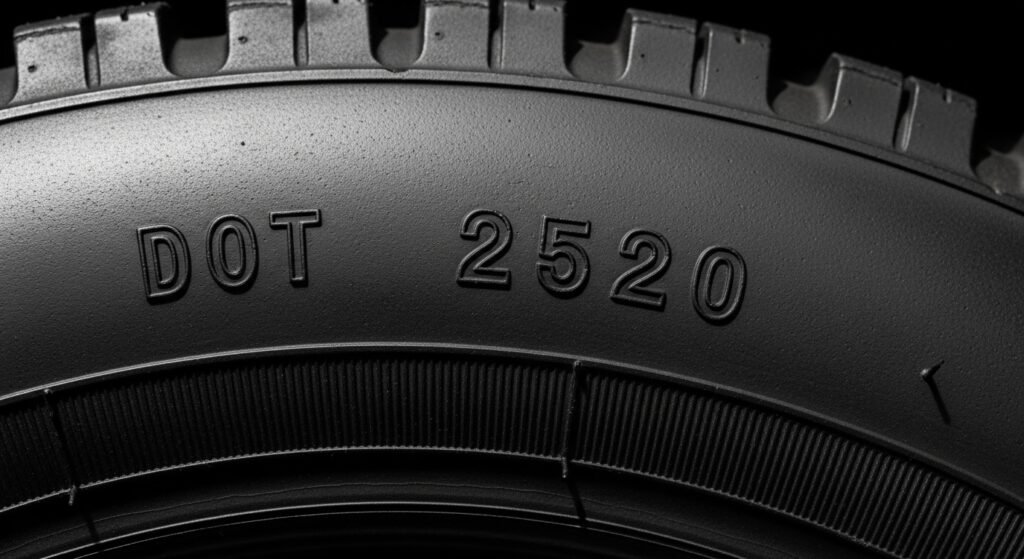
The most important part of the DOT code is the last four digits.
These four digits tell you:
- First two digits: week of manufacture
- Last two digits: year of manufacture
For example:
- 4718 means the tire was made in the 47th week of 2018.
- 1519 means the tire was made in the 15th week of 2019.
If today’s date is 2026, a tire with 1519 is over five years old.
Knowing how to read this code allows you to make informed decisions when buying or inspecting tires.
Example of a DOT Code
Suppose you see the following on your tire:
DOT XXXX XXXX 2520
This means:
- 25 = 25th week
- 20 = Year 2020
You can calculate the tire’s age by counting from that week in 2020 to the present date.
This simple step can prevent driving on an aged tire unknowingly.
Pre-2000 Three-Digit DOT Codes
Tires manufactured before the year 2000 used a three-digit date code.
For example:
- 158 could mean the 15th week of a year ending in 8.
Because the decade is unclear, and because these tires are now decades old, any tire with a three-digit DOT code should be replaced immediately.
These tires are far beyond safe service life.
Why You Should Never Buy a Tire Without a DOT Stamp
If a tire lacks a DOT stamp:
- It may not meet federal safety standards.
- Its age cannot be verified.
- It could be counterfeit.
- It may have been stored improperly.
Always check the DOT code before purchasing, even if the tire appears new.
How Long Do Tires Last?
Retail Shelf Life of New Tires
Properly stored tires can remain suitable for sale for several years. However, storage conditions must be controlled.
Ideal storage includes:
- Cool temperatures
- Low humidity
- No direct sunlight
- Minimal ozone exposure
Even so, it is wise to purchase tires that are as recent as possible.
Before installation:
- Check the DOT date
- Confirm all four tires are similar in age
- Avoid tires more than two years old when possible
Recommended Replacement Guidelines
General safety recommendations suggest:
- Inspect tires annually after five years
- Replace tires at ten years regardless of condition
- Consider replacement earlier in hot climates
Some manufacturers recommend replacement around six years, depending on conditions.
It is always best to consult both tire manufacturer guidelines and vehicle manufacturer recommendations.
Mileage vs. Age: Which Matters More?
Mileage affects tread wear, but age affects structural integrity.
A high-mileage tire may wear out due to tread loss.
A low-mileage tire may become unsafe due to aging.
In many cases:
- Age becomes the limiting factor
- Spare tires may expire before use
- Garage-kept vehicles are not immune to aging
Both mileage and age must be considered together.
Professional Tire Inspection and Maintenance
When to Have a Tire Professionally Inspected
Professional inspections are recommended:
- After five years of service
- If cracks or bulges appear
- Before long trips
- If handling feels unstable
- After impact damage
Regular inspections increase safety and extend tire life.
What Professionals Check
During inspection, technicians evaluate:
- Sidewall integrity
- Internal belt condition
- Tread wear patterns
- Air pressure accuracy
- Signs of separation
- Balance and alignment
They may also remove the tire to check the full DOT code.
Why Removing the Tire May Be Necessary
In some cases, the complete DOT code is visible only on the inner sidewall.
Removing the tire allows:
- Full verification of manufacture date
- Inspection for internal damage
- Detection of hidden structural issues
This step is especially important for older tires.
Key Maintenance Practices That Extend Tire Life

Tire Rotation
Regular rotation promotes even wear across all four tires.
Benefits include:
- Longer tread life
- Balanced traction
- Improved handling stability
Follow vehicle manufacturer rotation intervals.
Wheel Alignment
Misalignment causes uneven wear and stress.
Signs of misalignment:
- Vehicle pulling to one side
- Uneven edge wear
- Steering wheel vibration
Correct alignment reduces premature aging.
Tire Balancing
Balancing ensures weight is evenly distributed.
Proper balancing:
- Reduces vibration
- Prevents uneven wear
- Protects suspension components
- Improves ride comfort
Proper Inflation Practices
Maintain correct pressure by:
- Checking monthly
- Using a reliable gauge
- Adjusting for seasonal changes
- Following door-jamb pressure recommendations
Proper inflation significantly reduces aging stress.
Warning Signs of Tire Aging and Failure

Visible Signs of Aging
Watch for:
- Sidewall cracks
- Surface dry rot
- Bulges
- Blisters
- Discoloration
These signs indicate weakening rubber.
Performance-Based Warning Signs
Driving symptoms may include:
- Vibration
- Poor handling
- Reduced traction
- Increased road noise
- Frequent pressure loss
These symptoms should never be ignored.
When to Replace Immediately
Replace tires immediately if:
- They are ten years old
- They have three-digit DOT codes
- There is severe cracking
- There is belt separation
- They frequently lose air
Safety should always come first.
Buying New Tires: What You Must Check
Always Verify the DOT Date
Before purchase:
- Inspect the DOT code
- Confirm week and year
- Ensure all tires match closely in age
Do not rely solely on appearance.
Ask About Storage Conditions
Ask retailers:
- How long have these tires been in stock?
- How were they stored?
- Were they kept indoors?
Proper storage slows aging.
Climate Considerations
Drivers in hot climates should:
- Inspect tires more frequently
- Replace earlier if needed
- Monitor pressure closely
- Avoid driving on aged tires during extreme heat
Heat dramatically accelerates deterioration.
Practical Tire Safety Checklist
Monthly Checklist
- Check tire pressure
- Inspect for cracks
- Look for uneven wear
- Confirm tread depth
- Examine spare tire
Annual Checklist
- Verify DOT date
- Schedule professional inspection
- Check alignment and balance
- Review replacement timeline
Before Long Trips
- Inspect pressure when cold
- Look for visible damage
- Ensure tires are not near age limit
- Check spare tire condition
Preparation reduces roadside emergencies.
Final Thoughts: Age, Pressure, and Prevention
Tire safety depends on awareness and consistent maintenance. Age is just as important as tread depth. Heat and underinflation are major contributors to tire failure. The DOT code provides the most reliable method to determine a tire’s age.
After five years, increased attention is necessary. At ten years, replacement is strongly recommended regardless of appearance. Regular inspections, proper inflation, rotation, and alignment dramatically reduce risk.
Never assume a tire is safe simply because it looks good. Understanding tire age and practicing proper maintenance ensures safer driving, better performance, and peace of mind every time you get behind the wheel.
Frequently Asked Questions
Can tires expire even if they have never been used?
Yes, tires can expire even if they have never been mounted or driven on. Rubber compounds naturally degrade over time due to exposure to oxygen, ozone, and environmental conditions. Even in storage, aging continues. That is why checking the DOT manufacturing date is essential before purchasing unused tires.
How does ozone affect tire aging?
Ozone reacts with rubber compounds and accelerates cracking, especially on sidewalls. Urban environments with higher pollution levels may expose tires to more ozone, increasing the rate of deterioration.
Does storing a vehicle indoors prevent tire aging?
Indoor storage slows aging but does not completely stop it. Tires stored in garages are protected from direct sunlight and extreme temperature swings, but oxidation and natural rubber breakdown still occur over time.
Are all tire brands affected by aging at the same rate?
Different manufacturers use varying rubber compounds and construction techniques, which may influence durability. However, all tires age over time, regardless of brand or quality level.
Can tire dressings or shine products extend tire life?
Most cosmetic tire dressings do not extend structural life. Some solvent-based products may even accelerate rubber drying. Only products specifically designed for rubber protection should be used, and they do not replace proper maintenance.
Is it safe to drive on tires older than six years?
It depends on storage conditions, climate, and overall condition. However, increased caution is recommended after five to six years. A professional inspection is strongly advised for tires within this age range.
Do spare tires expire?
Yes, spare tires age just like regular tires. Many drivers forget about their spare, but it can become unsafe due to age even if it has never been used. Always check the DOT date on your spare tire.
How does extreme cold affect tire aging?
Cold temperatures make rubber less flexible. Repeated freezing and thawing cycles can contribute to cracking and surface deterioration over time.
Can tire age affect fuel economy?
Yes, aging tires may develop increased rolling resistance due to rubber hardening and internal degradation. This can reduce fuel efficiency compared to properly maintained, newer tires.
What happens if I mix old and new tires on the same vehicle?
Mixing significantly older tires with newer ones can create uneven traction and handling differences. This may affect stability, especially during emergency braking or wet conditions.
Do electric vehicles require different tire age considerations?
Electric vehicles often have higher torque and heavier battery weight, which can stress tires more. Monitoring tire condition and age is especially important for EV drivers.
Can improper tire storage damage new tires before installation?
Yes. Storing tires outdoors, near heat sources, or in direct sunlight accelerates aging. Tires should be stored in cool, dry, and dark environments to maintain their integrity.
How does high-speed driving impact aging tires?
High-speed driving generates more heat. Older tires with weakened internal structures are more vulnerable to heat-related failure at highway speeds.
Are trailer tires more sensitive to aging?
Yes. Trailer tires often sit unused for long periods and carry heavy loads. Because of limited mileage and long storage periods, age-related deterioration is common in trailer tires.
Does tire pressure monitoring system (TPMS) detect aging problems?
No. TPMS only alerts drivers to low air pressure. It does not detect cracking, internal belt separation, or age-related structural weakening.
Can wheel size affect tire lifespan?
Larger wheels with lower-profile tires often have shorter lifespans due to reduced sidewall cushioning and increased stress. However, age-related deterioration still occurs regardless of size.
Is dry rot always visible?
Not always. While surface cracks are common signs, internal deterioration may occur without visible symptoms. That is why checking the DOT date is critical.
How do heavy loads impact aging tires?
Carrying heavy loads increases stress and heat generation. On older tires, this additional stress can accelerate failure risk.
Should seasonal tires be replaced based on age even if used only part of the year?
Yes. Seasonal tires age year-round, even when stored. Always track their manufacturing date and total age, not just the months of active use.
Can a tire be retreaded if it is too old?
No. Retreading is only safe when the tire casing is structurally sound. Aged tires with internal degradation are not suitable candidates for retreading.
Do tires on parked vehicles age faster if they sit in one position?
Extended parking in one position can cause flat spots and localized stress. Combined with aging, this may increase vibration and structural weakness.
How can I calculate the exact age of my tire?
Locate the last four digits of the DOT code. The first two digits represent the production week, and the last two digits represent the year. Count from that week and year to the current date to determine the tire’s age.
Are motorcycle tires subject to the same aging concerns?
Yes. Motorcycle tires age similarly to car tires. Because motorcycles rely heavily on tire grip for balance and safety, monitoring tire age is extremely important.
Does humidity affect tire lifespan?
High humidity can contribute to rubber degradation and corrosion of internal steel components, especially when combined with temperature changes.
Is it risky to buy discounted tires that have been sitting in inventory?
Discounted tires may simply be older stock. Always check the DOT date before purchasing to ensure you are not buying tires that are already several years old.