 Skip to content
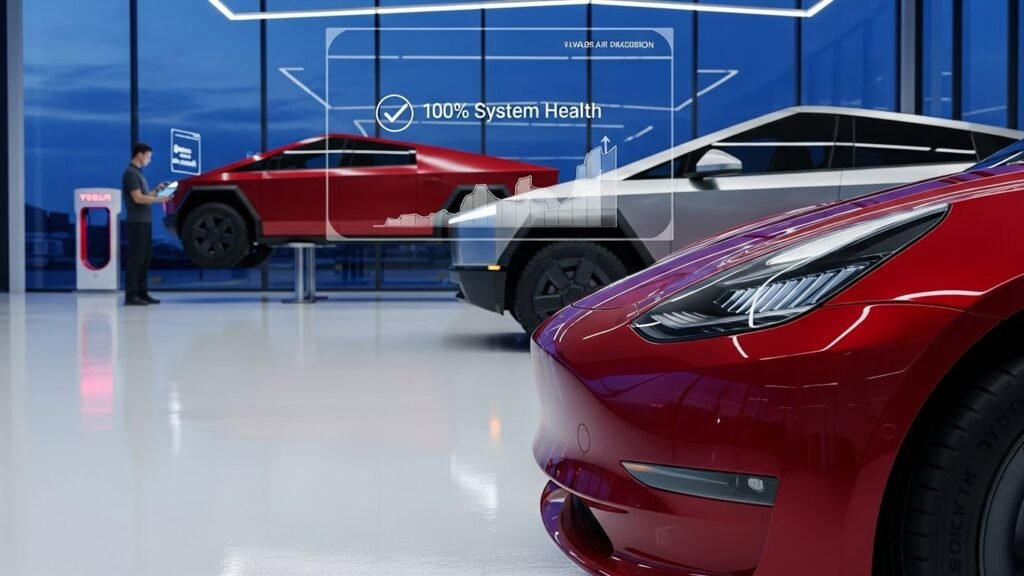
The question of whether a high-tech electric vehicle can stand the test of time is one that every potential buyer asks. As the automotive world shifts toward electrification, one brand stands at the center of every conversation. This leads many to critically evaluate their options and ask, are teslas reliable enough for long-term ownership? The debate surrounding this tech giant is often polarized, with fans praising their innovation and critics pointing toward historical manufacturing flaws. To truly understand the current state of affairs, one must look past the flashy headlines and dive into the data-driven reality of modern electric car ownership.
Understanding Tesla Reliability: The Paradox of Innovation
Reliability in the world of electric vehicles (EVs) means something entirely different than it does for traditional internal combustion engine (ICE) cars. In a gas car, reliability is usually measured by how long the engine, transmission, and fuel systems last before they need major repairs. Since an EV removes these complex mechanical systems, the focus shifts toward software stability, battery health, and electronic components. This fundamental shift is why people often wonder are teslas reliable when they see fewer moving parts but more complex computer systems.
The Tesla Paradox describes a unique situation where owner satisfaction remains incredibly high even when reliability scores from major publications fluctuate. Many owners are willing to overlook a minor trim misalignment if it means they get to experience world-class acceleration and a seamless charging network. This brand maturation has seen the company move from the early-adopter era of production struggles to a state where they are producing millions of cars with increasingly refined processes.
- Mechanical simplicity is the biggest advantage of an EV, as the lack of hundreds of moving parts reduces the potential for catastrophic engine failure.
- Software-centric design allows for constant improvements, but it also introduces the risk of digital bugs that traditional cars simply do not have.
- Consumer expectations are changing, with modern buyers valuing tech integration and ease of use as much as mechanical durability.
How Industry Experts Rate Tesla Reliability

When looking at the numbers from 2025 and 2026, the data shows a significant upward trend for the brand. Industry experts have noticed that as the company scales, they are getting much better at the “basics” of car building. For a long time, the brand was criticized for being a tech company that happened to make cars, but the latest reports suggest they have finally earned their seat at the table with legacy manufacturers.
Consumer Reports has recently noted a massive jump in their rankings, with the brand climbing multiple spots to break into the top ten most reliable automakers. This shift is largely attributed to the maturity of their mass-market models, which have had years to work out the kinks. J.D. Power also tracks dependability, and their latest studies show that the number of problems per 100 vehicles (PP100) has dropped significantly, placing the brand ahead of several established luxury rivals like Audi and Mercedes-Benz.
- Consumer Reports now ranks the brand as the 9th most reliable automaker, showing a massive improvement from previous years.
- J.D. Power scores highlight a reduction in total problems, particularly in the drivetrain and powertrain areas.
- RepairPal gives a respectable 3.5/5.0 star rating, which is considered above average for the luxury vehicle segment.
- Benchmark comparisons show that while they still lag behind some Japanese brands, they are outperforming many European luxury competitors in long-term dependability.
The Evolution of Tesla’s Build Quality and Design
The journey from a niche startup to a global leader was not without its hurdles. Between 2012 and 2017, the early versions of the Model S and Model X became famous for “production hell.” These early years were defined by ambitious designs that the factory lines weren’t quite ready to handle. Issues like falcon-wing doors that wouldn’t close and door handles that wouldn’t pop out were common complaints that colored the early perception of the brand’s quality.
However, manufacturing refinement is a continuous process. As production cycles have lengthened for models like the Model 3 and Model Y, consistency has improved. The company has moved away from the frequent, radical design changes that used to cause assembly line chaos. Instead, they now focus on incremental updates that prioritize structural efficiency and ease of assembly, which naturally leads to fewer mistakes on the factory floor.
- Panel gaps and exterior trim alignment were the most cited issues in the past, but recent factory audits show much tighter tolerances.
- Paint quality remains a point of discussion, as some owners report thin coatings that are susceptible to rock chips.
- Interior materials have seen a durability boost, with vegan leather seats designed to withstand years of use without cracking.
- Acoustic insulation has been upgraded in newer models to address previous complaints about wind noise and cabin rattles.
Performance and the Electric Driving Experience
One of the strongest arguments for why these cars are considered dependable is their mechanical simplicity. A traditional car has a complex transmission with dozens of gears and an engine with hundreds of moving parts, all of which require oil, coolant, and regular timing belt changes. An electric motor is essentially a single moving part that spins to create motion. This simplicity is a core reason why people find are teslas reliable for high-mileage commuting.
The power delivery in these vehicles is not just about speed; it is about efficiency and stability. Models equipped with dual and triple motors offer a level of traction and handling that is hard to match in the gas world. The Model S Plaid, for instance, provides supercar levels of performance without the high-maintenance temperament of a traditional exotic car.
- No oil changes or spark plug replacements mean that the most common failure points of gas cars are non-existent.
- Dual-motor setups provide redundancy, meaning if one motor fails, the other can often still drive the car to a service center.
- Regenerative braking reduces the physical wear on brake pads and rotors, often allowing them to last over 100,000 miles.
- Stability control systems are integrated directly into the motor response, allowing for near-instant adjustments to road conditions.
Software, Technology, and Over-the-Air (OTA) Updates
The most unique aspect of owning one of these vehicles is the “software-defined” nature of the car. Almost every function, from the air conditioning to the suspension stiffness, is controlled by a central computer. This allows for Over-the-Air (OTA) updates, which can literally make the car better while it is parked in your garage. If a bug is found in the braking system or a better way to manage the battery is discovered, a software patch can be sent to every car simultaneously.
However, this reliance on code is a double-edged sword. Digital failure points can occur where a software update might introduce a new glitch or change the user interface in a way that confuses the driver. There have been instances where “phantom braking” occurred because the vision-based safety system misinterpreted a shadow on the road. Despite these technical hurdles, the ability to fix a “recall” without the owner ever visiting a shop is a massive reliability win.
- OTA updates keep the vehicle’s features and safety systems up to date with the latest technology.
- Digital reboots can sometimes fix electronic gremlins that would require a mechanic in a traditional car.
- Media Control Units (MCU) have seen upgrades over the years to prevent the screen-freezing issues seen in older models.
- FSD and Autopilot continue to evolve, with AI training helping the cars handle complex “edge cases” on the road.
Battery Life, Longevity, and Charging Infrastructure

The heart of any electric vehicle is its battery, and this is where most of the long-term reliability questions lie. Many people worry that an EV battery is like a giant smartphone battery that will die after a few years of use. Real-world data suggests otherwise. Modern EV batteries are designed with sophisticated cooling systems that prevent the kind of heat-related damage that kills smaller electronic batteries.
How Long Do Tesla Batteries Really Last?

Official data from millions of miles of driving shows that these Tesla batteries are incredibly resilient. On average, a pack will retain between 70% and 80% of its original capacity even after a decade of use or over 150,000 miles. For many drivers, this means the battery will actually outlast the rest of the car’s components. Recent studies have even shown that some high-mileage units have crossed the 200,000-mile mark with only 12% degradation.
- Capacity retention is helped by sophisticated thermal management systems that keep the cells at the ideal temperature.
- Degradation rates typically flatten out after the first year, leading to a very predictable loss of range over time.
- Warranty coverage typically protects owners for 8 years or 100,000 to 120,000 miles, ensuring peace of mind.
Charging Reliability and Speed
A car is only reliable if you can actually use it for trips, and this is where the Supercharger network shines. While other EV owners often struggle with broken third-party chargers or complicated payment apps, this proprietary network is known for nearly 100% uptime. The speed of charging has also improved, with the latest V4 stalls providing hundreds of miles of range in the time it takes to grab a coffee.
- Superchargers are integrated into the car’s navigation, allowing the battery to pre-condition for the fastest possible charge.
- Home charging is the most reliable way to fuel a car, adding 25–30 miles of range per hour while you sleep.
- Plug-and-charge technology removes the need for credit card readers or apps at the charging stall, reducing points of failure.
The “Silent Problem”: Suspension and Tire Wear

While the motors and batteries are solid, these vehicles are heavy. The battery pack alone can weigh as much as a small car, and this puts extra stress on the suspension and tires. Many owners are surprised to find that they need new tires much sooner than they did with their previous gas vehicles. This isn’t necessarily a “reliability” failure, but it is a maintenance reality that comes with high-performance EVs.
- Heavy weight causes suspension bushings and control arms to wear out faster, leading to squeaks or rattles over time.
- High torque from the electric motors can chew through tire tread if the driver has a “lead foot” during acceleration.
- Control arm issues were reported in older Model 3 units, though newer versions have reinforced parts to solve the problem.
- Alignment is critical for these cars, as even a small deviation can lead to uneven tire wear and reduced range.
Manufacturing Locations and Their Impact on Quality
Not every car with the same badge is built the same way. The company operates massive “Gigafactories” around the world, and there is a noticeable difference in quality depending on where the car was made. Owners often use the Vehicle Identification Number (VIN) to see if their car came from California, Texas, China, or Germany.
Giga Shanghai is widely regarded as producing the highest-quality units, with some of the tightest tolerances in the fleet. Giga Berlin has also received praise for its advanced paint shop and interior assembly. As the newer factories in Texas and Berlin ramp up, the global standard for the brand’s build quality is becoming more unified and professional.
- Giga Shanghai has become the primary export hub due to its consistent and high-quality manufacturing output.
- Fremont, California is the oldest factory and has historically had the most issues with “fit and finish,” though it has improved recently.
- Giga Texas is pioneering new “unboxed” manufacturing methods designed to simplify the car and reduce assembly errors.
- Continuous iteration means that a car built in 2026 is structurally different and more refined than one built in 2023.
The Real Cost of Ownership
To determine are teslas reliable, you have to look at the total cost of keeping the car on the road. While the purchase price can be higher than a budget gas car, the long-term savings are significant. When you factor in the lack of expensive engine repairs and the low cost of electricity, the “5-year cost to own” often beats out much cheaper vehicles.
Purchase Price vs. Long-Term Value
The lineup now covers a wide range of prices, from the accessible Model 3 to the high-end Model X. While you might pay $40,000 or more upfront, you are essentially pre-paying for your fuel and maintenance. Over five years, a Model 3 owner can save thousands of dollars compared to someone driving a BMW 3-Series or an Audi A4.
- Model 3 and Model Y represent the best value, often ranking as the most affordable luxury cars over a five-year period.
- Resale value remains strong because the hardware is kept relevant through constant software updates.
- Fuel savings can amount to over $1,000 per year depending on local electricity rates and driving habits.
Maintenance and Repair Costs
Even though there is no oil to change, there are still costs. Cabin filters need to be replaced, and in cold climates, the brake calipers need to be lubricated to prevent them from seizing due to lack of use. The biggest concern for owners is what happens if something major breaks out of warranty. Because the company controls its own parts and service, there are few third-party options for cheap repairs.
- Annual maintenance costs average around $800, which is higher than a Toyota but lower than a BMW.
- Battery replacement is the most expensive potential repair, often costing between $10,000 and $20,000 if not covered by warranty.
- Collision repairs can be slow and expensive because of the specialized aluminum and steel structures used in the chassis.
- Mobile service is a major benefit, as “Rangers” can perform many repairs right in your driveway or office parking lot.
Reliability Profiles by Model
Every car in the lineup has its own personality and its own set of common issues. Understanding these differences can help a buyer choose the most dependable option for their lifestyle.
- Model 3: This is the most refined and reliable car in the fleet. Because it has been in production for so long, the factory has perfected the assembly process.
- Model Y: Shares many parts with the Model 3, making it very dependable, though some early units had issues with the rear hatch alignment.
- Model S: A very mature platform that has solved most of its early “tech” bugs, though it is more complex than the 3 or Y.
- Model X: Still the most “unreliable” model due to its complex doors and heavy weight, which can stress the front suspension.
- Cybertruck: Too new for long-term data, but its stainless steel body and 48V electronics represent a bold new step in durability and tech.
Notable Recalls, Safety Ratings, and Legal Scrutiny
Safety and reliability go hand-in-hand. A car that protects you in a crash is a reliable machine. These vehicles consistently earn the highest possible scores from the NHTSA and IIHS. Their structural design, which lacks a heavy engine in the front, creates massive “crumple zones” that absorb impact energy much better than traditional cars.
However, the brand is often in the news for recalls. It is important to remember that most of these “recalls” are fixed via a software update while the car is parked. While legal scrutiny regarding the “Autopilot” name continues, the active safety features like automatic emergency braking are consistently ranked as some of the best in the industry.
- IIHS Top Safety Pick+ awards are standard for the Model 3 and Model Y.
- Rollover risk is extremely low because the heavy battery pack is located at the very bottom of the car.
- Active safety systems are always monitoring the road, providing a second set of “eyes” to help the driver avoid accidents.
Final Verdict: Is a Tesla Right for You?
So, are teslas reliable? The answer is a resounding yes for those who value mechanical durability and cutting-edge technology. While you might still encounter a minor trim issue or a software bug, the core of the car—the battery and the motors—is built to last for hundreds of thousands of miles.
The decision to buy one should depend on your access to a service center and your willingness to embrace a new way of driving. If you live in a remote area with no service support, any minor issue could become a major headache. But for the average commuter, the combination of low maintenance, high safety, and a world-class charging network makes it one of the most dependable choices on the market today.
- Pros: Top-tier battery life, industry-leading charging, high safety ratings, and low mechanical maintenance.
- Cons: Potential for build quality quirks, dependence on official service centers, and higher insurance costs.
- Verdict: For most drivers in 2026, these vehicles offer a level of reliability that matches or exceeds traditional luxury brands.
Frequently Asked Questions
Does the lack of traditional service intervals affect long-term reliability?
Unlike gas cars that have strict schedules for oil changes and belt replacements, these vehicles rely on condition-based maintenance. While this saves money, it means that some components like brake fluid or suspension bushings might be neglected if the owner does not proactively check them. Regular safety inspections are still recommended every two years to ensure the car remains in top condition.
Can a Tesla jump-start a traditional gas vehicle?
It is generally not recommended to use the high-voltage system or the low-voltage accessory battery to jump-start a gas car. Doing so can cause electrical surges that might damage the sensitive electronic controllers. Most owners carry a portable jump pack for emergencies to avoid any risk to the vehicle’s internal computer systems.
What causes the bubbling or peeling on the vegan leather headrests?
Some owners have noticed bubbling on the headrests and seats, which is often caused by a chemical reaction between the synthetic leather and certain hair oils or skin products. This is a cosmetic reliability issue that the company has addressed in newer models by changing the material composition. Keeping the interior clean with mild, non-alcoholic wipes can prevent this from happening.
How do I maintain the car if I live in a region with salted winter roads?
In areas where salt is used to melt ice, the brake calipers can become corroded because they are rarely used due to regenerative braking. To maintain reliability, you should have the calipers cleaned and lubricated once a year. This prevents the pads from seizing and ensures the physical brakes work perfectly when you actually need them in an emergency.
Is it true that high-voltage battery fires are more common than engine fires?
Statistical data from fire departments and insurance companies shows that electric vehicles are actually significantly less likely to catch fire than internal combustion engine vehicles. While an EV fire is more difficult to extinguish due to the chemical nature of the cells, the frequency of these events is much lower per 100,000 vehicles on the road.
What does the blue snowflake icon on the screen mean for driving?
The blue snowflake appears when the battery is too cold to provide its full range or performance. When this icon is visible, you will notice that regenerative braking is limited and the car might feel slightly slower. It is not a sign of a broken car; it is a protective measure to ensure the battery cells are not damaged while they are cold.
How does the 12V or 16V accessory battery impact reliability?
Most people don’t realize that even if the big high-voltage battery is full, the car won’t start if the small accessory battery dies. In older models, the lead-acid 12V battery was a common failure point every 3-4 years. Newer models now use a Lithium-Ion 16V battery that is designed to last the entire life of the vehicle, significantly improving overall starting reliability.
Can software updates permanently disable features of the car?
While updates usually add features, there have been rare cases where performance or range was slightly adjusted to protect the long-term health of the battery. The company does this to prevent premature degradation, though it can be frustrating for owners who notice a small change in their maximum range after an update.
Does frequent Supercharging damage the battery life?
Using a Supercharger is perfectly safe, but doing it every single day can lead to slightly faster degradation compared to slow home charging. The car’s computer manages the heat during fast charging to minimize stress. For the best long-term reliability, it is recommended to use slow AC charging at home for daily needs and save fast DC charging for road trips.
Are the door handles reliable in freezing rain conditions?
The flush-mounted door handles can sometimes freeze shut if a layer of ice forms over them. To solve this, the software now includes a feature in the app to “unlatch” the door electronically, pushing it open slightly so you don’t have to pull the handle. You can also use your fist to gently bump the handle to break the ice as recommended in the owner’s manual.
How does the car handle a total loss of power while driving?
These vehicles are designed with multiple layers of redundancy. If the main computer fails, there are secondary systems that keep the steering and brakes operational so you can safely pull over. Total power failure is extremely rare and is usually related to a physical fault in the high-voltage pyrotechnic fuse, which is designed to disconnect the battery during a major crash.
Do Teslas have a transmission that can fail?
Unlike gas cars with 6 to 10 gears, these vehicles use a single-speed fixed gear reduction. There are no clutches to wear out and no shifting mechanisms that can break. This lack of a complex transmission is one of the primary reasons why the drivetrain is considered nearly bulletproof compared to a traditional luxury car.
What is the reliability of the HEPA filtration system in the Model Y and X?
The Bioweapon Defense Mode uses a massive HEPA filter to scrub the air inside the cabin. This system is very reliable, but the filters are much larger and more expensive than standard car filters. To maintain the system, these filters should be replaced every three years to ensure the air quality remains high and the HVAC blowers aren’t strained.
Can I tow with a Tesla without damaging the motors?
The Model Y and Model X are rated for towing, and their electric motors are actually better suited for it than gas engines because of the instant torque. However, towing puts a massive load on the thermal management system. The car will automatically limit power if the motors or battery get too hot, ensuring that you don’t cause any permanent damage to the drivetrain.
How does the glass roof hold up against hail and impacts?
The panoramic glass roofs are made of toughened safety glass that is designed to be much stronger than a standard metal roof. In many rollover tests, the glass roof has proven to be incredibly resilient, often supporting several times the weight of the car. While it can crack from a direct hit by a large rock, it is not a common reliability concern for most owners.
Are the cameras and sensors reliable in heavy rain or snow?
The “Tesla Vision” system relies on cameras that can be obscured by mud, snow, or heavy rain. If the cameras are blocked, features like Autopilot or Park Assist may become temporarily unavailable. This is not a hardware failure, but rather a limitation of the technology. Keeping the car clean and using the built-in camera heaters usually solves the problem.
What is the life expectancy of the drive unit fluid?
While there is no engine oil, the drive units do contain a small amount of oil for lubrication and cooling. This fluid is technically “lifetime” and doesn’t need to be changed under normal driving conditions. However, high-performance drivers or those who tow frequently may choose to have it inspected after 100,000 miles to ensure no metal shavings have accumulated.
How reliable is the key card and phone-as-key system?
The phone-as-key system is very reliable but depends on your phone’s Bluetooth stability. To ensure you are never stranded, it is always recommended to keep the credit-card-sized key in your wallet. Even if your phone dies or the car’s 12V battery is low, the NFC chip in the key card can still unlock and start the vehicle.
Do the air suspension systems in the Model S and X fail often?
Air suspension is a premium feature that offers a smoother ride, but like all air systems, the rubber bellows can eventually leak after 7-10 years. It is more complex than a standard spring suspension, meaning it is a potential high-cost repair down the road. Most owners of newer models haven’t seen significant issues, but it is something to watch on older, high-mileage cars.
Is the touchscreen still a major failure point?
In the early days of the Model S, the screens were known for leaking “goo” or turning yellow. The company has since switched to automotive-grade screens that are designed to withstand extreme cabin temperatures without failing. Modern screens are much more durable and are expected to last for the entire life of the vehicle without the issues seen in the 2012-2015 era.