 Skip to content
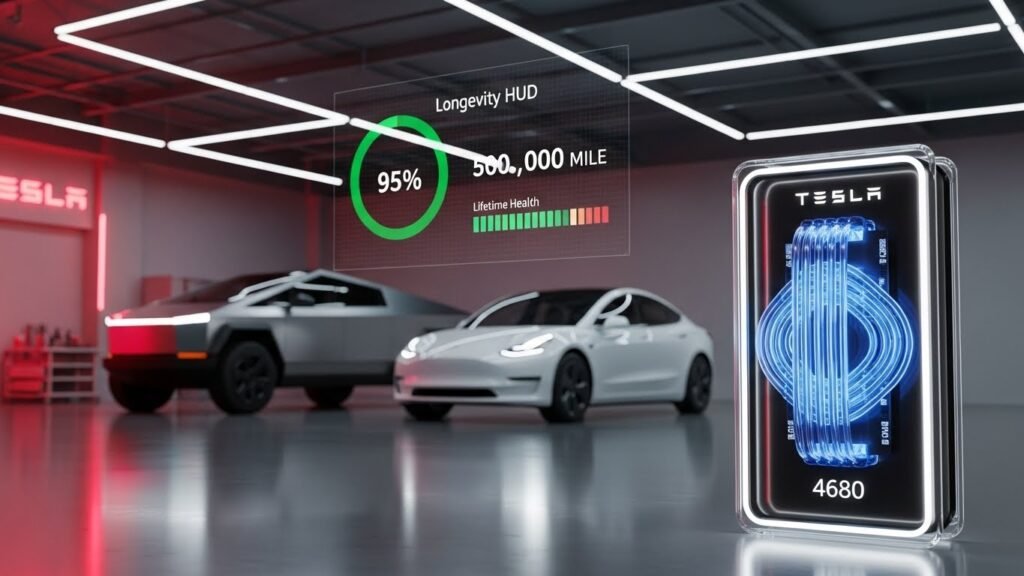
Tesla has established itself as the gold standard for electric vehicle (EV) longevity, yet a primary concern for potential buyers remains: how long does a Tesla battery last?. With millions of these vehicles now on the road, real-world data provides a clear and encouraging picture of what owners can expect over the long haul. Most Tesla batteries are engineered to actually outlast the vehicle itself, often providing reliable service for decades before ever needing a major replacement. This guide explores the technology, data, and daily habits that determine the lifespan of your Tesla’s most critical component.
Introduction to the 2026 Tesla Battery Ecosystem
The landscape of electric vehicle energy has shifted significantly as we move through 2026. While early EV adopters worried about total battery failure, modern Tesla owners have shifted their focus toward capacity retention and daily range. The conversation has evolved from “Will the battery die?” to “How much range will I still have in ten years?”.
Tesla’s commitment to endurance is backed by millions of miles of fleet data, proving that their battery packs are incredibly resilient. As technology matures, Tesla is pushing toward the ultimate goal of a “permanent” vehicle battery. Recent advancements in chemistry and thermal management now allow newer models to handle thousands of charge cycles. For most drivers, the battery is no longer a “ticking clock” but a long-term asset that supports the car’s entire lifespan.
The Engineering Behind Tesla’s Longevity
The durability of a Tesla battery is the result of meticulous engineering and sophisticated software management. Tesla uses high-density lithium-ion chemistry specifically optimized for the high demands of rapid acceleration and fast charging. By carefully selecting materials for the cathode and anode, engineers balance high energy storage with long-term chemical stability.
Innovative Design Features
- Modular Architecture: Instead of one giant cell, the pack consists of thousands of small cells arranged in modules. This design improves cooling and ensures that if a few cells underperform, the rest of the pack continues to function efficiently.
- Battery Management System (BMS): This advanced computer acts as the “brain” of the pack, constantly balancing the charge between thousands of individual cells to prevent localized wear.
- Cell Design Evolution: Tesla has transitioned from original 18650 cells to 2170 cells and now to revolutionary 4680 structural cells, which offer better energy density and improved thermal characteristics.
- Structural Integrity: Newer packs using 4680 cells serve as a structural component of the car, reducing vehicle weight and increasing safety while protecting the delicate internal chemistry.
How Long Does a Tesla Last Per Charge? (The Daily View)
When discussing battery life, it is essential to distinguish between the total lifespan of the battery and the range available on a single charge. Daily range depends on the model, battery size, and environmental conditions. As of 2026, Tesla models offer some of the most competitive ranges in the industry.
Estimated Range by Model
- Model S: This flagship sedan remains a leader, with estimates reaching up to 410 miles on a full charge.
- Model 3 Long Range: A favorite for commuters, offering between 340 and 363 miles.
- Model X & Cybertruck: These larger vehicles typically provide between 320 and 352 miles, depending on configuration and wheel size.
- Model Y: This popular compact SUV offers a versatile range of approximately 277 to 337 miles.
Daily range is also influenced by “Phantom Drain,” where systems like Sentry Mode or climate control consume power while the car is parked. Most owners find that for daily driving, keeping the battery within a practical “80% window” provides plenty of mileage while significantly extending the pack’s overall health.
The Total Lifespan: How Many Miles Can You Expect?
Tesla designs its battery packs with a target lifespan of 300,000 to 500,000 miles. For the average driver in the U.S. traveling about 13,500 miles annually, this equates to more than 20 years of vehicle life. Even after such high mileage, the battery is not expected to fail; it simply holds less energy than it did when new.
The degradation follows a predictable pattern. Most packs see an initial capacity drop of around 5% during the first year or 25,000 miles. This is a normal part of chemical stabilization and BMS calibration. After this initial period, the degradation rate plateaus significantly.
Key Longevity Stats
- Average Degradation Rate: Once stabilized, many owners report losing only about 1% of capacity for every 25,000 miles driven.
- High-Mileage Resilience: Studies of high-mileage Teslas show that even at 200,000 miles, many packs retain 85% to 90% of their original capacity.
- Long-Term Reliability: For the vast majority of owners, the battery will provide more than enough range for daily needs long after other vehicle components have aged.
Deep Dive: NCA vs. LFP Battery Chemistries

Not all Tesla batteries are the same. The chemistry inside your pack dictates how you should treat it. Tesla primarily uses two types of lithium-ion chemistries: Nickel-Cobalt-Aluminum (NCA) and Lithium Iron Phosphate (LFP).
- NCA Batteries: Typically found in Long Range and Performance models, these offer higher energy density for more miles in a lighter pack. However, they are more sensitive to being kept at a high state of charge (100%) for long periods.
- LFP Batteries: Standard in RWD and entry-level models. Though heavier, they are incredibly durable and can handle being charged to 100% frequently without excessive wear.
- Durability Comparison: LFP batteries can handle up to 3,000 full charge cycles, significantly higher than the 1,000 to 2,000 cycles typical of NCA packs.
- BMS Calibration: Tesla recommends charging LFP-equipped cars to 100% at least once a week to help the BMS accurately track the battery’s state of charge.
Environmental & External Killers of Battery Health
While Tesla’s engineering is robust, external factors can accelerate aging. Heat is the primary enemy; prolonged exposure to high temperatures causes chemical breakdown, leading to faster “calendar aging”. Tesla’s thermal management system mitigates this by actively cooling the pack even when parked.
Cold weather also presents temporary challenges. In freezing conditions, internal resistance increases, which can reduce efficiency and slow charging speeds. This is particularly true for LFP batteries.
External Impact Factors
- Extreme Heat: Consistently parking in direct, scorching sunlight without a garage can lead to slightly higher degradation over several years.
- Winter Range Loss: In very cold climates, owners may see a temporary range reduction of 20% to 30% as the car uses energy to heat the battery and cabin.
- Topography: Frequent driving in mountainous areas generates more internal battery heat, though regenerative braking on the way down helps recover energy and cool the pack.
Charging Habits: Myths vs. Reality
One of the most common questions is how charging frequency and speed affect the pack. For a long time, it was believed that frequent Supercharging would quickly destroy a battery. However, recent studies show that the difference in degradation between cars that primarily Supercharge and those that charge at home is remarkably small.

Best Practices for Longevity
- The Golden Rule: For most models, staying between 20% and 80% state of charge (SOC) keeps chemical stress at a minimum.
- Avoid Deep Discharges: Letting the battery sit at near 0% for days is critical to prevent permanent cell damage.
- Home Charging: Slow, steady Level 2 charging at home is the most stable way to add energy with minimal heat.
- Supercharging Logic: Superchargers communicate with the BMS to adjust charging speed based on temperature and health to minimize wear.
- Stay Plugged In: Tesla recommends leaving the car plugged in when not in use so the thermal management system can run off wall power.
Official Tesla Warranties: The Fine Print
Tesla provides a robust warranty to give owners peace of mind. As of 2026, the standard battery warranty lasts for 8 years, guaranteeing that the battery will retain at least 70% of its original capacity. If it drops below this within the warranty period, Tesla will repair or replace it at no cost.
Warranty Limits by Model
- Model S & X: 8 years or 150,000 miles.
- Model 3 & Y (LR/Performance): 8 years or 120,000 miles.
- Model 3 & Y (Standard/RWD): 8 years or 100,000 miles.
- Cybertruck: 8 years or 150,000 miles.
Note: The warranty covers defects and excessive degradation, but not the normal, gradual loss of range that occurs with all EVs.
Monitoring Your Battery Like a Pro
Tesla provides several ways for owners to stay on top of vehicle health. The simplest method is comparing your current 100% range estimate to the original EPA rating, though this can vary based on driving efficiency.
Professional Diagnostic Tools
- Service Mode: Accessed via the touchscreen, this allows you to run a full “Battery Health Test”. This test takes up to 24 hours as the car fully discharges and recharges to calculate precise remaining capacity.
- Third-Party Apps: Tools like “Tessie” or “Recurrent” track charging history and degradation over time.
- BMS Recalibration: If you notice sudden jumps in estimated range, the BMS may simply need to be recalibrated through a full charge cycle.
The Economics of Battery Replacement
While rare, a battery may eventually need replacement outside of warranty due to physical damage or extremely high mileage. The cost remains a significant investment, though prices are trending downward as production scales.

- Replacement Costs: A full replacement typically costs between $15,000 and $25,000.
- Remanufactured Packs: For models like the Model 3, refurbished packs may be available for $7,000 to $12,000, extending the car’s life for another decade.
- Labor & Parts: Replacement is a complex procedure requiring 3 to 13 hours of labor and may involve updating cooling lines and sensors.
Real-World High-Mileage Case Studies
The best proof of longevity comes from owners who have already put hundreds of thousands of miles on their cars.
- The 1-Million Mile Model S: While it required battery replacements over its long life, it proved the rest of the vehicle platform is capable of extreme endurance.
- Fleet Data: Shuttle services driven nearly 24/7 often reach 300,000 miles while remaining profitable and reliable.
- The 200k Club: Many everyday owners have reached 200,000 miles with only 10% to 15% degradation.
- Survival Stories: High-mileage Teslas in Canada and Norway prove that with proper preconditioning, these batteries endure years of harsh winters without premature failure.
The Environmental Footprint & Circular Economy

Sustainability is a key part of the Tesla battery lifecycle. Tesla’s “closed-loop” recycling program recovers up to 92% of raw materials (lithium, nickel, and cobalt) from old packs to be used in new ones.
Even a battery that is “dead” for a car (at 70% capacity) is still perfectly useful for stationary energy storage, such as balancing the power grid or providing backup power for buildings. Tesla also continues to reduce its carbon footprint by moving toward cobalt-free LFP chemistries. In the future, “Vehicle-to-Grid” (V2G) technology may even allow owners to earn money by using their car’s battery to stabilize the grid while parked.
Future Tech: What’s Coming in 2027 and Beyond?
Battery innovation is moving fast. Next-gen technologies like semi-solid state and solid-state electrolytes are being researched for even higher energy density and safety. Tesla is also researching “million-mile” chemistries that could handle over 4,000 charge cycles. This could mean a battery lasting 50 years, potentially outliving two or three car bodies.
Upcoming Advancements
- Ultra-Fast Charging: Future batteries may handle 10-minute “refuels” without chemical damage.
- Cobalt-Free Future: Moving away from expensive materials will make batteries cheaper and more sustainable.
- Advanced Thermal Controls: Sophisticated cooling will maintain peak health in even more extreme climates.
Conclusion: Is the Battery the Weak Link?
The data is clear: for most owners, the battery is not the weak link in a Tesla. Suspension, interior components, or bodywork are more likely to wear out first. With proper care—staying between 20% and 80% charge and using winter preconditioning—a Tesla battery is a high-performance, long-lasting asset. The answer to how long it lasts is simple: long enough to be one of the most durable pieces of technology you will ever own.
FAQs: Everything You Need to Know About Tesla Battery Life
These frequently asked questions provide additional insights into specific ownership scenarios.
Does frequent use of Sentry Mode affect long-term battery health?
Sentry Mode causes “vampire drain”. While it doesn’t directly damage cells, it increases the number of small charge cycles. Daily use can add several hundred miles of “usage” per year not seen on the odometer, contributing slightly to calendar aging.
Can I leave my Tesla plugged in for several weeks while on vacation?
Yes. Tesla recommends this so the onboard computer can manage the charge and keep the battery at an optimal temperature. This prevents the battery from draining to 0%, which can cause permanent damage.
Is it bad for the battery to use a mobile connector on a standard 120V outlet?
No, “trickle” charging is perfectly safe and is actually one of the gentlest ways to charge due to low heat. It is only limited by its extreme slowness.
How does towing a trailer impact the lifespan of a Tesla battery?
Towing increases load and heat, leading to more frequent charge cycles. For occasional towing, the impact on longevity is negligible.
Does the “Insane” or “Ludicrous” mode damage the battery?
These modes draw massive current and create brief heat spikes. Occasional use is fine as the system monitors temperatures, but constant daily use could theoretically lead to slightly faster degradation.
What is the ideal storage temperature for a Tesla battery?
Tesla batteries are happiest between 60°F and 80°F. Storing in a temperature-controlled garage minimizes the energy spent on heating or cooling the pack, preserving its health.
Should I worry about “memory effect” in my Tesla battery?
No. Memory effect was an issue for older NiCd batteries. Modern lithium-ion batteries do not suffer from this, and deep discharges are actually harmful.
Does the age of the car matter more than the mileage for battery health?
Both matter. Calendar aging is constant; chemicals lose potency over time even if not driven. A 10-year-old car with low miles might have more degradation than a 3-year-old car with high miles.
Can a Tesla battery be repaired instead of replaced?
Sometimes. Some third-party shops offer module-level repairs. However, Tesla officially prefers replacing the entire pack with a remanufactured unit for consistent safety and performance.
Will the battery degrade faster if I live in a very hilly area?
Hilly terrain requires higher power output, creating slightly more thermal stress. Most owners won’t notice a major difference unless pushing the car to limits on steep grades constantly.
Does tire choice affect the battery’s longevity?
Indirectly. Heavy or “sticky” tires increase rolling resistance, requiring more energy and leading to more frequent charge cycles. Tesla-approved low-rolling-resistance tires are best for longevity.
How does the Tesla Powerwall technology relate to car batteries?
They are similar, and old car batteries are often recycled into Powerwalls. Car batteries are built for tougher conditions (rapid acceleration), making them over-engineered for longevity.
Is there a “break-in” period for a brand-new Tesla battery?
No traditional break-in is needed. However, range estimates may fluctuate during the first 1,000 miles as the BMS calibrates to the new cells and your driving style.
Does the size of the battery pack affect how long it lasts?
Generally, yes. Larger packs (like 100kWh) typically last more miles because they can travel further on one charge, resulting in fewer total charge cycles over the same mileage.
What happens if I accidentally leave my car at 0% for a day?
The car enters “deep sleep” to protect itself. Immediate charging usually prevents damage. However, sitting at 0% for weeks can “brick” the battery permanently.
Can software updates really improve my battery life?
Yes. OTA updates refine BMS algorithms for better heat management and cell balancing, sometimes even unlocking more usable capacity.
Is it safe to use third-party “fast chargers” regularly?
Most reputable third-party chargers are safe. The BMS still controls speed to protect the pack. However, Tesla Superchargers are optimized to communicate more seamlessly with the car’s thermal systems.
Does the paint color of the car impact battery life?
Indirectly, yes. A black car in a sunny climate absorbs more heat, causing cabin and battery cooling systems to work harder, slightly increasing energy usage and aging over many years.
How do I know if my battery is failing versus just degrading?
Degradation is slow and predictable. Failure is sudden and accompanied by error messages like “Maximum Battery Charge Level Reduced”. A sudden 20% range drop overnight is a sign of a hardware issue.
Does the use of “Dog Mode” or “Camp Mode” hurt the battery?
These modes draw steady power while parked. Occasional use is fine, but constant 24/7 use will accumulate significantly more “idle” charge cycles over time.