Skip to content
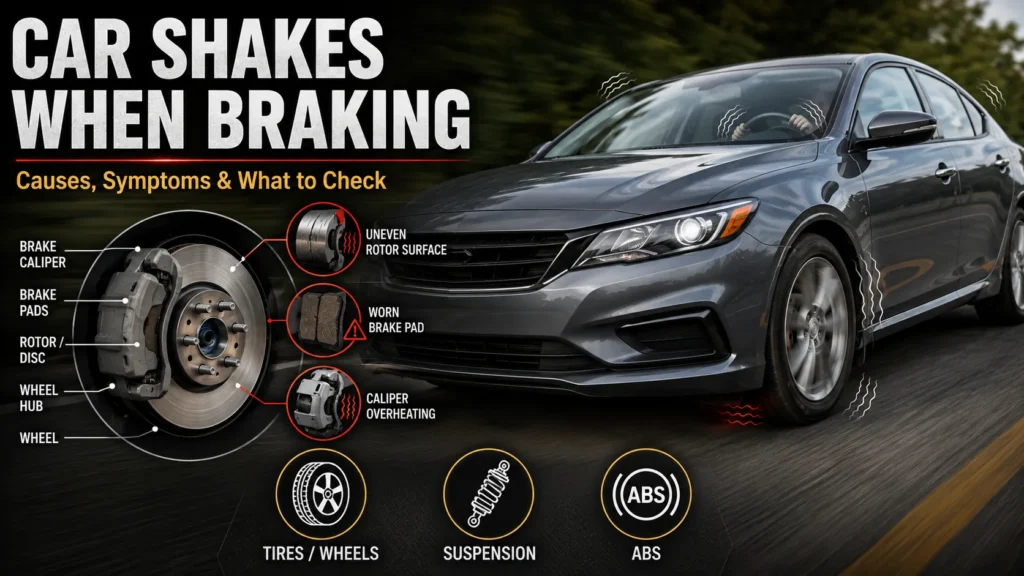
If your car shakes when braking, it can be hard to tell whether the problem is coming from the brakes, tires, wheels, or suspension. The good news is that the way your car shakes can give you useful clues.
I would pay attention to where you feel the vibration, how fast you are driving, and whether the shaking happens only when you press the brake pedal. These details can help narrow down the possible cause.
Quick Answer
A car that shakes when braking is often caused by uneven brake rotors, worn brake pads, or a sticking brake caliper. Tires, wheels, wheel bearings, suspension parts, and ABS problems can also cause vibration. If the shaking is severe, getting worse, or comes with poor braking, pulling, grinding, or a warning light, have the car checked promptly.
Why Does My Car Shake When I Brake?
If your car shakes when you press the brake pedal, I would first look at the braking system. A brake rotor with uneven thickness, worn brake pads, or a caliper that does not move correctly can change the way braking force is applied.
The vibration may feel different depending on the problem. You might feel the steering wheel shake, a pulsating brake pedal, or vibration through the seat and floor.
Speed also matters. A car that shakes only when braking from highway speed may have a different problem from one that shakes during slow stops.
Brake problems are the first place I would look, but tires, wheels, suspension, and wheel bearings can create similar symptoms.
Common Causes of a Car Shaking When Braking

1. Uneven or Warped Brake Rotors
Brake rotors are the metal discs that the brake pads press against to slow the wheels.
Drivers often call a rotor problem a warped brake rotor. In many cases, the more accurate description is uneven rotor thickness or an uneven friction surface. This can develop from heat, wear, uneven pad deposits, or other brake problems.
When the brake pad moves over high and low areas of the rotor, the braking force changes slightly. You can feel that change as a vibration or pulsation through the brake pedal and steering wheel.
This is one of the first things I would check if the car feels smooth while driving but starts shaking as soon as I brake.
2. Worn or Glazed Brake Pads
Brake pads wear as you drive.
If the pads become very thin, contaminated, or unevenly worn, they may not apply friction consistently across the rotor.
Brake pads can also become glazed. This can happen when the friction material becomes hardened after excessive heat or certain braking conditions. The result can be poor or uneven braking and vibration.
I would pay attention to other signs such as squealing, grinding, reduced braking performance, or uneven pad wear.
3. Sticking Brake Caliper
A brake caliper pushes the brake pads against the rotor.
If the caliper piston or slide mechanism sticks, the pad may stay in contact with the rotor when it should release. This can create excess heat and uneven braking.
A sticking caliper can cause:
- Car shaking when braking
- Steering wheel vibration
- Pulling to one side
- Uneven brake pad wear
- A hot wheel
- Burning smell
If the car pulls to one side when I brake and one wheel seems much hotter than the others, I would have the caliper checked promptly.
4. Uneven Brake Pad Deposits
Brake pads can leave friction material on a rotor surface.
If that material is distributed unevenly, the rotor can develop areas with different friction characteristics. The driver may feel this as brake judder or vibration.
Repeated hard braking, overheating, or incorrect pad bedding can contribute to this type of problem.
This can feel much like a warped rotor, which is why a proper inspection matters.
5. Worn Suspension Components
Not every car shaking when braking problem comes from the brakes.
Braking transfers weight toward the front of the vehicle. If suspension or steering components have excessive movement, that braking force can make the problem easier to feel.
Possible components include:
- Control arm bushings
- Ball joints
- Tie rod ends
- Struts
- Shock absorbers
- Wheel bearings
A suspension problem may also cause clunking over bumps, uneven tire wear, loose steering, or vibration while driving.
6. Unbalanced or Damaged Tires
A tire or wheel problem can feel similar to brake vibration.
An unbalanced wheel often causes vibration at certain driving speeds. A damaged tire, uneven tread wear, flat spot, or bent wheel can also cause shaking.
The key difference is timing.
If the car shakes while cruising and the vibration gets stronger when you brake, I would inspect the tires and wheels as well as the brakes.
If the car is completely smooth until I press the brake pedal, the braking system becomes a stronger suspect.
7. Bad Wheel Bearing or Wheel Hub
A worn wheel bearing can create vibration, humming, grinding, or looseness around a wheel.
In some cases, braking makes the problem easier to notice because braking changes the load on the wheel and suspension.
A bad wheel bearing is less likely than a brake rotor problem, but I would include it in the inspection if the vibration is accompanied by wheel noise or looseness.
8. Brake Drum Problems
Not every vehicle uses disc brakes at all four wheels.
Some vehicles use rear drum brakes. An out-of-round or uneven brake drum can cause vibration during braking.
The feeling may be different from a front brake problem. You may notice more vibration through the seat or rear of the vehicle rather than mainly through the steering wheel.
9. ABS Activation or a Fault
The Anti-lock Braking System can cause a rapid pulsing sensation through the brake pedal when it activates during hard braking or when a wheel is losing traction.
That type of pedal pulsation can be normal.
But if ABS seems to activate during a normal stop on dry pavement, especially at low speed, the system may need inspection. A wheel-speed sensor or another ABS component could be involved.
Where Do You Feel the Shaking?

Where you feel the vibration can give you a useful clue.
| Where you feel it | Possible causes |
| Steering wheel | Front brake rotors, front caliper, wheel or suspension |
| Brake pedal | Rotor thickness variation, brake drum, ABS |
| Seat or floor | Rear brakes, tires, wheels, suspension |
| Whole vehicle | Brake, tire, wheel, suspension, or multiple issues |
| Vehicle pulls to one side | Sticking caliper, uneven braking, suspension |
These clues do not prove which part has failed, but they can help narrow the inspection.
Why Is My Steering Wheel Shaking When I Brake?
If the steering wheel shakes when braking, I would pay close attention to the front braking and suspension systems.
Front brake rotors are a common cause because the vibration can travel through the caliper, steering knuckle, and steering components into the wheel.
A worn suspension or steering component can also allow extra wheel movement when braking.
Other possibilities include:
- Bent wheel
- Damaged tire
- Wheel bearing
- Loose steering component
- Sticking front caliper
If the steering wheel is smooth during normal driving but shakes only when I press the brakes, I would inspect the brakes first.
Why Does My Brake Pedal Pulsate When I Brake?
A pulsating brake pedal often points to an uneven brake rotor or drum.
As the rotor rotates, its uneven areas change the amount of resistance against the brake pad. That change can travel through the hydraulic system and be felt through the pedal.
ABS activation also causes pedal pulsation, but the sensation is usually rapid and associated with the system actively preventing wheel lock.
If the pedal pulses during ordinary braking on a dry road, I would have the brake system inspected.
Why Does My Car Shake When Braking at High Speeds?

High-speed braking can make brake vibration much easier to feel.
If the car is smooth at highway speed but the steering wheel starts shaking when I brake, uneven front brake rotors are high on my list.
Wheel imbalance can also become more noticeable at higher speeds. The important clue is whether the vibration exists before braking.
If the vehicle vibrates while cruising and continues or increases when braking, I would inspect both the wheels and brakes.
Why Does My Car Shake When Braking at Low Speeds?
Low-speed brake shaking can have several causes.
A sticking caliper, glazed brake pads, uneven rotor surface, or brake drum problem may produce vibration during slow stops.
If a vehicle has been sitting and the brakes have developed a light layer of surface rust, the first few stops may feel different. If the shaking continues after several normal stops, I would not assume surface rust is the cause.
Persistent low-speed vibration deserves a brake inspection.
Why Does My Car Pull to One Side When Braking?
If the car pulls left or right when you brake, I would pay close attention to the brake calipers and pads.
A sticking caliper can cause one side to brake harder than the other. Uneven brake pad wear can also contribute to uneven braking.
Suspension and tire problems can create similar symptoms.
A strong pull should not be ignored because it can affect your ability to keep the vehicle moving in the intended direction during a stop.
How to Tell If the Problem Is the Brakes, Tires, or Suspension

I would use the symptoms to narrow down the possible source.
| Symptom | More likely area |
| Shaking only when braking | Brake system |
| Shaking while cruising too | Tire, wheel, bearing, or suspension |
| Steering wheel shakes during braking | Front brakes or front suspension |
| Brake pedal pulses | Rotor, drum, or ABS |
| Car pulls while braking | Caliper, brakes, tire, or suspension |
| Clunking over bumps plus braking shake | Suspension or steering |
| Burning smell from one wheel | Sticking caliper |
| Tire vibration at highway speed | Tire or wheel balance |
This is only a starting point. Several problems can produce similar symptoms, so a physical inspection is still needed.
How Is a Car Shaking When Braking Diagnosed?

A proper diagnosis starts with the symptom pattern.
1. Reproduce the Problem Safely
A technician may perform a controlled road test to determine when the vibration occurs.
They may look at:
- Vehicle speed
- Brake pressure
- Steering wheel movement
- Brake pedal pulsation
- Pulling
- Noise
2. Inspect the Brake Pads
The pads should be checked for thickness, uneven wear, glazing, contamination, and damage.
Uneven wear can also provide a clue about a caliper or other brake problem.
3. Inspect the Rotors
A technician can inspect the rotor surface and measure it to determine whether it meets the vehicle’s specifications.
Rotor thickness variation and runout can contribute to brake vibration.
4. Check the Brake Calipers
The caliper should apply and release the brake pads correctly.
A sticking piston or slide can create uneven braking and excess heat.
5. Check the Tires and Wheels
The technician may inspect:
- Tire condition
- Tread wear
- Wheel balance
- Bent wheels
- Tire damage
- Wheel bearings
This helps separate brake vibration from a wheel or tire problem.
6. Inspect Steering and Suspension Parts
Control arm bushings, ball joints, tie rods, struts, and other parts may be checked for excessive play or damage.
This is especially important if the car shakes when braking and also clunks over bumps or feels loose while driving.
7. Check the ABS System
If the brake pedal pulses unexpectedly, the ABS system and wheel-speed sensors may need to be checked.
A diagnostic scan can help identify stored ABS fault codes.
Is It Safe to Drive a Car That Shakes When Braking?
I would not ignore brake vibration.
A mild vibration does not automatically mean the brakes will fail, but braking is a safety-critical system. A problem that gets worse can affect braking performance and stopping behavior.
I would arrange an inspection soon if the car shakes every time you brake.
I would be more cautious if the shaking comes with:
- Severe vibration
- A soft or sinking brake pedal
- Strong pulling to one side
- Grinding
- Burning smell
- Smoke near a wheel
- Sudden loss of braking ability
- ABS or brake warning light
- New wheel or steering looseness
If braking performance has suddenly changed or the car is difficult to control, I would stop driving as soon as it is safe and arrange professional assistance.
Can I Keep Driving If My Car Shakes Only a Little When Braking?
It is better to have the problem checked rather than waiting for the shaking to become severe.
A small vibration may start as an uneven rotor or pad problem and become more noticeable over time. A sticking caliper can also generate excess heat and cause additional brake damage.
I would especially avoid delaying the inspection if the vibration is getting stronger or happens at every stop.
What Happens If I Ignore Brake Vibration?
The result depends on the cause.
If the problem is an uneven rotor, continued braking can contribute to additional uneven wear.
If a caliper is sticking, the affected brake can continue generating heat and wearing the pads and rotor.
If the real problem is a loose suspension or steering component, ignoring it can allow the part to become more worn.
The bigger issue is that brake vibration tells you the braking system or another related component is not behaving as it should.
How Much Does It Cost to Fix a Car That Shakes When Braking?
There is no single repair price because the cause can range from a simple brake service to a wheel, bearing, caliper, or suspension repair.
The final cost depends on:
- Vehicle make and model
- Parts required
- Labor rates
- Number of affected wheels
- Whether rotors can be resurfaced or need replacement
- Whether other damaged components are found
A basic brake pad and rotor replacement will cost less than replacing a caliper plus suspension or wheel components.
I would get the diagnosis first instead of asking for a specific part to be replaced based only on the vibration.
Can Brake Rotors Be Resurfaced Instead of Replaced?
Sometimes.
If a rotor has enough material remaining and meets the vehicle’s specifications, resurfacing may be possible. But replacement may be the better option when the rotor is too thin, badly damaged, or otherwise outside its service limits.
The correct choice depends on the rotor’s condition and the vehicle manufacturer’s specifications.
How Can I Prevent Brake Vibration?
I would focus on regular brake and tire maintenance.
Useful steps include:
- Have the brakes inspected during routine service.
- Replace worn brake pads before they become severely worn.
- Check tire condition and pressure.
- Have wheel balance checked if vibration occurs while driving.
- Address brake pulling early.
- Avoid riding the brakes on long descents.
- Follow proper brake bedding instructions after brake replacement.
- Fix unusual brake noises before they become severe.
Correct wheel and brake service also matters. For example, improper wheel installation or uneven lug-nut torque can contribute to wheel and brake problems.
Car Shakes When Braking After Sitting
If the car has been sitting for several days, the brake rotors may develop surface rust.
A small amount of surface rust is normal. You may notice a little noise or a different feel during the first few stops.
If the vibration disappears after normal braking, it may have been temporary surface rust.
If the car shaking when braking continues after the brakes have been used normally, I would have the brake system inspected instead of assuming it will clear by itself.
Car Shakes When Braking After New Brakes
If your car starts shaking soon after new brake pads or rotors are installed, I would have the work checked.
Possible causes include:
- Incorrect installation
- Rotor surface problem
- Uneven pad bedding
- Brake hardware issue
- Caliper problem
- Wheel installation issue
New brake parts should not automatically be assumed to be the cause. Something else may have been missed during the repair.
Car Shakes When Braking Downhill
Downhill driving places more demand on the braking system because the vehicle has to slow while gravity is pulling it downhill.
Repeated heavy braking can increase brake temperatures.
If the shaking becomes noticeable after a long downhill section and continues afterward, I would have the brakes inspected for heat-related wear, uneven surfaces, or other problems.
Using the correct lower gear where appropriate can reduce the amount of braking needed on long descents.
Final Takeaway
If your car shakes when braking, I would start with the brake system, especially the rotors, pads, and calipers. These are common sources of brake vibration, but tires, wheels, wheel bearings, suspension parts, and ABS can also create similar symptoms.
The most useful clue is where and when you feel the shaking.
A steering wheel that shakes during braking points more toward the front brakes or front-end components. A pulsating brake pedal can point toward rotor, drum, or ABS issues. A car that pulls to one side may have a sticking caliper or another uneven braking problem.
I would not ignore a new or worsening vibration. Brakes affect your ability to stop safely, so finding the cause early is the better approach.
FAQs About Car Shakes When Braking
Can cold brakes cause a car to shake when braking?
Cold brakes can feel slightly different from warm brakes, but noticeable or repeated shaking is not something I would treat as normal. If the vibration continues after the brakes warm up, I would have the brake system checked.
Can loose lug nuts make a car shake when braking?
Yes, improperly tightened or loose lug nuts can create serious wheel and brake problems. If the shaking started after a wheel was removed or installed, I would have the wheel mounting checked before continuing to drive normally.
Can a bad alignment cause a car to shake when braking?
A wheel alignment problem can cause pulling, uneven tire wear, and handling issues, but it is not usually the main cause of vibration that appears only during braking. If the car also pulls or the tires are wearing unevenly, I would include alignment and suspension checks in the inspection.
Can brake vibration go away on its own?
Sometimes a temporary vibration caused by light surface rust after the car has been sitting may disappear after normal driving and braking. Persistent brake vibration usually needs attention rather than being left alone.
Why does my car shake more after the brakes get hot?
If the shaking becomes stronger as the brakes heat up, heat-related brake problems may be involved. Uneven rotor surfaces, pad deposits, or a sticking caliper can become more noticeable as temperatures rise.
Can a bad wheel bearing cause shaking when braking?
Yes, a worn wheel bearing can create vibration or looseness that becomes more noticeable during braking. It is more likely to be the cause if you also hear humming, grinding, or other wheel-related noise while driving.
Can hard braking damage brake rotors?
Repeated heavy braking can create a lot of heat. Excessive heat can contribute to uneven rotor surfaces, friction material deposits, and other brake problems. I would avoid repeated hard braking when normal braking or appropriate engine braking can safely do the job.
Why does my car shake only when I brake downhill?
Braking downhill places more heat and load on the brake system. If the vibration appears only after repeated downhill braking, heat-related brake problems may be involved. If it happens regularly, I would have the rotors, pads, and calipers inspected.
Can new brake pads cause vibration?
New brake pads should not normally cause ongoing vibration. If the problem starts immediately after brake service, I would have the installation, rotor condition, pad bedding, caliper operation, and wheel installation checked.
Why does my car shake when braking but not when driving?
When a car is smooth during normal driving but shakes only when the brake pedal is pressed, the braking system becomes a stronger suspect. Uneven rotors, brake pads, calipers, or rear brake components can create this pattern.