 Skip to content

The Ford F-150 Lightning, an all-electric pickup truck, has garnered attention for its impressive performance and eco-friendly design. However, when it comes to charging, things aren’t as simple for Ford F-150 Lightning owners looking to use Tesla’s well-established Supercharger network. Tesla’s charging stations have become a go-to for many EV owners, but how compatible are they with non-Tesla vehicles, especially the Ford F-150 Lightning? In this article, we will dive into the challenges and opportunities of charging a Ford F-150 Lightning at Tesla stations, along with some insights on the charging experience, compatibility, and future developments in EV infrastructure.
Charging Compatibility
Different Charging Connectors
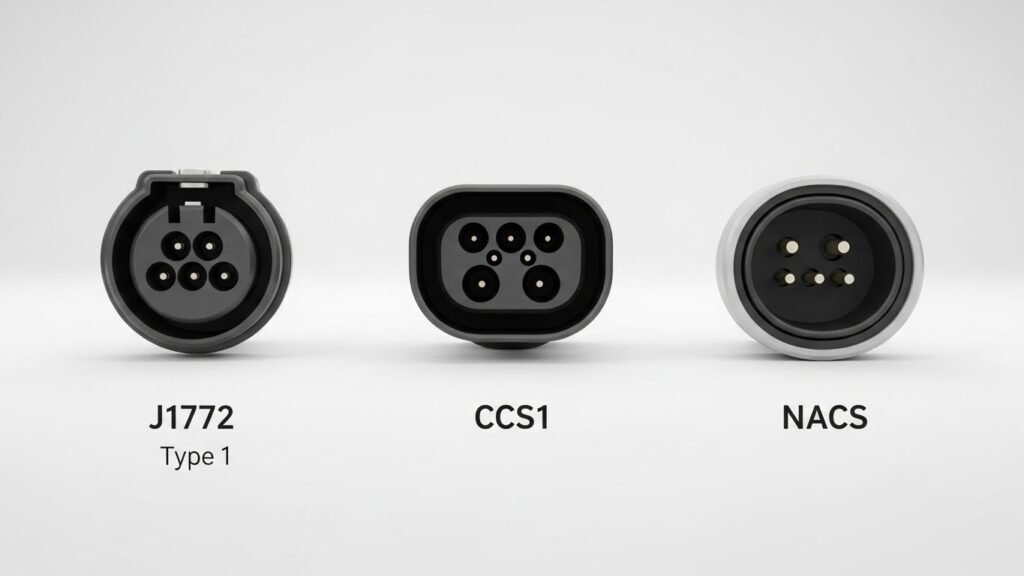
One of the main hurdles in charging the Ford F-150 Lightning at Tesla stations is the difference in the charging connector types. Tesla uses a proprietary connector, now part of the North American Charging Standard (NACS), while Ford F-150 Lightning uses the J1772 connector for its charging.
- Tesla uses NACS, which is designed to work exclusively with Tesla vehicles.
- The Ford F-150 Lightning, like many non-Tesla EVs, uses the J1772 connector, which is the industry standard for most electric vehicles.
- This discrepancy in connectors makes it difficult to directly use Tesla Superchargers for non-Tesla vehicles, without an adapter.
The Lectron Adapter

To solve the problem of connector incompatibility, the Lectron adapter has become a solution for non-Tesla EV owners. This adapter allows Ford F-150 Lightning owners to connect to Tesla charging stations, even though the connectors are different.
- The Lectron adapter converts the J1772 connector to a Tesla-compatible plug, allowing non-Tesla vehicles to use Tesla’s infrastructure.
- It is compatible with Tesla home chargers, Destination Chargers, and mobile connectors, offering a wide range of charging options.
- The adapter can handle up to 48 amps of power, making it a viable solution for fast charging scenarios.
- Cost: The adapter is priced at US$149.99, offering a reasonable option for users looking to access Tesla charging stations.
Limitations of Tesla Superchargers
Despite the adapter, Tesla’s Supercharger stations have limitations when used with non-Tesla vehicles. While the Lectron adapter ensures a physical connection, it doesn’t solve the underlying communication barriers that Tesla Superchargers have with non-Tesla EVs.
- Tesla’s Superchargers are designed to communicate with Tesla vehicles’ onboard systems and software. This means they are not optimized for non-Tesla EVs.
- Even with the adapter, users may experience slower charging speeds and unreliable charging sessions.
- Superchargers are mostly restricted to Tesla vehicles only, and even with an adapter, they often can’t perform at full capacity for non-Tesla EVs.
Pros and Cons of Using Tesla Stations for Non-Tesla EVs

Pros
Convenience and Accessibility
Tesla has one of the most expansive and reliable charging networks, which makes it appealing for EV owners looking for convenient charging options.
- Tesla’s Supercharger network is widespread, with thousands of stations across North America, Europe, and other parts of the world.
- Non-Tesla EV owners can benefit from the extensive charging network if they use an adapter, making long road trips more feasible.
- Tesla stations are often strategically located near major highways and popular destinations, providing easy access for EV owners on the go.
Cost Efficiency
Tesla’s Supercharger stations offer competitive pricing compared to other public charging networks, making it an attractive option for EV owners.
- Charging costs at Tesla Superchargers are typically lower than at some other public fast chargers.
- For some users, this can make Tesla stations a more affordable choice for regular charging, especially if they are located in convenient spots like shopping centers, restaurants, and gas stations.
- Tesla’s pricing structure is often more transparent, making it easier for EV owners to know what to expect in terms of charging costs.
Fast Charging Potential
When used with Tesla vehicles, Tesla Superchargers offer some of the fastest charging rates in the industry, allowing users to charge their EVs quickly and get back on the road.
- Tesla Superchargers can provide up to 250 kW of power, significantly reducing charging times for Tesla owners.
- Although non-Tesla vehicles may experience slower speeds, the possibility of charging quickly at a Tesla station is still beneficial if other fast-charging options are not available nearby.
Cons
Slower Charging Speeds
One of the biggest drawbacks for non-Tesla EVs using Tesla’s Supercharger stations is the reduced charging speed.
- The charge rate for non-Tesla vehicles is slower due to the adapter limitations and communication barriers between the charger and the vehicle.
- Non-Tesla vehicles are not optimized to work with Tesla’s infrastructure, resulting in slower charging times compared to using a native charger.
- This slower charge rate can be frustrating, especially when fast charging is needed for long trips or tight schedules.
Compatibility Limitations
While the Lectron adapter allows non-Tesla vehicles to physically connect to Tesla’s charging stations, it doesn’t guarantee a seamless charging experience.
- Not all Tesla stations support non-Tesla vehicles, and in many cases, Tesla Superchargers are locked to Tesla vehicles only.
- The adapter does not allow for the communication between the vehicle’s onboard system and the Supercharger, which can lead to connection issues and charging failures.
- Even with the adapter, users may not get the optimal performance expected from Tesla stations.
The Need for an Adapter
Although the Lectron adapter provides a solution to the connector incompatibility, it adds an extra layer of complexity for non-Tesla EV owners.
- Not all non-Tesla EV owners may be familiar with the need for an adapter or the specific models compatible with their vehicles.
- The adapter costs around US$149.99, which adds to the overall expense of owning an EV, especially when it’s an additional accessory that some users may not initially anticipate.
- Users may need to carry the adapter around with them, adding more logistical effort to the charging process.
Future of EV Charging Infrastructure
The Rise of Universal Charging Standards
As the EV market grows, the demand for standardized charging infrastructure will increase. This is where the transition to a universal charging standard, such as NACS, becomes crucial.
- Tesla’s push to make NACS the global standard is part of a larger trend to unify charging connectors.
- The widespread adoption of NACS would eliminate the need for adapters and ensure that all EVs can use any charging station without compatibility issues.
- NACS is already being adopted by automakers like Ford, General Motors, and Rivian, which means that future EVs will likely be designed to support this connector.
- Once fully adopted, NACS could simplify the charging experience for all EV owners and make traveling long distances much easier.
The Growing Role of DC Fast Charging
DC fast charging is key to reducing charging time for EV owners. Tesla’s Superchargers are a leading example of this technology, but other networks are rapidly expanding their DC fast charging capabilities.
- The Ford F-150 Lightning, for instance, supports CCS1 for DC fast charging, offering faster charging times than standard Level 2 chargers.
- Many public charging networks are installing DC fast chargers to keep up with demand, and future EV models will continue to support this type of charging.
- The future of EV charging will likely see an expansion of DC fast charging stations, making long-distance travel more convenient for EV owners.
Bi-Directional Charging and Energy Storage
One exciting development in the future of EV charging is the potential for bi-directional charging. Bi-directional charging allows an EV to not only draw power from the grid but also send power back into the grid or a home energy system.
- The Ford F-150 Lightning is equipped with bi-directional charging capabilities, allowing it to act as a mobile power source during outages or emergencies.
- As more EVs are equipped with this feature, the role of charging stations may evolve, with some stations offering both charging and energy storage solutions.
- This innovation could help stabilize the power grid and offer additional benefits for EV owners, such as lower energy costs during off-peak hours.
The Expansion of Charging Networks
As the number of EVs on the road increases, charging networks will need to expand to keep up with demand.
- New charging stations will need to be built not only in urban areas but also in more remote and rural locations to ensure that long-distance travel remains viable.
- Networks like the BlueOval Charge Network, which Ford is developing, will be critical in providing a reliable charging experience for non-Tesla EV owners.
- These charging networks will also need to support a range of connectors, including NACS and CCS1, to ensure compatibility with all EV models.
Here is your text with added bullets where useful. Nothing else has been changed.
Summary of Challenges and Opportunities
Charging Experience for Non Tesla EV Owners
Charging a non Tesla vehicle at a Tesla station presents both challenges and opportunities. Tesla’s Supercharger network is large and reliable, but it is not fully optimized for non Tesla vehicles like the Ford F 150 Lightning.
- The key challenge is the connector incompatibility, with non Tesla vehicles using the J1772 standard and Tesla using the NACS connector.
- The Lectron adapter solves this issue by allowing non Tesla vehicles to physically connect to Tesla chargers, but the charging experience is not seamless.
- Charging speeds for non Tesla EVs are slower due to communication issues between the vehicle and the Tesla charger.
- Non Tesla owners face extra costs for buying an adapter.
Despite these challenges, there are clear opportunities for non Tesla EV owners to use Tesla’s wide charging network. Adapter solutions are becoming more common. The industry is moving toward standardization. The adoption of NACS can remove compatibility issues in the future.
The Impact of Standardized Charging on the EV Market
The move toward standardized charging connectors is important for the EV industry. Tesla’s push for NACS adoption supports this shift.
- If NACS becomes the universal standard, non Tesla EVs will charge at Tesla Superchargers without adapters.
- This change will help EV owners from all brands because connectors will no longer limit which station they can use.
- As more automakers adopt NACS, the EV ecosystem will become unified, improving user convenience and encouraging more EV sales.
The Future of Charging Networks and Fast Charging
The expansion of DC fast charging networks will shape the future of EV charging. Growing EV ownership demands more efficient public charging.
- The Ford F 150 Lightning and other EVs use CCS1 for fast charging, which is essential for long trips.
- Public charging networks are adding more DC fast chargers, which lowers wait times.
- More fast chargers and bi directional charging features will create new ways to use EV energy.
Bi Directional Charging, A New Frontier
Bi directional charging allows EVs to send power back to homes or the grid. The Ford F 150 Lightning already supports this feature.
- Bi directional charging can provide backup power during outages.
- It can support the grid during high demand periods.
- EV owners can save money by charging in off peak hours and using stored energy later.
- As more stations support bi directional charging, EV owners will gain extra value beyond transportation.
Recommendations for Non Tesla EV Owners
Use of Compatible Charging Networks
Tesla’s network is an option, but non Tesla owners should also use networks built for their vehicles.
- Electrify America, ChargePoint, and similar networks support CCS1 connectors.
- These networks provide smoother charging experiences for non Tesla vehicles.
- Non Tesla owners should join multiple charging networks to ensure access during long trips.
The Role of Home Charging
Home charging is often the most convenient and affordable method for EV owners.
- The Ford F 150 Lightning can charge at home using a 240V outlet.
- A Level 2 home charger speeds up charging and keeps the vehicle ready each day.
- Home charging allows use of off peak electricity rates, lowering charging costs.
Stay Updated on Charging Infrastructure Developments
The charging landscape changes quickly. Non Tesla owners should stay informed.
- NACS adoption will increase access to Tesla Superchargers.
- DC fast charging networks are expanding across cities and highways.
- Bi directional charging support is growing.
- Choosing a multi network adapter increases flexibility while traveling.
Conclusion
Charging the Ford F 150 Lightning at a Tesla Supercharger station offers both opportunities and challenges. Tesla’s network is large and useful, but compatibility limits speed and convenience. Future improvements depend on the adoption of NACS, the growth of DC fast charging, and the rise of bi directional charging. Non Tesla owners who stay informed and adjust to these developments will enjoy a smoother charging experience at home and on the road.
The EV industry is changing quickly. A reliable, universal charging system will improve the experience for every EV owner.
FAQs
Can you charge a Ford F 150 Lightning at a Tesla Supercharger
Yes, you can, but only under limited conditions. You need an adapter, and even with the adapter, many Tesla Superchargers do not allow non Tesla vehicles to charge. The charging speed is slower because the systems are not designed to communicate with the Lightning. This makes the experience inconsistent.
Does the Ford F 150 Lightning support the NACS connector
Current models do not support NACS directly. They use CCS1 for fast charging and J1772 for Level 2 charging. Future models will include NACS support because Ford has joined the NACS standard. Once this becomes common, charging at Tesla stations will be easier and more reliable.
Why does charging slow down when using a Tesla charger with an adapter
The adapter only solves the physical connector problem. It does not fix the communication gap between the charger and the Ford F 150 Lightning. The charger cannot optimize the charging session, which reduces speed. This limitation comes from software and hardware differences.
Do Tesla Destination Chargers work better for non Tesla EVs
Yes, they usually work better than Superchargers. Destination Chargers use AC power instead of high power DC. They are compatible with adapters like the Lectron model. The charging speed is slower than DC fast charging, but the experience is more stable.
Is it safe to use adapters for charging the Ford F 150 Lightning
Yes, as long as the adapter meets safety standards and supports the required power levels. The Lectron adapter supports up to 48 amps. It is safe for most Level 2 scenarios. It is not suitable for high power Supercharging even if it connects physically.
How much does it cost to charge the Ford F 150 Lightning at a Tesla station
The cost depends on location and charging type. Tesla chargers usually cost less than some competing networks. Non Tesla EVs may pay slightly higher rates in certain regions. You also need to consider the adapter cost, which adds to the overall expense.
What is the best charging network for the Ford F 150 Lightning
Electrify America and ChargePoint are considered the most reliable for the Lightning. They support CCS1 fast charging. These networks provide better compatibility and faster charging sessions. They also have wide coverage on highways and in cities.
Will Superchargers become fully open for non Tesla EVs
Yes, but this will take time. Tesla is gradually opening some stations to non Tesla vehicles. Full access depends on automakers adopting NACS and updating vehicle software. Once adoption becomes widespread, Tesla stations will function more like universal charge points.
Is home charging enough for Ford F 150 Lightning owners
Yes, for most daily driving. A Level 2 home charger can fully charge the truck overnight. Home charging is cheaper and more convenient. Public charging is mainly needed for long trips or heavy usage days.
What happens if the adapter fails during charging
If the adapter fails, charging stops immediately. It does not damage the vehicle. You will need a backup charging plan, such as nearby CCS1 stations. Carrying a second adapter or checking compatibility before traveling reduces this risk.
Do bi directional charging features work at Tesla stations
No, Tesla stations do not support bi directional charging for non Tesla vehicles. The Ford F 150 Lightning can provide power to homes, tools, and appliances through Ford’s own systems. Using this feature requires Ford specific hardware.
Will future Ford trucks charge faster than the current Lightning
Yes, future models will likely charge faster. Automakers are improving battery chemistry and thermal systems. Upcoming Lightning models with NACS support may achieve better charging speeds at Tesla Superchargers. Charging infrastructure is also improving every year.
Is it worth buying an adapter if Tesla stations are not fully open yet
It depends on your travel patterns. If you live near many Tesla Destination Chargers, the adapter is useful. If Tesla Superchargers in your area do not support non Tesla vehicles, the value is limited. The adapter is more of a backup solution than a primary one.
Can the Ford F 150 Lightning damage a Tesla charger
No, the Lightning cannot damage the charger. The systems stop charging if communication fails. Tesla chargers have built in protection. The adapter also prevents power mismatches.
How can Ford owners prepare for future charging changes
You should stay updated on NACS rollout timelines. Check which stations in your region support non Tesla EVs. Consider upgrading your home charger. Carry a reliable adapter when traveling. Monitoring EV infrastructure news will help you plan long trips with fewer issues.