 Skip to content
Hearing a weird sound when you hit the gas is a real bummer. It usually means your ride is trying to tell you something is wrong. A car should be pretty quiet when you are driving normally. If you start hearing a high-pitched squeal or a deep rumble, you need to pay attention. These sounds are not just annoying. They can be signs of big trouble that might leave you stranded.
Knowing why your car makes noise when accelerating helps you fix the problem fast. You might save a ton of cash by catching a small leak before it ruins your whole engine. Some of these issues are super easy to fix at home. Others will definitely need a pro mechanic to take a look under the hood. Either way, you should never ignore a new sound that pops up.
Understanding Abnormal Acceleration Noises
The first step in fixing your car is knowing what a healthy car sounds like. Most modern cars have a steady, low hum when the engine is running. If you hear anything that breaks that pattern, it is time to investigate. You should get to know the “voice” of your car during your daily commute. This helps you spot a problem the second it starts.
The Baseline Test
A baseline test is just a fancy way of saying you should listen to your car. Pay attention to how the engine sounds when you first start it up in the morning. Notice the sound it makes when you are cruising on the highway or sitting at a red light. If a new clicking or whining sound starts, compare it to your mental baseline. If it sounds different, it is likely a sign of a real problem.
Excessive Volume
Sometimes the problem is not a new sound, but just how loud the old sound has become. Any car that seems excessively loud during acceleration indicates an underlying issue. You might notice you have to turn up the radio just to hear your music over the engine. This usually means something is leaking or a part is rubbing where it should not. Loud noises are your car’s way of screaming for help.
The Importance of Early Diagnosis
Ignoring a small sound today can lead to a huge repair bill next month. Finding the source of the noise early prevents catastrophic mechanical failure. For example, a tiny belt squeal could lead to your engine overheating if the belt snaps. Catching these issues early also keeps your car much safer for you and your family. It is always better to be safe than sorry when it comes to your vehicle.
Acoustic Localization
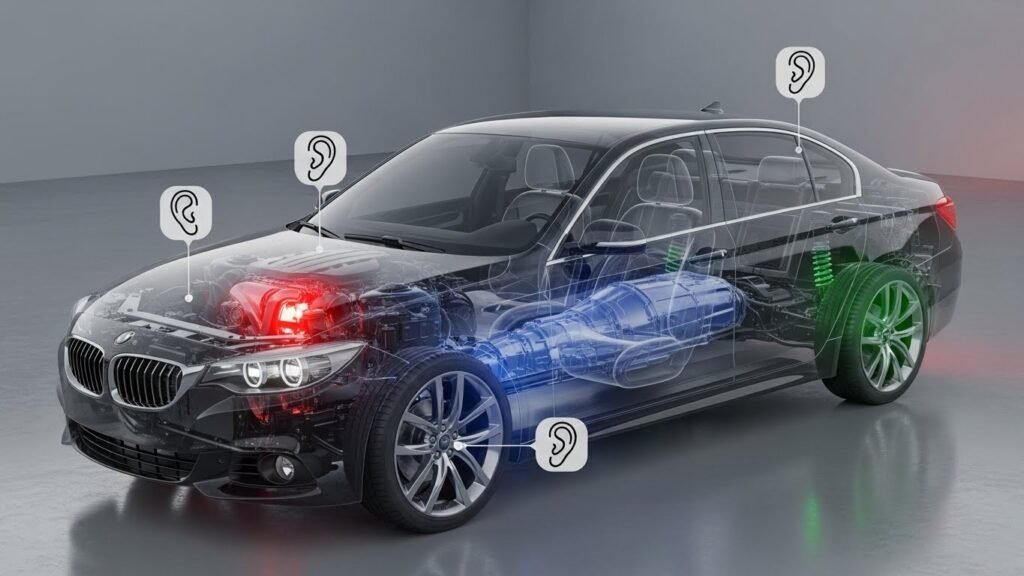
To fix the noise, you first have to find out exactly where it is coming from. Open your windows and listen to see if the sound is coming from the front or back. If the noise is coming from the engine bay, it might be a belt or a pump. If you hear it under the floorboards, it could be an exhaust leak or a transmission issue. Sounds from the rear usually point toward the differential or the wheels.
Common Belt and Pulley Issues

Belts are the unsung heroes of your engine because they power so many parts. They are made of rubber, which means they eventually wear out and get dry. When a belt gets old, it starts to slip on the metal pulleys. This creates a sound that most people recognize instantly. If your car makes noise when accelerating, a belt is one of the most common culprits.
Squealing or Screeching Sounds
A high-pitched squeal is the classic sound of a bad belt. It usually happens because the rubber has become glazed or hard over time. When you step on the gas, the engine spins faster, and the belt tries to keep up. If it cannot grip the pulley, it slides and makes that terrible screeching sound. It is a very distinct noise that is hard to miss.
The Serpentine Belt
The serpentine belt is a long, winding belt that runs almost everything on the front of your engine. It powers your alternator, your power steering pump, and your air conditioning compressor.
- Function: It transfers power from the crankshaft to all the accessories that keep your car running.
- Signs of Wear: Look for visible cracks, fraying, or missing chunks of rubber on the ribbed side.
- Impact of Acceleration: Higher RPMs make the belt spin faster, which increases the chance of it slipping and making noise.
Pulley and Tensioner Failure
Sometimes the belt is fine, but the part holding it is broken. Pulleys have bearings inside that allow them to spin smoothly at high speeds. If these bearings get dirty or wear out, they will start to whine or chirp. A bad tensioner might not keep the belt tight enough, which also leads to noise. You can usually tell a pulley is bad if the noise stays the same even after a new belt.
Timing Belt vs. Serpentine Belt
It is important to know which belt is making the noise because one is way more dangerous. A serpentine belt is on the outside and is easy to see. A timing belt is hidden behind a cover and keeps the engine’s internal parts in sync. If a serpentine belt breaks, you lose your A/C or power steering. If a timing belt breaks, your engine could be totally destroyed in a split second.
Belt Maintenance
The good news is that belt issues are usually pretty cheap to fix. You should check your belts every time you get your oil changed.
- Simple Fixes: Sometimes you just need to tighten a loose bolt to stop a squeak.
- Adjusting Tension: Some cars have a manual adjustment that lets you pull the belt tighter.
- Full Replacement: If the belt is cracked or old, just buy a new one to be safe.
Exhaust System Complications
Your exhaust system does more than just move smoke to the back of the car. It also muffles the sound of thousands of tiny explosions happening in your engine. If there is a hole in this system, your car will sound like a race car, but in a bad way. Exhaust noises get much louder when you accelerate because the engine is pushing out more gas.
Rumbling, Roaring, or Loud Drifting Sounds
A deep rumble or a loud roar is a classic sign of an exhaust leak. You might feel a vibration under your feet along with the noise. This happens because the exhaust gases are escaping through a hole before they reach the muffler. It can make a normal sedan sound like a giant truck. This noise will almost always get louder the harder you push the gas pedal.
Identifying the Source of the Leak

Exhaust systems have many parts, and any one of them can fail.
- Mufflers and Resonators: These are the big metal cans at the back that quiet the noise.
- Catalytic Converters: These clean the exhaust but can rattle if the insides break apart.
- Exhaust Manifolds and Headers: These are bolted to the engine and often make a ticking sound if they leak.
- Heat Shields: These thin metal plates protect your car from heat but can rattle like crazy if they get loose.
The Role of Exhaust Gases
When you accelerate, your engine burns more fuel to give you more power. This creates a much larger volume of exhaust gases that need to leave the engine. If there is a leak, this extra pressure forces the gas out of the hole even faster. This is why a tiny leak might be silent at a red light but very loud on the highway.
The Danger of Carbon Monoxide
An exhaust leak is not just a noise problem; it is a safety problem. Exhaust fumes contain carbon monoxide, which is a gas you cannot see or smell. If you have a leak under the car, these fumes can get sucked into the cabin through the vents. This can make you sleepy or even kill you if you are in the car too long. Always fix an exhaust leak as soon as you find it.
Drivetrain and Transmission Troubleshooting
The drivetrain is the system that takes power from the engine and sends it to the wheels. It involves the transmission, the driveshaft, and the axles. Because these parts are always spinning and moving, they can make a lot of noise if they wear out. If your car makes noise when accelerating, the transmission is one of the most expensive things to check.
Grinding, Clunking, and Whining
These are the three main sounds of a drivetrain that is failing. A grinding sound usually means metal parts are rubbing together without enough oil. A clunking sound might happen when you shift gears or start moving from a stop. Whining is very common when a transmission is low on fluid or has a bad bearing. None of these sounds should ever be ignored.
Automatic and Manual Transmission Issues

The transmission is the heart of your car’s drivetrain.
- Fluid Quality: Low or dirty transmission fluid is the number one cause of whining noises.
- Internal Wear: Over time, the gears and bearings inside the transmission can simply wear out.
- Shifting Symptoms: Watch for rough shifts or a car that “hunts” for the right gear while making noise.
Differential and Axle Problems
The differential is the part that allows your wheels to spin at different speeds when you turn.
- Differential Fluid: If the fluid gets old, the gears will howl or whine during acceleration.
- Driveshafts and Transfer Cases: These long metal shafts can vibrate or clunk if they become unbalanced.
- CV Joint Failure: If you hear a clicking sound while turning and accelerating, your CV axles are likely bad.
Engine Component Failures

The engine is full of moving parts like valves, pistons, and bearings. All of these parts need a constant supply of oil to stay quiet and cool. If something inside the engine breaks, the noise is usually very rhythmic. It will speed up and slow down perfectly with the speed of the engine.
Ticking, Clicking, and Knocking
A ticking or clicking sound often comes from the top of the engine near the valves. It sounds like a fast-moving sewing machine. A knocking sound is much deeper and usually comes from the bottom of the engine. Knocking is a very bad sign that usually means the engine is about to fail completely. You should pull over immediately if you hear a loud knocking sound.
Valvetrain Issues
Valves open and close thousands of times every minute to let air and fuel into the engine. If they get worn or lose their adjustment, they will start to click. Sometimes this is caused by low oil pressure or dirty oil that cannot reach the top of the engine. Keeping up with your oil changes is the best way to prevent this.
Bearing Failure
Bearings are the smooth surfaces that allow the crankshaft to spin inside the engine. If a bearing fails, it creates a loud screech or a heavy whirring sound. This is often caused by running the engine with too little oil. Once a bearing is gone, the engine usually needs a very expensive rebuild or a full replacement.
Piston Slap and Knocking
Pistons move up and down inside the engine cylinders.
- Piston Slap: This is a rattling sound that happens when a piston wobbles inside the cylinder.
- Engine Knock: This is caused by the fuel-air mixture exploding at the wrong time.
- Pre-ignition: This can be caused by using the wrong grade of gasoline for your car.
Turbocharger and Supercharger Whine
If your car has a turbo, it might make a high-pitched whistling or whining sound. While a little bit of whistle is normal, a loud “dentist drill” sound is a bad sign. It usually means the tiny fans inside the turbo are hitting the sides of the metal housing. This can lead to a total loss of power and a very smoky exhaust.
The Charging System
The alternator is the part that keeps your battery charged while you drive.
- Alternator Failure: Failing bearings inside the alternator often create a loud whining noise.
- Electrical Symptoms: You might see dim headlights or a battery warning light on your dashboard.
- Whirring Noise: The noise will get higher in pitch as you rev the engine and the alternator spins faster.
Steering and Suspension Related Noises
Your steering and suspension systems help you stay in control on the road. Because these parts move when you turn or hit bumps, they are prone to making noise. Some of these noises only happen when you are accelerating and turning at the same time.
Whining and Groaning During Maneuvers
If your car groans when you turn the wheel, you likely have a power steering issue.
- Power Steering Pump: The pump can whine if it is struggling to move fluid through the system.
- Fluid Levels: Low fluid or air bubbles in the lines will make the pump very noisy.
- Acceleration Pitch: The whining will often get louder or change pitch as you accelerate and steer.
Wheel Bearings and Tires
Wheel bearings allow your wheels to spin with almost no friction.
- Wheel Bearing Howl: A bad bearing makes a constant humming or howling sound.
- Increasing Speed: The noise gets louder the faster the car moves, even if you let off the gas.
- Vibrations: You might feel a shaking in the steering wheel if the bearing is really bad.
Suspension Stress Noises
When you accelerate hard, the front of the car lifts up and the back “squats” down. This puts a lot of stress on your springs and shocks. If your suspension is old, you might hear a creaking or groaning sound during this movement. This usually means your bushings are dry or your struts are starting to leak.
Make and Model Specific Tendencies
Not all cars are built the same way, so some have specific noise problems. Some brands are known for having certain parts wear out faster than others. Knowing these trends can help you narrow down the search for your noise.
Honda
Hondas are great cars, but they are known for having exhaust issues as they get older. Specifically, the exhaust manifolds can crack, leading to a ticking sound during acceleration. They also tend to have more exhaust leaks than some other brands after ten or fifteen years on the road.
Subaru
Subarus use a special engine called a “Boxer” engine where the pistons move side-to-side. Because of this design, they are more likely to have “piston slap” noises. This usually sounds like a light knocking when the engine is cold and often goes away once it warms up.
General Trends
Front-wheel drive (FWD) cars are more likely to have CV joint clicking noises. All-wheel drive (AWD) cars have more complex drivetrains, which means more gears that can whine. Heavier vehicles like trucks and SUVs often put more stress on their wheel bearings and universal joints.
Diagnosing Noises by Sound Type

If you are trying to figure out what is wrong, use this quick guide to match the sound to the problem.
| Sound Type | Potential Cause | Urgency |
| Squealing | Serpentine Belt or Pulley | Medium |
| Rumbling | Exhaust Leak or Muffler | Medium |
| Knocking | Internal Engine Damage | High |
| Clicking | Valves or CV Joints | Medium |
| Whining | Transmission or Alternator | High |
| Grinding | Brakes or Transmission | High |
Popping or Backfiring: Usually caused by a bad fuel mixture or old spark plugs.- Hissing: Often a sign of a cooling system leak or a vacuum leak.
- Whistling: Likely a turbocharger issue or a leak in the air intake.
- Chirping: Usually the very beginning of a belt or pulley failure.
- Metal-on-Metal Scraping: Can be caused by worn-out brake pads or a bent dust shield rubbing the wheel.
The Role of Modern Car Electronics
Modern cars use a lot of computers and sensors to keep things running smoothly. Sometimes the noise you hear is actually coming from the car’s computer system.
Active Sound Enhancement
Some new cars actually play fake engine noises through the speakers to make the car sound faster. If there is a glitch in the audio system, this can create weird humming or buzzing sounds. If you can turn off your “sport mode” and the noise goes away, it might just be the speakers.
Sensors and Error Codes
Your car’s computer is always watching for problems. If a part starts to fail and make noise, the computer will often turn on the Check Engine light. A mechanic can plug in a tool to see exactly which sensor is complaining. This is a huge help in finding out why a car makes noise when accelerating.
Safety and Risks of Ignoring Acceleration Noises

It is very tempting to just turn up the radio and ignore a weird sound. However, this is one of the most dangerous things you can do as a driver.
The Risk of Stalling
A noise is a warning that a part is about to fail. If that part is your fuel pump or your alternator, your car could just die in the middle of a busy highway. Stalling in traffic is incredibly dangerous for you and everyone around you. A car that is making a strange noise is not a reliable car.
Safety Hazard Assessment
You need to decide if your car is safe to drive right now. If the noise is a light chirp, you can probably drive it to a shop. If the noise is a loud grinding or a deep knock, you should probably call a tow truck. Driving a car with a major mechanical failure can lead to an accident.
Roadside Breakdowns
Breaking down on the side of the road is never fun and always expensive. You will have to pay for a tow truck on top of the cost of the repair. Plus, you might be stuck in the heat or the cold for hours waiting for help. Fixing the noise before it leads to a breakdown is always the smarter choice.
Repair Solutions and Maintenance Strategies
Once you find the noise, it is time to get your hands dirty or get your wallet ready.
Simple Fixes
Some noises can be fixed with just a few dollars and a little time.
- Cleaning Fuel Systems: A bottle of fuel injector cleaner can sometimes stop a popping noise.
- Replacing Air Filters: A dirty filter can cause the engine to whistle or struggle.
- Topping Off Fluids: Adding power steering or transmission fluid can stop a whine instantly.
Intermediate Repairs
These are jobs that a handy person can do in their driveway with basic tools.
- Belt Replacements: Swapping a serpentine belt is usually a one-hour job.
- Exhaust Welding: A small hole in a pipe can sometimes be patched with special tape or a small weld.
- Sensor Updates: Replacing a bad spark plug or an oxygen sensor is a common DIY task.
Major Overhauls
For big problems, you might need a professional shop to step in.
- Quality Used Parts: To save money on an engine or transmission, look for quality used parts.
- Expert Diagnostics: Pros have special microphones and scanners to find noises that are hidden deep inside the car.
Predictive Maintenance
The best way to deal with car noise is to never hear it in the first place. Follow the maintenance schedule in your owner’s manual. Change your oil on time and replace your belts before they start to crack. Taking care of your car prevents the wear and tear that leads to these annoying sounds.
Safety Assessment: Tow Truck vs. Drive to Shop
When your car starts making strange noises during acceleration, you need to decide if it is safe to keep moving. Driving a car with a major mechanical failure can lead to a dangerous accident or a total engine breakdown. Use the following guide to help you decide when to pull over and call for help.
When to Call a Tow Truck (Do Not Drive)
If you hear these sounds, your car is at high risk of a “catastrophic mechanical failure” that could leave you stranded in a dangerous spot.
- Deep Metal Knocking: This is a high-urgency sign of internal engine damage. Pull over immediately to avoid destroying the engine completely.
- Heavy Grinding: This often means metal parts are rubbing together without any oil. It is a high-urgency issue that can cause a wheel or transmission to seize up.
- Loud “Dentist Drill” Whine: A very loud whistling or whining from the turbocharger means the internal fans are hitting metal. This can lead to a total loss of power and a smoky exhaust.
- Sudden Loss of Power Steering: If a belt snaps, you may find it very hard to turn the wheel. This is a major safety hazard in traffic.
When It Is Safe to Drive (With Caution)
If the noise is light and the car still feels stable, you can likely drive it directly to a repair shop.
- Light Squealing or Chirping: This is usually the beginning of a belt or pulley failure. While annoying, it is typically a medium-urgency repair.
- Exhaust Rumbling: A hole in the muffler or exhaust pipe makes the car loud but usually does not stop it from driving. However, fix it fast to avoid breathing in carbon monoxide.
- Clicking While Turning: This indicates a CV joint failure. It is a medium-urgency issue, but you should avoid hard turns until it is fixed.
- Rattling Heat Shields: A loose heat shield is a nuisance but is not a safety hazard.
Critical Warning Signs
Regardless of the sound, you should stop driving if you notice any of these accompanying symptoms:
- Dashboard Warning Lights: If the Check Engine or Battery light comes on with the noise, the computer has found a serious fault.
- Strange Odors: If you smell burning or see exhaust fumes entering the cabin, pull over immediately.
- Stalling: If the car dies or struggles to stay running, it is no longer a reliable vehicle and is unsafe for the road.
Fixing the noise before it leads to a full breakdown on the side of the road is always the smarter and cheaper choice.
Vehicle Noise Maintenance Checklist
Use this checklist to inspect your vehicle regularly and prevent the common issues that lead to loud acceleration noises. Catching these signs early can save you from expensive repairs and keep your car running quietly.
Monthly Visual Inspection
- Serpentine Belt Condition: Check for visible cracks, fraying, or missing chunks of rubber.
- Fluid Levels: Ensure power steering, transmission, and engine oil levels are topped off to prevent whining or grinding.
- Exhaust System: Look under the car for heavy rust, holes, or loose metal heat shields that could cause rumbling or rattling.
- Tires: Inspect for uneven wear patterns, which can indicate failing wheel bearings.
Listening & Driving Tests
- The Baseline Test: Listen to your car’s “voice” during your commute to spot any new clicks, whines, or hums.
- Turning Test: Listen for clicking sounds while turning and accelerating, which indicates CV joint failure.
- Cold Start Test: Note if “piston slap” or knocking occurs when the engine is cold, particularly in Subaru models.
- Electronic Check: Switch off “Sport Mode” to see if abnormal engine noises are actually glitches in the car’s audio system.
Scheduled Maintenance (Refer to Owner’s Manual)
- Oil Changes: Stay current with oil changes to keep the valvetrain and bearings lubricated and quiet.
- Belt Replacement: Replace the serpentine or timing belt based on mileage intervals before they start to slip or snap.
- Filter Replacement: Change dirty air filters to prevent whistling or struggling engine noises.
- Fuel System Care: Occasionally use fuel injector cleaner to prevent popping or backfiring from a bad fuel mixture.
Warning Signs: When to Call a Pro
- Urgency – High: If you hear deep metal knocking, heavy grinding, or loud whining from the transmission.
- Dashboard Lights: If the Check Engine light or Battery warning light accompanies a new noise.
- Odor: If you smell burning or exhaust fumes inside the cabin while driving.
Taking Control of Your Vehicle’s Health
Hearing an unusual noise during acceleration is your car’s way of communicating that a component requires your attention. While it can be stressful to hear a new squeal, thump, or whine, identifying these sounds early is the most effective way to protect your wallet and your safety. By using your ears to locate the source and matching the sound to the common issues discussed in this guide, you can determine whether you are facing a simple DIY fix or a task for a professional mechanic.
- Listen carefully to your car’s “voice” during your daily commute to establish a mental baseline.
- Never ignore a new sound, as small issues like a belt squeal can quickly escalate into engine failure.
- Prioritize safety by addressing exhaust leaks or knocking sounds immediately to avoid dangerous stalls or carbon monoxide exposure.
- Stay proactive with predictive maintenance to prevent these annoying and costly sounds from developing in the first place.
A well-maintained car is a quiet and reliable car. Taking action today ensures that your vehicle remains a safe mode of transportation for you and your family for many miles to come.
Frequently Asked Questions
Is it normal for my car to be louder when it is cold?
A little bit of extra noise is normal because the oil is thick. However, if the noise is a loud knock or a sharp squeal, it is a problem that needs fixing.
Can a bad tire make a noise that sounds like an engine problem?
Yes, a bad wheel bearing or an unbalanced tire can make a humming sound that gets louder as you speed up. This can often be mistaken for an engine or transmission whine.
How much does it cost to fix a whining transmission?
If the system just needs fresh fluid, it might cost fifty dollars. If the internal gears or bearings are broken, it could cost several thousand dollars to repair or replace.
Can I drive with a squealing belt?
You can drive a short distance, but the belt could snap at any time. If it snaps, you will lose your power steering and your battery will stop charging.
Why does my car whistle when I step on the gas?
This is often a sign of a vacuum leak or a problem with your turbocharger. It can also be caused by a dirty air filter that is struggling to let air through.
What does it mean if my car makes a clicking noise only when turning?
This is a classic sign of CV joint failure. The noise happens because the grease inside the protective boot has leaked out, causing metal parts to rub together.
Why do I hear a hissing sound after I turn off the engine?
A hissing sound usually indicates a cooling system leak. It is often the sound of pressurized coolant escaping from a hot hose or the radiator.
Can low engine oil cause a ticking sound?
Yes, valves need a constant supply of oil to stay quiet. If the oil level is low, the top of the engine won’t get enough lubrication, leading to a rhythmic ticking or clicking.
What is the difference between a chirp and a squeal?
A chirp is often the very beginning of a belt or pulley failure. A loud, constant squeal usually means the belt is glazed, old, or has completely lost its grip.
Why does my car sound like a lawnmower when I accelerate?
This usually points to a significant exhaust leak, such as a hole in the manifold or a detached muffler. The engine sounds raw because the exhaust gases are escaping before they can be muffled.
Is a “dentist drill” sound from the engine dangerous?
Yes, a high-pitched “dentist drill” sound often indicates a failing turbocharger. This means the internal fans are hitting the metal housing, which can lead to total power loss.
Why does my car vibrate when it makes a rumbling noise?
Vibrations along with rumbling often mean exhaust gases are escaping under the floorboards. It can also be caused by an unbalanced driveshaft or failing universal joints.
Can a loose spark plug make a noise?
Yes, a loose spark plug can cause a popping or “puffing” sound as air and fuel escape the cylinder. It can also lead to engine misfires and a lack of power during acceleration.
What causes a metal-on-metal scraping noise?
This is frequently caused by worn-out brake pads or a bent dust shield rubbing against the wheel. If it happens only during acceleration, something may be shifting and touching a spinning part.
Why does my car groan when I turn the steering wheel?
A groaning noise is typically a power steering issue. It usually means the pump is struggling due to low fluid or air bubbles trapped in the lines.
What is piston slap?
Piston slap is a rattling sound caused by a piston wobbling inside the cylinder. It is more common in certain engine designs, like the Subaru Boxer engine, especially when cold.
Why does my car make a loud “bang” when I accelerate?
A loud bang is usually an engine backfire. This happens when unburned fuel ignites in the exhaust system instead of the engine cylinders.
Can a bad alternator make a whining noise?
Yes, failing bearings inside the alternator create a loud whining noise that gets higher in pitch as you rev the engine.
Why do I hear a rattling sound under the car at stoplights?
This is often a loose heat shield. These thin metal plates can vibrate against the exhaust pipe when the engine is at a certain RPM, creating a tinny rattling sound.
What should I do if my car starts knocking?
You should pull over immediately and turn off the engine. Knocking usually indicates internal engine damage that will result in a total breakdown if you keep driving.