 Skip to content
What It Means to Finance a Car
Car financing is a common path to vehicle ownership for most Americans. It means you take out an auto loan from a lender to cover the purchase price of a car. You promise to pay back the loan over time. This repayment happens through monthly installments or fixed monthly payments until you finally own the car. This is much easier than paying the full price upfront.
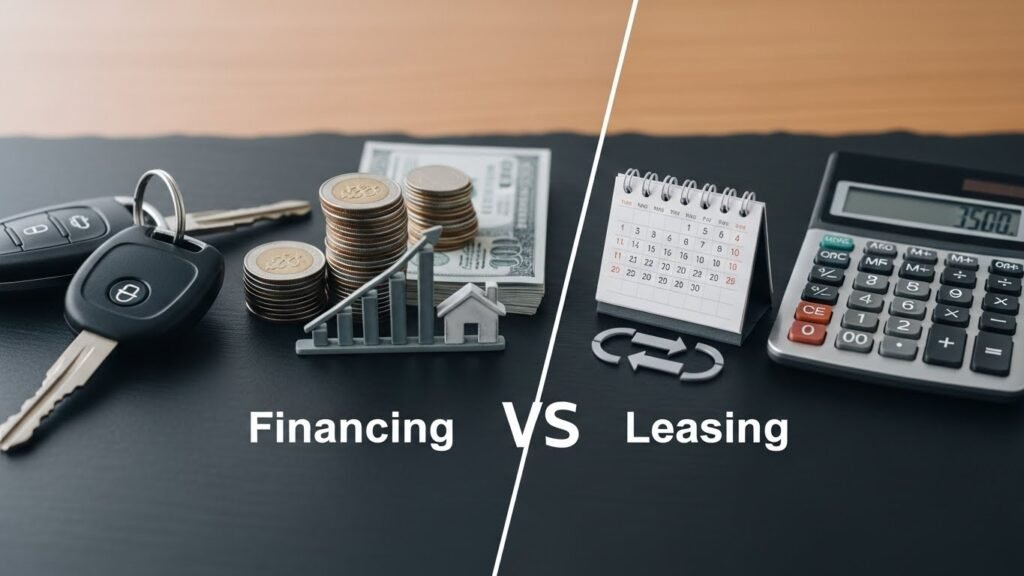
If you are looking to get a new ride, you have a few choices. You can buy a car outright with cash. Alternatively, you can lease it, which is like renting. Or, you can finance it. Choosing the right path depends on your lifestyle and your budget.
The Core Difference: Financing vs. Leasing
Financing and leasing are two very different approaches. Financing is the better choice if your goal is to achieve ownership. You get to keep the vehicle long-term. You won’t mind making slightly higher monthly payments. This option lets you build equity in the asset.
On the other hand, leasing is ideal if you love driving the newest manufacturer models every few years. You make lower monthly payments, but you never actually own the car. Essentially, you are making rentals payments indefinitely.
The Mechanics of Car Financing (Auto Loans)
When you buy a car using financing, the process follows a clear set of steps. First, you usually make a down payment. This is a chunk of cash you pay right away. Then, you secure an auto loan for the remaining balance, which is the rest of the purchase price.
Securing Your Auto Loan
Finding the right loan means looking beyond the dealership. You have three primary avenues for getting an auto loan:
- Dealership Financing: The dealership often works with a network of various lenders. They present you with options. It is important to compare their rates and loan terms.
- Your Bank or Credit Union: If you have a solid credit history, your personal bank or credit union is a great place to start. They can offer competitive interest rates. Always do comparison shopping before you finalize a deal.
- Get a Personal Loan: Sometimes, if you need money quickly, an online third-party lender can offer a personal loan. However, you must carefully compare the loan terms to make sure they fit your budget.
Key Elements That Define Your Loan Terms

An auto loan is a type of installment credit. It is made up of several parts that determine your total cost.
The Down Payment and Principal
The down payment is cash you pay upfront. It reduces the loan amount you need to borrower. The more you put down, the smaller the principal (the amount borrowed). A larger down payment also typically qualifies you for better loan terms.
- For new cars, putting down 20% or more is a smart move. This helps you avoid negative equity early on.
- For used vehicles, a 10% down payment is usually recommended.
Understanding Interest and APR
The interest is the cost of borrowing the money. It’s how the lender makes money. The Annual Percentage Rate (APR) is even more important than the simple interest rates. The APR includes both the interest and any extra fees the lender charges. Comparing the APR between different loan offers helps you see the true cost.
Loan Term and Monthly Payments
The loan term, or length of loan, is the time period you have to pay back the loan. Terms can range from 36 to over 72 months.
- A longer loan term gives you smaller monthly payments. However, you end up paying more in total interest over the life of the loan agreement.
- A shorter loan term means higher monthly payments but you pay significantly less total interest.
Your monthly payments are fixed amounts that pay down both the principal and the interest. Aim for monthly payments that are 10% or less of your take-home income.
Ownership and Risk: Collateral
It is crucial to understand that the vehicle itself acts as collateral for the auto loan. This means the lender has a security interest in the car. If you miss too many monthly installments, the lender has the legal right to take the car back. This is called repossession. You will lose the car and any money you have already paid into it.
The Mechanics of Car Leasing
Leasing a vehicle is essentially a long-term renting agreement. You do not finance the full purchase price. Instead, your monthly payments cover the expected loss in value (depreciation) of the car during the lease term.
The main appeal of a lease is that the monthly payments are usually lower than financing the same car. You get to drive a brand-new car and stay under the manufacturer’s warranty the whole time. However, you are making payments on a car you will never own.
Finding a Lease
Leasing options are available from several sources:
- Dealership Leasing: This is the most common way. You negotiate the loan terms and pay a security deposit. You make monthly payments, and you return the car when the lease term ends.
- Manufacturer Leasing: Sometimes, working directly with the manufacturer can result in better loan terms or special discounts.
- Third-Party Lending: Some lenders specialize in offering rentals to customers who might not qualify through a dealership. Always read the loan agreement and fine print carefully.
This covers the foundational understanding of how financing and leasing work. Now, let’s explore how your credit and financial health affect your ability to get these deals.
Loan Approval Criteria and Process
Before any lender decides to give you an auto loan, they need to assess their risk. They look closely at your financial stability. This process determines not only if you are approved but also what interest rates you will receive.
Factors Affecting Loan Approval and Terms
The lender examines several key areas on your application. These factors help them predict how reliable you will be as a borrower.
- Credit Score: This is the most important factor. It summarizes your credit history. A high score shows you manage debt responsibly.
- Loan Amount: How much money you are asking to buy the vehicle.
- Length of Loan: Shorter loan terms are often seen as less risky than very long ones.
- Debt-to-Income Ratio: This ratio compares your total monthly debt payments to your gross monthly income. A lower ratio is always better.
- Age of the Vehicle: Newer vehicles are typically easier to finance because they hold their value better.
If you get pre-approved for a loan, compare that offer with the in-house financing options at the dealership. You should always look at multiple quotes before you finalize your choice.
Credit Score Requirements for Approval
Your credit score has a huge impact on your loan terms. It determines the Annual Percentage Rate (APR) you qualify for.
- Good Credit: Generally, having a credit score of 661 (VantageScore) or 670 (FICO Score) or higher is considered good. This score bracket qualifies you for the lowest interest rates and the most flexible loan terms. You get more options from the bank or credit union.
- Fair or Poor Credit: If your credit score is low, you can still get an auto loan. However, your choices will be limited. You will likely be offered higher interest rates and tighter restrictions.
Strategies for Financing with Less-Than-Ideal Credit
If you have bad credit, don’t give up hope on buying a car. There are actionable steps you can take to improve your odds and get better loan terms.
First, pull your credit report. Check it for mistakes and look for areas you can improve. If you don’t need the car right away, focus on these steps:
- Bring Past-Due Accounts Current: Pay off any past-due accounts immediately. Payment history is a huge part of your score.
- Pay Down High Credit Card Balances: Lowering your credit card balances reduces your overall debt. This is crucial for improving your score quickly.
- Set Up Autopay: Using autopay helps ensure all future bill payments—including utilities, insurance, rent, streaming services, and cellphones—are made on time.
- Become an Authorized User: Ask a family member with a perfect credit history to add you as an authorized user on their credit card. Their good history might help your credit report.
If you need the vehicle sooner, focus on reducing the lender’s risk.
- Increase Down Payment: Saving for a bigger down payment reduces the loan amount. This lessens the risk for the lender and boosts your approval chances.
- Find a Cosigner: Persuade someone with good credit score to become a cosigner on your loan. Their excellent credit history backs up your ability to repay. Remember, if you miss a payment, they are responsible.
Car Leasing vs. Financing: A Detailed Comparison

Deciding between financing and leasing is often tricky. It comes down to comparing the pros and cons based on your budget and how long you plan to keep the vehicle. Below is a summary of the main differences.
Understanding Depreciation
Depreciation is key to understanding the cost of both options.
- Financing: New cars lose value fast—about 20% in the first year alone. Making a substantial down payment helps protect you from instantly being in negative equity. This means you don’t owe more on the loan than the car is worth.
- Leasing: Your monthly payment is largely based on how much the manufacturer expects the vehicle to depreciate during the lease term. You are only paying for that loss of value.
Managing Life with a Financed or Leased Car
Once you sign the paperwork and take delivery of your vehicle, your financial obligations begin. Whether you finance or lease, you must manage the car throughout the loan term or lease term. This includes dealing with potential repair issues and planning for when you eventually want to move on.
Handling Trade-Ins and Selling
The freedom you have to sell or trade in your car depends on the type of loan agreement you have.
Financial Flexibility with an Auto Loan
If you buy a car with an auto loan, you gain more flexibility over time. You can sell or trade in the car whenever you like once the loan is fully paid off. If you decide to trade in a financed car before the loan term is over, a few scenarios can play out.
- Positive Equity: This is a good spot to be in. Positive equity means your car is worth more than the remaining loan amount you still owe. The dealership pays off your old loan, and the extra cash goes toward the purchase of your new vehicle.
- Negative Equity: This is often called being “upside down.” Negative equity means you owe the lender more than the car is currently worth. You must pay this difference out of pocket. If you can’t, the dealer might roll that remaining debt into your new auto loan. This makes your new monthly payments much higher. It is usually smarter to wait until you reach positive equity before you trade in your car.
Leasing: Limited Trade-In Options
When you lease a car, you don’t own it. This means you cannot simply sell it whenever you choose. You are typically restricted to the terms of the lease agreement. At the end of the lease term, you usually just return the vehicle to the dealership. You might have the option to buy the car if you like it, or you can start a new lease on a different model.
Dealing with End-of-Term Obligations
How you conclude your relationship with the vehicle is very different depending on if you leased or financed.
Finalizing a Financed Vehicle
When you make that final fixed monthly payment on your auto loan, the lender releases the title. You achieve full ownership.
- You no longer have any monthly payments or obligations to the bank or credit union.
- All equity is now yours. You can keep the vehicle and save money, or you can sell it whenever you want.
Finalizing a Leased Vehicle
Returning a leased vehicle requires careful attention to the original loan terms. You must adhere to several restrictions:
- Mileage Limits: Leases always include a strict mileage limit or mileage restriction (e.g., 12,000 miles per year). If you exceed this limit, you face a hefty mileage penalty fee.
- Wear and Tear: You must return the car in acceptable condition. If there is excessive damage or wear beyond what is deemed normal, you may receive a substantial fine or bill for the repairs.
- Termination Fees: If you decide to end the contract early, you will be hit with an early termination fee. These fees are costly and make breaking a lease a bad financial decision.
Insurance Requirements and Costs

When you finance or lease a vehicle, you introduce a lender to the ownership equation. Because the bank, credit union, or manufacturer still holds the title or the majority interest in the car, they require protection for their collateral. This protection comes in the form of mandatory insurance coverage.
Full Coverage is Non-Negotiable
If you buy a car with an auto loan, the lender mandates that you carry full coverage insurance. This is non-negotiable for the duration of the loan term. Full coverage includes both collision and comprehensive coverage. Collision covers damage to your vehicle from an accident, while comprehensive covers damage from things like theft, fire, or weather. If you were only required to carry liability coverage, a total loss of the car would leave the lender holding a worthless loan.
Similarly, if you lease a vehicle, the lender imposes strict insurance requirements. They often demand even higher minimum liability limits than what state law requires. This is designed to reduce the lender’s risk throughout the lease term.
The Impact on Your Budget
The requirement for full coverage insurance directly impacts your budget and total expenses. Full coverage is significantly more expensive than basic liability insurance.
- Financing: Once you make the final monthly payment and own the car outright, you can choose to drop full coverage. This is a great way to save money if you decide to keep the vehicle for several years.
- Leasing: You must maintain the specified, higher level of coverage for the entire lease term. This means your insurance costs remain high until you return the car or buy it.
Taxes and Fees: Hidden Costs of Acquisition
The advertised price of a vehicle is just the starting point. When you buy or lease, various taxes and fees get added to the total cost. Understanding these costs is essential for accurate budgeting.
Understanding Sales Tax Application
The largest fee difference between financing and leasing is how sales tax is calculated.
- Financing: When you finance or buy a car, you pay sales tax on the entire purchase price of the vehicle. This tax is often rolled into the loan amount, so you end up paying interest on the sales tax itself.
- Leasing: When you lease, you are not purchasing the vehicle. You are essentially paying tax only on the portion of the car’s value that you use. Therefore, you pay sales tax only on the monthly payments you make. This makes the upfront expenses much lower for a lease.
Lease-Specific Fees
Leasing contracts include mandatory fees that are unique to the rental structure. You must factor these in when comparing your total cost.
- Acquisition Fee (Capitalization Fee): This is an administrative fee charged by the lender or manufacturer at the start of the lease. It covers the costs of setting up the loan agreement and running the credit report. This fee is usually a few hundred dollars and is often rolled into the total loan amount.
- Disposition Fee: This fee is charged when you return the vehicle at the end of the lease term. It covers the dealership’s cost for cleaning and preparing the car for resale. This is typically $300 to $500.
The Negotiation Process: Securing the Best Deal
Both financing and leasing require smart negotiation skills. Focusing on the right numbers is key to reducing your monthly payments and saving thousands of dollars over the loan term.
Tactics for Negotiating a Purchase
When you buy a car, stick to a three-step negotiation process. Do not let the salesperson rush you or combine these steps.
- Negotiate the Purchase Price: First and foremost, negotiate the purchase price of the vehicle itself. This is the starting point for everything else. Ignore your monthly payments during this step.
- Negotiate the Trade-In Value: Once the purchase price is set, negotiate the value of your old vehicle (if you have one to trade in).
- Finalize the Auto Loan: Only after the price and trade-in are final should you discuss the interest rates and loan terms. Use your loan preapproval from your bank as leverage to secure the lowest APR from the dealership.
Key Numbers to Negotiate on a Lease
Leasing negotiations feel different because you are not setting the final sale price. You need to focus on two core numbers:
- Capitalized Cost: This is the equivalent of the vehicle’s sale price. Negotiating this cost down is the most effective way to lower your monthly payments.
- Residual Value: This is the manufacturer’s predicted value of the car at the end of the lease term. A higher residual value is better for you because it means you are paying for less depreciation. Unfortunately, this value is often set by the manufacturer and is difficult to negotiate.
Refinancing an Existing Auto Loan

Refinancing means replacing your current auto loan with a new one, often from a different bank or credit union. This is a powerful strategy to save money and manage your budget better after you have owned the car for a while.
Why Refinance?
Many borrowers refinance their loan because their financial situation has improved since they first signed the paperwork.
- Lower Interest Rate: If your credit score has significantly improved, you can qualify for a much lower interest rate and APR. This can save you hundreds, even thousands, in interest over the remaining loan term.
- Adjust Monthly Payments: You might want to extend the length of loan to get smaller fixed monthly payments and reduce your current expenses. Conversely, you might shorten the loan term to pay off the debt faster.
- Debt Consolidation: Sometimes, refinancing is part of a larger debt consolidation plan to simplify your financial life.
The Refinancing Process
The process is similar to applying for the original auto loan. You fill out an application with a new lender. They perform a hard inquiry on your credit report. If approved, the new lender pays off your original loan, and you start making payments to the new bank under the new loan terms. Refinancing an existing auto loan is not an option if you are leasing.
Conclusion and Final Considerations
The choice between financing and leasing is one of the biggest financial decisions you will make when acquiring a vehicle. Your final decision should align with your specific goals, income, and tolerance for debt.
- Leasing Summary: This option is best if you prioritize lower upfront security deposit and lower monthly payments. It suits drivers who enjoy constantly having a new car under a manufacturer’s warranty. The downside is that you never build equity.
- Financing Summary: This option is better if your primary goal is building equity and achieving ownership. It allows you to keep the car for a long time, customize it, and drive without a mileage restriction. You must be ready to handle maintenance contracts and higher repair costs once the original warranty expires.
Remember to consider all your expenses and seek expert advice. Consulting a qualified financial advisor can help you review your total budget and choose the option that makes the most sense for your future.
Frequently Asked Questions (FAQs)
Can I include my auto insurance costs directly in my car loan or lease payment?
Generally, no. Your auto loan or lease payment covers the purchase price of the vehicle, interest, and any related administrative fees. Insurance is a separate expense that you must pay directly to the insurance company. The lender only requires proof that you have the mandatory coverage before they finalize the deal.
What is “gap insurance,” and do I need it for financing or leasing?
Gap insurance covers the “gap” between what your car is currently worth (its depreciated value) and the remaining balance on your loan or lease. This is critical if the vehicle is totaled early in the loan term. Since a new car depreciates fast, you often owe more than the insurance company will pay out. Leasing companies usually include gap insurance automatically. If financing, it’s smart to buy it, especially if you made a small down payment.
Is there a penalty for paying off my car loan early?
Sometimes, yes. Some loan agreements have a prepayment penalty clause. This fee compensates the lender for the interest they lose when you pay off the principal sooner than expected. Before you finalize the auto loan, ask the dealership or bank if the loan terms include any such penalty. Most modern auto loans do not have prepayment penalties.
What is the “capitalized cost reduction” in a lease agreement?
The capitalized cost reduction is similar to a down payment when you buy a car. It’s any cash paid upfront, a trade-in credit, or a rebate that reduces the total cost being leased. A larger reduction leads to lower monthly payments, but it increases your risk if the vehicle is stolen or totaled shortly after you take delivery.
Does a hard inquiry from a car loan application hurt my credit score permanently?
No, a hard inquiry will drop your credit score by a small amount, typically less than five points. This drop is temporary. Furthermore, if you apply for multiple auto loans within a short shopping window (usually 14 to 45 days), credit bureaus count them as a single inquiry. This is to encourage comparison shopping for the best interest rates.
Can I modify or customize a leased vehicle?
Generally, no. Since the manufacturer or lender still owns the vehicle, major modifications are prohibited under the lease agreement. You must return the car in its original condition. Adding accessories or making performance changes can result in a large damage fine at the end of the lease term.
What should my debt-to-income ratio (DTI) ideally be for loan preapproval?
Most lenders prefer a total debt-to-income ratio (DTI) of 43% or lower. This shows them that you have enough monthly income left over to comfortably afford the new monthly payments on the auto loan in addition to your existing expenses like rent and credit card balances.
What is the difference between an auto loan and a personal loan for buying a car?
An auto loan is secured by the vehicle itself, meaning the car acts as collateral and can be repossessed. This security makes the interest rates lower. A personal loan is unsecured, relying only on your credit history; therefore, the interest rates are usually higher.
Can I get out of a lease early by selling the car to a third party?
Yes, but it’s complicated. Some lease agreements allow “lease transfers” or “lease buyouts.” You or the third-party lender would have to buy the vehicle from the manufacturer for the negotiated purchase price (residual value) plus any outstanding fees and penalties. This is usually done to avoid the high early termination fee.
How often should I check my credit report before applying for a car loan?
You should check your credit report at least three to six months before you plan to submit a final application. This gives you enough time to fix any errors or pay down past-due accounts to boost your credit score and qualify for better loan terms.
What is the minimum loan amount for a typical auto loan?
There is no fixed minimum, but many lenders prefer not to process very small loans (e.g., under $5,000) due to administrative costs. If you only need a small amount, a personal loan or a credit card might be a simpler option.
Can I lease a used vehicle?
Yes, but it is less common. This is often called a “used-car lease” or “pre-owned lease.” The monthly payments can be lower than a new car lease, but the manufacturer’s warranty coverage may be less comprehensive, and the maintenance responsibility might shift to you sooner.
If I co-sign a loan, can my name be removed later?
It depends on the loan agreement. Some auto loans have a “cosigner release” clause, which allows the cosigner’s name to be removed after the borrower makes a certain number of on-time monthly payments and proves financial stability. If the loan doesn’t have this clause, the only way to remove the cosigner is to refinance the loan in the borrower’s name alone.
How does negative equity affect my ability to lease a new car?
If you have negative equity on your current vehicle, the dealership may try to roll that remaining debt into your new lease contract. This increases the total capitalized cost of the lease, making your monthly payments significantly higher.
What is a “balloon payment” in an auto loan?
A balloon payment is a large, lump-sum payment due at the end of a specially structured loan term. Throughout the loan, your monthly payments are much lower because they only cover a fraction of the principal and interest. You must then either pay the “balloon” amount or refinance it.
Are maintenance contracts required when I finance a car?
No, maintenance contracts (extended warranty plans) are optional add-ons. The dealership may try to negotiate them into your loan, but they are not required to secure the auto loan. Always review the total purchase price to ensure no unnecessary services were added without your consent.
How does the age of the vehicle affect interest rates?
Older, used vehicles typically carry higher interest rates than new ones. This is because lenders view older vehicles as higher risk collateral due to greater potential for mechanical failure and rapid depreciation.
What happens to my security deposit when my lease ends?
If you fulfill all the loan terms—meaning you return the vehicle without excessive damage or mileage penalty fees—your security deposit is typically refunded in full. If you owe any fees or fines, the lender will deduct them from the deposit.
When is the best time to negotiate the purchase price of a car?
The best time to negotiate is near the end of the month or the end of the year. Salespeople and dealerships are often trying to meet sales quotas to earn bonuses, making them more willing to offer a better purchase price or lower loan terms.
Can I deduct car loan interest on my taxes?
Generally, no. Interest paid on an auto loan for a personal-use vehicle is not tax-deductible. However, if you are self-employed and use the vehicle primarily for business, or if you finance the car using a home equity loan, you might be able to claim a deduction. Consult a tax professional for advice on your specific income and expenses.