 Skip to content
Are you wondering how long does it take to align a car? Getting your ride fixed up should not take all day. Most shops can get you back on the road in about an hour. This guide will break down every little detail about the process. We will look at costs, types of service, and why your car acts funky. Keep reading to become a pro on car maintenance.
Understanding Wheel Alignment: More Than Just Tires
Wheel alignment is a big deal for your car’s health. It is not just about the tires touching the road. It is about how the wheels sit on the car frame. Techs adjust the angles so everything points the right way. This keeps your drive smooth and your tires lasting longer.
- What is a Wheel Alignment? This is a technical job that fixes your wheel angles. The goal is to make wheels perpendicular to the ground. They must also be parallel to each other. It makes the car drive straight without any extra effort.
The Three Core Measurements

Techs look at three main angles during the job. These angles tell them how to fix the lean of your wheels. Each measurement helps the car handle better in different ways.
- Camber This is how much the tire tilts in or out. If you look from the front, you can see it. Too much tilt causes the tread to wear out fast.
- Caster This angle is seen from the side of the car. It helps with steering stability and keeping the car straight. It is like the fork on a bicycle.
- Toe This is how the tires point when seen from above. They can point inward like your toes do. They can also point outward which is called toe-out.
The Core Benefits of Regular Service
Keeping things straight has some awesome perks for you. It saves you cash and keeps you safe on the road. You will feel the difference right after the service is done.
- Enhanced Safety A straight car is easier to control in emergencies. It will not pull or drift when you need to stop. You will have better grip on the road surface.
- Better Fuel Economy When wheels are straight, there is less rolling resistance. This means your engine does not work as hard. You will get more miles for every gallon of gas.
- Longer Tire Life Straight tires wear down evenly across the whole tread. This prevents you from buying new tires too soon. It is a smart way to save big money.
How Long Does it Take to Align a Car?

The big question is how long does it take to align a car. For most drivers, the wait is pretty short and easy. You can usually wait in the lobby with some coffee.
- Average Timeframes Most standard cars take about one hour to finish. Some simple jobs might only take thirty minutes. It really depends on the type of alignment you need.
Duration Based on Alignment Type
Not all alignment jobs are the same for every car. Some cars only need a quick front fix. Others need all four wheels checked and adjusted carefully.
- Front-End Alignment This usually takes between thirty and forty-five minutes. Techs only focus on the front two wheels. It is not very common on modern cars today.
- Thrust Alignment This job takes about one hour to complete. It aligns the front wheels to the rear axle line. It ensures the car does not drive sideways.
- Four-Wheel Alignment This takes between one and two hours. It is the most common for modern all-wheel drive cars. Every wheel gets measured and fixed to factory specs.
Critical Factors That Influence Service Duration
A few things can slow down your service at the shop. Some cars are just more complex than others to fix. The condition of your car matters a lot too.
- Number of Wheels If you need all four wheels done, it takes longer. More measurements mean more time for the technician. Two-wheel jobs are always the fastest way to go.
Vehicle Category and Engineering
High-end rides often need more love and attention. The way they are built affects the service time.
- Performance and Luxury Vehicles Sports cars have very complex suspension systems. Techs must be very precise with these high-end cars. This extra care can add time to the job.
- Large Vehicles Trucks and big SUVs are heavy and bulky. Moving them on the rack takes more effort. Their parts are bigger and harder to adjust quickly.
- Classic Cars Old cars use manual shims to fix the angles. This is a slow, old-school way of working. It can be very time-consuming for the shop.
Suspension and Tire Condition
If your car is beat up, expect a longer wait. Techs cannot align a car with broken parts. They have to fix the problems first.
- Worn Suspension Weak or rusted parts like ball joints cause delays. They must be replaced before the alignment starts. This ensures the alignment actually stays in place.
- Tire Wear Tires with bad tread patterns can confuse the sensors. Techs might need to check your tire pressure first. Sometimes they might suggest getting new tires first.
How Do I Know I Need an Alignment? (Signs and Symptoms)

Your car will tell you when something is wrong. You just have to listen and feel for signs. Do not ignore these red flags for too long.
- Vehicle Pulling Your car might drift to one side by itself. You have to fight the wheel to stay straight. This is a classic sign of bad alignment.
Steering Wheel Irregularities
The steering wheel should be perfectly centered when driving. If it looks weird, you have an issue.
- Off-Center Wheel The logo on your wheel might look tilted. Even on a flat road, the wheel stays crooked. This means your wheels are not pointing straight.
- Vibrations and Shaking You might feel a shimmy in your hands. This happens when the wheels fight each other. It can also mean your tires are out of balance.
Audible and Visual Cues
Sometimes you can hear or see the problem clearly. Check your tires once a week for these signs.
- Squealing Tires You might hear a high-pitched sound during turns. This happens because the rubber is scrubbing the road. It is a sign of a bad toe angle.
- Uneven Tread Wear Look for patches where the tread is gone. One side of the tire might be totally smooth. This is a sure sign you need a fix.
Common Causes of Misalignment
Roads can be pretty rough on your car’s suspension. Small bumps add up over a long time.
- Potholes and Debris Hitting a deep hole can knock wheels out. Even a small piece of trash can cause shifts. It happens fast and can be very sudden.
- Curb Strikes Bumping a curb while parking is a common cause. It puts a lot of force on the wheel. Minor accidents can also bend your metal suspension parts.
The Technical Process: How a Service Center Fixes Alignment
Knowing the process helps you understand the time it takes. It is a high-tech job that requires special training.

- Step 1: Preliminary Inspection Techs take off the wheels to look for damage. They check the rims and the rubber for issues. They also look at the suspension for any leaks.
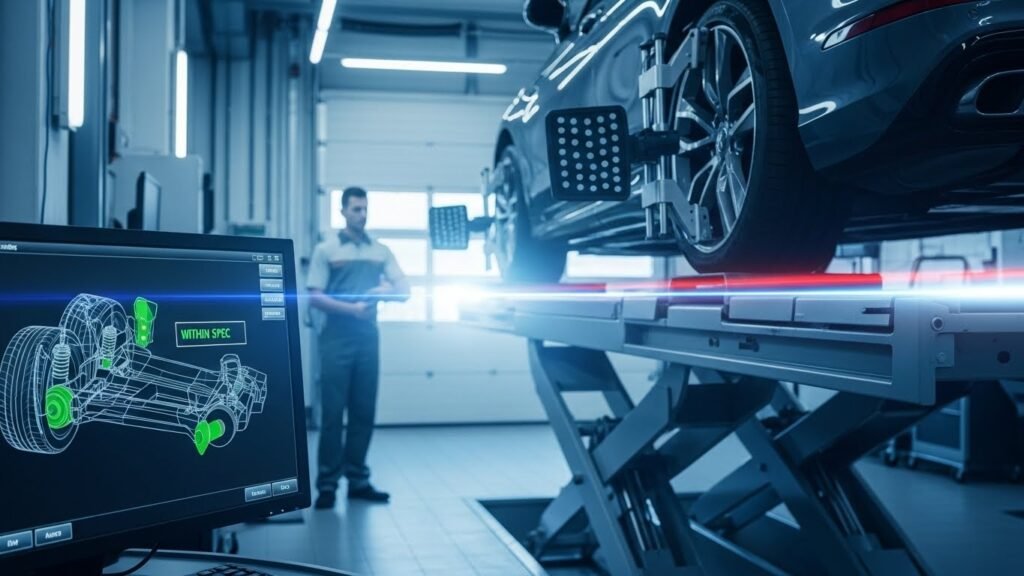
- Step 2: Digital Measurement The car goes on a special aligner machine. Sensors and cameras track the position of each wheel. The computer compares this to factory specifications.
- Step 3: Precision Adjustment The tech gets under the car with some tools. They turn bolts to move the wheels into place. The machine shows them when the angle is perfect.
- Step 4: Final Verification All parts are tightened down to stay in place. A final test check ensures everything is green on screen. Some shops will even do a quick road test.
The Financial Side: Cost and Value
Getting an alignment is an investment in your car. It is much cheaper than buying a new set of tires.
- What Does a Wheel Alignment Cost? Most shops charge around seventy-five dollars for the job. The price usually ranges from fifty to two hundred dollars. It depends on the shop and your car type.
- Maximizing Your Investment Always look for service specials or online coupons. These can save you a chunk of change on maintenance. Regular checks prevent huge repair bills in the future.
Professional Service vs. DIY Alignment

You might think about trying to fix it yourself. However, this is a job best left to pros.
- The Role of Technology Pro shops use lasers and high-speed cameras for accuracy. You cannot get these results with a tape measure. Modern cars are too sensitive for manual guessing.
- Technician Expertise ASE certified techs know exactly what to look for. They can find tiny cracks in parts you might miss. Their experience keeps your car safe for the long haul.
- Warranty and Guarantees Most shops give you a warranty on their work. If the car still pulls, they fix it for free. You do not get that peace of mind doing it at home.
Wheel Alignment Types and Duration Summary
| Alignment Type | Estimated Duration | Key Focus Area |
| Front-End Alignment | 30 to 45 minutes | Focuses exclusively on the front two wheels; less common on modern vehicles. |
| Thrust Alignment | Approximately 1 hour | Aligns the front wheels to the rear axle line to prevent the car from driving sideways. |
| Four-Wheel Alignment | 1 to 2 hours | The most common service for modern all-wheel drive cars where every wheel is fixed to factory specs. |
| Average Standard Service | Approximately 1 hour | The typical timeframe for most standard cars depending on the specific needs of the vehicle. |
Scheduling and Next Steps
Now you know how long does it take to align a car. It is time to get your ride checked out.
- Convenience and Planning Use an online tool to book your time slot. This makes sure the shop is ready for you. You will get in and out much faster this way.
- Service at Local Centers Find a shop like George Weber Chevrolet or Beachlers. They have the right gear to do the job right. Most will have you back on the road in an hour.
Concluding Summary: Getting Back on the Road
Maintaining your vehicle’s alignment is a small investment that leads to major long-term benefits. Whether you are dealing with a classic car or a modern luxury ride, understanding the process helps you manage your time and expectations at the shop.
- Timing Expectations: Most drivers can expect to be back on the road in about an hour.
- Type of Service: While front-end or thrust alignments are options, a comprehensive four-wheel alignment is the most common choice for modern vehicles.
- Safety First: Proper alignment keeps your drive smooth, prevents your car from drifting, and ensures you have a better grip on the road.
- Financial Value: At an average cost of seventy-five dollars, an alignment is far more affordable than replacing a full set of tires ruined by uneven wear.
- Professional Care: Using specialized sensors and cameras, certified technicians provide a level of precision that cannot be achieved at home.
By staying alert to signs like an off-center steering wheel or unusual tire noises, you can catch alignment issues before they become expensive repairs. Planning your visit through online tools can further streamline the process, getting you in and out of the service center quickly.
Frequently Asked Questions
How often should I get a wheel alignment?
Most experts suggest checking your alignment every six months or every 6,000 miles. You should also get it checked every time you install a new set of tires to ensure they wear evenly from the start.
Can I drive my car if the alignment is bad?
You can technically drive with bad alignment, but it is not a good idea for the long term. It makes the car harder to control and can lead to a dangerous blowout if your tires wear down to the metal wires.
Does a wheel alignment include tire balancing?
No, these are two different services. Alignment adjusts the angles of the suspension, while balancing ensures the weight of the tire and wheel is even all the way around.
Will a wheel alignment fix a steering wheel that vibrates?
It might help, but a vibration is often a sign that your tires are out of balance or that you have a bent rim. A service technician will usually check both systems to find the root cause of the shaking.
Do I need an alignment after replacing brake pads?
Standard brake pad replacement does not usually require a new alignment. However, if you are replacing major parts like rotors or calipers, it is a good time for a safety inspection.
Can bad alignment cause my car to make noise?
Yes, misaligned wheels can cause tires to scrub against the road, creating a squealing or chirping sound. It can also lead to a loud humming noise as the tread wears down unevenly.
Is a four-wheel alignment better than a two-wheel alignment?
A four-wheel alignment is the most thorough option and is required for most modern cars and SUVs. It ensures all four wheels are working together, which is vital for vehicles with independent rear suspensions.
Does hitting a pothole always ruin my alignment?
Not always, but hitting a deep pothole at high speed is a very common cause of sudden misalignment. It is smart to have a technician look at the suspension if you felt a hard jolt.
Will an alignment fix my car pulling to one side?
In most cases, yes, as pulling is a classic symptom of uneven caster or camber angles. If the pull continues after an alignment, you might have a tire problem or a sticking brake caliper.
Should I check my tire pressure before an alignment?
Yes, having the correct tire pressure is a key part of the alignment process. Technicians will typically check and adjust your tire pressure to the manufacturer specifications before they start measuring angles.
Do all-wheel drive (AWD) cars need special alignment?
AWD vehicles almost always require a full four-wheel alignment to protect the complex drivetrain. Proper alignment ensures that the computer systems for the AWD don’t get confused by wheels spinning at different speeds.
Can a worn-out ball joint affect my alignment?
Absolutely, as ball joints are a critical part of the suspension system. If a ball joint is loose, the wheel will “move” and won’t hold the alignment angles correctly.
Does a wheel alignment affect the steering angle sensor?
On many modern cars, a digital alignment must also involve resetting the steering angle sensor. This ensures the car’s computer knows exactly where “straight ahead” is for the stability control system.
Is it possible to align a car with a lifted suspension?
Yes, but it often requires specialized equipment and might take longer than a standard car. Lifted trucks sometimes need aftermarket parts like adjustable control arms to get the angles back to spec.
Can I get an alignment with old tires?
You can, but it is better to do it with newer tires for the most accurate results. If your old tires are severely worn on one side, they can pull the car even after the alignment is technically perfect.
How long does an alignment warranty usually last?
Many professional shops offer a warranty that lasts for 6 months or 6,000 miles. This gives you time to make sure the car handles correctly under different driving conditions.
Does insurance cover wheel alignments?
Standard maintenance alignments are not covered by insurance. However, if the alignment was knocked out by a car accident, the repair might be included in the insurance claim.
Will a wheel alignment improve my gas mileage?
Yes, because it reduces the rolling resistance of your tires. When wheels are properly aligned, the engine doesn’t have to work as hard to push the car forward.
What is a “road test” in an alignment service?
A road test is when the technician drives the car after the work is done to confirm the steering wheel is centered and the car drives straight. It is the final step in a quality safety inspection.
Are computerized alignments more accurate than manual ones?
Computerized systems are significantly more accurate because they use lasers and cameras to measure down to a fraction of a degree. This high-tech equipment is the industry standard for modern automotive repair.