 Skip to content

Seeing a puddle under your car can be scary. You walk out to your driveway and spot a bright stain. You ask yourself, “what car fluid is red?” and worry if your car is breaking down. It is a stressful feeling for any driver. Most people just want to get to work or home without any trouble. Finding a leak feels like a giant problem in your busy life. But do not panic yet. We are going to explain every red fluid found in a car. This guide will help you act like a detective to find the problem. We will look at colors, smells, and where the spots land. By the end, you will know exactly what to tell a mechanic. You might even find out it is an easy fix. Let us look under the hood and solve this mystery together.
Understanding the Mystery of Red Fluid Leaks
Modern cars are like big puzzles with many moving parts. To keep these parts working, cars use different liquids. Makers color-code these fluids so you can tell them apart. It is like a secret code for your car. When you see a leak, your car is trying to talk to you. It is telling you that a seal or a hose is worn out. Knowing what car fluid is red helps you understand that message. You can fix a small problem before it becomes a huge bill. It also keeps you and your family safe while driving.
The Importance of Color Coding
Car companies do not pick colors just for looks. They use dyes to make finding leaks much easier for owners. If every fluid was clear, you would never know what was wrong. The red color is very common because it is easy to see on gray pavement. It grabs your attention so you do not ignore it. Most red fluids are very important for shifting gears or steering. Without these colors, you might drive until the car stops moving entirely.
The Initial Discovery
If you find a puddle on your garage floor, stay calm and look closely. Do not just look at it from far away. Get down and see how big the spot really is. Is it just a tiny drip or a large pool of liquid? Take a photo of it with your phone to show a pro later. Look at exactly where the fluid is sitting under the car. This first look is the most important step.
Safety First
Some leaks are much more dangerous than others. If your brakes are leaking, you must stop driving right away. A car that cannot stop is a danger to everyone on the road. If your steering fluid is gone, you might not be able to turn the wheel. Safety should always be your main goal. Never ignore a red puddle and hope it goes away. It is better to get a tow than to have an accident.
Common Types of Red Automotive Fluids
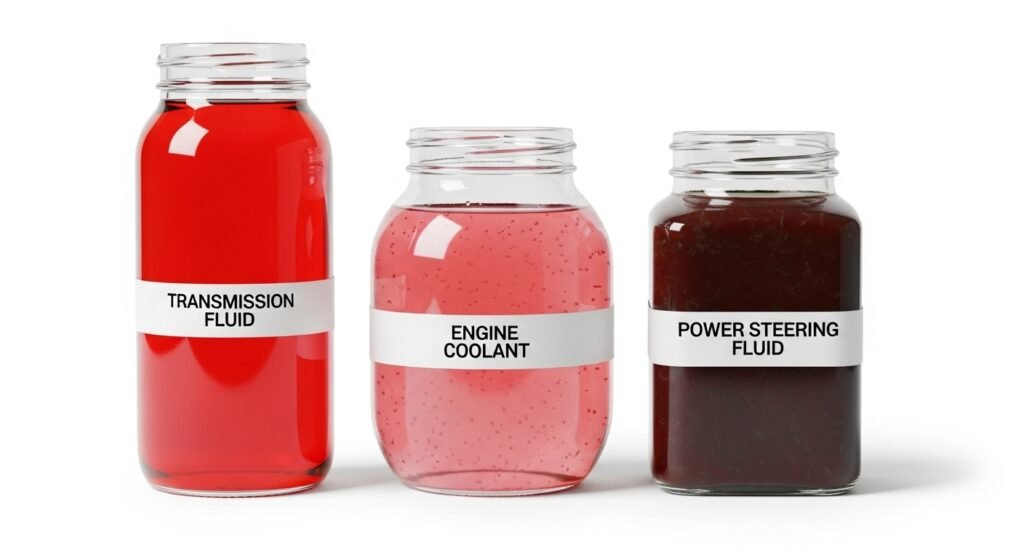
Your car has a few different systems that use red liquids. Finding the right fluid is the first step in knowing how bad the leak is. You need to check more than just the color. You should also check the texture and the smell. Some fluids feel like thick syrup, while others are like water. Let us look at the main suspects.
Transmission Fluid
This is the most common answer when people ask what car fluid is red. Your transmission is the part that helps your car change speeds. It needs this fluid to stay cool and move the gears inside.
- Primary Function: It is needed for shifting gears and keeping internal parts oiled. It also helps cool down the whole transmission system.
- Appearance and Consistency: This fluid is bright red and clear when it is brand new. It feels very slick and oily between your fingers.
- The Aging Process: Over time, the fluid changes from bright red to orange or light brown. It can turn dark brown or black if it gets too hot.
- Scent Profile: It has a very strong smell like oil or gas. Some people say it smells like burnt toast when it is old.
Power Steering Fluid (Hydraulic Systems)
If you have an older car or a big truck, you likely have hydraulic steering. This system uses red fluid to help you turn the wheel easily. If this leaks, your arms will feel the struggle very quickly.
- Primary Function: It acts as the liquid that allows for easy steering. It helps push the heavy tires so you don’t have to work as hard.
- Appearance: It is red and usually thinner than transmission fluid. It looks a bit like red water.
- System Requirements: Check if your car uses a hydraulic system or an electric system. Electric systems do not use this fluid.
- Texture and Scent: It feels oily and has a slight smell of oil. It is not as smelly as transmission fluid.
Engine Coolant (Antifreeze)
Coolant keeps your engine from getting too hot and melting. It comes in many colors like green, blue, and yellow. Red is a common color for many Asian and European cars.
- The Color Spectrum: Coolant can be green, blue, yellow, or red. Each type is made for a specific kind of metal in your engine.
- Purpose: It controls the engine heat and stops the system from freezing or boiling over.
- Identification Tip: Check the clear plastic tank under the hood. Match the color of the leak to the liquid inside that tank.
Brake Fluid
Brake fluid is the most important liquid in your car. It helps you stop when you press the pedal. While it usually starts clear, it can change over time.
- Initial Appearance: Most of the time, this fluid is light brown or clear. It looks like honey when it is fresh.
- The Red Variant: Some high-performance brake fluids are actually bright red. This is rare but possible in sporty cars.
- Aging Indicators: It can turn dark red as it gets old and dirty. If it looks dark red, it probably needs to be changed.
Diagnostic Techniques: Identifying the Source
Once you know the fluids, you have to find where they come from. You can find the exact spot by looking at the evidence. You do not need special tools to be a detective. Just pay attention to the clues. The location of the puddle is your best hint.
Location-Based Identification

Where the fluid lands on the ground tells a story. Fluids usually drop straight down from where they leak.
- Behind the Tires: This usually means a brake fluid leak from the lines or parts near the wheels.
- Front of Vehicle Toward the Center: This is a common spot for radiator or water pump leaks. It means your coolant is the problem.
- Center of the Vehicle: This is the main spot for transmission fluid leaks. The transmission sits in the middle of most cars.
- Directly Under the Engine: This is usually the area for power steering leaks. The pump is often at the front of the engine.
Physical Characteristics and Sensation
Use your senses to figure out the fluid. You can touch the fluid, but be sure to wash your hands afterward.
- Visual Inspection: Put a piece of white cardboard or a paper towel under the car. This shows the true color without the dirt from the ground.
- Texture Analysis: Rub the fluid between your fingers. Transmission fluid is very slippery, while coolant feels more like water.
- Scent Comparison: Give it a quick sniff. Coolant often smells sweet like candy, but remember it is very poisonous.
The Significance and Risks of Red Fluid Leaks

Ignoring a leak is like ignoring an alarm. It might start small, but it can lead to a disaster. Every driver needs to know the risks. Some leaks just leave a stain, but others can leave you stranded.
Transmission System Hazards
The transmission is one of the most expensive parts to fix. If it runs out of fluid, it will break very fast.
- Gear Slippage: Low fluid makes the gears slip. You might hear the engine speed up, but the car doesn’t go faster.
- Overheating: Fluid keeps the metal parts cool. Without it, the parts can melt together.
- Cost Implications: Fixing a small rubber seal is cheap. Replacing the whole transmission costs thousands of dollars.
Steering Performance and Safety
If you cannot steer, you are in danger. Steering leaks make the wheel very hard to turn.
- Sluggish Response: A leak makes the steering wheel feel heavy. You might need both hands just to make a turn.
- Loss of Control: It is a major safety risk if the steering fails while you are driving.
- Component Wear: Running the pump without fluid will burn it out. The pump needs that red fluid to stay lubricated.
Engine and Cooling System Risks
A red coolant leak means your engine is in trouble. Heat can destroy a motor very quickly.
- Water Pump and Radiator Failure: These leaks usually start at the pump or the radiator. It means your cooling system is broken.
- Engine Overheating: A small leak can lead to a blown head gasket. This is a very expensive repair.
Braking System Criticality
Do not take risks with brake leaks. If you see red fluid near your tires, stop the car.
- Pressure Loss: A leak stops the brakes from working. Your pedal might go to the floor without stopping the car.
- Immediate Consultation: Brake problems need a mechanic right away. It is the most important safety part of your car.
Proactive Maintenance and Resolution

Finding a leak is bad, but fixing it helps you move forward. You can take steps to fix leaks and stop new ones from starting. Taking care of your car makes it last longer.
Diagnostic Approach to Addressing Leaks
Have a plan when you see a red spot. Don’t just worry about it.
- Fluid Identification: Use the color, feel, and smell to find the source. This helps you tell the mechanic what is wrong.
- Regular Inspection Schedules: Check your hoses every time you get an oil change. Look for wet spots on the rubber parts.
- Monitoring Fluid Levels: Check your fluid levels once a month. If the level is going down, you have a leak.
Common Repair Procedures
Most leaks come from common spots that are easy to fix.
- Replacing Worn Hoses: Rubber hoses crack as they get old. Changing a hose is usually a fast and cheap fix.
- Resealing Gaskets: Fixing leaks often just needs a new seal or gasket to keep the fluid inside.
- Flushing Systems: If your red fluid is dark or dirty, it is time for a flush. Fresh fluid keeps the parts working well.
Professional Intervention
Some jobs are too big to do at home. You need to know when to call the experts.
- When to DIY vs. When to Call a Pro: If it is a simple hose, you might fix it. If it is inside the transmission, you need a shop.
- Consulting a Technician: Pros have tools to find tiny leaks. They can test the system to find the exact hole.
Keeping Your Ride Leak-Free
At the end of the day, a red leak is just a task to handle. It does not have to be the end of your car. By knowing what car fluid is red, you are already ahead of the game. You can identify the problem and act fast. This saves you money and keeps you safe on the road. Remember to check under your car once in a while. A little bit of attention goes a long way in the car world. Take care of your car, and it will take care of you. If you are ever unsure, just ask a local mechanic for help. They see these red puddles every day and can get you back on the road fast.
| Fluid Type | Primary Use (The “Why”) | Key Benefits (The “How it Helps”) |
| Transmission Fluid | Facilitates gear shifting and lubricates the internal planetary gears, clutches, and bands within the transmission. | Prevents Overheating: Acts as a coolant for the transmission. Smooth Operation: Ensures seamless gear transitions and prevents metal-on-metal friction. |
| Power Steering Fluid | Acts as a hydraulic medium to multiply the force applied to the steering wheel, making it easier to turn the tires. | Effortless Control: Allows for precision handling with minimal physical effort. Pump Protection: Lubricates the power steering pump to prevent mechanical seizure. |
| Engine Coolant (Red) | Circulates through the engine block and radiator to absorb and dissipate extreme heat generated by combustion. | Temperature Regulation: Keeps the engine within a safe operating range. Corrosion Resistance: Contains additives that protect aluminum and metal engine parts from rusting. |
| Brake Fluid (Red Variant) | Transfers the force of your foot on the brake pedal directly to the brake calipers or wheel cylinders to stop the vehicle. | Reliable Stopping Power: Maintains high boiling points to ensure brakes don’t “fade” under heavy use. Hydraulic Integrity: Keeps the braking system pressurized for instant response. |
| Transfer Case Fluid | Used in 4WD or AWD vehicles to lubricate the gears that split power between the front and rear axles. | Drivetrain Longevity: Reduces wear on expensive 4×4 components. Synchronized Power: Ensures the front and rear wheels receive power smoothly without grinding. |
| Active Suspension Fluid | Used in high-end hydraulic or “active” suspension systems to adjust ride height and absorb road shocks. | Ride Comfort: Automatically adjusts to road conditions for a smoother experience. Stability: Helps keep the car level during fast cornering or heavy braking. |
FAQs About Red Fluid Leaks
Why does my car leak red fluid only when the air conditioning is running?
Actually, your air conditioner usually leaks clear water due to condensation. If you see red fluid specifically when the AC is on, it is likely that the vibration of the AC compressor is aggravating a loose power steering hose or a radiator leak nearby. The AC system itself does not use red fluid, so the leak is coming from a neighboring component.
Can a red leak be caused by a bad axle seal?
Yes, axle seals keep transmission fluid inside the transaxle. When these seals wear out or tear, red transmission fluid will spray or drip onto the underside of the car and eventually pool on the ground. This is common in front-wheel-drive vehicles where the axles connect directly to the transmission.
Is there a difference between red fluid in a manual versus an automatic car?
Most manual transmissions use a thicker, amber-colored gear oil, while automatics almost exclusively use red Automatic Transmission Fluid (ATF). However, some modern manual transmissions are designed to use ATF, so you should check your manual. If a manual car is leaking red fluid, it is usually either ATF or power steering fluid.
Does the age of the vehicle affect the shade of the red leak?
Older vehicles often have older rubber seals that shrink, leading to darker, more brownish-red leaks. In brand-new cars, the fluid is often a very bright, almost neon cherry red. As a car ages, the fluid picks up metal shavings and heat damage, making the leak look more like dark wine or old blood.
Can red fluid leak from the back of the car?
If you see red fluid near the rear bumper, it is almost certainly a brake fluid leak from the rear brake lines or wheel cylinders. Since the engine and transmission are in the front of most cars, any red fluid in the back is a major red flag for your braking system’s integrity.
What does it mean if the red fluid is foamy or has bubbles?
Foamy red fluid usually indicates that air is being sucked into the system. This happens most often in the power steering pump when a hose is loose. The air mixes with the fluid, creating a pinkish foam that can leak out of the reservoir cap.
Is red fluid toxic to pets and wildlife?
Yes, red engine coolant is extremely toxic and has a sweet taste that attracts dogs and cats. Even a small amount can be fatal if ingested. Transmission and steering fluids are also chemical hazards that can harm the environment and should be cleaned up with kitty litter or sand immediately.
Can a red leak happen only when the car is cold?
Some seals only leak when they are cold because the rubber is stiff and hasn’t expanded yet. Once the engine warms up, the rubber expands and stops the leak. This is why you might see a small red puddle in the morning that doesn’t seem to grow while you are at work.
What is the average cost to fix a transmission fluid leak?
The cost depends on the source. A simple pan gasket or a cooling line might cost between $150 and $300. However, if the leak is coming from the front pump seal, the mechanic has to remove the entire transmission, which can cost $800 to $1,200 in labor alone.
Can I use “stop leak” products for red fluid puddles?
Stop leak products are a temporary band-aid. They work by swelling the rubber seals to stop the drip. While they can help in an emergency, they can also gum up the small passages inside your transmission or steering rack, leading to bigger problems later.
Why is my red fluid turning into a pink milky substance?
If your red transmission fluid looks like a pink strawberry milkshake, you have a “strawberry milkshake of death.” This happens when your car’s radiator fails internally, allowing engine coolant to mix with transmission fluid. This usually requires a full transmission and radiator replacement.
Can a red leak affect my car’s fuel economy?
Indirectly, yes. If the leak is in the transmission, the gears may slip, causing the engine to work harder and burn more fuel to maintain speed. If the power steering is low, the pump works harder, putting more “parasitic drag” on the engine.
Is red fluid flammable?
Transmission fluid and power steering fluid are petroleum-based and can catch fire if they leak onto a hot exhaust manifold. If you smell smoke or see a “fog” coming from under the hood along with a red leak, pull over immediately to prevent an engine fire.
How do I clean a red fluid stain from my driveway?
For fresh leaks, cover the spot with clay-based kitty litter and let it sit overnight to soak up the oil. For older red stains, use a heavy-duty degreaser or a mixture of dish soap and baking soda with a stiff brush to scrub the pores of the concrete.
Can a red leak cause the “Check Engine” light to come on?
A transmission fluid leak can trigger sensors that detect “incorrect gear ratios” or “transmission slip,” which will turn on the Check Engine or Transmission Warning light. Power steering and coolant leaks have their own specific dashboard warning lights.
Does the weather or humidity affect red fluid leaks?
High humidity doesn’t change the leak itself, but extreme heat makes the fluid thinner (lower viscosity), which allows it to escape through tiny cracks more easily. In the winter, fluid is thicker and may leak less, but the seals are more likely to crack in the cold.
What is the “paper towel test” for red leaks?
The paper towel test involves dabbing a clean white towel into the puddle. Bright red and oily stains indicate transmission fluid, while pink, watery puddles typically point to engine coolant. Dark red, thick fluid is usually aged power steering fluid leaking from a hydraulic system.
Are there any red fluids in electric vehicles (EVs)?
Most EVs do not have transmissions or power steering pumps like gas cars, but they do have thermal management systems. Some EVs use a red-colored specialized coolant to keep the battery pack at the right temperature, so a red leak in an EV is usually a battery cooling issue.
Can a red leak be caused by a cracked transmission pan?
Yes, hitting a rock or a speed bump can crack the metal or plastic pan at the bottom of the transmission. This usually results in a very fast, heavy leak of bright red fluid that requires the car to be towed immediately.
Why does my car make a whining noise when I see red fluid?
The whining noise is almost always the power steering pump struggling to circulate fluid because the level is too low. The air getting into the pump creates a high-pitched “moan” or “whine” when you turn the steering wheel.