 Skip to content

Understanding engine oil can feel like a total headache. Most drivers just grab any bottle off the shelf without realizing that knowing what API stands for automotive performance is a game changer. It helps your car run better, last longer, and keeps your ride smooth for years. This guide breaks down everything about oil ratings to explain why these letters matter so much for your engine.
What Does API Stand For in Oil Products?
The American Petroleum Institute (API) is the primary authority or “big boss” of the oil and gas industry. They set the technical standards and rules for how motor oil must perform. By establishing these guidelines, they ensure the lubricant in your engine is of high quality. Without the API, oil brands could simply make up their own performance rules.
The Regulatory Role of the American Petroleum Institute
This group ensures every drop of oil is safe by testing how it handles extreme heat and pressure. They collaborate with car makers to determine exactly what modern engines need, creating a quality standard for everyone. Their work ensures your engine stays protected under the hood, allowing you to trust the seal of certification on the bottle.
The Quality Seal and ILSAC Standards
The API works alongside the International Lubricant Standardization and Approval Committee (ILSAC). Together, they create the “starburst” symbol found on oil containers. This symbol specifically identifies oils that save fuel, protect parts, and represent ultimate engine performance. Always look for this seal to ensure you are buying fresh, high-quality motor oil.
Understanding the API Service Symbol Donut
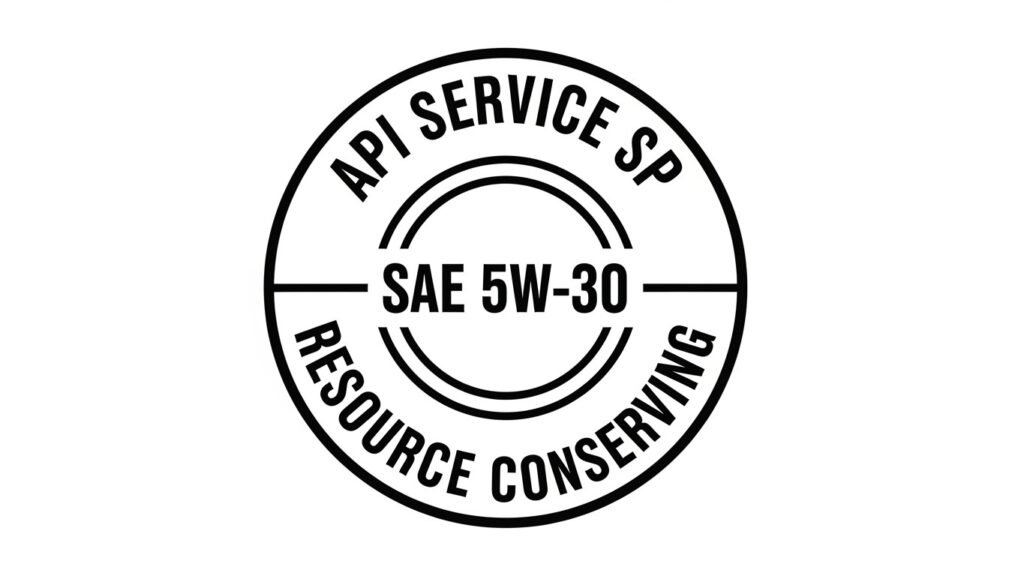
The “donut” is a specialized label on the oil container that tells you exactly what is inside. It consists of three main parts that make choosing the correct oil fast and easy. By understanding the donut, you can avoid using the wrong lubricant in your car.
The API Rating on the Outer Ring
The top portion of the donut circle shows the service rating. This identifies whether the oil is designed for gasoline or diesel engines. It also indicates the specific performance level of that blend, which is vital for vehicle compatibility since newer cars require updated ratings to stay healthy.
The SAE Rating in the Center
The center of the donut displays the viscosity grade, set by the Society of Automotive Engineers (SAE). This tells you how thick or thin the oil is, such as the common 5W-30 grade.
- The first number (with the “W”): Indicates the oil’s performance in cold winter temperatures.
- The second number: Indicates the oil’s performance when the engine is hot.
Gasoline vs. Diesel: Key Differences and Comparison

While both types of oils use base stocks and additives, their chemical designs differ to address the specific combustion byproducts of different engines. Choosing the right one is about matching the oil to the ignition method of your vehicle.
Comparison Table: Gasoline (S) vs. Diesel (C) Ratings
| Feature | Gasoline Engines (S – Service) | Diesel Engines (C – Commercial) |
| Ignition Type | Spark Ignition | Compression Ignition |
| Primary Identifier | Starts with the letter “S” | Starts with the letter “C” |
| Primary Focus | Sludge, varnish, and LSPI protection | High durability and soot handling |
| Current Top Standard | API SP | API CK-4 |
| Common Application | Passenger vehicles | Heavy-duty commercial trucks |
Understanding the “S” and “C” Series
- Gasoline Engine Designation: These oils start with the letter “S,” which stands for service or spark ignition engines.
- Diesel Engine Designation: These oils start with the letter “C,” representing commercial or compression ignition engines.
- Hardware Sensitivity: Pure diesel oils contain higher levels of detergents and additives that can harm the catalytic converters in gasoline vehicles.
- Detergent Levels: Modern diesel ratings like CK-4 are specifically made to protect exhaust filters and manage soot while using Ultra-Low Sulfur Diesel (ULSD).
- Dual Ratings: Some oils carry both ratings, but it is always safer to use an oil with the “S” rating for gasoline cars.
- Viscosity Needs: New gasoline engines often require thinner oil to improve fuel economy, whereas diesel engines need high durability for heavy-duty work.
API Classification for Engine Oil
The API divides oil into two main categories: one for passenger vehicles with gasoline engines and another for heavy-duty commercial diesel vehicles. It is essential to pick the correct category for your specific engine type.
Gasoline Engine Classifications S-Series
Gasoline oil categories are updated as technology improves:
- SP System: The newest and best standard for 2021 vehicles and onward.
- SN System: The primary standard for cars made in 2020 or earlier.
- SM Rating: Designed for older vehicles manufactured between 2004 and 2010.
- SJ Rating: Covers even older vehicles from 2001 and back.
Diesel Engine Classifications C-Series
Diesel ratings are specialized for high-stress commercial use:
- CK-4: The current top standard for modern diesel trucks.
- CJ-4: Works for high-speed diesels manufactured after 2010.
- CI-4: Created for engines built between 2002 and 2010.
- CH-4: Designed for older diesel workhorses from the late nineties.
Why Do API Ratings Change Regularly?
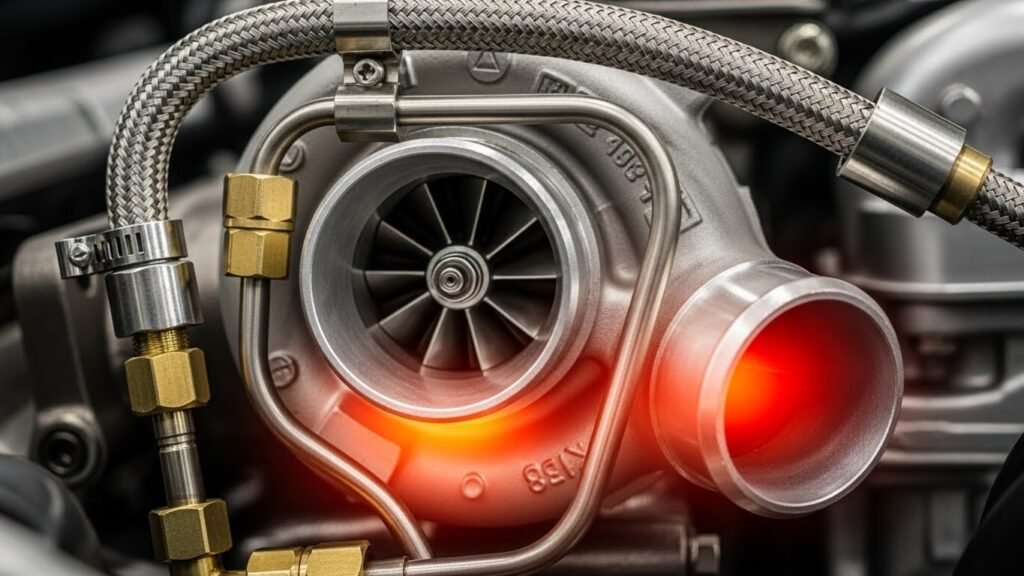
Engines are getting smaller but more powerful, generating extra heat that old oil formulations cannot handle. API updates its rules to ensure that lubrication technology keeps your engine safe under these increasing stresses.
Engine Evolution and New Technology
Modern engines utilize turbochargers and direct injection, which require thinner oil to function correctly. Thinner oil improves fuel economy, lowers emissions, and flows faster to protect moving parts.
Protection Against Low-Speed Pre-Ignition
New engines can suffer from Low-Speed Pre-Ignition (LSPI), which is when fuel burns at the wrong time and can ruin an engine in seconds. The new SP system was specifically made to stop this by using special additives to keep combustion stable and protect timing chains from premature wear.
Compatibility and Safety Standards
Most new oil is “backwards compatible,” making the buying process less confusing.
Backwards Compatibility for Older Engines
A new SP oil will work fine in an old car and actually offers better protection against sludge and corrosion than older oils. However, you should never put old oil in a new car because it will degrade too fast from the modern engine’s heat.
The Danger of Obsolete API Ratings
Ratings like SA, SB, or SH are considered obsolete and do not have the right chemical composition for today’s engines. Using them can lead to expensive repair bills.
Why Expired Oil is a Bad Idea
Oil can oxidize and lose thermal stability while sitting in the bottle. Additives may settle at the bottom, making the oil behave like “dirty water” that causes friction and hurts engine life.
Benefits of Using API-Compliant Oil
Using the right oil is the most cost-effective way to maintain your vehicle. Key perks include:
- Better fuel economy: Because the engine turns more easily.
- Increased engine life: By reducing metal-on-metal wear.
- Superior sludge control: To keep internal parts clean.
- Turbocharger protection: From extreme heat and carbon buildup.
- Enhanced seal compatibility: To prevent annoying oil leaks.
Practical Application and Maintenance

Knowing these ratings helps you talk to your mechanic with confidence.
Consulting the Owner’s Manual
Your car manual specifies the exact motor oil grades and SAE ratings you need for your climate. Following these recommendations keeps your warranty safe and valid.
The Universal Language of Oil
API ratings are a global standard recognized by mechanics throughout the USA and the world. This universal language makes it easy to get the right service for any vehicle, from a small car to a big truck.
Summary of API Oil Classifications
| API Category | Engine Type | Recommended Years | Key Benefit |
| SP | Gasoline | 2021 and New | LSPI protection |
| SN | Gasoline | 2011 to 2020 | Turbo protection |
| SM | Gasoline | 2005 to 2010 | Oxidation control |
| CK-4 | Diesel | Modern Trucks | High durability |
Frequently Asked Questions About API Engine Oil Ratings
Understanding the specifics of oil standards can be tricky. Here are additional answers to common questions about what api stands for automotive protection and how these ratings affect your vehicle.
What is the difference between the API Starburst and the API Donut?
The API Donut provides detailed technical info like the service category and viscosity, while the Starburst symbol specifically identifies oils that meet the latest energy-conserving standards for gasoline engines. The Starburst is only found on oils that meet the most current ILSAC requirements.
Does API certification apply to transmission fluids or gear oils?
While the API is famous for engine oil, they also set standards for gear lubricants, often using GL (Gear Lubricant) ratings like GL-4 or GL-5. However, transmission fluids are usually governed by specific manufacturer standards like Dexron or Mercon rather than the API S or C series.
What happens if I use diesel-rated oil in a gasoline engine?
Some oils are dual-rated, but pure diesel oil has higher levels of detergents and anti-wear additives that might harm the catalytic converters in a gasoline car. It is always safer to use an oil that carries the “S” rating for gasoline vehicles.
How does the API test for oxidation stability in new oils?
The API uses standardized engine tests where oil is run at extremely high temperatures for hundreds of hours to see how much it thickens. If the oil stays thin and flows well after the heat stress, it passes the oxidation stability requirements for modern ratings like SP.
What is the role of the ILSAC GF-6 standard in relation to API SP?
ILSAC GF-6 is the performance counterpart to the API SP category, focusing heavily on fuel economy and protecting engines from low-speed pre-ignition. Most oils that carry the API SP rating will also meet the ILSAC GF-6 specification.
Why is the sulfur content in fuel important for API diesel ratings?
Older diesel ratings were designed for fuel with high sulfur, but modern ratings like CK-4 are made for Ultra-Low Sulfur Diesel (ULSD) to protect exhaust filters. Using the wrong oil with modern fuel can lead to rapid engine degradation.
Does the API regulate the chemical composition of oil additives?
The API sets performance targets rather than a strict recipe, allowing oil companies to use different chemical compositions as long as they pass the tests. This encourages innovation in how brands achieve wear protection and thermal stability.
Are API ratings the same for motorcycles and cars?
Motorcycles often have “wet clutches” and require different additives than cars, so they usually follow JASO standards instead of just API ratings. Using car oil in a motorcycle can cause the clutch to slip.
Can I trust an oil brand that says it “meets API standards” but lacks the Donut symbol?
If the bottle doesn’t have the official API Service Symbol Donut, it may not have been officially tested and licensed by the American Petroleum Institute. Licensed oils are regularly audited to ensure they actually meet the quality standard.
How do API ratings help with turbocharger protection?
Newer ratings like API SP include specific tests to ensure the oil does not form “coke” or hard carbon deposits inside the turbo’s hot bearings. This prevents the turbocharger from failing due to oil starvation.
What does the “Resource Conserving” label on the API Donut mean?
This label at the bottom of the donut indicates the oil has passed tests showing it improves fuel economy and protects emission systems better than standard oils. It is common in modern gasoline engine oils.
Why are some API ratings like SE or SF called obsolete?
These ratings are considered obsolete because they lack the modern additives needed to prevent sludge and acid buildup in newer engines. They are essentially outdated technology that doesn’t meet today’s engine performance needs.
Is API-certified oil required to maintain my vehicle warranty?
Most manufacturers require the use of API-certified oil with the correct service rating to keep your engine warranty valid. Using non-certified or incorrect oil can give the manufacturer a reason to deny a repair claim.
How does API oil help with timing chain wear?
Modern API SP oils include special anti-wear additives that form a protective layer on the links of the timing chain. This prevents the chain from stretching, which would otherwise ruin the engine’s timing.
Do synthetic oils have their own API rating system?
No, synthetic oils follow the same API S or C classification systems as conventional oils. The API rating tells you how the oil performs, regardless of whether it is made from crude oil or synthetic base stocks.
What is the difference between API CK-4 and API FA-4?
CK-4 is designed to be backwards compatible with older diesel engines, while FA-4 is a low-viscosity oil designed only for specific 2017 and newer engines for better fuel economy. FA-4 is not interchangeable with older diesel oils.
How does temperature affect the SAE rating inside the API Donut?
The oil’s viscosity changes with heat; the SAE rating ensures the oil is thin enough to start in the winter but thick enough to protect when the engine is hot. This balance is a core part of API technical standards.
Are there specific API ratings for E85 or ethanol-blended fuels?
Modern API ratings like SN and SP are tested to ensure they are compatible with ethanol fuels to prevent corrosion inside the engine. These oils help neutralize the acids that can form when ethanol and water mix in the crankcase.
Why does the API update its standards every few years?
Standards are updated to address new engine problems, such as the need for better seal compatibility or protecting newer emission system components. Each update reflects the latest advancements in lubrication technology.
Can I use API SP oil in a vehicle that originally called for SL?
Yes, because API SP is backwards compatible, it provides superior protection compared to the original SL requirement. It will offer better deposit protection and oxidation stability for the older engine.