 Skip to content
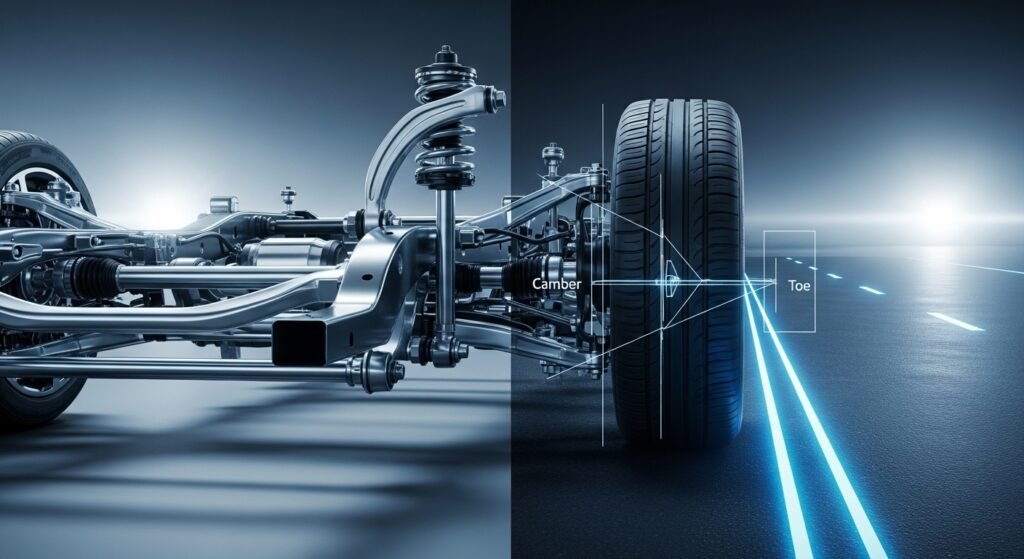
Your car is a big investment that helps you get around every day. Keeping it running right means paying attention to how it feels on the road. One of the most important things for a smooth drive is your suspension alignment. If you ignore it, you will end up spending a ton of money on tires and repairs. This guide will help you understand how your car stays straight and safe.
Introduction to Suspension and Wheel Alignment
Many drivers think that tires and the car frame are separate things. In reality, they all work together in a complex system to keep you moving. Your steering and chassis must stay in perfect sync with the road surface. This is why pros often talk about suspension alignment as a single ecosystem for your vehicle.
When winter ends, the road conditions usually get much worse very quickly. Melting ice and snow reveal deep potholes that can wreck your front-end parts. This “pothole season” is the most dangerous time for your car’s health and safety. Checking your suspension alignment early can save you from a massive headache later on.
Understanding the Car’s Suspension System
The suspension system is the bridge between the car body and the rubber tires. It is designed to handle all the bumps and dips you find on the street. Its main job is absorbing road shocks so you do not feel every single pebble. This system also keeps your tires in constant road contact so you can stop.
Without a working suspension, your car would bounce all over the place like a ball. The steering system works with these parts to let you turn the car safely. If any part is loose, your suspension alignment will be totally off and dangerous. You need every piece to be tight and right to maintain total vehicle control.
Key Components of a Modern Suspension System
Every modern car uses a mix of parts to keep the ride smooth and steady. These parts work together to manage the weight and movement of the vehicle frame. If one piece fails, it puts extra stress on everything else in the system. Here are the main parts you should know about for your next service visit.
- Shocks and Struts are the most common parts people recognize in a car. A shock absorber is a standalone part that just handles the dampening of bumps. Struts are different because they are a structural part of the chassis and hold the spring. Both parts stop your car from bouncing like a trampoline after you hit a bump.
- Tie Rods connect the steering gear or steering rack to the steering knuckles. These rods are the parts that actually turn your wheels when you move the steering wheel. They have adjustable ends that technicians use to set your front-wheel toe angle correctly. If these are bent, your suspension alignment will never stay straight for very long.
- Control Arms act as the primary hinges between your wheels and the car frame. Most cars have both upper and lower control arms to manage the wheel movement. They allow your wheels to go up and down without moving side to side. These arms are vital for keeping your suspension setup stable while you are driving fast.
- Ball Joints are the pivot points that act like a human hip or shoulder. They allow the steering knuckles to turn while the suspension moves up and down. These joints support suspension articulation so your tires stay flat on the ground during turns. Worn ball joints are a leading cause of a noisy and shaky front end.
- Sway Bars are also known as anti-roll bars or stabilizer bars by many mechanics. They link the left and right sides of your suspension to keep the car level. They reduce body roll so the car does not lean too far when turning. This makes your handling feel much more crisp and safe on curvy back roads.
- Bushings and Sleeves are small but mighty parts made of rubber or polyurethane materials. They sit between metal parts to reduce noise, vibration, and harshness while you drive. These rubber bushings also keep all the metal parts in the right spot and orientation. When they rot or crack, your car will feel loose and start to make clunking sounds.
What is Wheel Alignment?

Wheel alignment is the science of making sure your tires point in the right direction. It involves checking the angles of the wheels against the car frame and road. When your car has a perfect alignment, it follows the exact geometry designed by engineers. This ensures that the tire contact with the road is as even as possible.
Technicians use special computers to check three main angles known as camber, caster, and toe. Camber is the inward or outward tilt of the tire when viewed from the front. Caster is the tilt of the steering axis which helps your steering wheel return to center. Toe is the direction the tires point relative to the centerline of the vehicle.
Common Causes of Suspension Damage and Misalignment

Most cars do not just fall out of alignment for no reason at all. Usually, something happens on the road to push the parts out of their place. Understanding these causes can help you avoid expensive visits to the automotive repair shop. Even small things can add up to cause a major problem with your steering.
- Natural Wear and Tear happens to every car as the miles start to climb higher. Rubber bushings eventually dry out and crack after years of heat and cold cycles. Springs might sag over time which changes the ride height and alignment angles. This is a slow process, but it eventually ruins how your car handles and feels.
- Road Hazards and Potholes are the most common enemies of a straight-driving car today. Hitting a deep hole at high speed creates a massive road impact on the suspension. This force can bend a tie rod or snap a ball joint instantly. If you hit a big one, you should get a professional inspection right away.
- Curb Strikes usually happen when parking or taking a turn a bit too tight. Even a low-speed hit against a concrete curb can shift your suspension components. It pushes the wheel backward or sideways which ruins the caster and toe settings. This is a very common way that drivers accidentally mess up their own cars.
- Environmental Factors like road salt can be very destructive to the metal under your car. Rust and corrosion can eat away at the bolts that hold your suspension together. This can make parts seize up or even break under the stress of driving. Keeping your car clean during the winter helps prevent this kind of hidden damage.
- Vehicle Collisions are obvious causes of major trouble for your car’s frame and steering. Even a minor “fender bender” can have a huge collision impact on the wheel angles. The force moves the chassis just enough to make the car pull to the side. You should always check the alignment after any kind of accident, no matter how small.
- Driving Style plays a huge role in how long your suspension system will actually last. Drivers who go over speed bumps too fast put massive stress on their shocks. If you drive like you are in a race, your parts will wear out much faster. A smoother driving style helps keep everything in the right spot for many years.
Hazards to Avoid for Alignment Longevity
You can do a lot to keep your car driving straight just by being careful. Staying alert while you drive is the best way to protect your suspension system. Small changes in how you handle road obstacles can make a very big difference. Here are some simple tips to help you avoid a trip to the dealership.
- High-speed entry into potholes is the fastest way to break something under your car. If you cannot avoid a hole, try to slow down as much as possible. Letting off the brakes right before you hit it helps the suspension absorb the hit. This prevents the wheel from slamming into the edge of the pothole with full force.
- Neglecting to slow down for speed bumps will eventually blow out your expensive struts. These bumps are designed to be taken at very low speeds for a reason. Flying over them causes the suspension to compress and rebound much too quickly. Always follow the posted speed limit in parking lots and residential areas to be safe.
- Aggressive bottoming out happens when you load the car too heavy or hit big dips. This is when the suspension runs out of travel and hits the frame stops. It creates a metal-on-metal thud that can damage the chassis and bend various parts. Try to avoid carrying too much weight and watch for dips in the road.
The Impact of Vehicle Modifications
Many people love to customize their trucks and cars to make them look cool. While this is fun, it can really mess with your suspension alignment settings. Changing the height of a vehicle changes how every single part works together. You have to be smart about these changes to keep the car safe.
- Lifting and Lowering are the two most common ways people change their ride height. When you lift a truck, the tie rods and control arms sit at steeper angles. This can cause parts to wear out in just a few months instead of years. Lowering a car can also create negative camber that eats through your tire tread.
- Aftermarket components like stiffer springs or heavy-duty shocks change how the car reacts. These parts often do not follow the exact factory-engineered geometry of your car. You will always need an immediate suspension alignment after installing any of these custom kits. Without it, your new parts might actually make the car handle much worse.
Which Suspension Parts Directly Affect Your Alignment?
Not every part in your car is used to adjust the wheel angles. Some parts are there for support, while others are used for fine-tuning. Technicians look at specific pieces when they are performing a suspension alignment. Knowing these parts can help you understand what the mechanic is talking about later.
- Adjustable Sleeves on Tie Rods are the main tools for fixing your steering angle. A technician turns these sleeves to shorten or lengthen the tie rod assembly. This moves the front of the tires inward or outward to set the toe. If the steering wheel is crooked, this is usually the part that needs adjustment.
- Worn Ball Joints create what mechanics call “slop” or unwanted movement in the wheels. When a ball joint is loose, the wheel can wiggle even if the steering is straight. This makes it impossible to get a precise suspension alignment on the vehicle. Most shops will insist on replacing these before they even try to align it.
- Fresh Springs and Struts will almost always change the height of your car slightly. Old springs sag over time, and new ones will sit higher than the old ones. This change in height naturally shifts the camber and toe angles of the tires. You should always plan for a realignment after you get new suspension parts.
- Rubber Bushing Slop happens when the soft parts of the suspension start to fail. These bushings hold the metal parts in a very specific spot during a turn. If they are soft or torn, the suspension components will shift under the car’s weight. This causes your alignment to change while you are driving down the road.
Identifying the Symptoms of Misalignment and Suspension Failure

You do not need to be a master mechanic to know something is wrong. Your car will give you many warning signs when the suspension alignment is off. If you pay attention, you can catch these problems before they become dangerous. Here are the most common misalignment symptoms that every driver should watch for.
- Vehicle Pulling is when your car wants to drift left or right on its own. You might feel like you are constantly fighting the steering wheel to stay straight. This is a classic sign that your wheel alignment angles are not set right. It makes long drives very tiring and can be risky in rainy weather.
- Off-Center Steering Wheel is very easy to spot while you are driving on a flat road. If the logo on your wheel is tilted while the car goes straight, something is wrong. This angled steering wheel usually means your toe settings are out of whack. It is a clear signal that you need to schedule a service visit soon.
- Uneven or Premature Tire Wear is the most expensive symptom of a bad suspension alignment. You might see “balding” on the inside or outside edge of your tire tread. This happens because the tire is dragging across the road instead of rolling flat. If you do not fix it, you will have to buy new tires much sooner.
- Vibrations and Shaking can be felt through the steering wheel or the car floor. Steering wheel vibration often means that something in the front end is loose or bent. It can also be a sign that your tires are not balanced correctly anymore. This shaking gets worse as you go faster and can damage other car parts.
- The “Shimmy” Effect is an unstable side-to-side movement that feels very weird. This car shimmy often happens at a specific speed, like 50 or 60 miles per hour. It is usually caused by worn suspension components that are allowing the wheel to wobble. It can make the car feel like it is floating or “wandering” on the road.
- Sloppy Steering feels like there is a delay between turning the wheel and the car moving. It makes the vehicle feel less responsive and much harder to control in tight spots. This is often due to worn tie rods or a steering gear that is failing. Responsive steering is vital for dodging road hazards and staying safe in traffic.
Why Proper Alignment and Suspension Health Matters

Some people think that suspension alignment is just an optional thing for car enthusiasts. The truth is that it is one of the most important routine maintenance tasks. It affects almost every part of your driving experience and your wallet. Here is why you should never skip your next alignment check at the shop.
- Safety Benefits are the number one reason to keep your car in top shape. A well-aligned car is much more predictable during emergency maneuvers or hard braking. You have maximum vehicle control when you need to avoid an accident suddenly. This protects you, your passengers, and everyone else sharing the road with you.
- Financial Savings come from making your expensive parts last as long as possible. Good tire longevity means you spend hundreds of dollars less on rubber every year. Proper suspension alignment also prevents “cascading” damage to your steering rack and shocks. It is much cheaper to get an alignment than to replace a whole steering system.
- Fuel Efficiency is a benefit that many drivers do not expect from an alignment. When tires are misaligned, they “scrub” against the road, which creates extra drag. This makes your engine work harder and burn more gas to keep the car moving. Keeping things straight helps you get the best gas mileage possible every day.
- Ride Comfort makes every trip more enjoyable for you and your family. A healthy suspension ensures a smooth ride that does not bounce or clunk. You will notice less road noise and a much more quiet cabin during your commute. This is especially important for long road trips where comfort really matters.
Maintenance and Repair Strategies
The best way to handle car trouble is to stop it before it even starts. Being proactive with your vehicle inspection can save you thousands of dollars later. Most major repairs could have been avoided with a simple check-up months ago. Here are the best ways to keep your suspension system working like new.

- The “Ounce of Prevention” Rule means checking things before they break. It is always better to find a loose bolt now than a broken part on the highway. Regular checks allow the service team to spot tiny issues before they get big. This simple habit is the secret to keeping a car on the road for a long time.
- The Recommended Service Interval for most cars is every 6,000 miles or 6 months. A 6000 mile check usually aligns with when you get your oil changed anyway. This makes it easy to remember and keep your car on a steady schedule. Always check your owner’s manual to see if your car needs it more often.
- Post-Repair Realignment is a step that you must never skip after a big job. If you get new ball joints or tie rods, the old alignment is totally gone. Even if it feels okay, the angles could be off enough to ruin your tires in weeks. Make sure your automotive repair shop includes an alignment in the repair quote.
- Professional Inspection vs. DIY is a common debate for people who like to work on cars. While you can swap some parts at home, you cannot do a suspension alignment. Modern shops use precision laser alignment machinery and automotive diagnostics computers. A dealership technician has the training to get your angles perfect to the millimeter.
| Service Type | Frequency | Why it Matters |
| Alignment Check | Every 6,000 Miles | Catches drifting issues early. |
| Tire Rotation | Every 5,000-8,000 Miles | Helps find uneven tire wear. |
| Suspension Inspection | Every Oil Change | Checks for leaks or torn bushings. |
| Post-Accident Check | Immediately | Finds hidden collision impact damage. |
Conclusion: Achieving Peace of Mind on the Road
Your car’s suspension and steering are what connect you to the road safely. Keeping your suspension alignment in check is the best way to enjoy your drive. It saves you money, keeps you safe, and makes your tires last a long time. Do not wait for a major problem to develop before you take action.
If your car feels weird or you hit a big pothole, go see a pro. A quick check at the dealership can give you the peace of mind you need. Stay alert to how your steering wheel feels and how your tires are wearing. Taking care of your car today ensures it will take care of you tomorrow.
- Check your steering wheel for any tilt while you are driving straight.
- Look at your tire tread for any signs of smooth edges or uneven wear.
- Listen for clunks or squeaks when you go over bumps or turn the wheel.
- Set a reminder for your next 6,000-mile suspension alignment check.
Frequently Asked Questions
What is the difference between a two-wheel and a four-wheel suspension alignment?
A two-wheel service, often called a front-end alignment, only adjusts the front tires. This is usually done on older trucks with a solid rear axle. A four-wheel service is for modern cars and SUVs with independent rear suspensions. It ensures all four tires are parallel and pointing in the same direction.
Can bad suspension alignment affect my gas mileage?
Yes, it can significantly lower your fuel economy. When your wheels are not pointed straight, the tires drag sideways across the pavement. This creates extra friction and rolling resistance. Your engine has to work much harder and burn more fuel just to keep the car moving forward at a steady speed.
How do I know if my steering wheel is off-center due to alignment or a steering part?
If the wheel is crooked while you are driving straight, it is almost always an alignment issue. However, if the wheel feels loose or has a lot of “play” before the car turns, it is likely a worn steering gear or linkage. A technician can tell the difference by checking the tie rod ends while the car is on a lift.
Does suspension alignment help with braking performance?
Properly aligned wheels ensure that the tire tread maintains a full, even footprint on the road. When you slam on the brakes, you want the maximum amount of rubber touching the asphalt. If the alignment is off, only a portion of the tire might be gripping the road, which can increase your stopping distance.
Is it necessary to get an alignment after buying new tires?
It is highly recommended to protect your investment. New tires are expensive, and putting them on a car with bad alignment will ruin the tread in a matter of months. Most tire shops suggest an alignment with every new set to ensure you get the full mileage warranty from the manufacturer.
What is the “thrust angle” and why does it matter?
The thrust angle refers to the direction the rear wheels are pointing in relation to the center of the car. If the rear axle is crooked, the car will “dog-track,” meaning the back end sideways slightly while driving. A four-wheel alignment corrects this so the rear wheels follow the front wheels perfectly.
Can I perform a suspension alignment at home using basic tools?
While some people try to use string or tape measures, it is not accurate enough for modern vehicles. Today’s cars have very tight tolerances that require laser-guided computers. Even being off by a fraction of a degree can lead to tire wear and handling problems that home tools simply cannot detect.
Why does my car pull to the right even after a fresh alignment?
This is sometimes caused by “radial pull” in the tires themselves. If your tires were worn unevenly before the alignment, they might still pull the car because of their shape. Another cause could be a sticking brake caliper or uneven tire pressure, which mimics the feeling of a bad alignment.
Will a bad suspension alignment cause my car to fail a safety inspection?
In many states, it can lead to a failure. While the alignment itself might not be the direct cause, the symptoms usually are. Uneven tire wear often leads to “bald” spots or exposed cords, which are automatic safety failures. Loose ball joints or tie rods found during the check will also prevent you from passing.
Does suspension alignment affect the Advanced Driver Assistance Systems (ADAS)?
Yes, modern safety features like Lane Departure Warning and Automatic Emergency Braking rely on cameras and sensors. These systems assume the car is pointing exactly where the steering wheel says it is. If the alignment is off, these safety systems can become confused or deactivated because the sensors are misaligned with the road.
How long should I expect my suspension alignment to stay in spec?
Under perfect driving conditions, an alignment can last for years. However, most drivers deal with bumps, curbs, and potholes. That is why the general rule is to have it checked every six months. If you drive on gravel roads or in areas with lots of construction, you might need it more frequently.
Can a bad alignment cause noise while I am driving?
Alignment itself is usually silent, but the resulting tire wear is very noisy. If your tires develop a “feathered” or “cupped” wear pattern, they will make a loud humming or roaring sound on the highway. Many people mistake this for a bad wheel bearing when it is actually just a tire issue caused by misalignment.
Is camber or toe more destructive to my tires?
Toe is generally much more destructive than camber. Incorrect toe means the tires are “scrubbing” sideways as they roll forward, which eats through rubber very quickly. While bad camber also causes wear on the edges, it usually takes much longer to ruin the tire than a bad toe setting does.
Why do some cars have “negative camber” by design?
Performance cars often have a slight inward tilt of the tires to help with cornering. When the car leans into a turn, the negative camber flattens out to provide a larger contact patch with the road. While this helps with racing, too much negative camber on a street car will wear out the inside edges of your tires.
Does car weight affect the suspension alignment process?
Yes, and this is why a professional technician will check your trunk for heavy items before starting. Significant weight in the back of a car or truck can compress the springs and change the alignment angles. For the most accurate results, the car should be at its “curb weight” with normal fluid levels.
Can worn out shocks cause my car to go out of alignment?
Worn shocks do not directly change the alignment angles, but they allow for too much movement. This extra bouncing puts more stress on the bushings and ball joints, causing them to fail sooner. Once those parts fail, the car will definitely fall out of alignment and become difficult to steer.
What is a “pre-alignment” inspection?
Before a technician puts your car on the computer, they must check for broken parts. If a ball joint or tie rod is loose, the alignment will not “hold” no matter how much they adjust it. Most shops perform this inspection first to see if you need repairs before they spend time on the alignment.
Why does the steering wheel shake at high speeds but not low speeds?
This is usually a sign of an unbalanced tire rather than an alignment issue. However, bad alignment can lead to uneven tire wear, which eventually causes a balance problem. If the shaking is accompanied by the car pulling to one side, you likely have both an alignment and a balance issue.
Is there a difference between an alignment and a suspension tune-up?
A suspension tune-up is a general term for replacing worn parts like shocks, struts, and bushings. An alignment is the specific process of adjusting the angles of those parts. You should always get an alignment after a suspension tune-up to make sure the new parts are working in harmony.
Can road crowns affect how I perceive my car’s alignment?
Most roads are built with a “crown,” meaning they are slightly higher in the middle to help water drain off. This slant can cause a perfectly aligned car to drift slightly to the right. Technicians often account for this by setting the alignment to compensate for the slope of typical American roads.