 Skip to content
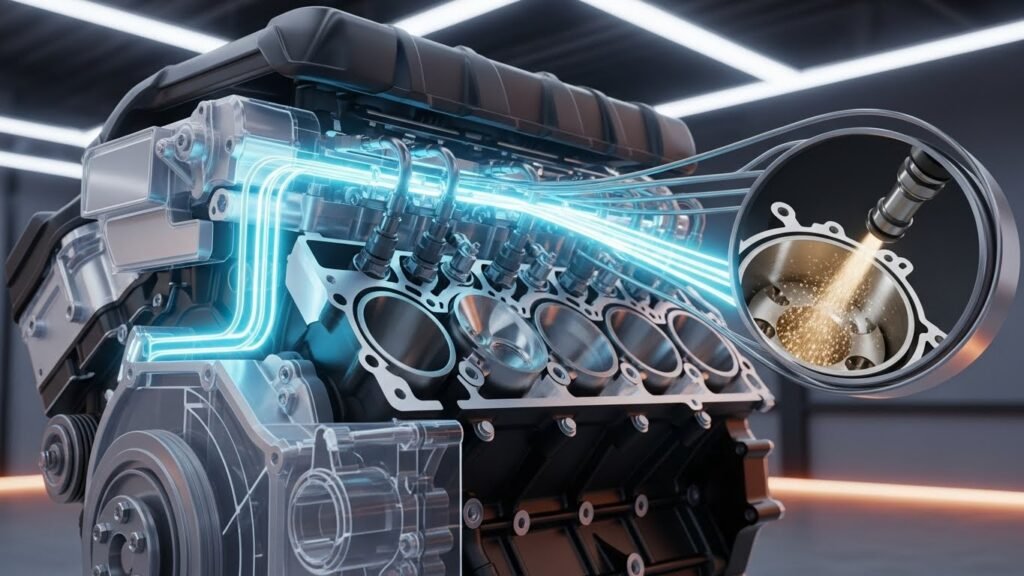
Ever wondered how your car turns liquid gas into pure speed? The secret lies in a tech marvel called the fuel injection system. If you want to know what is the fuel injection system, think of it as the heart of your engine. It pumps life into the cylinders so you can hit the road. This guide will break down every part of this cool setup. You will learn why it beats the old carburetor every single time.
Introduction to Fuel Injection
Knowing what is the fuel injection system starts with its basic job. It is a high-precision setup that delivers fuel to the engine. It must give the exact amount of gas at the perfect time. If the timing is off, your car will run like a total clunker. Modern systems make sure every drop of fuel counts. This keeps your engine running smooth and your wallet happy at the gas pump.
The combustion cycle is where the real magic happens in your car. Fuel enters the system and mixes with air to create a bang. This explosion pushes the pistons down to make the wheels turn. It needs a spark in gas cars or high heat in diesels. Without a solid injection system, this cycle would just fall apart. It is the bridge between the gas tank and the road.
The importance of the system cannot be overstated for any modern driver. It optimizes engine performance so you can pass others on the highway. It helps with fuel economy so you do not waste money. Most importantly, it keeps emissions low to save the planet. A clean-running engine is a happy engine for everyone involved. It is the best way to keep your ride on the road.
- Fuel Delivery: The system sends fuel from the tank to the engine bay.
- Precise Timing: It ensures fuel enters the cylinder during the induction stroke.
- Waste Reduction: Accurate metering prevents excess fuel from leaving the tailpipe.
- Power Boost: Better fuel control leads to higher horsepower and torque.
The Basic Mechanics of Fuel Injection

To grasp what is the fuel injection system, you have to look at pressure. Engines naturally suck in air like a giant vacuum. The fuel system has to fight this by firing gas in under high pressure. This ensures the fuel reaches the right spot even when the engine is spinning fast. It is a constant battle of air and liquid inside the metal. This pressure is what makes modern cars so much faster than old ones.
Atomization is a fancy word for turning liquid into a mist. Think of a spray nozzle on a garden hose. The injector acts like that nozzle to create a fine mist. This mist is much easier to burn than big drops of liquid. If the fuel does not atomize, it will not explode correctly. Good atomization is the key to a clean and powerful burn.
The air-fuel mixture is the final recipe for power in your motor. Engineers call the perfect mix the stoichiometric ratio. This means there is just enough air to burn every bit of gas. If there is too much air, the engine runs lean. If there is too much gas, it runs rich. The injection system works hard to keep this mix just right.
- Spray Pattern: The injector creates a cone-shaped mist for better coverage.
- Vaporization: Smaller droplets turn into gas faster for a better bang.
- Induction Stroke: Most systems spray during the time air enters the cylinder.
- Mixing Zone: Fuel and air blend in the inlet manifold or the port.
Core Types of Injection Control
Continuous Injection Systems
Continuous injection is a simple way to get the job done. In this setup, fuel is sprayed all the time while the engine runs. It does not stop or pulse like a heartbeat. Instead, it just flows into the intake port constantly. This was a popular way to build cars before computers got really smart. It is reliable but not as efficient as newer pulsed systems.
The flow regulation in these systems is purely mechanical. A mechanical control unit decides how much fuel to let through. When you step on the gas, the unit opens up the flow. When you idle, it chokes the flow back down. It does not use fancy computer chips to do the math. It relies on physical parts moving back and forth to manage the gas.
Timed (Pulsed) Injection
Timed injection is what most cars use today for better control. Instead of a constant stream, fuel comes in distinct bursts. These bursts are timed to match when the engine needs them. It is like a high-speed pulse that happens thousands of times a minute. This ensures that no fuel is wasted while the valves are closed. It is a much cleaner way to power a vehicle.
The evolution of this system has been quite a journey. Early versions used mechanical gears to time the pulses. They were complicated and prone to breaking over time. Modern systems use electronics to handle the timing with perfection. This change allowed cars to become much more powerful and efficient. Now, a computer handles everything in the blink of an eye.
- Pulse Width: This is the amount of time an injector stays open.
- Duty Cycle: The percentage of time the injector is active during a cycle.
- Synchronization: Matching the spray to the opening of the intake valve.
- Sequential Injection: Timing each injector individually for every single cylinder.
Mechanical vs. Electronic Systems
Components of Mechanical Fuel Injection
The high-pressure electric fuel pump is the workhorse here. It sits in the gas tank or on the frame. Its only job is to push fuel toward the engine with force. Without this pump, the rest of the system would have no pressure. It creates the “push” that the injectors need to spray. It is usually the first thing to check if a car won’t start.
A fuel accumulator acts like a short-term reservoir for the gas. It keeps the pressure steady so the engine does not stumble. Think of it like a battery but for fuel pressure instead of electricity. It smooths out the pulses coming from the fuel pump. This makes sure the injectors always have a steady supply of fuel. It also helps the car start easier after it has been sitting.
The fuel distributor is the “brain” of a mechanical system. It is often driven by the camshaft to stay in sync. It takes the pressurized fuel and sends it to each cylinder. It meters the gas so everyone gets an equal share. If the distributor fails, some cylinders might get too much or too little gas. This causes the engine to shake and lose a lot of power.
The flap valve is a cool part found in the air intake. It moves up and down based on how much air the engine sucks in. This movement physically moves a shuttle valve in the distributor. When you floor it, the flap opens wide to add more fuel. It is a clever way to measure air without using any sensors. It is pure mechanical engineering at its finest.
Electronic Fuel Injection (EFI)

Solenoid operation is what makes electronic injectors work so fast. A solenoid is just a tiny electromagnet inside the injector. When it gets power, it pulls a needle up to let fuel spray out. When the power stops, a spring snaps it shut instantly. This happens so fast you cannot even see it with your eyes. It is much more precise than any mechanical valve could ever be.
The Engine Control Unit (ECU) is the master computer of the car. It calculates exactly how long to keep the injectors open. This is known as the pulse width in the automotive world. The ECU looks at everything from engine temp to how hard you hit the gas. It makes thousands of decisions every second to keep you moving. It is the real reason modern cars are so reliable.
Sensor integration helps the ECU make the right choices. Oxygen sensors tell the computer if the exhaust is clean. Air mass sensors measure the weight of the air coming in. Temperature sensors let the ECU know if the engine is cold or hot. All this data creates a full picture of what the engine needs. It is like a doctor constantly checking your vitals while you run.
Cold start advantages are a huge plus for EFI systems. In the old days, you had to pull a choke lever to start a cold car. Now, the ECU just tells the injectors to spray more fuel. This creates a rich mixture that helps the engine fire right up. You can just turn the key and go, even in the snow. It takes the guesswork out of driving in the winter.
- Solenoid Valve: The electronic gatekeeper for fuel inside the injector.
- Pulse Duration: The micro-second timing determined by the car’s computer.
- Feedback Loop: Using sensors to correct the fuel mix in real-time.
- Data Processing: The ECU handles input from dozens of engine sensors at once.
Fuel Injection Layouts and Configurations
Single-Point or Throttle Body Injection (TBI)
Single-point injection was the first step away from carburetors. It uses one or two injectors located right at the throttle body. The fuel sprays into the top of the intake manifold. From there, it travels to all the cylinders like a shared straw. It is simple and cheap to build but not very efficient. Most cars moved away from this design in the early 1990s.
Multi-Point Fuel Injection (MPFI)
Multi-point fuel injection is the standard for most cars on the road. Instead of one big injector, every cylinder has its own. These injectors are usually placed in the intake manifold port. This is why it is often called port fuel injection or PFI. It allows for much better control of how much fuel each cylinder gets. This leads to smoother idling and better throttle response.
Direct Injection (DI/GDI)

Direct injection is the latest and greatest in engine tech. It bypasses the intake manifold and valves completely. The injector sprays fuel directly into the combustion chamber. This allows for a much higher compression ratio without causing knocks. It also cools down the cylinder, which helps make more power. Most new high-performance cars use GDI to get the best of both worlds.
- Individual Control: MPFI allows the computer to tune each cylinder separately.
- High Pressure: Direct injection requires much higher pressure to spray into a compressed cylinder.
- Efficiency Gains: GDI can improve fuel economy by up to 15 percent in some cases.
- Manifold Health: Port injection helps keep intake valves clean by washing them with fuel.
Diesel vs. Gasoline Injection Systems: Key Differences

Ignition Methods
The biggest difference between gas and diesel is how they go “bang.” Gasoline engines use spark ignition to get things moving. This means a spark plug creates a tiny bolt of lightning to light the fuel. Diesel engines use compression ignition instead. They squeeze the air so hard that it gets hot enough to light the fuel. There are no spark plugs in a diesel engine at all.
Compression Ratios
Compression ratio is all about how much the engine squeezes the air. Gasoline engines usually have a ratio between 8:1 and 12:1. If they squeeze it any more, the gas might explode too early. Diesel engines need way more heat, so their ratios are much higher. They usually sit between 15:1 and 20:1 for maximum pressure. This high pressure is why diesel engines are built so heavy and strong.
Diesel-Specific Technologies
Common rail injection is the gold standard for modern diesel trucks. It uses a high-pressure rail that acts like a shared tank for all injectors. This rail holds fuel at incredibly high pressure all the time. This allows for multiple injection events in a single stroke. It makes diesel engines much quieter and smoother than the old “clatter” boxes. It is a massive leap forward in diesel engineering.
Injection timing is the most critical part of a diesel engine. In a gas car, you can time the spark to control the explosion. In a diesel, the explosion happens the moment the fuel hits the hot air. This means the injector has to be perfectly on time. If it is even a millisecond off, the engine will lose power or smoke. Diesel mechanics spend a lot of time getting this timing just right.
- High Energy Density: Diesel fuel has more energy per gallon than gasoline.
- Pilot Injection: A small spray before the main one to reduce engine noise.
- Post Injection: A spray after the main bang to help clean the exhaust filter.
- Piezo Injectors: Advanced diesel injectors that use crystals to move even faster.
Maintenance and Care for Longevity
Best Practices for System Health
Using high-quality fuel is the easiest way to protect your car. Cheap gas often lacks the detergents needed to keep injectors clean. Over time, junk can build up and clog the tiny spray nozzles. This ruins the spray pattern and makes your car run like garbage. It is worth spending a few extra cents for Top Tier fuel. Your engine will thank you with more miles and fewer repairs.
Avoid running on empty if you want your fuel pump to last. The fuel in your tank actually acts as a coolant for the pump. When the tank is low, the pump can get too hot and burn out. Also, all the dirt and sediment settle at the bottom of the tank. If you run it dry, the pump might suck that junk into the lines. Try to keep your tank at least a quarter full at all times.
Regular inspections can catch small problems before they get huge. You should have a mechanic check your injectors and pumps every few months. They look for leaks, cracks, or weird noises that mean trouble. Checking the sensors is also a smart move to keep the ECU happy. A little bit of prevention goes a long way in the car world. It is much cheaper than a full engine rebuild.
Professional Servicing
Fuel system cleaning is a great way to restore lost power. Professionals use tools like BG Platinum to flush out carbon buildup. This goes deep into the intake and injectors to melt away the grime. It can make an old car feel brand new again. If your car feels sluggish, a professional cleaning might be the answer. It is one of the best maintenance items you can buy.
Filter replacements are a simple but vital task for every driver. The fuel filter catches all the tiny bits of rust and dirt from the tank. If it gets clogged, the engine will starve for gas and stall out. Most cars need a new filter every 30,000 miles or so. It is a cheap part that protects very expensive injectors. Never skip this step in your maintenance routine.
- Fuel Additives: Specialized liquids you can pour in the tank to clean as you drive.
- Carbon Blast: A deep cleaning method for direct injection engines with heavy buildup.
- Leak Tests: Pressurizing the system to find tiny drips before they cause a fire.
- Voltage Checks: Making sure the injectors are getting the right power from the battery.
Common Faults and Diagnostic Repairs
Identifying System Malfunctions

Rich vs. lean conditions are the two main ways an injection system fails. A rich condition means there is way too much fuel in the mix. You might smell gas or see black smoke coming from the tailpipe. A lean condition means there is too much air and not enough gas. This can cause the engine to overheat or even melt a piston. Both problems will trigger a “Check Engine” light on your dash.
Common symptoms of a failing system are pretty easy to spot. If your car has a rough idle or shakes at stoplights, check the injectors. Stalling out while driving is a major red flag for a bad fuel pump. You might also notice your gas mileage dropping for no reason. If the car feels like it is “hiccuping” when you accelerate, it is time for a checkup. Don’t ignore these signs or you might end up stranded.
Standard Repair Procedures
Injector and pump replacement is a common fix for older high-mileage cars. Internal seals can wear out and cause fuel to leak inside the engine. Mechanical parts in the pump can simply snap or seize up. Replacing these parts usually requires special tools and a bit of labor. However, it is the only way to get a dead fuel system back to life. New parts ensure the pressure stays exactly where it needs to be.
Pressure regulators are small but important parts of the loop. They make sure the fuel rail doesn’t get too much pressure from the pump. If the regulator sticks open, the pressure drops and the car won’t start. If it sticks closed, the pressure gets too high and blows out the seals. Replacing a bad regulator is usually a quick and easy job for a mechanic. It is a vital safety feature for the whole system.
Sensor diagnostics help find the “ghost in the machine.” A mechanic will plug a scanner into your car to see what the sensors are saying. If an oxygen sensor is lying to the ECU, the whole engine will run wrong. Testing the Mass Air Flow (MAF) sensor is also a standard part of the job. Often, a dirty sensor just needs a quick spray of cleaner to work again. It is much cheaper than replacing the whole injection system.
Leak detection is a safety-first priority for any fuel repair. Gas is highly flammable and even a tiny drip is a huge fire risk. Mechanics use “smoke machines” or dyes to find where the fuel is escaping. They check the fuel rails, lines, and all the connection points. If you ever smell raw gas around your car, get it checked immediately. It is better to be safe than sorry when it comes to fuel leaks.
- Scan Tool: A handheld computer used to read error codes from the ECU.
- Pressure Gauge: A tool used to measure the actual PSI in the fuel rail.
- Injector Balance Test: A test to see if all injectors are spraying the same amount.
- Visual Inspection: Checking for frayed wires or cracked rubber hoses under the hood.
Troubleshooting Guide: Rich vs. Lean Engine Conditions
Understanding the balance of your air-fuel mixture is vital for engine health. When the injection system fails to maintain the perfect stoichiometric ratio, the engine will run either rich or lean. This guide helps you identify the symptoms and risks associated with each condition.
Rich Engine Condition
A rich condition occurs when there is too much fuel and not enough air in the combustion chamber.
- Strong Gas Smell: You may notice a heavy scent of raw gasoline around the vehicle.
- Black Exhaust Smoke: Excessive fuel that does not burn completely often exits the tailpipe as black smoke.
- Poor Fuel Economy: Your gas mileage will drop significantly because the engine is wasting fuel.
- Fouled Spark Plugs: Too much fuel can coat the spark plugs in black soot, leading to poor ignition.
- Catalytic Converter Damage: A rich mixture can cause the catalytic converter to overheat and eventually melt.
Lean Engine Condition
A lean condition occurs when there is too much air and not enough fuel in the mixture.
- Engine Overheating: Because fuel helps cool the combustion chamber, a lack of it causes temperatures to skyrocket.
- Engine Knocking: Lean mixtures can cause pre-ignition or knocking, which can destroy pistons and bearings.
- Hesitation and Stalling: The car may “hiccup” or feel sluggish when you try to accelerate.
- Rough Idling: You might feel the car shaking or vibrating when stopped at a light.
- Spark Plug Blistering: Extreme heat from a lean condition can cause the tips of the spark plugs to appear white or blistered.
Common Causes for Both Conditions
While the symptoms differ, many of the same faulty components can cause either a rich or lean state.
- Faulty Oxygen Sensors: If a sensor lies to the ECU, the computer will provide the wrong amount of fuel.
- Dirty Mass Air Flow (MAF) Sensor: A sensor that cannot accurately measure the weight of incoming air will ruin the mixture.
- Bad Fuel Pressure Regulator: A regulator stuck open causes a lean drop in pressure, while one stuck closed creates a rich surge.
- Clogged or Leaking Injectors: Dirty injectors may spray too little fuel (lean), while leaking internal seals can let too much fuel in (rich).
Fuel Injection System Maintenance Checklist
Keeping your fuel injection system in top shape is the best way to maintain engine power and avoid expensive repair bills. Here is a checklist of the essential tasks mentioned in this guide to keep your vehicle running smoothly:
- Use High-Quality Fuel: Always opt for reputable, “Top Tier” gasoline or diesel that contains detergents to prevent carbon and junk buildup in your spray nozzles.
- Keep the Tank at Least 1/4 Full: Avoid running on empty to prevent your fuel pump from overheating and to keep it from sucking up dirt or sediment from the bottom of the tank.
- Replace the Fuel Filter Regularly: Most vehicles require a new filter every 30,000 miles to stop rust and dirt from reaching and damaging expensive injectors.
- Schedule Quarterly Inspections: Have a professional mechanic check your injectors, pumps, and sensors every few months to catch small leaks or cracks before they become major problems.
- Perform Professional Fuel System Cleanings: Use services like BG Platinum or carbon blasting to melt away grime and carbon buildup, especially if your car feels sluggish or has high mileage.
- Monitor Dashboard Warning Lights: Never ignore a “Check Engine” light, as it often signals rich or lean fuel conditions that can melt pistons or destroy your catalytic converter.
- Watch for Performance Red Flags: Get a checkup immediately if you experience a rough idle, “hiccuping” during acceleration, or a sudden drop in gas mileage.
Conclusion
Understanding what is the fuel injection system reveals why modern vehicles are more reliable, powerful, and efficient than their predecessors. This high-precision tech marvel serves as the heart of your engine, bridging the gap between the gas tank and the road to ensure that every drop of fuel counts. By moving away from the old carburetor, these systems have revolutionized the combustion cycle, providing the exact amount of gas at the perfect time to keep your engine running smooth and your wallet happy.
Whether your vehicle utilizes the simplicity of single-point injection, the balance of multi-point port injection, or the raw efficiency of gasoline direct injection, the goal remains the same: optimizing performance while keeping emissions low. For diesel drivers, the reliance on high-pressure common rail systems and compression ignition offers a unique set of benefits, including higher energy density and a massive leap forward in engineering. Regardless of the fuel type, the importance of this system cannot be overstated for any modern driver looking to maintain their ride for the long haul.
To ensure longevity and avoid the frustration of a “clunker” that shakes or loses power, proactive maintenance is essential. By using high-quality fuel, avoiding running on empty, and scheduling regular professional cleanings like carbon blasting, you can prevent the most common malfunctions. A little bit of prevention goes a long way, protecting expensive components like injectors and pumps from premature failure. Ultimately, a well-cared-for fuel injection system is the best way to keep your ride on the road and performing at its absolute peak.
Frequently Asked Questions About Fuel Injection Systems
What is the history behind the invention of fuel injection?
Fuel injection was first used in stationary engines and aircraft during the early 1900s to solve carburetor issues at high altitudes. It eventually transitioned to racing cars and luxury vehicles before becoming the industry standard in the late 1980s to meet strict emission laws.
Does a fuel injection system use more electricity than a carburetor?
Yes, because it requires an electric high-pressure fuel pump and a computer (ECU) to fire the solenoids in the injectors. A carburetor is mostly mechanical and relies on the engine’s vacuum to pull fuel into the cylinders.
How does altitude affect what is the fuel injection system performance?
Modern systems use a barometric pressure sensor to tell the ECU when the air is thinner at high altitudes. The system automatically reduces the fuel spray to maintain the perfect air-fuel ratio, preventing the engine from running too rich.
What is the difference between an open loop and a closed loop system?
An open loop system uses pre-set data to spray fuel, usually when the engine is cold. A closed loop system uses the oxygen sensor to provide a “feedback loop,” allowing the ECU to make real-time corrections based on exhaust data.
Why do some performance cars use two injectors per cylinder?
High-performance engines often use dual-stage injection to provide better atomization at both low and high RPMs. One injector handles idling and cruising, while the second kicks in during wide-open throttle to provide the extra fuel needed for maximum power.
What is a fuel rail and what does it do?
The fuel rail is a sturdy pipe that holds the pressurized fuel right above the injectors. It acts as a manifold, ensuring that every injector has access to a steady, high-pressure supply of fuel at all times.
Can water in the gas tank ruin my fuel injectors?
Yes, water is incompressible and provides no lubrication, which can cause the internal needle of the injector to seize or rust. Water also promotes the growth of bacteria in diesel systems, which can clog the fine mesh filters inside the injectors.
What are piezo injectors found in modern diesel engines?
Piezo injectors use special crystals that expand when hit with electricity, allowing them to open and close faster than traditional solenoids. This speed allows for “multi-stage injection,” where the fuel is sprayed in five or more tiny bursts during a single combustion stroke.
How does the fuel pressure regulator work?
The regulator uses a spring-loaded diaphragm to bleed off excess fuel pressure and send it back to the gas tank via a return line. This ensures the pressure at the injector stays constant regardless of how hard the fuel pump is working.
What is the role of the throttle position sensor (TPS)?
The TPS tells the ECU exactly how far you have pushed the gas pedal down. The ECU uses this data to instantly increase the “pulse width” of the injectors so the car accelerates without hesitating.
Does fuel injection help with engine braking?
Yes, modern ECUs can perform a “deceleration fuel cut-off,” where they stop spraying fuel entirely when you lift your foot off the pedal while in gear. This saves gas and uses the engine’s internal friction to help slow the vehicle down.
What are the symptoms of a leaking fuel pressure regulator?
If the regulator leaks internally, fuel can be sucked through the vacuum line into the intake, causing a very rich condition. Symptoms include hard starting, black smoke from the exhaust, and fouled spark plugs.
Why is gasoline direct injection (GDI) prone to carbon build-up?
In older port injection systems, the gasoline washes over the intake valves, keeping them clean. In GDI, the fuel is sprayed directly into the cylinder, so the valves never get “washed,” leading to oil and carbon gunk sticking to them over time.
What is the “limp home mode” in an electronic fuel injection system?
If a major sensor fails, the ECU uses “limp mode” to run the engine on safe, pre-programmed settings. This allows you to drive to a mechanic at low speeds without causing permanent damage to the engine.
How do fuel injectors contribute to “engine knock”?
If an injector is clogged and sprays too little fuel, the “lean” mix can cause temperatures to skyrocket, leading to pre-ignition or knocking. This knocking can quickly destroy pistons and bearings if not fixed.
What is the purpose of the fuel accumulator in older Mercedes or VW cars?
The accumulator holds fuel under pressure even after you turn the engine off. This prevents the fuel from turning into vapor inside the lines, which avoids “vapor lock” and makes the car easier to start when the engine is hot.
How does the ECU know when to spray if the cam sensor fails?
Many systems can use the crankshaft position sensor as a backup to determine engine timing. The car might run a bit rougher, but the computer can still calculate the induction stroke well enough to keep the engine running.
What is a “cold start injector”?
Some older electronic systems used a single extra injector just for starting the car in freezing weather. It acted like an automatic choke by spraying extra fuel into the intake manifold only when the engine was cold.
Can I clean my own fuel injectors?
You can use pour-in additives to clean light deposits, but heavy clogs usually require professional “ultrasonic cleaning”. This involves removing the injectors and placing them in a machine that uses sound waves to shake the dirt loose.
What is the relationship between the fuel system and the catalytic converter?
The fuel system must stay perfectly balanced because a rich mixture will overheat and melt the catalytic converter. The oxygen sensors constantly monitor this relationship to protect the expensive precious metals inside the exhaust.