 Skip to content
Keeping your ride safe means paying attention to that pesky tire pressure light. This little icon on your dashboard is actually a big deal for your safety. Your tire pressure monitoring system, or TPMS, is always watching your wheels. It makes sure you do not end up on the side of the road with a flat. If you see that amber light, it is time to act fast.
Why Do You Have a Flashing Tire Pressure Light?
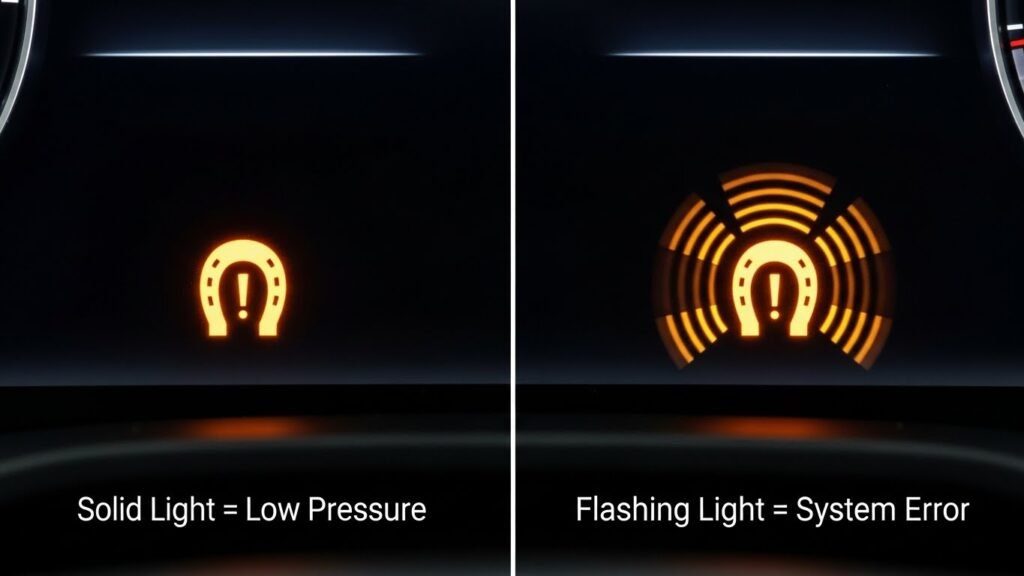
A flashing tire pressure light is different from a solid one. It usually means the system itself is having a rough time. A solid light says your air is low, but a blinker says something is broken. This could be a bad sensor or a dead battery in the wheel. You should never just ignore it and keep cruising.
- Urgency of the Warning: A flashing light is a high-priority alert that requires immediate attention to ensure vehicle safety.
- Safety Risks: Driving with a faulty system can mess up your handling and how fast you can stop in a pinch.
- System Malfunction vs. Pressure Issues: It helps you know if you need a gas station air pump or a real mechanic.
Understanding the Flashing TPMS Light On
When that light starts acting up, it signifies a deep issue with the tech inside your tires. Ignoring this warning can really ruin your day on the road. You want your car to handle perfectly when you are taking sharp turns.
- Visual Recognition: Look for the horseshoe shape with an exclamation point right in the middle of your dash.
- System Diagnostics: If it flashes for about a minute and then stays solid, the computer is telling you it lost touch with a sensor.
- The Role of the TPMS Sensor: These little gadgets live inside your wheels and talk to your car’s main brain.
What Should I Do If My TPMS Light Came On?

Do not panic if you see the tire pressure light pop up while you are driving. The first thing to do is find a safe spot to pull over. You need to check if a tire is actually going flat or if it is just a glitch. It is better to be safe than sorry when you are out on the highway.
- Immediate Safety Steps: Pull over far away from moving cars so you have room to work.
- Visual Inspection: Walk around the car and look for any tires that look squished or have nails in them.
- Manual Pressure Verification: Grab a tire gauge and check the PSI for every single wheel.
- Checking the Spare: Don’t forget the spare tire in the trunk because it might have a sensor too.
- Referencing Manufacturer Standards: Check the sticker on the driver’s door jamb to see the correct PSI for your specific truck or SUV.
- Inflation and Deflation: Add air if they are low, but don’t overdo it because overinflated tires ride rough.
- Recalibration Drive: Sometimes you just need to drive over 20 mph for a bit so the car can find the new pressure.
Tire Warning Light
The tire pressure light is more than just an annoying glow on your dashboard. It is a federal safety requirement for all modern cars and trucks. This system helps you save a ton of cash on gas over time. It also keeps your tires from wearing out way too fast.
- The Criticality of TPMS: This system is your first line of defense against a dangerous blowout.
- Impact on Fuel Efficiency: Tires with the right amount of air roll easier and help you get more miles per gallon.
- Tire Longevity: Keeping the air right helps your tread stay even so you don’t have to buy new tires as often.
Resetting Your Tire Pressure Light
Sometimes the light stays on even after you put air in the tires. This is when you need to perform a manual reset to clear the code. There are a few different ways to get this done depending on your vehicle. You can usually do this right in your own driveway with no special tools.
The High-Speed Reset (The Highway Method)
This is the easiest way to get the sensors to wake up. You just need a clear stretch of road where you can maintain speed. It gives the computer enough time to talk to all four wheels.
- Driving Speed: Hit the highway and maintain at least 50 mph.
- Duration: Keep that speed up for about 10 minutes straight.
- Final Step: The sensor should reset the very next time you turn the car back on.
Using the TPMS Reset Button
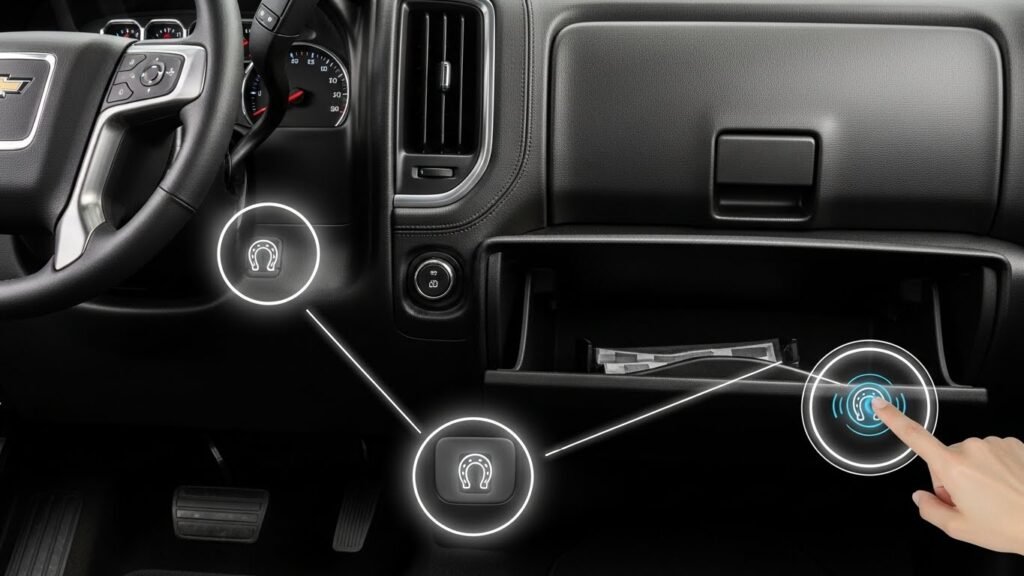
Many vehicles like a Chevrolet Silverado or GMC Sierra have a dedicated button. This is the most direct way to tell the car that the tires are good.
- Ignition Sequence: Put the key in and turn it to the On position but do not crank the engine.
- Locating the Button: Look under the steering wheel or check inside your glove box.
- The Blink Rule: Hold that button down until the tire pressure light blinks three times and then let go.
- Wait Time: Start the car and let it sit for about 20 minutes to finish the refresh.
The Over-Inflation Method
This is a old-school trick that works by changing the pressure rapidly. It forces the sensor to send a new signal to the computer.
- Step One: Fill every tire to 3 PSI over the recommended amount on the door sticker.
- Step Two: Deflate them all the way down until they are empty.
- Step Three: Fill them back up to the perfect PSI and see if the light goes away.
The Battery Discharge Technique
If nothing else works, you might need to reboot the car’s entire electrical system. This is like turning your phone off and back on again.
- Disconnect: Use a wrench to take the positive battery cable off while the car is off.
- Drain: Turn the car on and hold the horn for about 3 seconds to get rid of any leftover power.
- Reconnect: Hook the battery back up and the system should start fresh.
Will My Tire Pressure Light Reset Itself?
In most newer cars, the system is pretty smart but not perfect. Some will figure out the pressure is fixed on their own after a short drive. Others are a bit more stubborn and need you to push some buttons.
- Automatic vs. Manual Systems: Direct TPMS usually updates faster than indirect systems that use the ABS.
- The Continuous Reminder Logic: The light stays on to make sure you don’t forget about your safety.
- Post-Inflation Expectations: Don’t worry if it stays on for the first mile or two after you fill up.
Importance of TPMS Reset
Resetting the system is a vital part of your regular maintenance routine. It ensures that the computer knows what “normal” looks like for your tires. This prevents the light from coming back on when nothing is wrong.
- Accurate Monitoring: Calibration allows the system to catch tiny leaks before they become big problems.
- Preventing Accidents: Proper air levels keep your car stable when you have to swerve suddenly.
- System Integrity: A working TPMS helps your traction control and antilock brakes work their best.
Seeing a Flashing Tire Pressure Light? (Deep Dive into Hardware)
If the light is flashing, you might be looking at a hardware failure. These sensors are not immortal and eventually wear out. Understanding the tech can help you decide when to call a pro.
- Sensor Battery Life: Most of these sensors have a little battery inside that lasts about five to ten years.
- Replacement Cycles: When the battery dies, you usually have to replace the whole sensor unit.
- Signal Interference: Sometimes things like cheap phone chargers can mess with the radio signal from your wheels.
I Filled Up My Tires, So Why Is My TPMS Light Still On?

It is super frustrating when you do the work and the light won’t leave you alone. There are a few common reasons why this happens to drivers every day.
- The Spare Tire Factor: Many people forget that the spare hanging under their truck has a sensor too.
- Sensor Malfunction: Road salt or hitting a big pothole can physically break the sensor inside the rim.
- Incorrect Calibration: If your tire gauge is old and busted, you might be putting in the wrong amount of air.
- Extreme Temperature Changes: When it gets cold fast, the air inside shrinks and trips the sensor.
| Problem | Possible Cause | Quick Fix |
| Light stays solid | Low air pressure | Fill tires to PSI on door jamb |
| Light flashes then stays solid | Sensor failure | Visit a service center |
| Light won’t reset | Faulty reset button | Check owner’s manual for menu reset |
| Light comes on in morning | Cold weather | Check PSI when tires are cold |
Why Not to Ignore Your Tire Pressure Light
You might think it is just a suggestion, but that light is a warning. Driving on low tires is a recipe for disaster on the road. It can lead to a lot of expensive repairs down the line.
- Potential Safety Hazards: Underinflated tires get way too hot and can blow out at high speeds.
- Handling Performance: Your car will feel lazy and won’t grip the road well in the rain.
- Environmental Impact: Low tires make your engine work harder, which creates more pollution.
Professional Service and Diagnostics
If you have tried all the home tricks and the tire pressure light is still glowing, it is time for help. A certified technician has the right tools to talk to your car’s computer. They can find the exact wheel that is causing the drama.
- When to Visit a Service Center: If the light keeps flashing after a reset, you need a pro to look at it.
- Diagnostic Tools: Mechanics use special scanners to check the battery life and signal of every sensor.
- Comprehensive Inspections: While they are at it, they can check your alignment to make sure your tires last forever.
How to Check Your Tread Depth with the Penny Test
Checking your tread depth is a vital part of keeping your tires in top shape. While the tire pressure light monitors air, the penny test helps you see if your tread is deep enough to grip the road properly.
- Find a Penny: Use a standard copper penny for this quick check.
- Hold the Coin: Grip the penny so that you are holding the body of the coin with Abraham Lincoln’s head facing down.
- Insert into Tread: Place the top of the penny into the deepest groove of your tire tread.
- Check the Head: Look closely at how much of Lincoln’s head is covered by the rubber.
- Verify Safety: If you can see the very top of Lincoln’s head, your tread is too thin and it is time for new tires.
- Check Multiple Spots: Perform this test in several places around each tire to look for uneven wear.
- Identify Uneven Wear: If the tread is deep in one spot but thin in another, you may need a wheel alignment.
- Safety First: Making sure your tread is deep enough prevents your car from feeling lazy or losing grip in the rain.
Your Essential Monthly Tire Maintenance Checklist
Keeping your tires in top shape is the best way to stay safe on the road and save money. Follow this simple guide once a month to ensure your vehicle handles perfectly and your fuel efficiency stays high.
- Check the Pressure when Cold: Always test your tires when they are cold, meaning the car has been parked for at least three hours.
- Use a Reliable Gauge: Don’t rely on the gas station pump gauge; use your own high-quality tire gauge for an accurate reading.
- Find the Right PSI: Look at the sticker on your driver’s door jamb to find the exact pressure your specific vehicle needs.
- Inspect the Spare: Open the trunk or look under your truck to check the spare tire’s air level, as it often has a sensor too.
- Look for Damage: Walk around the car and check for nails, cuts, or any strange bulges in the sidewalls.
- Verify the Tread: Make sure your tire tread is deep enough to grip the road properly in rain or snow.
- Match the Door Sticker: Inflate or deflate each tire until it matches the “Recommended Amount” shown in your owner’s manual or door jamb.
- Secure the Valve Caps: Ensure every tire has a cap on the valve stem to keep dirt and moisture away from the sensor.
- Confirm the Dashboard: Start your car and check that the tire pressure light is off before you head out.
- Plan a Drive: If you added air, drive for about 10 minutes at highway speeds to let the computer recalibrate the sensors.
Conclusion and Maintenance Tips
Keeping your tire pressure light off is all about being proactive. Check your air at least once a month with a good gauge. This keeps you safe and keeps your car running smooth for years to come.
- Monthly Checks: Don’t wait for the light to turn on before you look at your tires.
- Genuine Parts: If you need a new sensor, get an OEM one so it talks to your car perfectly.
- Safety First: Treat that little amber light with the respect it deserves and stay safe out there.
Frequently Asked Questions
What happens if I ignore the tire pressure light for too long?
Ignoring the tire pressure light can lead to severe tire damage and safety risks. Driving on underinflated tires causes them to overheat, which significantly increases the chance of a dangerous blowout at high speeds. It also ruins your fuel economy because the engine has to work harder to move the vehicle.
Does a tire rotation affect the tire pressure light?
Yes, a tire rotation can sometimes confuse the TPMS because the sensors are now in different positions than the computer expects. While many modern vehicles will relearn the new positions automatically, some older models require a manual reset or a special tool to update the locations.
Can a tire sealant like Fix-a-Flat damage my sensor?
Many tire sealants are labeled as sensor-safe, but they can still gum up the small opening in a TPMS sensor. If the sealant blocks the sensor’s ability to read air pressure, it may cause the tire pressure light to stay on permanently or flash.
Why does my light turn off after I drive for a few miles?
As you drive, the friction between the tire and the road generates heat. This heat causes the air inside the tire to expand and increase in pressure. If your pressure was just barely low enough to trigger the light, the heat from driving might raise it enough to turn the light off temporarily.
Can cold weather cause the tire pressure light to come on?
Cold temperatures cause air to become denser and take up less space, which drops the PSI in your tires. For every 10-degree drop in temperature, your tires can lose about 1 PSI. This is why many drivers see the tire pressure light on cold winter mornings.
Is there a difference between direct and indirect TPMS?
Direct TPMS uses actual pressure sensors inside each wheel to send data to the car. Indirect TPMS does not have sensors but uses the Antilock Braking System (ABS) to track how fast the wheels are spinning. If one wheel spins faster than the others, the computer assumes it is low on air and triggers the tire pressure light.
How much does it cost to replace a TPMS sensor?
Replacing a single TPMS sensor usually costs between $50 and $150 depending on the vehicle make and model. This price typically includes the cost of the part and the labor required to remove the tire and program the new sensor.
Can I use an aftermarket sensor instead of an OEM one?
You can use aftermarket sensors, but they must be programmed correctly to match your vehicle’s specific frequency. Using Original Equipment Manufacturer (OEM) parts like those for a Chevrolet Silverado or GMC Sierra ensures the best compatibility and reliability.
Do I need to reset the system after a wheel alignment?
Generally, a wheel alignment does not require a TPMS reset because it does not involve changing the air pressure or moving the sensors. However, if the technician adjusted the tire pressure during the service, they should ensure the light is off before returning the car.
Can a faulty battery cable cause the light to stay on?
A loose or corroded positive battery cable can cause electrical glitches that affect the dashboard display. Since the TPMS is an electronic system, poor power flow can lead to false warnings or prevent the system from resetting properly.
Why does the light flash when I use a phone charger?
Some cheap or unshielded electronic devices, like phone chargers or GPS units, can create radio frequency interference. Since TPMS sensors transmit data via radio waves, this interference can cause the tire pressure light to flash as if there is a system error.
Is the TPMS reset button always in the same place?
No, the location varies wildly by vehicle; it might be under the steering wheel, in the glove compartment, or accessed through a touchscreen menu. Always consult your owner’s manual to find the exact location for your specific model.
Will a car wash damage my tire pressure sensors?
Standard car washes are safe for TPMS sensors because the sensors are protected inside the tire and rim assembly. However, high-pressure power washers used directly on the valve stem could potentially damage the external seals.
Do trailers have tire pressure monitoring systems?
Many modern heavy-duty trucks, like the GMC Sierra, offer integrated trailer TPMS that allows you to monitor the trailer tires from the truck’s dashboard. These systems usually require special sensors to be installed on the trailer wheels.
Can I turn off the TPMS system permanently?
No, it is not recommended or legal in many areas to disable the TPMS because it is a mandated safety feature. If the light is on, it is better to diagnose and fix the issue than to try and bypass the system.
Does the age of the tire affect the sensor?
While the tire age doesn’t directly affect the sensor, the sensor’s own battery life is limited. If your tires are old enough to be replaced, it is often a good idea to replace the sensors at the same time since the internal batteries are likely nearing the end of their life.
Why does the light stay on after I’ve used an air compressor?
If the light stays on, you may have an incorrect calibration on your air compressor’s gauge. It is always best to double-check the pressure with a high-quality manual tire gauge to ensure the PSI is exactly where it needs to be.
Can hitting a pothole trigger the tire pressure light?
Yes, a hard impact from a pothole can cause a sudden “burp” of air to escape from the tire, dropping the pressure. It can also physically damage the sensor or cause the battery inside the sensor to become loose or fail.
What is the “driver information center” reset?
In many modern SUVs and trucks, you don’t use a physical button but navigate through the “driver information center” on the instrument panel using steering wheel buttons. You simply scroll to the tire pressure screen and hold the “OK” or “Set” button to recalibrate.
Can I replace just the battery in a TPMS sensor?
No, the batteries in most TPMS sensors are potted in an epoxy resin to protect them from vibration and moisture. This means you cannot replace the battery alone and must replace the entire sensor unit when the battery dies.