 Skip to content
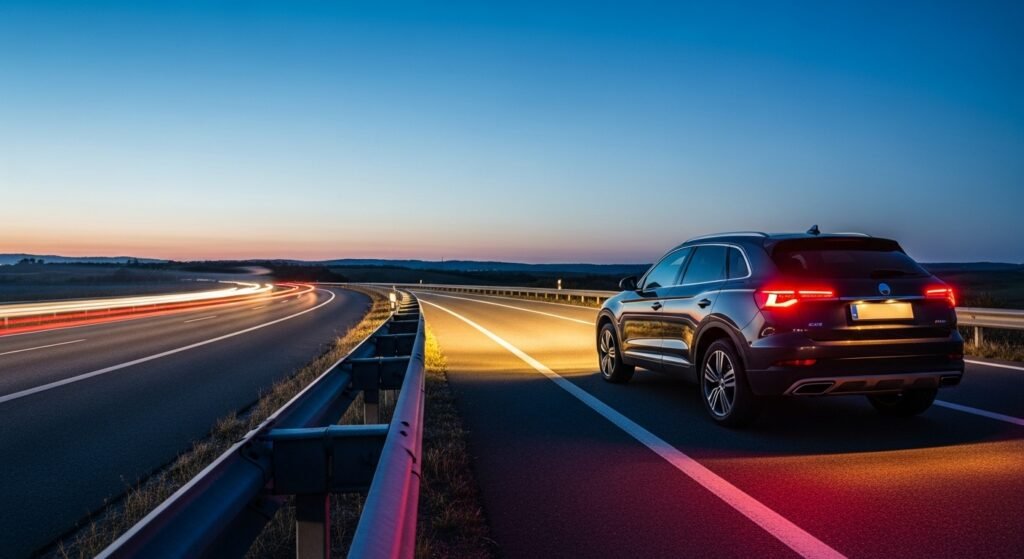
Imagine you are cruising down the highway. Suddenly, your engine loses power. Your heart drops as you realize you have a stalled vehicle on your hands. This situation is scary, but you can handle it. You need to stay calm and follow a clear plan. Being ready for a stalled vehicle can save your life.
Immediate Safety Actions and Roadside Maneuvers
When your car dies, you must act fast. Every second counts when you are in a stalled vehicle. You want to get out of the way of other drivers. Your main goal is to keep yourself and your passengers safe.
Pull Over to the Side of the Road
The moment you feel the car stutter, look for an exit. You should move toward the side of the highway immediately. Do not wait for the car to stop completely. It is much easier to steer while the car still has some speed.
Getting to the right side of the road is the best move. This side usually has a wider shoulder for a stalled vehicle. It keeps you away from the fast lanes and opposing traffic. This makes it easier for you to get out eventually.
You should still use your turn signals. Other drivers need to know where you are going. Even if your engine is dead, your battery might still run the lights. Move as far onto the shoulder as the asphalt allows.
- Right Side Priority: Always aim for the right shoulder of the road.
- Signal Intent: Use your blinkers to show you are moving over.
- Max Distance: Pull as far away from the traffic lanes as possible.
Signal Distress to Other Motorists

Once you stop, you need to be visible. Turn on your hazard warning lights right away. These flashing lights tell everyone that you have a stalled vehicle. It is a universal sign that you need help or space.
Hazard lights are your best friend in this situation. They help drivers see you from far away. This is especially true at night or in bad weather. Make sure they stay on the whole time you are stuck.
- Hazard Lights: Turn them on the second you realize there is trouble.
- Visual Warning: Keep them flashing to warn approaching traffic.
Managing Vehicle Position and Impact Mitigation
If you are on flat ground, think about your gear. Some pros say to leave a stalled vehicle in Neutral. They also say to avoid using the park brake. This sounds weird, but there is a reason.
If another car hits you from behind, Neutral helps. It allows your car to roll forward a bit. This absorbs some of the energy from the crash. It can keep your car’s frame from getting totally crushed.
- Neutral Gear: Consider using neutral on flat surfaces.
- Brake Strategy: Avoid the parking brake to reduce impact force.
Safety Protocols for Occupants and Specific Locations
Sitting in a stalled vehicle is nerve-wracking. You might want to run for help, but hold on. Where you stay depends on where the car stops. Safety is about making smart choices in the moment.
Guidelines for Staying Inside the Vehicle
If you are stuck in a traffic lane, stay put. Never try to get out of a stalled vehicle in the middle of a road. High-speed traffic is too dangerous for people on foot. Drivers might not see you until it is too late.
Keep your seat belt fastened while you wait. It protects you if someone hits your stalled vehicle. Keep an eye on your rearview mirror at all times. Watch for cars that might be coming toward you too fast.
- Stay Put: Do not exit the car if you are in a live lane.
- Seat Belts: Keep your harness on for extra protection.
- Mirror Check: Monitor the traffic coming up behind you.
Stalling in High-Risk Areas (Bridges and Overpasses)

Bridges are very dangerous for a stalled vehicle. There is usually no shoulder to hide in. If you stall there, pull the park brake immediately. You do not want the car rolling into more trouble.
You should only exit through the passenger side door. This keeps you away from the traffic side. Walk several hundred feet ahead of the car. Find a safe spot on the walkway or catwalk to wait.
- Park Brake: Use it on bridges to keep the car still.
- Passenger Exit: Only get out on the side away from traffic.
- Safe Distance: Stand far ahead of the car on the bridge path.
Handling Passengers and Pets
Your passengers need to follow the same safety rules. If they stay in the car, they must stay buckled. If it is safer behind a guardrail, move them carefully. Always keep everyone together so nobody gets lost.
Pets are a huge risk near a stalled vehicle. Never let your dog or cat out on the roadside. They might get scared and run into the highway. Keep them inside the car or on a very tight leash.
- Passenger Safety: Ensure everyone stays buckled or moves to a guardrail.
- Pet Control: Never let animals loose near the road.
Identifying the Root Causes of Engine Stalling

Why did your car just quit on you? A stalled vehicle usually has a specific mechanical failure. Understanding these can help you explain the problem to a mechanic. It also helps you prevent it from happening again.
Faulty Fuel System Issues
Your engine needs gasoline to keep running smoothly. If the fuel stops flowing, you have a stalled vehicle. The most common reason is simply an empty tank. Always check your gauge before a long trip.
Sometimes the tank is full, but the fuel stays stuck. This usually means you have a malfunctioning fuel pump. If the pump dies, the engine starves and shuts off. You cannot fix this on the side of the road.
- Empty Tank: Running out of gas is a top cause of stalls.
- Fuel Pump: A broken pump won’t send gas to the engine.
Ignition System Failures

The ignition system creates the spark that burns the fuel. If that spark disappears, your engine will stall instantly. Worn-out spark plugs are often the main culprit here. They eventually lose the ability to fire correctly.
Faulty ignition coils can also cause major trouble. These parts send the electricity to the spark plugs. If the coils fail, the engine’s cylinders won’t fire. This leads to a sudden and frustrating stalled vehicle.
- Spark Plugs: Old plugs can’t ignite the fuel mixture.
- Ignition Coils: Electrical failure here stops the engine cold.
Battery and Electrical Stress

Your battery does more than just start the car. It helps stabilize the entire electrical system while you drive. A weak battery puts a lot of stress on the alternator. This can lead to a voltage dip that kills the engine.
If your electrical system is overloaded, things go south. High demand from lights and AC can be too much. If the alternator cannot keep up, the vehicle stalls. Keeping your terminals clean of corrosion can prevent this.
- Weak Battery: Causes the alternator to work too hard.
- Overload: Too much electrical demand can shut down the car.
- Corrosion: Dirty terminals block the flow of power.
Airflow and Intake Obstructions
Engines need to breathe just like people do. They need a perfect air-fuel mixture to keep running. If the air filter is clogged with dirt, the engine chokes. This lack of airflow is a common cause of stalling.
A bad oxygen sensor can also mess up the mix. It tells the computer how much air is coming in. If the sensor is wrong, the engine might run out of fuel. This imbalance leads to an uneven idle and eventually a stall.
- Clogged Filters: Dirt blocks the air the engine needs.
- Mixture Issues: Too much or too little air kills the combustion.
Exhaust System Blockages
The engine has to get rid of old gases. If the exhaust is blocked, the engine cannot finish its cycle. A clogged catalytic converter is a frequent problem. Carbon deposits build up over time and choke the flow.
Backpressure issues can also lead to a stalled vehicle. If the muffler is damaged, it might block the pipes. This keeps the engine from “exhaling” properly. The car will lose power and then die.
- Catalytic Converter: Carbon buildup restricts exhaust flow.
- Backpressure: Blocked pipes prevent the engine from cycling.
Emergency Response and External Assistance
When you are stuck, you need a solid plan. Getting your stalled vehicle moving again is the priority. If it won’t budge, you need professional help. Knowing who to call makes a huge difference.
Attempting to Restart the Engine
Sometimes a stalled vehicle just needs a minute. If you are in a safe spot, try to restart it. Turn the key or push the button after a short rest. Occasionally, the engine will fire back up for a bit.
If it starts, do not assume everything is fine. You should still head to the nearest repair shop. Intermittent stalls are a sign of bigger problems coming. Do not push your luck on a busy highway.
- Quick Rest: Give the car a moment before trying the starter.
- Temporary Fix: Be aware that the car might stall again soon.
Dealing with Flat Tires While Stalling
A flat tire can feel like the engine is dying. If you have a damaged wheel, don’t stop in traffic. Driving on a flat tire is bad, but being hit is worse. Keep moving slowly toward the shoulder or a parking lot.
Your safety is worth more than a new rim. Drive on the shoulder until you are far from traffic. It is much easier to change a tire in a safe spot. Never try to fix a tire on the side of the road.
- Slow Movement: Keep going until you find a safe area.
- Rim vs Safety: Protect your life, not just the car parts.
Calling for Professional Help
Use your cell phone to call for assistance immediately. If you don’t have a phone, look for an emergency call box. If you are stuck in a live lane, call 911 right away. They can send help to move your stalled vehicle.
Contact your roadside assistance or a tow service. Tell them your exact location using mile markers. Give them details about your car, like the color and model. This helps the driver find you much faster.
- Emergency Calls: Dial 911 if you are in a dangerous spot.
- Tow Service: Call for a truck to move the car to a shop.
- Location Details: Use mile markers to help find you.
Proper Use of Safety Equipment

Flares and safety triangles can help other drivers see you. Only set them up if you can walk safely away from traffic. Place them far behind your stalled vehicle to give people a warning. This creates a longer “buffer zone” for your safety.
Be careful with fire when using flares. They get very hot and can start a fire easily. Don’t put them near dry grass or spilled gasoline. Always keep a fire extinguisher in your emergency kit just in case.
- Visibility Tools: Use flares and triangles to mark your spot.
- Fire Safety: Keep flares away from flammable items.
Long-Term Prevention and Maintenance
You don’t want to deal with a stalled vehicle again. Prevention is the best way to stay on the road. A little bit of care today saves you from a tow truck tomorrow. It also keeps your car’s value high.
Professional Diagnostic Assessments
After your car stalls, you must visit a mechanic. They can use an OBD-II scanner to find the problem. This tool reads diagnostic trouble codes from the car’s computer. It takes the guesswork out of the repair.
Many shops offer a vehicle inspection to find hidden issues. They might check your fuel injectors or ignition coils. If you are scared to drive, use a pick-up service. Some shops will even come to get your car for you.
- OBD-II Scan: Uses computer codes to find the root cause.
- Full Inspection: Checks all systems to prevent future stalls.
Avoid Dangerous Roadside Repairs
Never try to fix a stalled vehicle on the side of a highway. Working under the hood near fast cars is very risky. One distracted driver can cause a terrible accident. This is how many roadside fatalities happen every year.
Save the tools for the garage or a parking lot. Even changing a tire can be deadly if you are too close to traffic. Let the professionals with bright trucks handle the roadside work. It is simply not worth the risk to your life.
- No Highway Fixes: Never work on the car near moving traffic.
- Safety First: Wait for a tow to a safe location.
Emergency Preparedness Checklist

You should always be ready for the worst-case scenario. Keep a list of emergency numbers in your glovebox. Include your insurance, a local tow company, and family members. This saves time when you are stressed out.
Every car needs a well-stocked emergency kit. This kit should have jumper cables, a flashlight, and a first aid kit. Don’t forget to keep your phone charged on long road trips. Having these items ready makes a stalled vehicle much easier to handle.
- Emergency Contacts: Keep important numbers in your car.
- Emergency Kit: Carry tools, a flashlight, and medical supplies.
- Phone Power: Always bring a charger or power bank.
Summary Table: Stalled Vehicle Action Plan
| Situation | Immediate Action | Safety Step |
| Engine Stutters | Move to the right shoulder | Turn on hazard lights |
| Stuck in Lane | Stay in the vehicle | Keep seat belt fastened |
| Stalled on the Bridge | Use the park brake | Exit via the passenger door |
| Flat Tire | Drive slowly to safety | Do not stop on the highway |
| Waiting for Help | Monitor the rearview mirror | Lock all car doors |
Dealing with a stalled vehicle is a part of life for many drivers. If you stay calm and follow these steps, you will be fine. Remember to focus on your safety above everything else. A car can be fixed, but you cannot. Keep this guide in mind next time you hit the road.
Frequently Asked Questions
What should I do if my car stalls while I am in the middle of a left turn?
If your vehicle stalls during a turn, your steering will become much heavier because the power-steering pump has stopped. You must grip the wheel firmly and use your physical strength to complete the turn or steer toward the nearest curb. Do not slam on the brakes immediately, as this may leave you stranded in the direct path of oncoming traffic; try to use your remaining momentum to clear the intersection.
Is it normal for the steering wheel to feel like it is locked after a stall?
The steering wheel is not actually locked, but the loss of hydraulic or electric power assistance makes it feel that way. You can still steer the car, but it will require significantly more effort than usual. Continue to turn the wheel with force to guide the vehicle toward a safe stopping point.
Why does my car stall only when I am coming to a complete stop?
Stalling at stops is often caused by a faulty Idle Air Control (IAC) valve or a vacuum leak. These components manage the engine’s idle speed when you aren’t pressing the gas pedal. If they fail, the engine cannot maintain enough RPMs to keep running once the vehicle stops moving.
Can a faulty transmission cause a vehicle to stall?
Yes, specifically in automatic vehicles, a failing torque converter clutch can cause a stall. If the clutch fails to disengage when you slow down, it is similar to stopping a manual car without pressing the clutch pedal, which causes the engine to die.
Does extreme heat contribute to engine stalling?
Extreme temperatures can cause “vapor lock,” where the fuel changes from a liquid to a gas before reaching the engine. This gas bubbles in the fuel lines, preventing the engine from getting the liquid fuel it needs to function, leading to a stall.
Can a stalled vehicle cause damage to the braking system?
Stalling does not damage the brakes themselves, but it does affect the brake booster. You will typically have one or two “power-assisted” brake presses left after the engine dies. After that, the brake pedal will become very stiff, and you will need to press down much harder to stop the car.
What is the role of the Crankshaft Position Sensor in stalling?
The Crankshaft Position Sensor monitors the rotation speed and position of the engine. If this sensor fails or sends incorrect data to the car’s computer, the engine will not know when to spark the cylinders, causing the vehicle to stall instantly while driving.
Should I use my emergency brake to stop a stalled vehicle?
You should only use the emergency brake (parking brake) as a last resort if your primary foot brakes fail. If you must use it, apply it slowly and steadily. Ripping the emergency brake up quickly can lock the rear wheels and cause the car to spin out of control.
Can a loose gas cap cause a car to stall?
While a loose gas cap usually just triggers the “Check Engine” light due to EVAP system leaks, in some modern vehicles, it can cause pressure issues that lead to rough idling or stalling. It is always worth ensuring the cap is clicked into place.
Is it dangerous to jump-start a car that stalled while driving?
If the car stalled due to a dead alternator, jump-starting might only get it running for a few minutes before it stalls again. It is safer to have the charging system tested before attempting to drive the vehicle long distances after a jump.
Why does my car stall when I turn on the Air Conditioning?
This is usually a sign that the engine’s computer or the IAC valve is not compensating for the extra load the AC compressor puts on the engine. The added drag becomes too much for the engine to handle at idle, causing it to shut down.
Can a heavy keychain cause a car to stall?
Yes, a very heavy keychain can pull down on the ignition switch, especially when driving over bumps. This can accidentally move the ignition from the “on” position to the “accessory” or “off” position, killing the engine mid-drive.
What should I do if my car stalls in deep water or a flood?
If your car stalls while driving through deep water, do not try to restart it. You may have “hydro-locked” the engine by sucking water into the cylinders. Attempting to start it can cause permanent, catastrophic engine failure.
Can old or contaminated engine oil lead to stalling?
Indirectly, yes. Extremely old oil can lead to sludge buildup that affects the variable valve timing (VVT) solenoids. If these solenoids get stuck, the engine timing will be off, which can cause the car to stall at low speeds.
How does a clogged fuel filter differ from a bad fuel pump?
A clogged fuel filter usually causes stalling during high-speed acceleration or when going uphill because the engine can’t get enough volume of fuel. A bad fuel pump often causes the car to stall randomly or fail to start at all.
Why does my manual transmission car stall when I brake suddenly?
In a manual car, if you do not press the clutch pedal down while braking hard, the slowing wheels will force the engine RPMs too low, causing it to stall. Always remember to “clutch in” during emergency stops.
Can a blown fuse cause a vehicle to stall?
Yes, if the fuse for the fuel pump, ignition system, or the Engine Control Unit (ECU) blows, the car will lose power immediately. This is often a sign of a deeper electrical short circuit.
Does a failing alternator always give a warning before stalling the car?
Not always. While a battery light on the dashboard is common, an alternator can sometimes fail suddenly without warning. You might notice the headlights getting dim or the dashboard needles flickering just seconds before the stall occurs.
Can a bad Mass Airflow (MAF) sensor be cleaned to prevent stalling?
In many cases, yes. Using a specialized MAF sensor cleaner can remove dust and oil from the sensor wires. This restores accurate air-readings to the computer and can solve many mysterious stalling issues.
What is the danger of “coasting” in neutral after a stall?
Coasting in neutral is fine to get to the shoulder, but you must remember that you have limited steering and braking. Do not coast for long distances; focus on getting the vehicle off the road as quickly as your remaining momentum allows.