 Skip to content
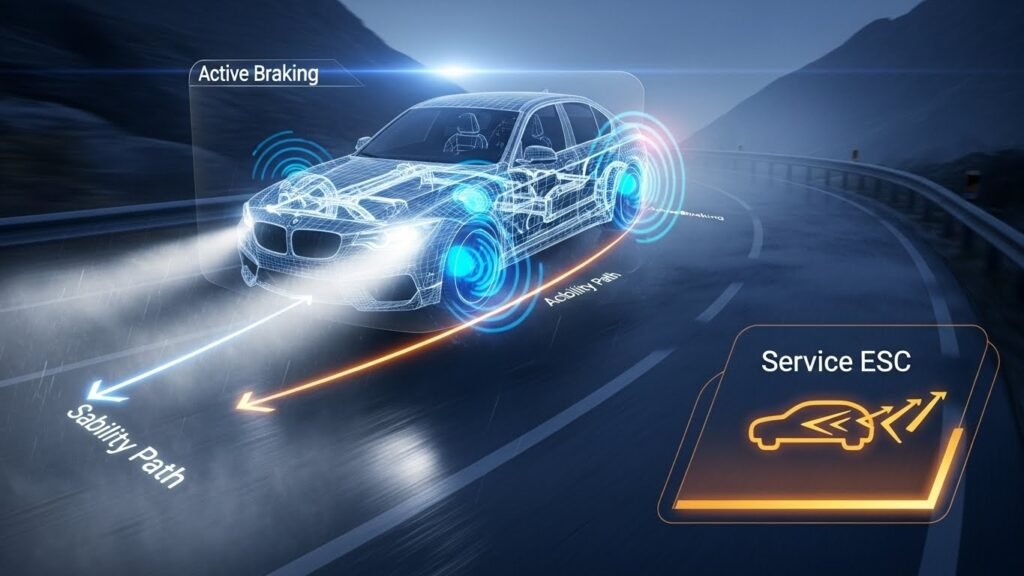
Driving your car should feel smooth and safe every single time. Sometimes a weird light pops up on your dash and ruins the vibe. One of the most common warnings is the service electronic stability control message. This little light means your car needs some serious attention right away. You might feel a bit worried when you see it on your dashboard. Don’t sweat it because we are going to break it all down for you. We will look at what this system does and why it matters so much. You will learn how to spot problems and get them fixed fast. This guide covers everything from simple sensor issues to complex computer calibrations.
Understanding Electronic Stability Control (ESC)
The electronic stability control system is like a guardian angel for your car. It constantly watches how your vehicle moves on the road. If things get shaky, the system jumps in to help you out. It is one of the coolest pieces of tech in your ride today.
Definition and Core Function
The main job of the ESC is to keep you from spinning out. It uses a bunch of smart sensors to track where you are going. The system compares where you want to go with where the car is actually headed. If those two things don’t match, the ESC knows there is trouble. It works in the background without you even noticing most of the time.
The Physics of Intervention
When the system senses a skid, it takes quick action to fix it. It can actually pump the brakes on just one specific wheel. This helps pull the car back into the right lane. The ESC can also turn down the engine power if you are going too fast. This combination of braking and throttle control keeps you on the pavement. It happens much faster than any human driver could ever react.
Interconnected Nature
The ESC system does not work all by itself in a vacuum. It shares a lot of parts with your anti-lock brakes. It also talks to the traction control and steering systems. Because they share data, a problem in one area often affects the others. This makes the whole vehicle work as one big safety unit.
The Evolution of ESC
Stability control used to be a fancy feature for expensive luxury cars. Now, every new car sold in the USA must have it by law. It has saved thousands of lives since it became standard equipment. The technology gets better and faster every single year. Modern systems can handle much tougher road conditions than older ones.
Key Components of the ESC System
To understand the service electronic stability control light, you need to know the parts. Many different pieces of hardware work together to keep you stable. If one piece breaks, the whole system might shut down.
Steering Angle Sensor

- Positioning: This sensor sits right behind your steering wheel inside the column.
- Data Metrics: It measures how far you turn the wheel and how fast you do it.
- The Feedback Loop: It tells the computer exactly which way you want the car to go.
Hydraulic Control Unit (HCU)
- Fluid Management: The HCU acts like the heart of your braking system.
- Pressure Application: It can send brake fluid to any wheel at any time.
- Emergency Action: This unit makes the physical corrections needed to stop a slide.
Integrated Sensor Network
- Wheel Speed Sensors: These tiny sensors watch how fast each tire is spinning.
- Yaw Rate Sensors: This part measures if the car is rotating or spinning around.
- Lateral Acceleration Sensors: These track how hard the car is pulling to the side.
- Throttle Position Sensor: This tells the computer how much gas you are giving it.
Common Causes of the ESC Warning Light
There are several reasons why your dash might say service electronic stability control. Some are easy fixes, while others need a pro mechanic. Knowing the causes helps you figure out what to do next.
Wheel Misalignment

- External Impacts: Hitting a huge pothole or a curb can knock your wheels crooked.
- Driving Symptoms: You might feel the car pulling or see the steering wheel tilted.
- Sensor Confusion: If the wheels are crooked, the sensors send bad data to the computer.
Manual System Deactivation
- The ESC OFF Button: Many cars have a button to turn the system off manually.
- Dashboard Lights: The light stays on to warn you that the safety system is off.
- Deep Snow Scenarios: You might turn it off if you are stuck in deep mud or snow.
Steering Angle Sensor Failure
- Calibration Loss: If the sensor loses its place, it gets very confused.
- Computer Discrepancy: The car thinks you are turning when you are actually going straight.
- Electronic Faults: Wear and tear can eventually kill the internal circuits of the sensor.
Anti-Lock Brake System (ABS) Malfunction
- Shared Components: ESC needs the ABS pump and sensors to do its job.
- Low Brake Fluid: If your fluid is low, the whole system might stop working.
- Worn Brake Pads: Very thin pads can sometimes trigger a system warning light.
Electrical Issues and Low Battery
- Voltage Sensitivity: These computers need a steady flow of strong electricity.
- Weak Battery: A dying battery can cause the electronics to act totally crazy.
- Blown Fuses: A simple cheap fuse can sometimes be the only thing that is wrong.
Decoding the Service ESC Message
When that light comes on, it is your car trying to talk to you. You need to understand what the different signals actually mean. It is the first step in getting your ride back to normal.
The Dashboard Icon
The icon usually looks like a car with two curvy lines underneath it. It represents a vehicle that is losing its grip on the road. Some cars just display the words service electronic stability control on a screen.
Flashing vs. Solid Light
- Flashing Light: This usually means the system is working hard to save you right now.
- Solid Light: A steady light means there is a problem that needs to be fixed.
- Color Codes: Yellow usually means a warning, while red means it is very serious.
Diagnostic Necessity
You cannot just guess what is wrong with these high-tech systems. A mechanic needs to plug in a tool to read the error codes. This tells them exactly which sensor or part is having a bad day.
Safety Urgency
Driving with this light on means you have no stability backup. If you hit a patch of ice, the car won’t be able to help you. It is best to get it checked out as soon as you possibly can.
The Critical Link Between ESC and ADAS

Modern cars have a lot of driver assistance features called ADAS. These systems are all connected to your stability control. If one has a problem, it can mess up everything else too.
Shared Infrastructure
- Emergency Braking: Your car uses ESC sensors to know when to stop for a crash.
- Lane Keep Assist: This system uses the steering sensors to keep you in the lines.
- Adaptive Cruise Control: It manages your speed and braking using the same hardware.
Precise Calibration Requirements
- Avoiding False Alerts: If sensors are off by even a little, the car might brake for no reason.
- Inconsistent Behavior: Poor calibration makes the car feel jerky or unpredictable.
- The Domino Effect: One bad sensor can turn off five different safety features at once.
Scenarios Requiring Professional Calibration

Sometimes you need a pro to reset the brain of your car. This is called calibration, and it is super important. It happens more often than you might think during regular service.
Post-Mechanical Repair and Maintenance
- Suspension Work: Changing struts or control arms moves the wheels around.
- Wheel Alignments: Every time you get an alignment, the ESC sensors need a reset.
- Tire Replacement: Brand new tires can sometimes change how the sensors read the road.
Post-Collision and Structural Repairs
- Minor Bumps: Even a small tap can knock a sensitive sensor out of its place.
- Airbag Deployment: If the airbags go off, the whole safety computer needs a checkup.
- Frame Straightening: Structural repairs always require a full system recalibration.
Part Replacement Protocols
- New Sensors: You can’t just plug in a new sensor and drive away.
- Software Matching: The new part must be introduced to the car’s computer.
- Zero-Point Calibration: This tells the car what “straight ahead” looks like again.
Advanced Troubleshooting and DIY Precautions
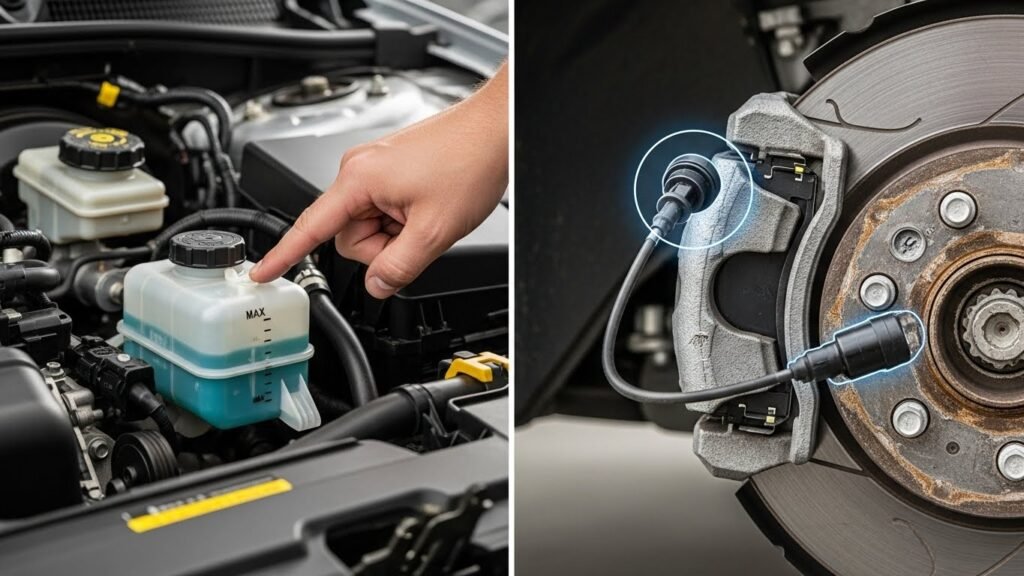
If you like to work on your own car, you can do some checks. But you have to be careful with these complex electronics. Some things are best left to the experts at the shop.
Diagnostic Trouble Codes (DTCs)
- OBD-II Scanners: You can plug a scanner into the port under your dash.
- Chassis Codes: Look for codes that start with the letter C for chassis issues.
- Code Translation: Use a manual to find out what specific numbers like C0045 mean.
Preliminary Checks for the Driver
- Check Fluid Levels: Make sure your brake fluid reservoir is totally full.
- Inspect Tires: Ensure all four tires have the exact same air pressure.
- Clean the Sensors: Look for mud or gunk stuck near the wheels and clear it off.
Environmental and Road Condition Factors
Where you drive can cause the service electronic stability control light to pop up. The world outside is a messy place for sensitive electronics. Nature can sometimes fool the car’s computer.
The Impact of Extreme Weather
- Ice and Slush: Frozen gunk can block the sensors and cause an error.
- Salt Corrosion: Road salt can eat through the wires that connect the sensors.
- Hydroplaning: Very heavy rain can trigger the system to work overtime.
Rough Terrain and Off-Roading
- Dust and Mud: Dirt can get inside the sensor rings and cause bad readings.
- Vibration: Driving on washboard roads can rattle connectors loose over time.
Modern Servicing Challenges and Responsibility
Fixing cars today is more about computers than wrenches. Mechanics have to be part-time software engineers now. It makes servicing the ESC a bit more complicated than it used to be.
Technology and Tooling
- Smart Diagnostics: Shops must buy very expensive tools to talk to your car.
- Firmware Updates: Sometimes the car just needs a software patch to fix a bug.
- Specialized Training: Techs have to go to school to learn how these systems work.
Professional Standards
- Safety Liability: Shops are responsible for making sure the car is safe to drive.
- Test Driving: A good mechanic will always drive the car to test the system.
- OEM Guidelines: Pros follow the rules set by the car maker for every repair.
The Future of Stability Control
The tech in your car is only going to get smarter from here. Engineers are finding new ways to keep us safe on the road. The future looks very bright for vehicle stability.
Torque Vectoring
Modern cars can now send different amounts of power to each wheel. This helps you turn corners like a pro race car driver. It makes the car feel much more agile and fun to drive.
Electric Vehicles (EVs) and ESC
Electric motors can change their speed almost instantly. This lets the ESC work much faster than it can with a gas engine. It provides a whole new level of control on slippery roads.
Predictive ESC
Future systems will use AI to guess when you might slip. They will watch the weather and road data from the cloud. The car will prepare itself for a skid before it even happens.
| Component | Common Symptom | Likely Fix |
| Wheel Speed Sensor | Speedometer acting weird | Sensor replacement |
| Steering Angle Sensor | Off-center steering wheel | Recalibration |
| Brake Fluid | Low pedal feel | Refill fluid |
| Battery | Multiple dash lights | New battery |
If you see that service electronic stability control message, don’t ignore it. Your car is telling you that its safety systems are down. Check your basics like tire pressure and fluid levels first. If that doesn’t work, take your ride to a pro mechanic with the right tools. Staying on top of these repairs keeps you and your family safe on the road.
Frequently Asked Questions About Service ESC
Many drivers have the same worries when their dash lights up. Here are the answers to the most common questions people ask.
Is it safe to drive with the ESC light on?
It is not an immediate emergency, but your safety net is gone. You should drive very carefully and get it fixed soon. Avoid high speeds and sharp turns until the light is out.
How much does it cost to fix the ESC system?
The price can vary a lot depending on what is actually broken. A simple fuse is a few dollars, but a new computer is expensive. Most sensor repairs cost between two hundred and five hundred dollars.
Can I reset the ESC light myself?
You can try unhooking the battery for a few minutes to reset it. However, if the problem is still there, the light will just come back. It is always better to find the real root cause of the error.
Will a bad alignment cause the service ESC message?
Yes, this is actually one of the most common reasons for the light. If your steering wheel is not straight, the computer gets very confused. A simple alignment often turns the warning light right off.
What is the difference between Traction Control and Electronic Stability Control?
While they are related, traction control specifically prevents wheels from spinning when you accelerate on slippery surfaces. Electronic Stability Control is a more advanced system that manages the overall direction of the vehicle to prevent sliding or spinning out during turns or sudden maneuvers.
Can a faulty wheel bearing trigger the Service ESC light?
Yes, a wheel bearing that is failing can develop play or wobble, which interferes with the wheel speed sensor’s ability to get an accurate reading. This inconsistency is often interpreted by the car’s computer as a system fault, leading to the warning light appearing on your dashboard.
Why does my ESC light come on only when I turn the steering wheel?
This is a classic sign of a failing clock spring or a steering angle sensor that is losing connection at certain angles. If the internal wiring is frayed, it may maintain a connection while driving straight but lose it once the wheel is rotated, tripping the system error.
Does a car’s lift kit or lowering springs affect the ESC system?
Modifying a vehicle’s ride height significantly changes the suspension geometry and the center of gravity. Without professional recalibration, the ESC sensors may miscalculate the vehicle’s lean or “yaw,” causing the system to intervene aggressively or show an error message.
Can rodent damage cause stability control failure?
Rodents often chew through thin electrical wires located in the wheel wells or engine bay. Since the ESC system relies on external wiring for wheel speed sensors, chewed wires are a very common cause for sudden system failure and warning lights.
Will the ESC system work if my check engine light is on?
In many modern vehicles, the computer will automatically disable the ESC and Traction Control systems if there is an engine performance issue. This is a “fail-safe” mode because the ESC needs precise control over engine torque to work correctly, which it cannot guarantee if the engine is malfunctioning.
Is the ESC system covered under my powertrain warranty?
Typically, ESC components like sensors and modules are considered part of the electrical or “bumper-to-bumper” warranty rather than the powertrain warranty. However, coverage varies by manufacturer, so it is important to check your specific policy details.
Can a bad alternator cause the ESC light to flicker?
Yes, the ESC module is extremely sensitive to voltage fluctuations. If your alternator is failing and providing inconsistent power, the ESC system may “reboot” or error out, causing the light to flicker or stay on even if the mechanical parts are fine.
Do I need to calibrate my ESC after replacing a windshield?
If your vehicle uses a camera-based ADAS system mounted to the windshield, you absolutely do. These cameras work with the ESC to provide lane-keeping and emergency braking; if the camera is slightly off after a glass replacement, the stability systems will not function accurately.
Can mismatched tire brands trigger the Service ESC light?
Even if the tires are the same size, different brands or models can have slightly different circumferences or grip levels. This can cause the wheels to rotate at slightly different speeds, which the ESC computer might interpret as a loss of traction.
Does ESC help with towing a trailer?
Many modern trucks and SUVs have a specialized “Trailer Sway Control” which is an extension of the ESC system. It uses the ESC sensors to detect the side-to-side wagging of a trailer and applies specific brakes to the vehicle to settle the trailer back into line.
Can extreme heat cause the ESC system to fail?
Extreme heat can cause electronic control modules to overheat or lead to “heat soak” in sensors located near the braking system. While rare, high temperatures can lead to temporary system shutdowns until the components cool down.
Is it possible for the ESC to engage when I am not skidding?
This is known as a “false intervention.” It usually happens because a sensor is loose or poorly calibrated, leading the car to believe it is sliding when it is actually driving normally. This can be dangerous as the car may brake unexpectedly.
How does a “Clock Spring” relate to the ESC system?
The clock spring is a spiral-wound electrical connector that allows the steering wheel to turn while maintaining a connection to the airbag and steering sensors. If this part breaks, the steering angle sensor data is lost, and the ESC light will illuminate.
Can I pass an emissions test or state inspection with the ESC light on?
In many regions, safety inspections will fail a vehicle if any primary safety warning light, including ESC or ABS, is illuminated. However, it typically does not affect the emissions (smog) portion of the test unless it is linked to a check engine light.
Does brake bleeding require a special tool for ESC-equipped cars?
For many modern vehicles with ESC, a standard manual bleed is not enough to remove air from the Hydraulic Control Unit. Mechanics often use a “Tech 2” or similar scan tool to cycle the internal valves of the HCU during the bleeding process.
Can a heavy load in the trunk trigger an ESC error?
If a vehicle is severely overloaded in the rear, it changes the pitch of the car, which can affect the lateral acceleration and pitch sensors. If the sensors detect the car is at an unusual angle for an extended period, it may trigger a service light.
Why did my ESC light come on after I used a spare tire?
Spare tires (especially “donuts”) are usually a different diameter than standard tires. Because the spare rotates faster than the other wheels, the ESC system detects a speed mismatch and disables itself to prevent damage or incorrect braking.
Can a dirty sensor ring cause intermittent ESC lights?
The “tone ring” or reluctor ring on the axle can become clogged with rust, metallic debris, or thick mud. This prevents the magnetic sensor from getting a clean reading, which often causes the light to pop on and off seemingly at random.
Does the ESC system use the car’s GPS?
In some high-end modern vehicles, the ESC system is “navigation-aided.” It uses GPS data to know if a sharp curve is coming up and pre-fills the braking system or adjusts the suspension to prepare for the turn, enhancing the stability response.