 Skip to content

Keeping your ride safe starts with your tires. Most folks look at the tread to see if it is worn down. But there is a hidden danger that most people miss. Tires actually have an expiration date. You can find this by looking at the tire manufacture date on the sidewall. Even if a tire looks brand new, the rubber can rot from the inside out over time. This guide will show you how to find that date code. You will learn how to read it like an expert. We will cover everything from the DOT code to basic tire care. Let’s get your vehicle ready for the road with some easy tips.
Understanding the Tire Date Code and Its Importance
The tire date code is a small set of numbers that tells a big story. It is basically the birth certificate for your tires. Every tire made for the road has one of these codes. It is required by law in the United States. Knowing the tire manufacture date helps you stay safe while driving. Old tires can fail suddenly even if they have plenty of tread left. This is why you need to check the age of your tires every year. It is one of the simplest ways to keep your family safe on the highway.
Overview of the Department of Transportation (DOT) Numbering System
The Department of Transportation, or DOT, sets the rules for tire safety. They created a special numbering system so every tire can be tracked. This system is called the DOT code. It is found on the tire sidewall near the rim. The code tells you where the tire was made and when it was made. It also includes information about the tire size and construction. Without this system, it would be impossible to know if your tires are too old to use.
Why the Date Code is the Birth Certificate of Your Tire
Just like people, tires get old and less flexible. The rubber compound starts to break down the moment the tire is finished at the factory. This process is called deterioration. The tire manufacture date tells you exactly how long that rubber has been aging. Even if the tire was sitting in a dark warehouse, it is still getting older. This is why the date code is so important for used car buyers. You want to know if those “new” tires are actually ten years old.
The Role of the Tire Identification Number (TIN) in Consumer Safety
The Tire Identification Number, or TIN, is the full string of characters on the sidewall. It provides a way for the government to track every single tire sold. This is a huge deal for consumer safety. If a specific factory makes a mistake, the TIN allows for a quick recall. It ensures that bad tires are taken off the road before they cause accidents. By checking your TIN, you can see if your tires are part of any safety warnings.
What is the Tire Identification Number (TIN)?
The TIN is more than just a date stamp. It is a detailed code that contains a lot of data. Most people just call it the DOT code, but the TIN is the official name. It consists of a sequence of letters and numbers. These characters identify the manufacturer, the factory, and the tire size. It is the most important marking on the tire sidewall besides the brand name. Learning to read it gives you total control over your tire maintenance.
Relationship Between the DOT Code and the TIN
Many people use the terms DOT code and TIN interchangeably. However, there is a small technical difference between them. The letters “DOT” simply mean the tire meets federal safety standards. The characters that follow those letters make up the TIN. So, the DOT symbol is the marker, and the TIN is the actual data. You will always find them right next to each other on the tire.
How the TIN is Used by Manufacturers for Quality Control
Manufacturers use the TIN to keep their production lines organized. Every batch of tires gets a specific code. This helps them track quality over time. If a certain batch shows signs of premature wear, they can find the exact machine that made them. It also helps with inventory management at tire dealers. They can make sure they are selling the oldest stock first to keep things fresh. This system keeps the whole industry running smoothly and safely.
Where to Find the Tire Date Code
Finding the tire manufacture date is easy once you know where to look. It is always located on the tire sidewall. You might have to grab a flashlight if your tires are dirty. Look for the letters “DOT” in small print. The date code will be at the very end of that string of characters. Sometimes it is only on one side of the tire. If you don’t see it, check the side facing the inside of the vehicle.
Locating the Code on the Tire Sidewall
The sidewall is the smooth part of the tire between the tread and the metal rim. It is covered in numbers and letters. You are looking for a sequence that starts with “DOT”. After those letters, you will see a series of groups of characters. The very last group is what you need. It is usually a four-digit number in a small raised box. That is your tire manufacture date.
Identification of the “DOT” Symbol as the Starting Marker
The “DOT” symbol is your starting line. It is required by the Department of Transportation on all legal street tires. If a tire does not have “DOT” on it, it might not be safe for road use. Always look for this symbol first when inspecting a new set of tires. It guarantees that the manufacturer followed basic safety rules. Once you find it, you are just a few inches away from the date code.
How to Read and Decipher the Tire Date Code
Reading the code is like cracking a simple secret message. It is not as hard as it looks at first glance. The TIN can have up to 13 characters in total. These are broken down into specific groups. Each group has a unique meaning. The most important part for most drivers is the very last group. But understanding the whole code can be very helpful for maintenance.
Breakdown of the Character Sequences
The code is divided into three or four main parts. Here is how they usually break down on a standard tire:
- Plant Code is the first group and tells you where the factory is.
- Size Code tells you the dimensions of the tire.
- Internal Code is for the manufacturer’s own tracking.
- Date Code is the final set of numbers that shows the age.
The Plant Code
The first two or three characters after “DOT” are the plant code. This tells you the specific factory that built the tire. For example, a certain code might mean a factory in Ohio. Another code might point to a facility in Finland. This is very useful if there is a recall. It allows the government to target only the tires made at one specific location.
The Size Code
After the plant code, you will find a grouping for the tire size. This is usually one or two characters. It corresponds to the physical dimensions of the tire. It ensures the tire matches the specifications for the vehicle it is going on. While you can find the size in larger print elsewhere, this code is for official tracking. It keeps the records accurate for the Department of Transportation.
Manufacturer Internal Codes
The next few characters are internal codes used by the brand. These are often optional for the manufacturer. They use them to track the specific construction materials or tread patterns. It helps them identify different versions of the same tire model. For a regular driver, these numbers don’t mean much. They are mostly for the engineers and factory workers.
The Date Stamp
This is the part everyone cares about. The date stamp is the final group of digits in the TIN. It tells you the exact week and year the tire was made. On modern tires, this is always a four-digit number. It is often slightly separated from the rest of the code. This makes it easier to find during a quick safety check. Always check this before you buy a used car.
Evolution of the Tire Date Code Format
The way we track the tire manufacture date has changed over the years. As technology got better, the codes became more detailed. Older tires used a different system than the ones we use today. It is important to know the difference so you don’t get confused. Modern standards are much safer and easier to read. Let’s look at how these formats evolved over the decades.
Tires Manufactured After the Year 2000

If your tires were made after the year 2000, they use a four-digit code. This is the standard for almost every tire on the road today. The four digits are easy to interpret once you know the pattern. It is the most reliable way to check for tire safety.
- The Week of Manufacture is represented by the first two digits.
- The Year of Manufacture is represented by the last two digits.
- WWYY format is the technical name for this four-digit layout.
The New 13-Character TIN Requirement
The government is currently updating the TIN to be even more detailed. The new standard requires a total of 13 characters. This is because the number of tire factories around the world is growing.
- Plant codes are moving from two characters to three characters.
- Mandatory info like tire type is now required instead of being optional.
- Compliance deadline for this new format is April 13, 2025.
- Traceability is improved with these extra digits for better safety.
Tires Manufactured Before the Year 2000
Tires made before the year 2000 are very different. They only used a three-digit code. The first two digits were the week, but the last digit was just the year. For example, a “9” could mean 1999 or 1989. This was very confusing and led to safety issues.
- Ambiguity made it hard to tell exactly how old a tire was.
- Deterioration is a huge risk for any tire this old.
- Safety warning experts say you should never drive on a three-digit code tire.
Why the DOT Code is Essential for Safety
The DOT code is not just red tape. It is a vital tool for keeping you alive on the road. Without it, we would have no way to manage tire safety across the country. It allows for a massive database of information that protects every driver. From the tire manufacture date to the factory location, every bit of data matters. Here is why you should always pay attention to it.
Product Registration
When you buy new tires, you should always register them. You can use the DOT code to do this on the manufacturer’s website. This gives the brand your name and address. If there is ever a problem with that batch of tires, they can find you. It is the best way to ensure you get notified about safety issues. Most people skip this step, but it only takes a minute.
Recall Identification
Tire recalls happen more often than you might think. Sometimes a machine at a factory breaks and produces a bad batch of rubber. The DOT code is the only way to know if your tires are affected. If you hear about a recall on the news, check your sidewall immediately. You can see if your plant code and date match the warning. If they do, you can usually get a free replacement.
Liability and Warranty
Most tire warranties are based on the tire manufacture date. If your tire fails, the company will check the code to see how old it is. If the tire is past a certain age, the warranty might be void. This is also important for insurance companies. If you have an accident on ten-year-old tires, they might not cover the claim. Keeping track of your date codes protects your wallet too.
Determining the Service Life of a Tire
How long does a tire actually last? This is a question every driver asks. There is no single answer because everyone drives differently. However, there are some general rules that experts follow. These rules are based on how rubber ages over time. Even if you don’t drive much, your tires are still ticking toward their end.
The Six-Year Rule
Most tire manufacturers recommend replacing tires after six years of use. This is because the rubber compound starts to harden. Once the rubber is hard, it doesn’t grip the road as well. This can make your stopping distance much longer. Even if the tread looks deep, the rubber might be too dry to be safe. Six years is a good time to start looking for a new set of all-season tires.
The Ten-Year Limit
The ten-year limit is the absolute maximum age for any tire. Experts say you should replace a tire once it hits ten years from the tire manufacture date. This applies even if the tire has never been used. Spare tires are a great example of this. Many people have a ten-year-old spare in their trunk that is unsafe to use. If your date code shows a year from a decade ago, get rid of it.
Distinguishing Between Age and Condition
Age and condition are two different things, but they are related. A six-year-old tire that was stored in a garage might look great. A three-year-old tire that sat in the hot sun might be falling apart. You have to check both.
- Age is determined by the tire manufacture date.
- Condition is determined by visual inspection of the tread and sidewall.
- Service life is the result of how well you balance both factors.
Factors Beyond the Date Code: Checking Tire Condition
While the date is huge, it isn’t the only thing that matters. You also need to look at the physical state of the tire. Environmental factors can speed up the aging process. High heat, sunlight, and even ozone can damage rubber. You should do a quick walk-around of your car every month. Look for anything that seems out of the ordinary.
Inspecting Tire Tread Wear
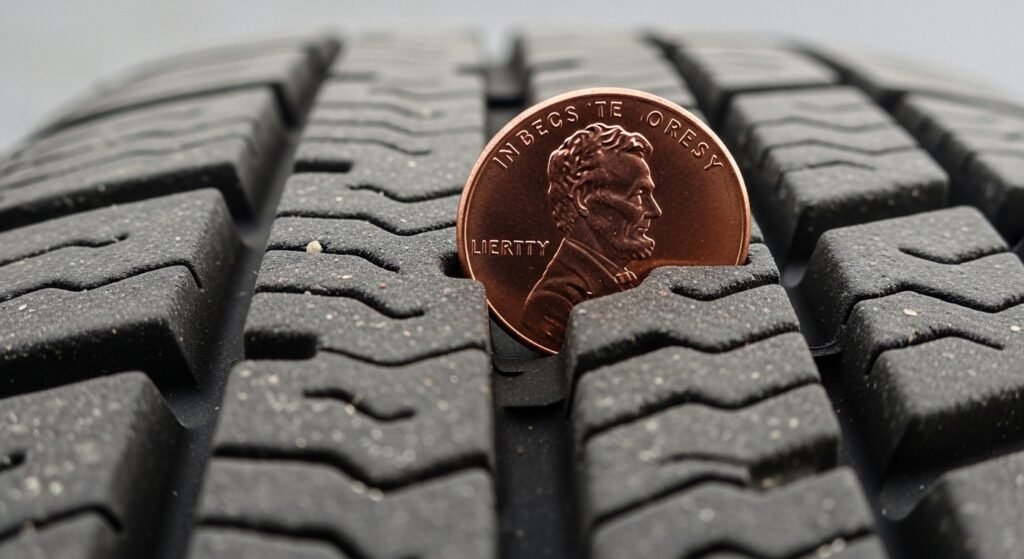
Tread wear is the most common reason for tire replacement. The tread is the part of the tire that touches the road. As you drive, it slowly wears away. Once it gets too thin, you lose traction in the rain or snow.
- Tread depth should be checked regularly for safety.
- Tread wear indicators are small bars inside the grooves that show when it’s time for a change.
- The Penny Test is an easy way to check your tread at home.
- Uneven wear can signal a problem with your car’s alignment.
Rubber Deterioration

Rubber deterioration is often called “dry rot.” It happens when the chemicals in the rubber start to evaporate. This makes the tire brittle and prone to cracking.
- Dry rot looks like tiny cracks on the sidewall or between the tread blocks.
- Oxidation is a chemical reaction that makes the rubber stiff and weak.
- Visual inspection is the only way to catch these issues before they cause a blowout.
Tire Pressure Management
Keeping the right amount of air in your tires is vital. Tire pressure affects how the tire wears and how much heat it builds up. Low pressure makes the sidewalls flex too much, which causes heat damage.
- Inflation pressure should match the numbers on your driver’s side door jamb.
- Fuel consumption goes up when your tires are low on air.
- Rolling resistance is reduced by proper pressure, saving you money at the pump.
Proper Tire Care and Maintenance to Extend Life
You can actually make your tires last longer with a little work. Proper maintenance is the key to getting the most out of your investment. It doesn’t take much time, but it pays off in the long run. By following a few simple steps, you can keep the rubber healthy for years. This keeps you safe and helps your wallet.
Storage Best Practices

If you have a set of winter tires, how you store them matters. They should be kept in a cool, dry place away from the sun. Sunlight has UV rays that eat away at rubber compounds.
- Keep them clean by washing off road salt and dirt before storage.
- Use bags to keep the oils inside the rubber from evaporating.
- Avoid heat by keeping them away from furnaces or hot garages.
Regular Rotation
Tire rotation is when you move the tires to different positions on the car. This ensures they all wear out at the same rate. Most experts recommend doing this every 5,000 to 8,000 miles.
- Front tires usually wear faster because they do the steering and most of the braking.
- Rotation patterns depend on whether your car is front-wheel or all-wheel drive.
- Longevity is greatly increased when you rotate your tires on schedule.
Damage Inspection
Sometimes you hit a curb or a big pothole. This can cause damage that you can’t see from the outside. You should check your tires for bulges or cuts after any hard impact.
- Bulges on the sidewall mean the internal structure is broken.
- Punctures from nails or glass should be repaired by a professional immediately.
- Safety standards dictate that some damage cannot be fixed and requires a new tire.
Professional Assistance and Consultations
You don’t have to do everything yourself. If you are unsure about your tires, ask a pro. Tire dealers have special tools to check for issues you might miss. They can give you an honest opinion on whether you need a replacement. It is better to spend a little on an inspection than a lot on a tow truck.
When to Visit a Certified Service Center
You should visit a shop if you feel a vibration in your steering wheel. This often means your tires are out of balance. You should also go if you see the “TPMS” light on your dashboard.
- Tire specialists can read your date codes and give you a safety report.
- Inspections at a service center are usually very quick and affordable.
- Recommendations will be based on your specific vehicle and how much you drive.
How a Tire Specialist Reads Codes
A specialist doesn’t just look at the date. They look at the plant code and the construction codes too. They check for any active recalls in their system using your TIN. This gives you a complete picture of your tire’s health. They can also tell you if a tire was made with a specific rubber compound for better winter grip. Their expertise is a great resource for any driver.
Summary of Key Takeaways for Drivers
We have covered a lot of ground today. The most important thing is to be proactive. Don’t wait for a flat tire to check your manufacture date. Take five minutes this weekend to look at your sidewalls. It could save you from a dangerous situation on the road.
Checklist for Buying New Tires
When you go to the tire shop, don’t just take whatever they give you. Check the tire manufacture date before they put them on your car.
- Ask for fresh tires that were made within the last year if possible.
- Verify the DOT code yourself to make sure you are getting what you paid for.
- Register your tires as soon as you get home to stay safe from recalls.
Final Advice on Maintaining a Safe Footprint
Your tires are the only thing connecting your car to the road. Treat them with respect and they will keep you safe. Keep them aired up, rotate them often, and watch the calendar. By knowing your tire manufacture date, you are ahead of 90% of other drivers. Stay safe out there and enjoy the ride!
Frequently Asked Questions About Tire Age and Safety
Can a tire be too old to be sold as new?
Yes, most industry experts suggest that a tire should not be sold as “new” if it was manufactured more than five or six years ago. Even if it has never touched the pavement, the chemical aging process begins at the factory. Always check the tire manufacture date before completing a purchase at a dealership.
Do motorcycle tires follow the same date code rules?
Motorcycle tires use the exact same DOT four-digit system as passenger cars and trucks. Because motorcycles rely on only two points of contact, the rubber condition is even more critical. Riders are often encouraged to replace tires every five years regardless of tread depth.
Does the tire manufacture date affect the price of a tire?
Sometimes retailers will offer a discount on “clearance” tires that have older date codes. While this can save you money, you are essentially losing years of service life. Calculate the cost per year of use to see if the discount is actually a good deal.
How does “dry rot” look on an aging tire?
Dry rot usually appears as a web of tiny cracks along the sidewall or inside the tread grooves. It looks similar to sun-dried mud or an old leather belt that has been left in the sun. If you see these cracks, the tire is no longer safe to hold high pressure.
Does the date code tell me if a tire is “Run-Flat”?
The date code itself does not indicate run-flat technology, but it is part of the TIN string that identifies the tire’s construction. You will usually see separate markings like “RSC,” “ROF,” or “ZP” elsewhere on the sidewall. You should still follow the same age limits for run-flat tires.
Is it legal to sell tires with a three-digit date code?
While there is no specific federal law banning the sale of antique tires for display, it is highly unethical and legally risky for a shop to install them for road use. Most reputable tire shops will refuse to mount any tire that is over ten years old.
Can I find the tire manufacture date on a spare tire?
Yes, every spare tire, including “donuts” and full-size spares, has a date code. Many people forget that their spare is aging in the trunk for a decade. A ten-year-old spare is likely to fail the moment you put it under the weight of the car.
Do trailer tires age faster than car tires?
Trailer tires often age faster because they sit stationary for long periods, which allows the protective waxes in the rubber to settle. They are also frequently exposed to direct sunlight in storage. It is common to replace trailer tires every three to five years.
Does nitrogen inflation slow down the aging of the rubber?
Nitrogen can slightly slow down internal oxidation because it lacks the moisture and oxygen found in regular compressed air. However, it does nothing to protect the outside of the tire from environmental damage. You should still follow standard replacement intervals.
Why do some tires have the date code on the inside?
The DOT requires the full TIN including the date code on at least one sidewall. Manufacturers often put the “pretty” side with the branding on the outside and the technical data on the inside. You may need to crawl under the car with a flashlight to see it.
Does the speed rating change as a tire gets older?
A tire’s ability to handle high speeds and heat decreases as the rubber becomes brittle and dry. An old tire with a “V” speed rating may no longer be safe at those speeds. Age effectively degrades every performance metric of the tire.
Can extreme cold weather impact the tire manufacture date?
Very cold temperatures can cause “cold cracking” in high-performance summer tires. If a summer tire is stored in a freezing warehouse for several years, it might be damaged before it is even sold. Always inspect the rubber for fine cracks.
How do I report a tire if the date code is missing?
If you bought a tire in the US and it has no date code, it is a non-compliant or “grey market” tire. You can report this to the National Highway Traffic Safety Administration (NHTSA). Driving on tires without a traceable TIN is a significant safety risk.
Do “All-Weather” tires age differently than “All-Season” tires?
All-weather tires have a higher natural rubber content to stay flexible in the snow. Because they are softer, they can sometimes show signs of aging or “chunking” faster than harder all-season compounds. Monitor their sidewalls closely after the fourth year.
Does the date code apply to retreaded tires?
Retreaded tires (common on semi-trucks) will often have a new mark or a “R” stamp, but the original casing still has its birth date. For passenger cars, retreading is rare, and you should always go by the original manufacture date of the tire’s structure.
Will a car pass a state inspection with old tires?
Most state inspections only look at tread depth and visible damage like bulges or exposed cords. However, an inspector might fail a vehicle if the tire manufacture date is extremely old and shows visible dry rot. Safety is the priority over the digits themselves.
Does tire shine or dressing protect against aging?
Most tire shines are purely cosmetic. In fact, some petroleum-based dressings can actually speed up the breakdown of the rubber’s natural antioxidants. Use only water-based dressings to keep the sidewalls looking clean without damaging them.
What should I do if my tires are 7 years old but look brand new?
Even if they look perfect, the internal structure is likely weakened. If you plan on driving long distances or at high speeds, you should replace them. If they are used for a low-speed farm vehicle, they might be okay for a little longer, but never for the highway.
Is the tire manufacture date the same as the “shelf life”?
Shelf life is the time a tire can sit in a warehouse, while service life is the time it is on your car. Most manufacturers count the total age from the manufacture date because the rubber is “curing” and aging regardless of where it is stored.
Can I use the date code to check a tire’s warranty?
Yes, if you lose your receipt, the manufacturer will use the tire manufacture date to determine when the warranty period began. Usually, the warranty is valid for five or six years from that date, depending on the brand’s specific policy.