 Skip to content
Keeping your car safe on the road is a big deal for every driver. One of the most important things to watch is your tire tread. If your tires are bald, you might slide around like a bar of soap in a bathtub. This guide will show you how to stay safe using a simple coin. You will learn everything about the tire tread penny test to keep your ride smooth.
Understanding the Critical Role of Tire Tread Depth
Tires are the only part of your car that actually touches the road. The tread is the rubber part that has all those cool patterns and grooves. These patterns aren’t just for looks because they help your car stay stuck to the pavement. Without good tread, your car becomes a heavy sled that is hard to stop.
The Science of Grip
The way your tires grab the road is actually pretty scientific stuff. As you drive, the rubber squeezes into the tiny bumps on the street. This creates friction which lets you speed up and slow down safely. When the rubber wears down, those grooves get shallower and lose their grip.
- Tread patterns are designed to bite into the road surface during acceleration.
- Rubber compounds stay flexible to help the tire wrap around small road debris.
- Sipes are tiny slits in the tread that provide extra edges for ice and snow.
Safety Risks of Worn Tires
Driving on worn tires is a gamble that you really do not want to take. When the tread is low, your car takes much longer to come to a stop. This can be the difference between a close call and a bad accident. Worn tires also have a higher chance of blowing out while you are driving fast.
- Increased stopping distance happens because there is less rubber to create friction.
- Blowout risk goes up as the tire wall and tread get thinner over time.
- Poor cornering makes it harder to turn the steering wheel and stay in your lane.
Performance Diminishment
You might notice your car feels a bit loose or “floaty” when tires get old. This is because the tire performance drops way before the tire is actually bald. You don’t have to wait until the tire is smooth to feel the difference. Even a half-worn tire won’t handle a sharp turn as well as a new one.
Hydroplaning Hazards
Hydroplaning is a scary word for when your car starts surfing on top of water. This happens when the water can’t get out from under the tire fast enough. Deep grooves act like a plumbing system to push water out to the sides. If the grooves are gone, you lose steering and braking control instantly on wet roads.
- Water channeling is the main job of the deep grooves in your tire.
- Loss of contact occurs when a layer of water builds up between the tire and road.
- Slushy conditions are even harder for worn tires to manage than plain rain.
The Fundamentals of Tire Measurement
Before you start testing, you need to know how pros measure tires. It is not just about looking at them and guessing if they are okay. There is a specific system used all across the United States for this. Knowing these numbers helps you talk to a mechanic without feeling lost.
The 32nds Standard
In the U.S., tire tread is measured in 32nds of an inch. It sounds like a weird fraction, but it is the industry standard for everyone. If a mechanic says you have “four thirty-seconds,” they are talking about that tiny measurement. It is a very small scale because every little bit of rubber counts for safety.
New Tire Benchmarks
When you buy brand new tires, they usually come with a lot of rubber. Most passenger cars start with a tread depth of 10/32” or 11/32”. This gives you plenty of miles before you need to worry about the tire tread penny test. You should check your paperwork to see exactly what your specific tires started with.
Variations by Tire Type
Not all tires are built the same way because they have different jobs. A big truck tire needs more meat on it than a small sedan tire. Winter tires also have deeper patterns to help them grab onto deep snow. Knowing your tire type helps you understand what a “healthy” depth looks like for you.
- SUV and truck tires often start with much deeper tread for off-road use.
- Winter tires have deep, aggressive patterns to handle heavy snow and slush.
- All-season tires provide a balance of depth for a smooth, quiet ride.
The Legal Threshold
There is a point where your tires actually become illegal to use on the road. The U.S. Department of Transportation says that 2/32” is the magic number. If your tires are at or below this depth, they are considered legally bald. Many states will even give you a ticket or fail your car inspection for this.
Comprehensive Guide to the Tire Tread Penny Test
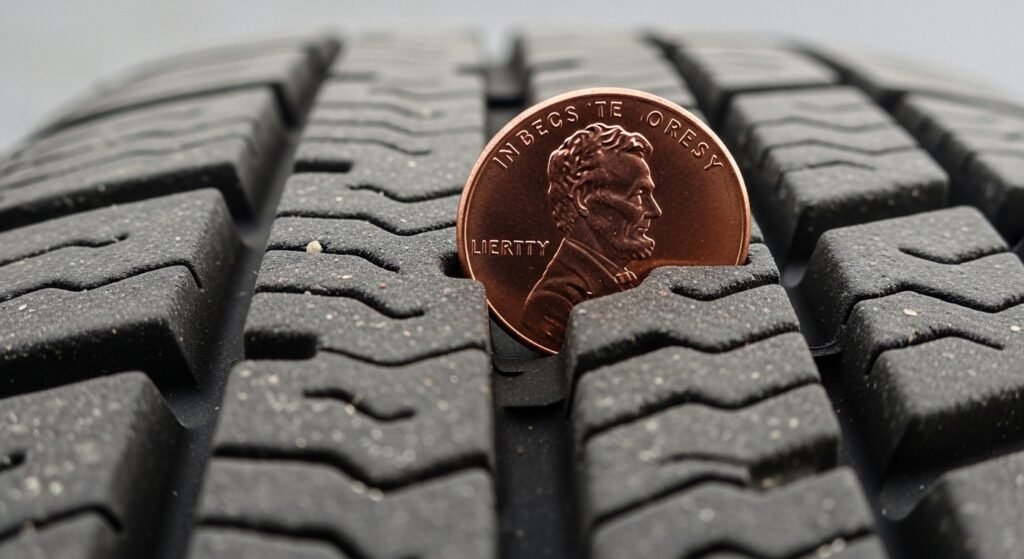
The tire tread penny test is the most famous DIY trick in the book. You don’t need fancy tools or a degree in car stuff to do it right. All you need is a single cent and about five minutes of your time. It is a reliable way to get a quick health check on your rubber.
Why the Penny Test Works
The reason we use a penny is because of Abraham Lincoln’s head. On a standard U.S. penny, the distance from the top of the coin to Lincoln’s hair is 2/32”. This makes the penny a perfect, built-in measuring stick for the legal limit. It is a smart way to use something you already have in your pocket.
Step-by-Step Execution

Doing the test is easy, but you have to be careful with how you hold the coin. You want to make sure you are getting an honest look at the deepest part. Follow these simple steps to get it right the first time.
- Find a penny that is clean so you can see Lincoln’s face clearly.
- Locate the ribs which are the raised rubber parts that go around the tire.
- Point the head down toward the center of the tire as you insert the coin.
Interpreting the Results

Once the penny is in the groove, you just have to look at what’s hidden. The coin tells a story about whether you need to spend money on new tires. Don’t ignore what the penny is telling you because it’s a matter of safety.
- Safe tread is when the rubber covers at least part of Lincoln’s head.
- At the limit means you can see the very top of his head, so start shopping.
- Immediate action is required if you can see his whole head and space above it.
Ensuring Accuracy Through Proper Testing Techniques
Just checking one spot on one tire isn’t going to give you the whole picture. Tires don’t always wear down in a perfect, even way across the whole surface. You need to be a bit of a detective to find the thin spots. A thorough check ensures you aren’t missing a hidden danger zone.
The Multi-Point Inspection Strategy
You should treat your tire check like a full scan of the whole car. Checking multiple spots helps you catch problems that a single check would miss. It only takes an extra minute to be super sure about your safety. This strategy is what the pros use when they inspect your vehicle at the shop.
Testing Inner, Outer, and Center Grooves

Tires have several grooves that run all the way around the circumference. You should put your penny in the groove closest to the inside of the car. Then check the middle groove and the one on the outside edge. Sometimes the inside of a tire wears out way faster than the outside.
Circumferential Testing
Don’t just check one side of the circle and call it a day. Roll your car forward a little bit or walk around the tire to check different sections. You want to make sure the tread is good all the way around the loop. This helps find flat spots or areas that might have been damaged by a hard brake.
Identifying the “Worst-Case” Spot
Your tire is only as good as its thinnest part. If three spots look great but one spot is bald, that tire is officially dangerous. The penny test is about finding that one bad spot that could cause a skid. Always replace the tire based on the lowest measurement you find during your test.
Identifying and Troubleshooting Uneven Tread Wear
When tires wear out in weird patterns, it’s usually a sign that something else is wrong. Tires are like a health report for your car’s suspension and alignment. If you see strange wear, the tire tread penny test is just the beginning. You might need to fix a mechanical issue to save your next set of tires.
Consistent Wear vs. Irregular Wear
Consistent wear means the whole tire is getting thin at the same speed. This is what you want to see because it means your car is balanced. Irregular wear looks like patches, waves, or one edge being smoother than the rest. Knowing the difference helps you catch car problems before they get expensive.
Signs of Improper Inflation
The air pressure inside your tires is the most important part of tire maintenance. If you have too much or too little air, the tread will suffer. You should check your tire pressure at least once a month with a good gauge. This simple habit can make your tires last much longer.
- Under-inflation causes the edges of the tire to wear out while the middle stays deep.
- Over-inflation pushes the middle of the tire out, so only the center gets bald.
- Fuel efficiency drops when tires are soft because the engine has to work harder.
Wheel Misalignment and Suspension Issues
If your car’s wheels aren’t pointed straight, they will “scrub” against the road. This creates a wear pattern called “feathering” where the tread feels sharp in one direction. Suspension problems can cause “cupping,” which looks like little scoops taken out of the rubber. These issues need a technician to fix them with special machines.
The Importance of Tire Rotation
Rotating your tires means moving the front ones to the back and vice versa. Since front tires usually handle the steering and most of the braking, they wear faster. Swapping them around helps all four tires wear down at the same rate. This saves you money because you won’t have to buy tires two at a time.
Beyond the Penny: Alternative Measuring Methods
While the penny is great, it is not the only way to check your rubber. Some people want more safety or more precision when they look at their tires. There are several other tricks and tools that give you a better idea of tire health. These alternatives can give you extra peace of mind during bad weather.
The Quarter Test for Enhanced Safety
Some experts think the penny test is actually a bit too risky for wet roads. They suggest using a quarter instead for a more conservative safety check. The distance to George Washington’s head is about 4/32”. If you fail the quarter test, you might still be legal, but you’re less safe in the rain.
Utilizing Built-in Tread Wear Indicator Bars
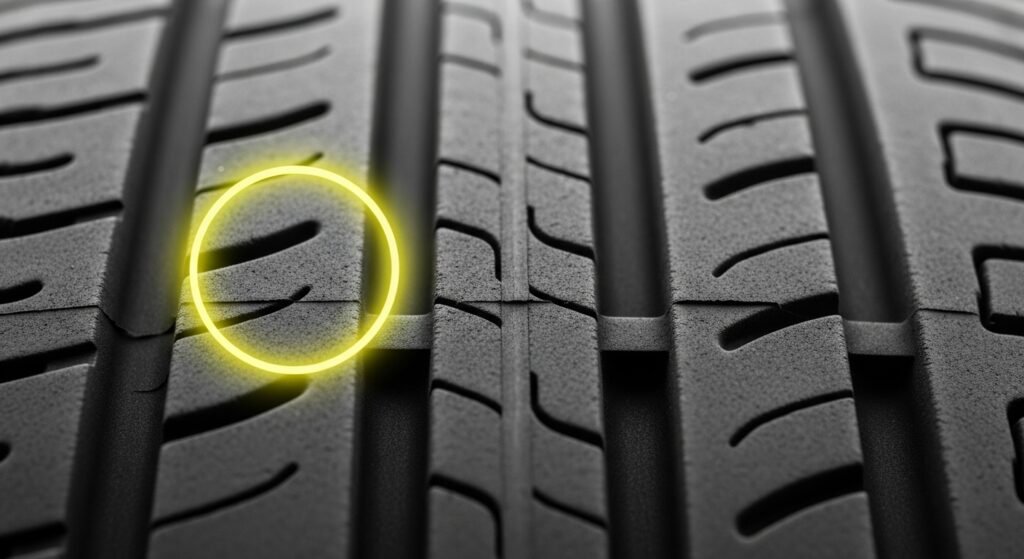
You don’t actually need a coin at all if you know where to look. Manufacturers build tiny bridges of rubber into the grooves called wear bars. When the rest of the tire wears down to the level of these bars, the tire is finished. It is a quick visual cue that anyone can see with a flashlight.
- Indicator bars are set exactly at the 2/32” legal limit for your safety.
- Flush tread means the main rubber is now level with the indicator bar.
- Easy monitoring can be done every time you wash your car or fill up with gas.
Professional Tread Depth Gauges

If you want to be a real pro, you can buy a tread depth gauge for a few bucks. These tools use a little metal probe to give you an exact number. It takes the guesswork out of the tire tread penny test. You can see if you have 5/32” or 6/32” with perfect accuracy.
- Graduated probe gauges are cheap and easy to find at any auto parts store.
- Dual scales show you the measurement in both 32nds and millimeters for convenience.
- Shoulder blocks on the gauge sit flat against the tire to ensure a straight reading.
When to Consult a Professional
Sometimes a DIY test isn’t enough to feel truly safe. If you’re about to go on a long road trip, you might want a second opinion. Mechanics have the experience to see things you might miss with a penny. Don’t be afraid to ask for help if something feels “off” while you’re driving.
The 90-Day Try and Buy Guarantee
Many tire brands offer special warranties when you buy a new set. This might include a trial period where you can return the tires if you don’t like the ride. Understanding your warranty helps you get the most value for your money. Always keep your receipts and registration info in the glove box.
Licensed Mechanic Inspections
A licensed mechanic can put your car on a lift to see the back side of the tires. They can also check your brakes and suspension while they are at it. If your penny test shows uneven wear, a pro can tell you if it’s an alignment issue. Regular inspections prevent small problems from turning into huge repair bills.
Preparing for Seasonal Changes
You should always check your tread before the first big rain or snow of the year. Tires that were “fine” in the summer might be death traps in the winter. Cold weather also makes tire pressure drop, so you’ll need to add air. Being proactive about the seasons keeps you out of the ditch when the weather turns bad.
Maintenance Tips to Maximize Tire Life
You can make your tires last a lot longer with just a little bit of effort. Most people ignore their tires until there is a problem, but that’s expensive. A few minutes of maintenance every month can add thousands of miles to your tread. It is the best way to protect the big investment you made in your rubber.
Pressure Monitoring
Keep a small tire gauge in your center console and use it often. Check the sticker inside your driver’s door to see the correct PSI for your car. Don’t just look at the tire to see if it’s low because modern tires can look fine even when they are 10 pounds under. Correct pressure keeps the tread flat against the road for even wear.
Alignment Checks
Get your alignment checked at least once a year or if you hit a big pothole. If your car pulls to one side when you let go of the wheel, your alignment is likely out. This “drifting” wears down one side of your tire very quickly. A quick alignment service is much cheaper than buying a whole new tire.
Regular Cleaning
Believe it or not, keeping your tires clean actually helps them stay healthy. Mud and road salt can get stuck in the grooves and cause problems. Use a stiff brush to get the junk out of the tread patterns when you wash your car. This also gives you a great chance to look for nails or cracks in the rubber.
Essential Checklist for Your Next Tire Inspection

Before you head out on a long trip or as part of your monthly vehicle maintenance, use this comprehensive checklist to ensure your tires are in peak condition. Regular inspections can prevent accidents and save you money by extending the life of your rubber.
- Check the tread depth with a penny: Insert a penny into several tread grooves with Lincoln’s head pointing down. If you can see the top of his head in any area, your tires are likely at or below the legal 2/32″ limit and need immediate replacement.
- Inspect the built-in wear bars: Look for the small raised rubber bars located between the tread ribs. If the surrounding tread is flush or level with these bars, the tire is worn out.
- Verify air pressure (PSI): Use a reliable tire pressure gauge to check each tire while they are “cold” (before driving). Compare the reading to the recommended PSI listed on the sticker inside your driver-side door frame.
- Look for uneven wear patterns: Examine the tread across the entire width of the tire. Heavy wear on the edges suggests under-inflation, while heavy wear in the center suggests over-inflation.
- Scan for physical damage: Check the sidewalls and tread surfaces for cuts, cracks, bulges, or punctures. If you see metal cords or “bubbles” in the rubber, do not drive the vehicle.
- Remove debris from the grooves: Use a flathead screwdriver or a stiff brush to clear out pebbles, glass, or metal shards stuck in the tread. This prevents these objects from being pushed deeper into the tire over time.
- Don’t forget the spare tire: Check the air pressure and general condition of your spare tire. A spare is only useful if it is properly inflated and ready for an emergency.
- Evaluate tire age: Look at the DOT number on the sidewall to find the manufacturing date. Regardless of how good the tread looks, most manufacturers recommend replacing tires that are more than six to ten years old due to rubber degradation.
- Monitor for vibration or pulling: While driving, take note of any unusual vibrations in the steering wheel or if the car pulls to one side. These are signs that your tires may be out of balance or that your alignment needs professional attention.
Conclusion: Proactive Safety and Replacement
Your tires are the most important safety feature on your vehicle. Using the tire tread penny test is an easy way to stay in control of your road safety. Don’t wait until you’re sliding in the rain to realize your tread is gone. Be smart, stay proactive, and keep those pennies handy for your next check.
Summarizing the Replacement Criteria
- Penny Test Fail: If you see all of Lincoln’s head, replace the tire now.
- Wear Bars: If the tread is level with the bars, the tire is officially worn out.
- Time and Damage: Replace tires that have cracks or are more than six years old, regardless of tread.
Final Safety Checklist
Before you head out on your next drive, do a quick walk-around. Look for low air, check for any visible damage, and keep your eyes on those tread depths. Your car handles better and stays safer when you take care of the rubber. Driving on good tires gives you the confidence to handle whatever the road throws at you.
Frequently Asked Questions
What happens if I use a different coin for the tire tread penny test?
Using a nickel or a dime will change the measurement. A nickel measures 1/16 of an inch to the top of Jefferson’s head, which is different from the standard 2/32″ legal limit provided by the penny.
Can a tire be dangerous even if it passes the penny test?
Yes, tires older than six years can suffer from dry rot or “rubber oxidation.” Even with deep tread, the rubber becomes brittle and prone to cracking or sudden failure.
Does the penny test work on motorcycle tires?
Motorcycle tires often have different safety thresholds. While the concept of measuring depth remains, bikers should consult their manual as some performance bike tires require replacement much sooner than 2/32″.
Should I check the tread on my spare tire too?
Absolutely. A spare tire loses air pressure over time and the rubber can degrade while sitting in the trunk. An unused spare can still be unsafe if the rubber is too old.
How does tread depth affect my car’s fuel economy?
Worn tires have less rolling resistance, which can slightly increase MPG. However, the safety risks of low traction far outweigh any minor savings at the gas pump.
Will low tread depth cause my steering wheel to shake?
Low tread itself usually doesn’t cause shaking, but the uneven wear or flat spots associated with worn tires will cause significant vibrations at highway speeds.
Can I pass a state inspection with 2/32 of an inch of tread?
Most states consider 2/32″ the bare minimum. While it might technically pass, many inspectors will issue a warning that replacement is required immediately to remain legal.
Does the penny test apply to the “shoulder” of the tire?
The test should be performed in the major tread grooves. However, if the shoulder is worn smooth while the center is deep, the tire is still unsafe and indicates an alignment issue.
Is the penny test accurate for winter-specific tires?
Winter tires lose their effectiveness in snow once they reach 6/32″ or 5/32″. While a penny says they are “legal” at 2/32″, they will no longer provide winter traction.
Does tire tread depth affect my Anti-lock Braking System (ABS)?
Yes, ABS relies on the tire’s ability to grip the road. If the tread is too low to provide friction, the ABS will engage more frequently and stopping distances will increase.
Why do some people use a quarter instead of a penny?
A quarter measures to 4/32″, which is a “safety” standard. Experts recommend 4/32″ for driving in heavy rain to significantly reduce the risk of hydroplaning.
Can I just replace the two front tires if they fail the test?
While possible, it is safest to replace all four. If you only replace two, the new tires should generally be placed on the rear axle to prevent the back of the car from fishtailing.
Does “sipping” a tire help if the tread is already low?
No, sipping is for adding grip to tires with healthy tread depth. Adding sipes to a worn tire can weaken the remaining rubber and lead to tread chunking.
How do I check for “flat spots” during my inspection?
Run your hand over the tread surface. If you feel sections that are significantly flatter or smoother than the rest of the tire, it indicates a flat spot from a skid or long-term storage.
What is “tread squirm” and does it go away as tires wear?
Tread squirm is the flexibility of deep, new tread blocks. While it goes away as tires wear down, the benefit of stability is lost to the danger of reduced traction.
Can I use a digital tread depth gauge instead?
Digital gauges are excellent and provide a highly accurate decimal reading. They are more precise than the penny test and help track wear more closely over time.
Does the penny test help identify a shifted belt?
No, the penny test only measures rubber depth. A shifted belt is an internal structural failure that usually shows up as a bulge or a crooked “wobble” in the tread.
Will low tread depth void my tire warranty?
Most treadwear warranties only apply if the tires wear out evenly before a certain mileage. If you reach 2/32″ due to lack of rotation or poor alignment, the warranty is usually void.
Does the penny test work on retreaded tires?
Yes, the measurement standard of 2/32″ applies to the remaining rubber on any tire surface, including retreads used on heavy trucks or trailers.
Can temperature affect my tread depth readings?
Extreme cold can cause rubber to contract slightly, but not enough to change the results of a penny test. However, you should always check tire pressure when temperatures shift.