 Skip to content
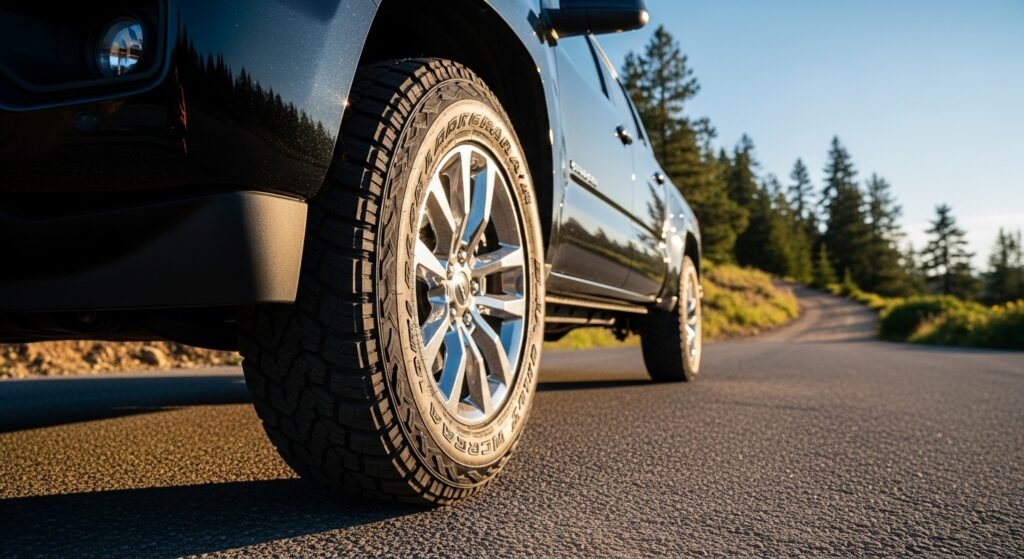
Picking out the right rubber for your rig is a big deal. You want to know exactly how long truck tires last before you drop a stack of cash. Most folks expect their tires to stick around for a long time. However, the truth is that your mileage can vary a lot based on how you drive. This guide will break down everything you need to know about keeping your truck on the road. We will look at the math behind the miles and the secrets to making them last longer.
Understanding the Realistic Lifespan of Truck Tires
When you ask how long truck tires last, the answer is usually between 25,000 and 60,000 miles. This is a huge range because every driver is different. Some guys get three years out of a set while others are shopping again in eighteen months. The number of miles you get depends on the quality of the tire and how you treat it. You cannot just look at the price tag to know the life of the tire. Cheap tires might save you money now but they usually wear out much faster.
Many people get confused by the warranties they see at the tire shop. You might see a “60,000-mile warranty” and think you are guaranteed that distance. That is not exactly how it works in the real world. A warranty is more like a protection plan against defects. It does not mean the tire will actually perform perfectly for that long on your specific truck. Factors like road heat and heavy loads can eat through that rubber long before the warranty ends.
It is also wild how two identical trucks can have totally different results. You and your buddy could buy the same Ford F-150 and the same set of tires. If you drive mostly on the highway and he spends his weekends in the mud, your tires will last way longer. This is why you have to look at your own driving habits. You also need to know the difference between the “useful life” of the tread and the “chronological age” of the rubber.
- Tread Life: This is the physical amount of rubber left on the tire carcass.
- Rubber Age: This is how long the tire has existed since it was manufactured.
- Usage Cycles: This refers to how many times the tire has heated up and cooled down.
- Structural Integrity: This is the health of the internal belts and the sidewall.
Primary Factors Impacting a Tire’s Lifespan
The way a tire is built has a lot to do with how long truck tires last. Tires are made of complex rubber compounds that react to the road. Harder rubber compounds generally last longer but they do not grip the road as well. Softer rubber sticks to the pavement like glue but it wears down very fast. It is always a trade-off between how long the tire stays around and how well it handles.
Heat is the biggest enemy of your truck tires. When you drive, the friction between the rubber and the road creates a lot of heat. Tread designs with large “void ratios” or big gaps help move air and cool things down. However, those same gaps can cause the tread blocks to wiggle and wear unevenly. Environmental factors also play a massive role in the life of your rubber. If you live in a place with hot summers or salty winter roads, your tires take a beating.
Tire Category and Tread Style

The style of tire you choose is the biggest factor in how long truck tires last. Highway-Terrain or H/T tires are built for the long haul. They usually feature dense siping and very hard rubber compounds. Most drivers can expect 60,000 miles or more from a good set of highway tires. They are quiet and smooth but they do not do well once you leave the pavement.
All-Terrain (A/T) tires are the middle ground for most truck owners. They try to balance off-road traction with decent road manners. You can usually expect between 30,000 and 50,000 miles from these. They have bigger lugs than highway tires which can lead to more noise. As they wear down, they might start to vibrate more than a standard street tire would.
Mud-Terrain (M/T) tires look the coolest but they wear out the fastest. They use very soft rubber so they can grip rocks and mud. This soft rubber disappears quickly on hot asphalt. Most M/T tires only last between 20,000 and 40,000 miles. You also have to watch out for specialty winter tires. If you drive winter tires on warm pavement, they will melt away in just a few months.
- Highway Tires: These are the kings of longevity on the pavement.
- All-Terrain Tires: Great for daily drivers who hit the trails sometimes.
- Mud Tires: Built for traction first and long life second.
- Winter Tires: Only for snow and ice to keep the rubber soft.
Vehicle Weight and Load Distribution
Your truck’s weight is constantly pushing down on those four patches of rubber. Heavier trucks like a RAM 3500 put way more stress on tires than a small Tacoma. This is why you have to check your Gross Vehicle Weight Rating. If your truck is always loaded down with tools or gear, the tires will wear out much faster. The weight compresses the rubber and creates more friction and heat.
Load distribution also matters more than most people think. If all your weight is in the back, those rear tires are going to scream. Constant towing puts a massive amount of stress on the rear axle tires. You might notice the middle of the tread wearing out faster on a heavy truck. This is because the weight is forcing the tire to bulge in ways it was not meant to.
Driving Style and Habitual Behavior
If you drive like a race car driver, your tires will pay the price. Rapid acceleration from a stop light scrubs off a tiny layer of rubber every time. Hard braking does the same thing but on the opposite side of the tread. If you want to know how long truck tires last, look at how often you mash the pedals. Gentle starts and stops can add thousands of miles to your tire life.
Cornering speeds are another silent tire killer. When you take a turn too fast, the weight of the truck shifts to the outside. This puts a ton of pressure on the outer shoulder of the tire. Over time, this leads to “shoulder wear” where the edges are bald but the middle looks fine. Even your daily commute matters. Highway miles are usually easier on tires than constant stop-and-go city driving.
Environmental and Physical Abuse
Road conditions can ruin a tire in an instant. Potholes are like landmines for your truck’s rubber. Hitting a deep hole can break the internal belts or tear the sidewall. Curbs are also dangerous because they can pinch the tire against the rim. Even small debris like nails or screws can lead to slow leaks that cause heat damage.
If you go off-roading, you have to worry about “chunking.” This happens when sharp rocks literally rip chunks of rubber out of the tread blocks. It makes the tire unbalanced and shortens its life. Physical abuse also includes hauling things that are too heavy for your tire’s rating. If you exceed the load limit, the sidewall can fail or the bead can pop off the rim.
- Potholes: These cause internal damage you cannot always see.
- Rock Chunking: Sharp terrain can tear the tread to pieces.
- Curb Rash: Hitting curbs weakens the delicate sidewall.
- Overloading: Too much weight causes the tire to overheat and fail.
The Critical Role of Tire Age and Chemical Degradation

Mileage is not the only thing that kills tires. Even if you don’t drive your truck often, the tires are still dying. This is because rubber is a natural material that breaks down over time. This process is called oxidation. As the rubber ages, it loses its oils and becomes brittle. A tire with plenty of tread can still be dangerous if the rubber is too old to flex.
You need to know the 6-year rule. Most tire makers say you should swap your tires after six years regardless of the tread. Some say you can go ten years if the truck is kept in a garage. To check this, look for the DOT date code on the sidewall. It is a four-digit number that tells you the week and year the tire was made. If those numbers are old, it is time for new rubber.
Dry rot is the most common sign of an aging tire. You will see tiny cracks forming in the sidewall or between the tread blocks. This means the rubber is drying out and losing its strength. If you see these cracks, the tire could blow out at any time. Weather plays a big part in this. Extreme heat and constant sun exposure speed up the drying process.
- DOT Code: Use this to find the exact birthday of your tires.
- Dry Rot: Look for small cracks that indicate brittle rubber.
- Sun Damage: UV rays eat away at the chemicals that keep rubber soft.
- Garage Storage: Keeping your truck inside can double the life of the rubber.
Essential Maintenance Strategies to Prolong Tire Wear
You should think of your tires as a maintenance item just like your oil. If you just put them on and forget them, they will wear out fast. Taking care of them can save you thousands of dollars over the life of your truck. Most people ignore their tires until there is a problem. By then, the damage is usually done and you have to buy new ones.
Proactive maintenance is the best way to answer the question of how long do truck tires last. Checking your tires once a month takes five minutes but adds months of life. It also keeps your truck safer on the road. Tires that are well-maintained provide better grip and shorter stopping distances. It is a win-win for your wallet and your safety.
Proper Inflation and Pressure Management

Keeping the right amount of air in your tires is the most important step. Under-inflation is a huge problem for truck owners. When a tire is low on air, the sidewalls flex too much. This creates an insane amount of internal heat that destroys the tire from the inside out. It also causes the outer edges of the tread to wear down much faster than the middle.
Over-inflation is just as bad but for different reasons. If you put too much air in, the tire bulges in the center. This makes the middle of the tread wear out while the edges stay thick. It also makes your truck ride like a tank and reduces your traction. You should always follow the PSI numbers on the sticker inside your driver’s door. Do not just go by the “max pressure” listed on the tire itself.
Rotation Patterns and Frequency
Your front and rear tires do very different jobs. The front tires handle all the steering and most of the braking. This causes the edges of the front tires to wear down in a specific way. The rear tires usually just handle the power and the load. If you never switch them, the front tires will go bald while the rears still look new.
You should rotate your truck tires every 5,000 to 7,000 miles. A good rule of thumb is to do it every time you change your oil. For most 4WD trucks, you want to use a cross-rotation pattern. This ensures that every tire spends time at every corner of the truck. This balances out the wear and helps you get the most miles possible.
- Standard Rotation: Moving front tires to the back and vice versa.
- Cross Rotation: Moving tires diagonally to change their spin direction.
- 5,000 Mile Rule: The golden interval for keeping wear even.
- Oil Change Synergy: Doing rotations with oil changes helps you remember.
Alignment and Suspension Health

Even a brand-new tire will die in a month if your truck is out of alignment. Alignment refers to the angles at which your tires hit the road. If they are tilted inward or outward, they will scrub across the pavement. This leads to “feathering” where the tread feels smooth in one direction and sharp in the other. It is a sign that your truck is literally dragging the tires sideways.
Your suspension parts also play a role. Worn-out shocks or struts can cause “cupping.” This looks like little scoops have been taken out of the tread. It happens because the tire is bouncing down the road instead of staying flat. If you install a lift kit or a leveling kit, you must get a professional alignment immediately. Adding height changes all the geometry of your front end.
Wheel Balancing
If your steering wheel shakes at high speeds, your tires are likely out of balance. This happens when one side of the tire or wheel is heavier than the other. That heavy spot slams into the road thousands of times per minute. This causes “spotty” wear where some parts of the tread are deeper than others. Getting them balanced is cheap and makes the ride much smoother.
Choosing the Right Tire for Your Specific Needs
To maximize how long do truck tires last, you have to buy the right ones first. Be honest about where you actually drive. If you spend 99% of your time on the highway, do not buy mud tires just for the look. You will be miserable with the noise and the short lifespan. Pick a tire that matches your “Driving Ratio.”
- Load Range E: Best for heavy towing and 2500/3500 series trucks.
- Load Range C: Good for lighter trucks like the Tacoma or Ranger.
- UTQG Ratings: Look at the treadwear grade on the sidewall for a baseline.
- Treadwear Warranties: Use these to compare different brands before buying.
Warning Signs: When is it Officially Time to Replace?

You need to know when your tires are done for safety reasons. The “Penny Test” is a classic way to check. Stick a penny into the tread with Lincoln’s head facing down. If you can see all of his head, your tread is below 2/32 of an inch. That is the legal limit in most places and it is very dangerous in the rain.
A better safety standard is 4/32 of an inch. Once you get that low, your truck will start to hydroplane on wet roads. You should also look for visual red flags. Any bulge or bubble in the sidewall means the internal structure is failing. This is a “replace immediately” situation. If you feel a weird vibration that doesn’t go away, a professional should inspect the tire.
- Low Tread: Anything under 2/32 of an inch is a legal fail.
- Sidewall Bubbles: These indicate a high risk of a blowout.
- Exposed Cords: If you see metal or fabric, the tire is dead.
- Loss of Traction: If you are sliding in light rain, it is time for new rubber.
Summary: The Formula for Maximum Tire Life
So, how long do truck tires last? They last exactly as long as you allow them to. If you buy the right style for your driving and keep them inflated, you will hit that 60,000-mile mark. If you ignore them and drive like a madman, you might be buying a new set every year. It all comes down to the “Golden Rules” of truck ownership.
Remember that your tires are the only thing touching the ground. They are the most important safety feature on your truck. Keep an eye on the air pressure and rotate them every time you change the oil. If you do these simple things, your tires will serve you well for years to come.
Frequently Asked Questions
Is the spare tire on my truck still safe to use after ten years?
Even if a spare tire looks brand new, the rubber degrades chemically over time. Most manufacturers suggest replacing any tire older than ten years. Using an aged spare for long distances can lead to a sudden blowout.
Do nitrogen-filled tires help them last longer than regular air?
Nitrogen molecules are larger and escape through the rubber lining more slowly than oxygen. This helps maintain consistent pressure and reduces internal oxidation. While it can extend life slightly, regular pressure checks are more important.
Can I mix different tire brands or tread patterns on the same axle?
Mixing different tires causes uneven grip and varying wear rates across the axle. This puts stress on the differential and leads to poor handling. Always keep identical tires on the same axle to ensure uniform longevity.
Does parking my truck on concrete versus dirt affect tire health?
Concrete can leach oils out of the rubber over long periods of rest. Dirt or gravel can trap moisture against the tire and lead to early rot. Parking on plywood or specialized tire mats is best for long-term storage.
How does high-speed highway driving impact tread life?
Sustained high speeds generate significant heat within the tire structure. This heat softens the rubber and causes it to wear down faster. Keeping your speed moderate helps preserve the tread for more miles.
Will a front-end leveling kit reduce how long truck tires last?
A leveling kit changes the suspension geometry and puts extra stress on the ball joints. If you do not get an alignment immediately, the tires will wear out in weeks. Even with an alignment, some increased wear on components is common.
Are “blemished” or “B-grade” tires a good way to save money?
Blemished tires usually have cosmetic flaws that do not affect structural integrity. They often carry the same tread life potential as standard tires. However, check that the warranty still applies before purchasing.
Do tire shine and cleaning chemicals cause the rubber to crack?
Some cheap tire shines contain petroleum distillates that strip away protective waxes. This can actually speed up dry rot and cracking. Use water-based dressings to keep tires looking good without damaging them.
Why do my rear tires wear faster even when I am not towing?
If you have a heavy foot, the torque from the engine grinds the rear tires against the road. Rear-wheel-drive trucks naturally put more strain on the back tires during acceleration. Frequent rotation is the only way to balance this out.
Does cold weather cause tires to wear out slower than hot weather?
Cooler pavement reduces the friction heat that eats away at rubber. However, if the rubber gets too cold, it can become brittle and chip. Moderate temperatures are ideal for maximum mileage.
Can driving on a flat tire for just a few blocks ruin it?
Driving on a flat tire crushes the internal sidewall structure between the rim and the road. This creates “heat discoloration” and permanent internal damage. Even a short distance can make the tire unrepairable.
How does altitude or mountain driving affect tire pressure?
As you climb higher, the atmospheric pressure drops, causing the tire’s internal pressure to increase. This over-inflation can cause center-tread wear. Always adjust your PSI when changing elevations significantly.
Does the color of the tire tell me anything about its age?
A tire that is turning grey or brownish is likely experiencing “blooming.” This is a natural process where antiozonants move to the surface. It does not mean the tire is bad, but it shows it is aging.
Are retreaded tires safe for light-duty pickup trucks?
Retreads are common in the trucking industry but less popular for passenger pickups. They are generally safe if done by a reputable shop. However, they may not offer the same high-speed stability as new tires.
Do wider tires last longer than narrow tires?
Wider tires spread the vehicle’s weight over a larger surface area. This can lead to slower wear if the alignment is perfect. However, wider tires are also more prone to uneven wear if the suspension is loose.
How does frequent car washing impact how long truck tires last?
Regularly washing away road salt and brake dust prevents chemical corrosion. Brake dust is acidic and can eat into the rubber and the wheel finish. Clean tires generally stay healthy longer.
Should I balance my tires every time I rotate them?
While not strictly required, balancing during rotation ensures a smoother ride. It prevents small vibrations from turning into major tread issues. Most experts recommend balancing at least every other rotation.
Does the “maximum pressure” on the sidewall mean I should fill it to that?
No, that number is the limit for the tire’s safety, not the recommendation for your truck. Filling to the max pressure will cause a harsh ride and center-tread wear. Use the sticker on your door frame instead.
Can a bad wheel bearing cause my tires to wear out?
A failing wheel bearing allows the wheel to wobble as it rotates. This creates erratic wear patterns that look like cupping or feathering. Fix the bearing immediately to save your tires.
Does the type of road surface (asphalt vs. concrete) matter?
Concrete is more abrasive than asphalt and can wear down tires faster. Chip-seal roads are the harshest and can significantly reduce the miles you get. Smooth asphalt is the best for tire longevity.