 Skip to content
Does your ride feel like it is dragging a boat when you hit a slope? You step on the gas, but nothing happens. It is super frustrating when your car is struggling to go uphill, no check engine light in sight. You might think everything is fine because that little dashboard light is off. Sadly, your engine is trying to tell you it is starving for something. This guide will help you find out exactly why your car feels weak. We will look at fuel, air, and spark to get your torque back. Driving should be fun and not a constant battle with gravity.
Summary of the Performance Crisis
When your car hits a steep road, it needs extra power to keep moving. This pull comes from a perfect mix of fuel and air exploding in your cylinders. If your car is struggling to go uphill, with no check engine light, it means a mechanical part is failing slowly. Sensors might not catch it until the part breaks completely. Most of the time, the engine is running lean. This means there is too much air and not enough gas. A lean engine lacks the muscle to push a heavy vehicle up an incline.
- Engine pull is the force that moves you forward against gravity.
- Mechanical glitches often hide in the computer systems for a long time.
- Torque requirements jump way up the second the road tilts.
- Fuel starvation is the main reason engines act lazily on hills.
Common Reasons Your Car Struggles to Go Uphill
Your car is a complex beast that needs everything to be just right. On flat ground, a small problem might stay hidden. Once you go uphill, the load on the engine increases significantly. This is a real-world stress test for your fuel and air systems. If any part is weak, the car will hesitate or rumble. You might notice the RPMs jumping around like crazy. Let’s look at the most common parts that cause this headache.
Clogged or Dirty Air Filters

The air filter is the lungs of your vehicle. It stops dirt from getting inside the engine. If it gets clogged, the engine cannot breathe. This creates a huge bottleneck for power. An unclean air filter makes the engine work twice as hard. It also wastes a lot of gas because the mix is wrong.
- Airflow restriction stops the engine from reaching high speeds quickly.
- Fuel waste happens when the computer tries to fix the air shortage.
- Stalling risks go up if the filter is totally blocked with gunk.
- Easy fixes are possible since you can change a filter in minutes.
Mass Air Flow (MAF) Sensor Malfunctions
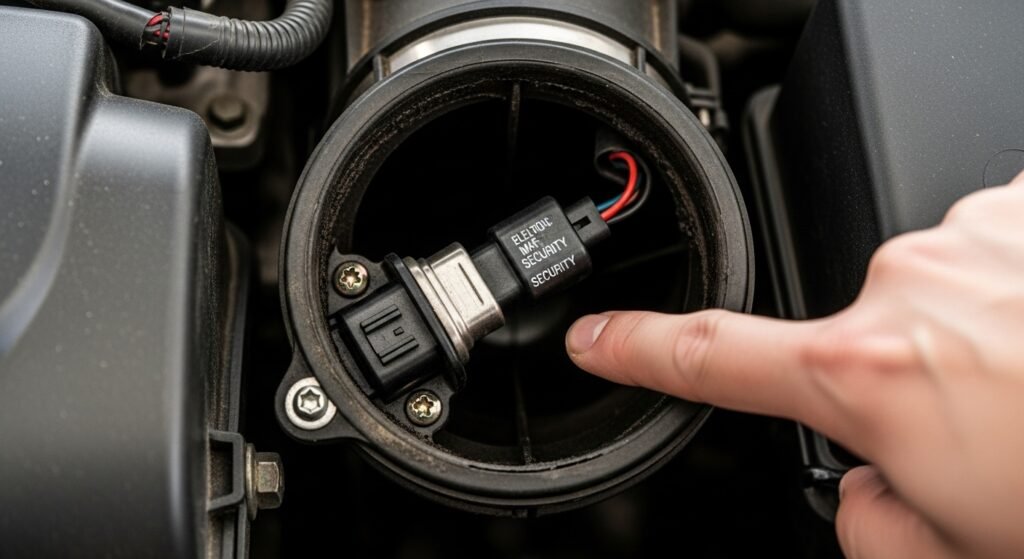
The MAF sensor lives between your air filter and the engine. It calculates exactly how much air is coming in. Then it tells the computer how much gas to spray. If this sensor gets dirty, it gives the car computer bad data. This inaccurate calculation ruins your power. You might feel the car jerk when you try to accelerate.
- The intake brain is another name for this tiny but vital sensor.
- Dust and oil are the main enemies of the MAF sensor wire.
- Hesitation issues are very common when this sensor starts failing.
- Inaccurate fuel quantity leads to a very weak combustion process.
Fuel System Failures and Blockages
Your fuel system needs to be clean to work right. Any blockage will starve the engine of its energy source. This is especially true when you are climbing. A car struggling to go uphill, with no check engine light often has a hidden fuel clog. This can happen anywhere from the tank to the engine.
- Fuel filter clogs act like a kink in a garden hose.
- Line restrictions slow down the flow of gas to the injectors.
- Bad gas quality can contain sediment that ruins your engine’s day.
- Octane ratings matter because the wrong gas causes performance loss.
Clogged or Malfunctioning Fuel Injectors

Fuel injectors spray a fine mist of gas into the cylinders. Over time, they get covered in carbon and dirt. This ruins the spray pattern. Instead of a mist, you get a weak drizzle. This makes the combustion very inefficient. Your car will feel sluggish and slow to respond.
- Atomization problems stop the gas from burning completely.
- Acceleration lag is the time you wait for the car to move.
- Sputtering sounds often come from the engine when injectors are dirty.
- RPM fluctuations show that the engine is struggling to stay steady.
Damaged or Failing Fuel Pump
The fuel pump is the heart of the fuel system. It pushes gas from the tank to the front of the car. Gravity pulls gas backward when you go uphill. A weak pump cannot fight that gravity. This causes a massive drop in fuel pressure. Your car might even stall on a steep bridge.
- Pressure drops happen when the pump motor gets tired or old.
- Overheating links exist because gas helps keep the pump cool.
- The choke effect feels like the engine is running out of gas.
- Stalling hazards are real if the pump stops working entirely.
Spark Plug and Ignition System Issues
Spark plugs provide the fire for the engine. They need to fire at the exact right microsecond. If they are worn out, you get a weak spark. This leads to misfires under heavy load. You will definitely feel this when driving uphill. It feels like a rhythmic thumping or shaking.
- Worn electrodes increase the gap the spark must jump.
- Ignition coils must convert low battery voltage to high voltage.
- Torque deficits happen when one cylinder isn’t firing right.
- Misfire events waste gas and can damage your catalytic converter.
Exhaust System and Catalytic Converter Blockages

Your engine needs to exhale just as much as it inhales. The exhaust system carries away burnt gases. If the catalytic converter is clogged, it creates backpressure. This trapped gas stays in the cylinder. There is no room for fresh air and fuel. This kills your horsepower instantly.
- Exhaust backpressure acts like a wall against the engine’s power.
- Converter clogs are often caused by engine oil leaks.
- Flow restrictions mean the engine cannot reach high RPMs easily.
- Heat buildup from a blocked exhaust can melt engine parts.
Sensor and Timing Malfunctions
Modern cars rely on timing to stay powerful. The camshaft sensor tells the computer where the engine is. If this timing is off, the explosions happen at the wrong time. This causes a huge loss in efficiency. The throttle position sensor also tells the car how much power you want. If it fails, the car won’t know you are flooring it.
- Camshaft sensors synchronize the valves and the fuel spray.
- Timing errors make the engine sound like it is rattling.
- Throttle dead zones mean the pedal feels like it does nothing.
- ECM logic can get confused by bad sensor signals.
Oxygen Sensor (O2) Failure
The O2 sensor monitors the exhaust gases. It tells the computer if the engine is running rich or lean. If the sensor is lazy, it won’t react fast enough. This leads to poor acceleration on hills. A dirty sensor can also cause your idle to feel rough. Even without a light, it can fail.
- Air-fuel ratios are managed by this sensor in real-time.
- Efficiency losses show up as poor gas mileage.
- Irregular idling is a sign that the sensor is on its way out.
- Power loss happens when the computer goes into safe mode.
Internal Engine Compression Issues
Compression is the force that squeezes the air and fuel. If your engine has a leak, that pressure escapes. This means the explosion has no force behind it. Leaking valves or worn piston rings are usually to blame. A blown head gasket can also cause a loss of pressure. This is a serious mechanical problem.
- Leaking valves let the compression escape into the exhaust.
- Piston ring wear allows pressure to leak into the oil pan.
- Head gaskets seal the top of the engine to the bottom.
- Power gaps are very noticeable when you need high torque.
Environmental and External Factors
Sometimes the world around you affects your car. Hot, humid days make air less dense. This means there is less oxygen for the engine. High altitudes also have thinner air. Your car computer might retard the timing to stay safe. This reduces your total horsepower.
- High humidity causes the engine to “knock” or “ping.”
- AC load takes away about five to ten horsepower.
- High intake temperatures make the combustion process less stable.
- Overloading weight makes the climb much harder than it should be.
Transmission-Related Power Loss (The Hidden Struggle)
Sometimes the engine is fine, but the power isn’t reaching the wheels. The transmission is responsible for moving that energy. If the transmission is slipping, the engine will scream, but the car won’t move. This is a very common issue on steep hills. You might notice the engine revving high while you slow down.
Automatic Transmission Slippage
Automatic cars use fluid and friction to shift gears. If the fluid is low, the gears won’t engage properly. Worn clutch packs inside the unit can also slip. This is most obvious when the car needs maximum torque. You might feel a slight shudder before the car loses speed.
- High RPMs without speed gain indicate a slipping transmission.
- Low fluid levels prevent the internal parts from grabbing.
- Burnt fluid smells like toasted bread and indicates damage.
- Friction plates wear out just like your car’s brakes do.
Torque Converter Issues
The torque converter sits between the engine and transmission. It acts like a fluid coupling to transfer power. If the internal fins are damaged, it won’t transfer power efficiently. This can feel like a “dead” spot in your acceleration. You might notice the car vibrating at certain speeds.
- Lock-up failure prevents the car from being efficient at highway speeds.
- Shuddering feelings feel like driving over a rumble strip.
- Fluid contamination can ruin the delicate converter internals.
- Torque loss is huge if the fluid isn’t spinning correctly.
Improper Gear Selection (Manual & Automatic)
Driving uphill requires the right gear. If you are in too high of a gear, the engine will “lug.” This means it is working hard but spinning slowly. Lugging creates a lot of heat and carbon buildup. Most modern automatics shift for you, but they can get it wrong.
- Downshifting is necessary to keep the engine in its power band.
- Lugging the engine can cause long-term damage to the pistons.
- Overdrive buttons should be turned off on very steep mountain roads.
- Gear hunting is when the car can’t decide which gear to use.
Advanced Drivetrain and Brake Friction
Sometimes something is physically holding the car back. This is called parasitic drag. It is like trying to run while someone pulls on your shirt. This drag gets much worse when you are fighting gravity, too.
Dragging Brake Calipers

Brake calipers squeeze the pads against the rotors. If a caliper is stuck, the pad stays against the rotor. This creates constant friction and heat. Your engine has to work much harder to overcome this. You might smell something burning after a long drive.
- Parasitic drag steals horsepower right from the wheels.
- Wheel heat is a dead giveaway of a stuck brake caliper.
- Uneven wear on your brake pads is a sign of a sticking piston.
- Pulling to one side often happens when a front brake is dragging.
Differential and Axle Issues
The differential sends power to the individual wheels. If the fluid is old and thick, it creates internal resistance. Worn-out bearings can also slow down the rotation. This makes the car feel heavy and unresponsive.
- Fluid viscosity changes as the oil gets old and dirty.
- Binding joints in the CV axles can cause power loss.
- Humming noises often come from worn-out axle bearings.
- Resistance in the drivetrain makes uphill climbs feel impossible.
Diagnostic Strategies: Narrowing Down the Culprit
Finding the problem doesn’t have to be a guessing game. You can use logic to figure it out. Start with the easy stuff before moving to the expensive parts. A systematic approach saves you time and money.
The Idle vs. Load Test
Does your car run fine in the driveway? If it idles smoothly but fails on hills, it is a load issue. This points toward fuel delivery or exhaust blockages. If it runs badly all the time, it is likely a spark or sensor issue.
- Idle quality tells you if the basic engine timing is okay.
- Load testing reveals weaknesses in the fuel pump and injectors.
- Steady throttle tests can help find flat spots in sensor data.
Real-time Data Logging
You can buy a cheap OBD-II scanner to see what the car sees. Watch the fuel trims while you drive uphill. If the numbers go positive, the car is trying to add fuel. This confirms you have a fuel shortage. You can also see the MAF sensor readings in real-time.
- Fuel trims show if the engine is running rich or lean.
- MAF readings should increase steadily as you speed up.
- Spark advance tells you if the computer is retarding the timing.
Visual Inspections
Pop the hood and look for the obvious. Check for cracked hoses or loose wires. A small vacuum leak can cause huge power loss. Look for soot around the exhaust manifold. This indicates a leak that is confusing the O2 sensor.
- Dry rot in rubber hoses is a very common cause of leaks.
- Loose connections can cause sensors to cut in and out.
- Fluid leaks can get on the belts and cause them to slip.
Detailed Solutions and Restoration Steps
Once you find the problem, it is time to fix it. Some jobs are easy enough for a Saturday afternoon. Others might require a trip to the local shop. Don’t be afraid to ask for professional help if a job looks too big.
DIY Maintenance and Simple Fixes
Changing filters is the best way to start. Most air filters just need a few clips opened. Fuel filters might be under the car or in the engine bay. You can also clean your MAF sensor with a special spray. This often fixes hesitation instantly.
- Air filter swaps take less than five minutes on most cars.
- MAF cleaning requires a specific “sensor safe” cleaner.
- Spark plug changes can restore that lost torque and power.
Professional Diagnostic Procedures
Mechanics have tools that help them find hidden leaks. A smoke machine can find a tiny hole in a vacuum line. They can also test your fuel pressure with a gauge. This proves if your fuel pump is actually dying. Compression tests check the health of the engine’s internals.
- Smoke machines reveal leaks you could never see with your eyes.
- Fuel pressure gauges show if the pump can handle high demand.
- Compression gauges find out if your engine needs a rebuild.
Advanced Mechanical Repairs
Sometimes parts just need to be replaced. A new fuel pump or catalytic converter is a big job. Cleaning fuel injectors professionally can save you from buying new ones. If your timing is off, a technician will need to recalibrate the sensors.
- Injector cleaning uses high-pressure chemicals to blast away dirt.
- Exhaust replacement gets rid of those power-killing clogs.
- Sensor calibration ensures the computer and engine are in sync.
Preventative Maintenance for Uphill Performance

The best way to fix a car struggling to go uphill with no check engine light is to prevent it. Regular maintenance keeps parts from getting dirty. It is much cheaper to change a filter than to fix an engine.
- Stick to the schedule in your owner’s manual for all filters.
- Carbon cleaning helps remove gunk from your intake valves.
- Coolant flushes keep the engine from getting too hot on hills.
- Top-tier gas contains detergents that keep your injectors clean.
Comprehensive Troubleshooting: Causes and Solutions
| Component at Fault | Primary Symptom on Inclines | Recommended Solution |
| Air Filter | The engine feels “suffocated” and sluggish. | Replace with a high-quality new filter. |
| Fuel Filter | Sudden power drop or sputtering. | Install a fresh filter; check service intervals. |
| MAF Sensor | Jerky acceleration and inconsistent RPMs. | Clean with specialized MAF cleaner or replace. |
| Fuel Injectors | Significant lag and rough engine vibration. | Use a professional fuel system cleaning service. |
| Fuel Pump | Engine “chokes” or stalls under heavy load. | Test fuel pressure and replace the pump if low. |
| Spark Plugs | Rhythmic thumping or engine misfires. | Replace old plugs and check electrode gaps. |
| Ignition Coils | Weak power and shaking during acceleration. | Replace faulty coils to ensure a strong spark. |
| Catalytic Converter | Extreme power loss and excessive heat. | Clear blockages or replace the converter unit. |
| O2 Sensor | Poor fuel economy and lazy response. | Clean the sensor tip or install a new sensor. |
| Throttle Sensor | The gas pedal feels dead or unresponsive. | Calibrate the sensor or replace the TPS unit. |
| Camshaft Sensor | Engine rattles and loses timing sync. | Replace the sensor to restore engine timing. |
| Vacuum Hoses | Hissing sounds and lean engine running. | Locate leaks with smoke and replace hoses. |
| Transmission Fluid | High engine revs with no increase in speed. | Check fluid levels and top up or flush. |
| Brake Caliper | Smells like burning and heavy pulling. | Service the braking system and grease sliders. |
| Torque Converter | Violent shudders or vibration on slopes. | Flush transmission or replace the converter. |
| Piston Rings | Excessive smoke and low compression. | Internal engine repair or piston ring replacement. |
| Head Gasket | Overheating and loss of coolant/power. | Replace the gasket and plane the cylinder head. |
| Exhaust Manifold | Loud ticking and power-killing leaks. | Tighten bolts or replace the manifold gasket. |
| Turbocharger | Absence of “boost” and flat performance. | Inspect the wastegate and intercooler for leaks. |
| Clutch (Manual) | Engine revs climb, but speed drops. | Replace the worn clutch disc and pressure plate. |
Conclusion: Safety and Longevity
Driving a sluggish car is dangerous. You need to be able to merge and climb safely. If your car is struggling to go uphill no check engine light, don’t wait. Small problems always grow into expensive ones. Fix it now so you can enjoy the open road again. Your car will thank you with a smooth, powerful ride.
Frequently Asked Questions
Why does my car struggle uphill only when the fuel tank is low?
When your fuel level is low, the fuel pump has to work harder to maintain pressure, especially against the incline of a hill. Sloshing fuel can also lead to the pump sucking in air bubbles, causing momentary power loss or sputtering that disappears once the tank is filled.
Can a faulty transmission cooler cause power loss on inclines?
Yes, if the transmission cooler is clogged or failing, the transmission fluid will overheat rapidly during high-load situations like climbing. Overheated fluid loses its ability to provide the necessary hydraulic pressure, leading to slippage and a feeling of powerlessness.
Does tire pressure or size affect uphill performance?
Under-inflated tires increase rolling resistance, making the engine work harder to maintain speed. Additionally, if you have installed significantly larger tires without re-gearing the differential, your car will lack the effective torque needed to climb steep hills efficiently.
Is it possible for a failing alternator to cause sluggishness on hills?
While the alternator primarily charges the battery, a failing one can put an inconsistent load on the engine’s accessory belt. Furthermore, if the voltage drops, the ignition system and fuel injectors may not receive enough power to operate at peak efficiency under heavy load.
How does high altitude impact a car with no check engine light?
At higher altitudes, the air is thinner and contains less oxygen. Even if your sensors are working, the engine simply cannot physically pull in enough oxygen to create a high-power explosion, resulting in a natural loss of horsepower that is most noticeable on mountain passes.
Can a worn serpentine belt cause power issues?
If the serpentine belt is slipping under the high stress of a climb, it can cause intermittent power loss to the alternator or water pump. This can lead to subtle parasitic drag or electrical fluctuations that make the car feel like it is struggling to maintain its pace.
Will a cracked intake manifold boot lead to uphill hesitation?
A small crack in the rubber intake boot may stay sealed while idling but open up when the engine torques or moves during a climb. This “unmetered air” bypasses the MAF sensor, creating a lean condition that starves the engine of power exactly when you need it most.
Does a faulty variable valve timing (VVT) solenoid affect hill climbing?
VVT systems adjust the engine’s timing for maximum torque at low speeds and efficiency at high speeds. If the solenoid is sticking, the engine might stay in “economy mode” and fail to transition to the high-torque profile required for climbing.
Can old engine oil contribute to poor uphill performance?
Extremely old or thin oil increases internal friction and may fail to properly lubricate the camshafts and pistons. This extra friction acts as a minor brake inside the engine, which becomes very apparent when the engine is pushed to its limits on an incline.
Why does my car lose power uphill only when the headlights are on?
This points to an electrical grounding issue or a weak charging system. The extra draw from the headlights reduces the available voltage for the ignition coils, resulting in a weaker spark that cannot effectively combust the fuel under high-load conditions.
Can a partially blocked DPF affect diesel cars climbing hills?
In diesel vehicles, a Diesel Particulate Filter (DPF) that is nearly full creates immense backpressure. While it might not trigger a light yet, it prevents the turbocharger from spooling up properly, leaving the car feeling “flat” during a steep ascent.
Does a bad wheel bearing mimic engine power loss?
A failing wheel bearing creates significant mechanical resistance. As the bearing heats up during a drive, the friction increases, making it feel like the engine is losing power when it is actually just fighting a “seizing” wheel.
Could a malfunctioning cruise control system cause sluggishness?
If the cruise control vacuum actuator or electronic module is failing, it may not pull the throttle cable or signal the butterfly valve correctly on hills. This results in the car losing speed despite the system being set to maintain it.
Can a stretched timing chain cause power loss without a code?
A timing chain that has stretched slightly will cause the valves to open and close a few degrees off-schedule. This reduces volumetric efficiency, meaning the engine can’t breathe well enough to handle the high-load demands of an incline.
How do worn engine mounts affect climbing?
While they don’t stop the engine from making power, worn mounts allow the engine to tilt excessively under load. This can cause the throttle linkage to bind or vacuum hoses to stretch and leak, indirectly causing a loss of responsiveness.
Can a clogged cabin air filter affect engine power?
Actually, no. The cabin air filter only affects the air you breathe inside. However, many drivers confuse a struggling AC blower motor (caused by a clogged cabin filter) with engine strain, especially when the AC is working overtime on a hot hill.
Does using the wrong oil viscosity impact torque?
Using oil that is too thick for your engine increases the “pumping losses” inside the block. The engine has to spend more energy just moving the oil around, which leaves less energy for the wheels when tackling a steep grade.
Can a faulty brake booster cause engine hesitation?
The brake booster relies on engine vacuum. If the internal diaphragm is leaking, it creates a constant vacuum leak. This leans out the fuel mixture, which is most noticeable when the engine is under the high-vacuum demand of a climb.
Will a dirty intercooler affect turbo-charged cars on hills?
In turbocharged vehicles, the intercooler cools the compressed air. If the fins are covered in mud or oil, the air stays hot and less dense, significantly reducing the amount of oxygen reaching the cylinders during a high-boost climb.
Can a heavy roof rack affect my car’s ability to climb?
Yes, a roof rack creates massive aerodynamic drag. At highway speeds on a hill, the engine has to fight both gravity and the “wind wall” created by the rack, which can make a perfectly healthy car feel underpowered.