 Skip to content
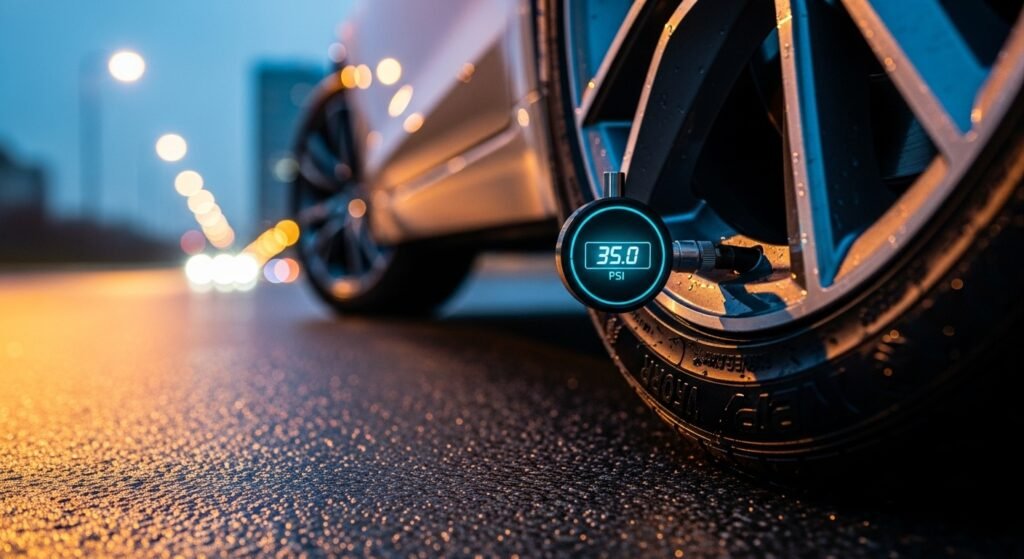
Keeping your ride smooth and safe starts with one simple thing. You need to check your tyre pressure often to stay out of trouble. Most drivers forget about their air until a light pops up on the dash. That is a big mistake that can cost you a lot of cash. Think of your tyres like the shoes on your feet. If they do not fit right, you are going to have a bad time.
Understanding Tyre Pressure and Why It Matters
Tyre pressure is basically how much air is packed inside your rubber. It is the force that keeps your car from dragging on the ground. Without enough air, your car just can’t do its job right.
Defining Tyre Pressure
A pneumatic tyre is just a fancy name for a rubber hoop filled with air. This air pressure acts like a invisible pillar for your whole car. It holds up the weight of the engine, the seats, and you. When you have the right amount of air, the tyre keeps its shape.
The Physics of Pressure
Physics might sound boring, but it keeps you alive on the road. Air pressure pushes out in every direction inside the tyre. This force creates a contact patch where the rubber meets the road. If this patch is too small or too big, you lose control.
Why Correct Pressure is Critical
You want your car to handle like a dream, right?. Having the perfect tyre pressure makes everything work better. It helps you steer straight and stop fast when someone cuts you off.
- Road Grip: Proper air gives you the best traction on wet or dry streets.
- Fuel Efficiency: You save money at the pump by reducing rolling resistance.
- Tyre Longevity: Your rubber lasts way longer when it is not being squished too much.
The Role of Compressed Air
Inside your tyre, millions of air molecules are bouncing around like crazy. This compressed air gives the tyre its structural integrity. It allows the tyre to absorb bumps so you don’t feel every pebble. Without this cushion, your car’s suspension would take a beating.
Essential Tyre Pressure Terminology and Measurements
Talking about air can get confusing with all the different units. Most people just say “air,” but pros use specific terms. You should know these so you look like a pro at the shop.
What is PSI (Pounds-per-Square-Inch)?
PSI is the king of measurements in the USA. It stands for pounds-force per square inch of area. It tells you exactly how much weight the air is pushing on every inch. Most passenger cars like to sit between 30 and 35 PSI.
What is BAR?
BAR is a metric unit that folks over in Europe love to use. It is based on atmospheric pressure at sea level. One BAR is roughly the weight of the air around us every day. It equals about 14.5 PSI if you are doing the math.
What is kPa (Kilopascals)?
Kilopascals are another metric unit you might see on modern cars. It is named after a smart guy named Blaise Pascal who loved science. One kPa is a very small amount of force. That is why we use thousands of them to measure tyres.
Unit Conversion Formulae

Sometimes your car asks for one unit, but the pump shows another. Do not sweat it, the math is pretty easy. You can use a calculator on your phone to get it right.
- BAR to PSI: Multiply the BAR number by 14.504 to get your PSI.
- PSI to kPa: Take your PSI and multiply it by 6.895.
- kPa to PSI: Multiply the kPa number by 0.145 to find the PSI.
How to Find Your Vehicle’s Recommended Tyre Pressure
Do not just guess what your pressure should be. Every car is different and needs its own special number. Luckily, your car has “cheat sheets” hidden in a few spots.
The Vehicle Owner’s Manual
The manual is the big book of secrets for your car. It has a whole section on tyres and maintenance. It will tell you the best PSI for normal driving or heavy loads. If you lost yours, you can usually find it online for free.
The Tyre Placard
The placard is a handy little sticker usually on the driver’s side. You can find it on the door pillar or the edge of the door. Sometimes it is hiding inside the fuel flap or the glove box. It lists the exact PSI for the front and rear tyres.
Manufacturer Databases
If the sticker is gone, you can check official databases. Websites like CarsGuide have charts for almost every car ever made. Just type in your make and model to see the specs. This is great for older cars where the manual is long gone.
Sidewall Markings vs. Placard
Look at the side of your tyre and you will see a bunch of numbers. One will say “Max Pressure,” but do not use that for daily driving. That is just the most the tyre can hold before it might pop. Always follow the placard on the car, not the tyre wall.
Aftermarket Tyre Considerations
Did you get big fancy wheels or different tyres?. The factory placard might not be 100% right anymore. You should ask the tyre shop what pressure they recommend for the new setup. Heavier tyres usually need a bit more air to work right.
The Risks of Incorrect Tyre Inflation

Driving with the wrong air is like walking in shoes that are falling apart. You are asking for a lot of trouble on the highway. It messes with your safety and your bank account.
The Dangers of Under-Inflation
Being low on air is the most common problem for drivers. It makes your tyres soft and “soggy” when you turn the wheel. This can lead to some scary situations if you have to swerve.
- Heat Build-up: Soft tyres flex too much, which creates tons of heat.
- Structural Damage: The tyre can actually peel right off the rim.
- Fuel Economy: It takes more gas to move a flat tyre, plain and simple.
- Wear Patterns: The edges of your tread will wear out super fast.
The Dangers of Over-Inflation
Too much air is also bad news for your ride. It makes the tyre hard as a rock and very bouncy. You might think it is faster, but it is actually more dangerous.
- Reduced Traction: The tyre gets rounded, so less rubber touches the road.
- Impact Sensitivity: Potholes can easily pop a tyre that is too tight.
- Ride Comfort: You will feel every single bump and dip in the road.
- Wear Patterns: The center of your tread will go bald way too soon.
Step-by-Step Guide: How to Check and Adjust Tyre Pressure
Checking your air is one of the easiest DIY car tasks. You don’t need to be a mechanic to get it done right. Just follow these simple steps to keep your ride safe.
Preparing for the Check
Timing is everything when it comes to measuring air. You want to get the most accurate reading possible. That means you need to follow the “Cold” rule every time.
- The Cold Rule: Check your tyres before you drive more than a mile.
- Avoid Heat: Driving makes the air inside expand and gives a fake high reading.
- Rest Time: If you just got home, wait at least three hours before checking.
Using Equipment
You have a few choices when it comes to tools for the job. Most gas stations have what you need for a few quarters. But having your own gear is even better for your car care.
- Service Station Air Hoses: These are everywhere and usually easy to use.
- Digital vs. Manual Gauges: Digital ones are way easier to read and more precise.
- Personal Gauges: Keeping a small gauge in your glove box is a smart move.
The Process

Once you have your gauge, it is time to get to work. Go around to each tyre one by one to make sure they match. Don’t rush it, just take your time and be careful.
- Remove the Cap: Unscrew the little plastic cap on the valve stem.
- Press the Gauge: Push the gauge onto the valve firmly until the hissing stops.
- Read the Number: Check the screen or the stick to see your current PSI.
- Adjust Air: Add air if it is low, or press the pin to let some out if it is high.
- Replace the Cap: Screw the cap back on tight to keep dirt out of the valve.
The Spare Tyre
Most people completely forget about the tyre in the trunk. Imagine getting a flat and your spare is also flat!. That is a total nightmare you can easily avoid. Check your spare every single time you check your main tyres.
Advanced Tuning: The 4 PSI Rule for Bitumen Driving
If you want to be a real tyre expert, you should know about heat. As you drive, the friction with the road makes the air hot. This rule helps you see if your cold pressure was actually right.
The Theory
The 4 PSI rule is like a “sanity check” for your settings. It uses the expansion of air to tell a story about your tyres. If the numbers jump too much, something is definitely wrong.
Applying the Rule for Passenger Cars
For a normal car, you should see a 4 PSI jump. Start by checking the pressure when the tyres are cold. Then go drive on the highway for about 30 minutes. Check them again right after you stop and compare the two.
Applying the Rule for 4×4 and Light Trucks
Big trucks and off-road rigs are a bit different. Their tyres are much thicker and hold way more air. For these, you are looking for a 6 PSI increase instead. If it is more than that, you started with too little air.
Troubleshooting the Results
If your numbers do not match the rule, you need to adjust. It is an easy fix that will save your tyres from wearing out.
- Higher than 4/6 PSI: Your starting pressure was too low, causing too much heat.
- Lower than 4/6 PSI: Your starting pressure was likely too high to begin with.
Special Circumstances: Adjusting Pressure for Load and Towing
Your car doesn’t always weigh the same amount every day. Sometimes you are just driving yourself to work. Other times, you are moving a whole house or towing a boat.
The Load Factor
When you pack the car for a road trip, the tyres get squished. You need to add more air to push back against that extra weight. Look at your placard for the “Max Load” pressure setting. It is usually a few PSI higher than the normal setting.
Towing Requirements
Towing puts a huge amount of pressure on your rear tyres. The “tongue weight” of a trailer pushes down on the back of the car. You must increase the rear tyre pressure to handle this safely. It keeps the trailer from swaying and helps you stay in control.
The “Full Load” Specification
Most cars have two different sets of numbers on the placard. One is for “Normal” and one is for “Full Load”. Full load usually means five people and a trunk full of gear. Always switch to the higher number before you head out on a big trip.
Dynamic Loading
Driving fast on the highway also changes how your tyres work. High speeds create more heat and more stress on the rubber. If you are doing a long desert drive at high speeds, check your pressure more often.
Off-Roading and Terrain-Specific Pressure Management
If you like to get dirty, you can’t just leave your tyres at 35 PSI. Different ground needs different amounts of air to get grip. This is where the real fun of 4×4 driving begins.
The Science of the Footprint
When you let air out, the tyre gets flatter and longer. This creates a much bigger “footprint” on the ground. A big footprint spreads the weight out so you don’t sink. It is like wearing snowshoes instead of high heels in the mud.
Terrain Guidelines

Every type of ground has a “sweet spot” for tyre pressure. You will need a portable compressor to air back up later.
- Sand (18–26 PSI): You want to “float” on top of the sand, not dig a hole.
- Fast/Smooth Gravel (28–32 PSI): Keep enough air for good steering and stability.
- Slow/Rough Gravel (24–28 PSI): Lower air helps the tyre soak up the vibrations.
- Mud (22–28 PSI): You need a balance of grip and the ability to spin off the muck.
- Rocky Terrain (20–26 PSI): Soft tyres wrap around rocks for insane traction.
Critical Warning
Be super careful when you go below 20 PSI on your tyres. If you turn too hard, the tyre can pop right off the metal rim. This is called “unbeading” and it is a huge pain to fix in the wild. Unless you have beadlock rims, stay above the 20 PSI mark.
Modern Safety Technology: TPMS (Tyre Pressure Monitoring Systems)
Most cars made in the last ten years have a digital guardian. It is called the Tyre Pressure Monitoring System, or TPMS. It watches your air so you don’t have to check it every single day.
What is TPMS?
TPMS is a system that talks to your car’s computer about the air. If the pressure drops too low, it flashes a light on your dash. It is designed to save you from a blowout or a flat tyre.
Direct vs. Indirect TPMS

There are two main ways cars measure your tyre pressure. One uses real sensors, and the other uses clever math.
- Direct TPMS: Small sensors inside each wheel measure the air directly. They send the exact PSI number to your dashboard screen.
- Indirect TPMS: This system uses the ABS wheel speed sensors. If a tyre is low, it gets smaller and spins faster than the others. The computer sees this and sets off the alarm.
Responding to Alerts
If you see a yellow light that looks like a flat tyre, don’t ignore it. Pull over as soon as it is safe to do so. Check all four tyres with your manual gauge to find the problem. Sometimes the light comes on just because the weather got cold.
TPMS Limitations
Do not rely 100% on that little dashboard light for your safety. TPMS usually only triggers when you have lost 25% of your air. Your tyres could be 5 PSI low and the light might never turn on. Manual checks are still the best way to keep your tyres healthy.
The Impact of Environmental Factors on Pressure
The world around you changes your tyre pressure every single day. Temperature and altitude play a huge role in how much air is in there. You have to adjust your maintenance based on where you live.
Ambient Temperature Fluctuations
Air expands when it is hot and shrinks when it is cold. A big cold front can make your TPMS light turn on overnight.
- The Rule of Thumb: You lose about 1 PSI for every 10 degrees the temp drops.
- Winter Blues: Always check your tyres when the first big freeze hits.
- Summer Heat: Hot roads can over-inflate your tyres beyond what is safe.
High-Altitude Driving
If you are driving up into the mountains, the air gets thinner. This change in atmospheric pressure affects the reading on your gauge. Your tyres will actually show a higher PSI the higher you go up. If you are spending weeks in the mountains, recalibrate your tyres.
Nitrogen vs. Compressed Air
Some shops want to sell you Nitrogen instead of regular air. They say it is better because Nitrogen molecules are bigger.
- The Benefits: Nitrogen leaks out slower and doesn’t hold as much moisture.
- The Downside: It costs money and you can’t find it at every gas station.
- Compatibility: You can totally mix regular air with Nitrogen if you have to.
Long-Term Tyre Health and Maintenance
Taking care of your tyres is a marathon, not a sprint. Small habits today will save you thousands of dollars later. It only takes a few minutes a month to be a responsible owner.
Monthly Checks
Make a date with your car once every month to check the air. Use the first day of the month or your payday to help you remember. Regular checks catch slow leaks before they become big problems.
Visual Inspections
While you are down there checking air, look at the rubber itself. Check for “bubbles” or bulges on the side of the tyre. Look for nails, rocks, or glass stuck in the tread pattern. If you see wires showing, you need new tyres immediately.
Wheel Alignment and Balancing
If your car pulls to one side, your alignment is probably off. Bad alignment eats through tyres like a buzzsaw. Balancing ensures that the weight is spread evenly around the wheel. Both of these services help your tyres stay at the right pressure.
The Three-Step Roadworthy Check
Before any long trip, remember the three big things for your tyres. It is a simple checklist that keeps you and your family safe.
- Tread Depth: Make sure you have enough “meat” left on the tyre.
- Pressure: Set all tyres (including the spare) to the correct PSI.
- Condition: Look for cracks, dry rot, or any weird damage.
Rotation Strategies
You should rotate your tyres every 5,000 to 7,000 miles. The front tyres usually wear out faster because they do the steering. Moving them around helps the whole set last much longer. After a rotation, always double-check the pressure in each spot.
Troubleshooting Persistent Pressure Loss

If you find yourself adding air every single week, you have a leak. Ignoring a slow leak is a great way to get stranded at night. You need to find the hole and get it patched up.
Valve Stem Failure
The little rubber straw where you add air can get old and crack. Sometimes the “core” inside gets loose and lets air out slowly. You can buy a tool to tighten the core for just a few bucks. If the rubber is cracked, a shop needs to replace the whole stem.
The Slow Leak
A tiny nail can stay in your tyre for months while leaking air. These are hard to see just by looking at the tread. Sometimes the air leaks out from the “bead” where the tyre hits the rim. This happens if the rim is dirty or has a bit of rust on it.
Rim Damage
If you hit a curb or a big pothole, you might have bent your wheel. Even a tiny bend can break the airtight seal of the tyre. Alloy wheels can even get hairline cracks that you can’t see. A professional wheel shop can usually straighten a bent rim.
Using the “Soapy Water Test”
This is an old-school trick to find a leak that is driving you crazy. Mix some dish soap and water in a spray bottle. Spray it all over the tyre, the valve stem, and the rim edge. Wherever you see bubbles forming, that is where your air is escaping.
Tyre Pressure for Alternative Vehicles
Not everything with tyres is a standard car or truck. Some vehicles have very special needs when it comes to their air.
Electric Vehicles (EVs)
EVs are much heavier than gas cars because of their big batteries. This extra weight puts a massive strain on the tyres every day. You must keep EV tyres at the exact right pressure to get good range. Low air can kill your battery life and wear out your tyres in months.
Motorcycles and Scooters
On a bike, your tyres are everything when it comes to staying upright. Being just 2 PSI low can make a motorcycle feel “heavy” and hard to turn. Check your bike tyres before every single ride to stay safe. There is no room for error when you only have two wheels.
Caravans and Motorhomes
These big rigs often sit for months without moving at all. This causes “flat spots” in the rubber and slow leaks. Many use Light Truck (LT) tyres that need much higher pressure than a car. Always check for “dry rot” cracks in the sidewalls before a trip.
Conclusion: The Road to Tyre Safety
Tyre pressure is the unsung hero of your car’s performance. It keeps you safe, saves you money, and makes driving fun. Now that you know the secrets, you can take control of your maintenance.
Summary of Benefits
When you keep your tyres pumped up, everything gets better. You will notice it the next time you hit the highway or a trail.
- Safety: You stop faster and turn better in emergencies.
- Savings: You get better gas mileage and your tyres last years longer.
- Performance: Your car feels light, responsive, and ready for anything.
Final Expert Advice
If you are ever in doubt, just ask a professional at a tyre shop. They have seen every problem under the sun and can help you out. Don’t wait until you have a flat to start caring about your air.
Creating a Maintenance Habit
The best way to stay safe is to make it a routine you can’t break. Keep a gauge in your car and check the air every time you fill up gas. It only takes two minutes but gives you total peace of mind. Happy driving and keep those tyres ready for the road!.
| Category | Condition/Terrain | Recommended Pressure Range | Key Objective |
| Standard Road Use | Normal Daily Driving | 30 – 35 PSI | Optimal balance of comfort, grip, and wear. |
| Standard Road Use | Full Load / Towing | 36 – 42 PSI | Supports extra weight; prevents sidewall sagging. |
| Eco/Efficiency | Highway Cruising | 34 – 36 PSI | Reduces rolling resistance for better fuel economy. |
| Off-Roading | Sand Driving | 18 – 26 PSI | Increases footprint for “flotation” on soft sand. |
| Off-Roading | Fast / Smooth Gravel | 28 – 32 PSI | Maintains steering response and stability. |
| Off-Roading | Slow / Rough Gravel | 24 – 28 PSI | Absorbs corrugations and protects the carcass. |
| Off-Roading | Mud | 22 – 28 PSI | Balance of traction and momentum. |
| Off-Roading | Rocky Terrain | 20 – 26 PSI | Allows tyre to “mold” over sharp obstacles. |
| Heavy Vehicles | Light Trucks / 4x4s | 35 – 45 PSI | Thicker sidewalls require higher internal pressure. |
| Heavy Vehicles | Caravans / Trailers | 50 – 65+ PSI | Prevents trailer sway and supports heavy cargo. |
| Specialty | Spare Tyre | 40 – 60 PSI | Often kept higher to account for pressure loss over time. |
| Specialty | Space Saver (Temp) | 60 PSI | High pressure required for small, narrow profile. |
Frequently Asked Questions
What happens if I mix air and nitrogen in my tyres?
Mixing them is perfectly safe and will not cause any chemical reaction or damage. However, adding regular air to a nitrogen-filled tyre will dilute the purity, reducing the specific benefits of nitrogen like slower pressure loss and reduced moisture.
Does tyre pressure affect the accuracy of my speedometer?
Yes, significantly under-inflated tyres have a smaller rolling circumference, which can cause your speedometer to show a speed slightly higher than your actual velocity. Maintaining correct pressure ensures your odometer and speedometer readings remain accurate.
Why does my tyre pressure light come on in the morning but turn off later?
Cold morning temperatures cause air to densify and pressure to drop, often triggering the TPMS sensor. As you drive or as the day warms up, the air expands and the pressure rises back above the alert threshold, turning the light off.
Can I use a bicycle pump to inflate car tyres?
You can use a bicycle floor pump in an emergency, as car valves (Schrader valves) are often the same. However, because car tyres have a much higher volume of air, it will require significant physical effort and hundreds of strokes to see a meaningful increase in PSI.
Should I change my tyre pressure during the winter months?
You should not change the target PSI, but you must check it more often. Since pressure drops about 1 PSI for every 10°F decrease in temperature, you will likely need to add air during winter to maintain the manufacturer’s recommended level.
Does tyre pressure impact the lifespan of suspension components?
Over-inflated tyres are extremely rigid and do not absorb road shocks, forcing the springs and shock absorbers to take the full impact of bumps. This can lead to premature wear of bushings, ball joints, and struts.
Is it necessary to replace the valve caps if they are lost?
Yes, while the cap doesn’t hold the air in, it prevents dirt, salt, and moisture from entering the valve core. Debris in the valve can cause a slow leak or prevent the valve from sealing properly after you add air.
Can tyre pressure influence the range of an electric vehicle?
Under-inflated tyres increase rolling resistance, which forces the electric motor to use more battery power to maintain speed. Keeping tyres at the correct pressure is one of the easiest ways to maximize the mileage range of an EV.
Do run-flat tyres require different pressure checks?
Run-flat tyres use the same pressure as standard tyres, but they are harder to inspect visually. Because of their reinforced sidewalls, a run-flat tyre may not look low even when it has zero pressure, making a high-quality gauge essential.
Why do some mechanics recommend higher pressure for high-speed highway driving?
Some manufacturers suggest increasing pressure by 3-5 PSI for sustained high-speed travel (over 100 mph/160 kph) to reduce sidewall flexing and heat buildup, though this should only be done if specifically noted in the owner’s manual.
Does parking on a curb affect tyre pressure?
Parking with a tyre partially on a curb puts uneven stress on the sidewall and bead seal. While it might not cause an instant leak, prolonged parking in this manner can weaken the tyre structure and lead to slow pressure loss over time.
Should I adjust pressure when driving with a roof rack or cargo box?
Added aerodynamic drag doesn’t require more pressure, but the weight of the cargo inside the box does. If you are carrying a heavy load on the roof, you should treat the vehicle as “fully loaded” and adjust the PSI accordingly.
Can a faulty TPMS sensor cause a leak?
Yes, if the nut securing the TPMS sensor to the rim becomes loose or if the rubber grommet seals perish, air can leak out from the base of the valve stem. These seals should be replaced whenever you buy new tyres.
Is it safe to drive on a tyre that is only 5 PSI low?
While not an immediate emergency, a tyre that is 5 PSI low is under-inflated by roughly 15-20%. This is enough to increase braking distances, reduce fuel economy, and cause the tyre to run hotter than intended.
Why do trailer tyres often require much higher pressure than car tyres?
Trailer tyres (ST tyres) are designed with stiffer sidewalls to handle heavy vertical loads and reduce swaying. They often require 50-65 PSI or more to maintain their structural integrity under the weight of a trailer.
Does the age of a tyre affect how well it holds pressure?
As rubber ages, it develops micro-cracks (dry rot) and becomes more porous. Older tyres (usually over 6 years) may lose pressure faster than new tyres because the rubber compounds are no longer as effective at sealing.
Can cleaning products cause tyre pressure leaks?
Certain harsh chemical cleaners can degrade the rubber seal of the valve stem or cause corrosion around the rim’s bead seat. Always use dedicated wheel cleaners and rinse them off thoroughly to protect the airtight seals.
What is the “bead” of a tyre, and how does it relate to pressure?
The bead is the edge of the tyre that sits on the rim. Air pressure inside the tyre forces the bead against the metal, creating an airtight seal. If the pressure is too low, the bead can slip, causing a sudden loss of all air.
Should I deflate my tyres if I am storing my car for the winter?
No, you should actually slightly over-inflate them (by about 5 PSI) to help prevent “flat-spotting” where the weight of the car flattens the bottom of the tyre during long-term storage.
Does tyre pressure affect insurance claims?
In some regions, if an investigator determines that a crash was caused by a blowout or poor handling due to severely neglected tyre pressure, an insurance company may attempt to reduce the payout or deny the claim based on vehicle negligence.