 Skip to content
Knowing your vehicle weights is a total game changer for any driver. It helps you stay safe on the road every single day. Many folks get confused by terms like GVM and GCM. Our guide breaks down everything from tare mass to towing capacity in plain English. You will learn how to pack your gear without breaking any laws. We want to make sure your truck or SUV stays in top shape for years.
The Fundamentals of Vehicle Mass
Understanding mass is the first step to becoming a pro at hauling gear. In the world of cars, mass and weight usually mean the same thing. Gross refers to the total amount of everything added together. Getting these numbers right keeps your ride running smooth and legal. You do not want to deal with mechanical failures or high fines.
- Weight vs. Science: Scientists might disagree, but drivers use mass and weight for the same idea.
- Measurement Units: Most weights are listed in kilograms or tonnes on official documents.
- The Importance of Accuracy: Precise numbers prevent your suspension from snapping under too much pressure.
- Safety First: Knowing your limits keeps you and other drivers safe during every trip.
Vehicle Weight Categories Explained
There are several ways to measure how heavy your car is today. Each term tells you something different about what is inside the vehicle. You need to know which one to use for your specific needs. Let us look at the most common labels you will see.
Tare Mass (or Tare Weight)
The tare mass is the basic starting point for your vehicle weight. It represents the car exactly as it came from the factory. This is often called the unladen weight of the machine. It is the baseline for all your other cargo calculations.
- Definition: This is the weight of an empty standard vehicle without any extras.
- What is Included: It counts all the essential fluids like engine oil and coolants.
- Fuel Level: It only includes 10 litres of fuel in the tank.
- Exclusions: You do not count passengers, tools, or any heavy accessories.
Kerb Mass (or Kerb Weight)
Kerb mass is very similar to tare mass but with one big change. It assumes the car is sitting at the kerb ready to go. This figure is usually higher than the tare mass listed. It gives a more realistic starting point for your daily driving.
- Definition: This is the weight of the vehicle with a full tank of fuel.
- The Difference: The main change from tare mass is the extra weight of the fuel.
- Factory Accessories: It includes items like alloy wheels that came with the car.
- Exclusions: It still does not count your passengers or aftermarket roof racks.
Gross Vehicle Mass (GVM)
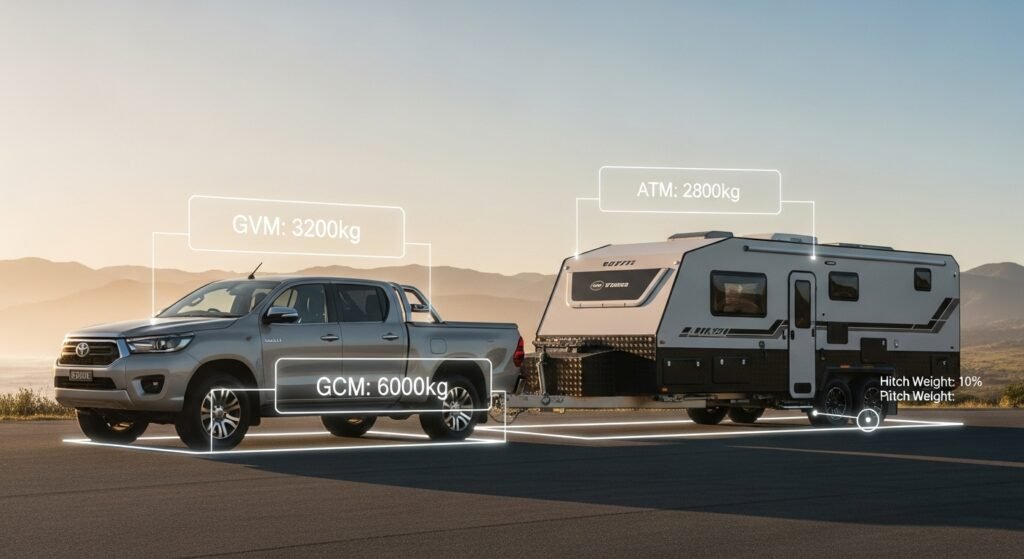
The GVM is one of the most important numbers for any truck owner. It is the maximum legal weight your car can ever be. Going over this limit is dangerous and against the law. You can find this number on a special plate on your car.
- Components of GVM: This includes the kerb mass, all your gear, and passengers.
- Tow Ball Download: If you are towing, the weight on the hitch counts here.
- Finding the GVM: Look for a placard on the driver’s door opening or B-pillar.
- Manufacturer Specs: This limit is set by the people who built your car.
Gross Vehicle Axle Mass (GAWR)
Your car has a front axle and a rear axle to carry weight. Each one has its own specific limit for how much it can hold. You must balance your load so neither axle gets too stressed. Proper balance keeps your tires wearing evenly over time.
- Front vs. Rear Axle: The front and rear have different capacities for carrying loads.
- Safety Margin: Axle limits added together often beat the total GVM.
- Distribution: Putting all your heavy tools in the very back can hurt steering.
- Braking Power: Correct axle weights help your brakes stop the car quickly.
Trailer and Caravan Weight Categories
Towing adds a whole new layer of weight terms to learn today. Trailers come in many shapes like box trailers or big caravans. Each type has specific limits you must follow for road safety. Let us break down the trailer math for you now.
Tare Trailer Mass (TARE)
Just like a car, a trailer has a baseline tare weight. This is the weight of the trailer when it is totally empty. It is the starting number before you pack any camping gear. Knowing this helps you figure out how much stuff you can bring.
- Definition: This is the weight of the empty trailer by itself.
- Dry Weight: For campers, this means no water in tanks or gas bottles.
- Baseline: It is the weight of the unit exactly as it left the shop.
- Standard Build: It includes only the standard equipment built into the frame.
Gross Trailer Mass (GTM)
GTM focuses on the weight hitting the road through the tires. It is the mass of the trailer while it is hitched up. Part of the trailer’s weight sits on the car’s hitch. The GTM only counts what the trailer axles are carrying.
- Definition: This is the weight the trailer axles carry when fully loaded.
- Visualizing GTM: Imagine the trailer is attached to your truck on a scale.
- Axle Load: This number ensures you do not snap the trailer’s suspension.
- Legal Limit: The manufacturer sets this as the safe limit for those axles.
Aggregate Trailer Mass (ATM)

ATM is the most a trailer can weigh when standing alone. It is the total of everything including the hitch weight. You must never pack a trailer heavier than its ATM. It is the absolute limit for the entire trailer structure.
- Definition: This is the maximum legal weight of the trailer fully loaded.
- Calculation: You add the GTM and the tow ball download together.
- Total Capacity: It counts every tool, water drop, and gas bottle inside.
- VIN Plate: You can find this number stamped on the trailer’s drawbar.
Tow Ball Download (TBD) / Ball Weight
The ball weight is how much the trailer pushes down on your car. This is also known as the drawbar weight in some manuals. Getting this number right is key to stopping trailer sway. It affects how well your car handles on the highway.
- Definition: This is the vertical pressure on the tow ball hitch.
- The 10% Rule: Aim for 10% of the trailer’s total weight on the hitch.
- Laden Ball Mass: This changes based on how you pack your heavy gear.
- Vehicle Stress: Too much ball weight can lift the car’s front wheels.
Payload: The Capacity to Carry
Payload is the amount of stuff you can actually bring along. It is the space between being empty and being full. Calculating payload correctly keeps you from overloading your suspension. Many people forget how quickly small items add up.
Defining Payload
Your payload is not just what is in the trunk or bed. It is every single thing you add to the base car. You find it by subtracting kerb mass from the GVM. This gives you the total weight capacity for your trip.
- Passengers and Crew: Every person in the car counts toward your payload.
- Luggage and Gear: This includes all your bags, clothes, and snacks.
- Tools and Equipment: Tradies must count every drill, saw, and toolbox.
- Accessories: Bull bars, winches, and roof racks all eat into this limit.
- Towball Download: The weight from your trailer also uses up payload.
The Impact of Accessories
Aftermarket gear can really change how much you can carry today. A big steel bull bar might weigh a lot more than you think. Adding a canopy or drawers to a ute uses up space. You must weigh these items to stay within your legal GVM.
- Bull Bars: These heavy steel guards are often the first thing added.
- Roof Racks: Carrying kayaks or bikes on the roof adds weight high up.
- Winches: These are great for off-road but add weight to the front.
- Canopies: These protect your gear but reduce the total weight you can carry.
The Complexity of Combination Weights
When you hook up a trailer, you create a combined machine. This setup has its own special rules and weight limits. You have to think about the car and trailer as one. It is more than just adding two numbers together simply.
Gross Combination Mass (GCM)

GCM is the total weight allowed for the whole rig. This includes the car, the trailer, and everything inside both. Manufacturers set this limit for safety and engine health. It is a hard limit you cannot legally go over.
- The Towing Capacity Trap: A car might claim to tow 3.5 tonnes.
- The Reality Check: You might only hit that limit if the car is empty.
- Balancing the Load: Loading the car to GVM reduces what you can tow.
- Braking Limits: GCM ensures your brakes can stop the whole moving weight.
How to Calculate Your Weights: Step-by-Step
Doing the math might seem hard, but it is just steps. You just need to follow a simple plan for success. This keeps you legal and keeps your family safe today. Let us walk through the basic steps for you.
Step 1: Data Collection
Start by finding all the numbers for your specific car. Do not guess what the weights might be for you. Every model has different limits based on its build. Use the official sources to get the right facts.
- Check the Plate: Find the compliance plate on your car’s door.
- Read the Manual: The owner’s manual has all the factory specs.
- Look at the Trailer: The trailer drawbar should have a VIN plate.
- Note the GVM: Write down your maximum legal vehicle weight first.
Step 2: Summing the Payload
Now you need to figure out what you are carrying. Think about every item you put inside the vehicle. Be honest about how much your gear really weighs today. It is better to be safe than sorry later.
- Weigh the Crew: Count the weight of every person coming along.
- Add the Gear: Total up your tools, luggage, and camping equipment.
- Count Extras: Do not forget the bull bar and roof racks.
- Factor in Fuel: If using tare mass, add the weight of fuel.
Step 3: Determining the Tow Ball Download
If you are towing, you must know the hitch weight. This is a major part of your car’s total load. You can use a special scale for this job easily. It ensures your trailer is balanced and safe to pull.
- Use a Scale: A ball weight scale gives you an exact number.
- Check the Balance: Make sure the weight is not too far back.
- Review the Limit: Ensure the weight does not exceed the hitch rating.
- Adjust the Load: Move items inside the trailer to get it right.
Step 4: Final Validation
The last step is checking that everything fits the limits. Add your baseline weight to your total payload weight. Compare this total to your GVM and GCM numbers. If you are over, you must remove some gear.
- Vehicle Check: Ensure your car weight is below the GVM.
- Combination Check: Ensure the whole rig is below the GCM.
- Axle Check: Make sure neither axle is carrying too much weight.
- Stay Safe: Being under the limit protects your car and passengers.
Practical Examples and Calculations
Let us look at some real-world ways to use math. Examples help make these confusing terms much clearer for you. You can see how small changes affect your total weight. It is all about finding a safe balance today.
Using Tare vs. Kerb in Calculations
Using kerb weight is often better for your daily planning. It already counts a full tank of fuel for you. This makes your payload math a little bit easier now. Let us see how they compare in a sum.
- Tare Example: Start with 2,200kg and add 80kg for fuel.
- Kerb Example: Start with 2,280kg and skip the fuel math.
- Payload Difference: Using kerb weight gives you a more accurate limit.
- Safe Margin: Kerb weight helps you avoid going over the GVM.
Pre-2020 vs. Post-2020 GTM Formulas
Manufacturers sometimes change how they calculate trailer axle weights. Older vans might use a different math rule than new. It is important to know which rule fits your van. This keeps your towing legal and very safe today.
- Older Models: These often subtract ball weight from the ATM.
- Newer Models: These might use axle tare plus 90% of payload.
- Check the Plate: The plate will tell you the specific GTM.
- Follow the Guide: Always use the manual for your specific trailer year.
Common Mistakes, Myths, and Pitfalls
Many drivers fall into the same traps every single year. Misunderstanding these terms can lead to very dangerous situations. We want to help you avoid these common errors. Let us look at what people often get wrong.
The “Brochure Weight” Trap
Never trust the shiny brochure for your final weight numbers. Those numbers are for a basic car with no extras. Your car probably has options that make it heavier. Always look at your own car’s specific compliance plate.
- Base Models: Brochures often show the lightest version of the car.
- Factory Options: Sunroofs or bigger wheels add extra weight quickly.
- Real Numbers: Your car’s plate is the only legal weight source.
- Trust the Scale: Weighing your car is better than reading a book.
Neglecting Tow Ball Weight

Many folks think the trailer weight stays on the trailer. That is not true because it pushes on the car. This hitch weight uses up your car’s available payload. You must include it in your total GVM sum.
- Hidden Weight: Tow ball download is part of the car’s load.
- Reduced Payload: A heavy hitch means you can carry fewer people.
- Rear Axle Stress: It puts a lot of pressure on tires.
- Balance Key: Getting this right prevents the trailer from wobbling around.
The Dynamic Loading Myth
Some people think weight limits only matter when parked. They believe cars can handle more weight while moving fast. That is a myth because moving adds extra stress. Legal limits apply at all times on the road.
- Hard Limits: GVM and GCM are legal maximums for safety.
- Moving Stress: Bumping over holes puts more pressure on the frame.
- Safe Handling: Staying under limits helps you steer around trouble.
- Braking Power: Limits ensure you can stop in an emergency situation.
Rounding Down
Never round down your weight numbers to look better. Being 10kg over is still being over the limit. Authorities do not care if you were “close” enough. Always aim to be safely under every single limit.
- Legal Fact: Maximum capacity is a hard line you cannot cross.
- Accuracy Counts: Use a weighbridge for the most exact numbers possible.
- Safety Margin: It is smart to stay a bit under limits.
- Avoid Fines: Police use scales that are very precise and accurate.
Safety and Legal Implications
Overloading your car has serious consequences for your life today. It is not just about getting a small ticket. It affects your wallet and your legal standing forever. Safety should always be your number one priority now.
Insurance and Liability
If you have an accident while overloaded, insurance might fail. They can refuse to pay for any damage caused. This could leave you with a massive bill to pay. It might even lead to legal trouble in court.
- Voided Policy: Overloading can make your insurance policy totally worthless.
- At Fault: You might be blamed for a crash automatically.
- Huge Costs: Paying for two crashed cars out of pocket hurts.
- Liability: You could be sued for any injuries to others.
Roadside Compliance and Fines
Police and transport officers check vehicle weights on highways. They have portable scales to weigh you anywhere easily. If you are over, you will face big fines. They might even stop you from driving any further.
- Portable Scales: Officers can check your weight on the roadside.
- Expensive Fines: Overloading fines can cost you hundreds of dollars.
- Defect Notices: You might have to fix the car before driving.
- Unsafe Label: They can declare your car unroadworthy on the spot.
Pro-Tips for Managing Weight
Managing your weight is an art that you can master. It takes a bit of practice to get right. These tips help you pack smarter for every trip. You will feel more confident behind the wheel today.
Effective Packing Strategies
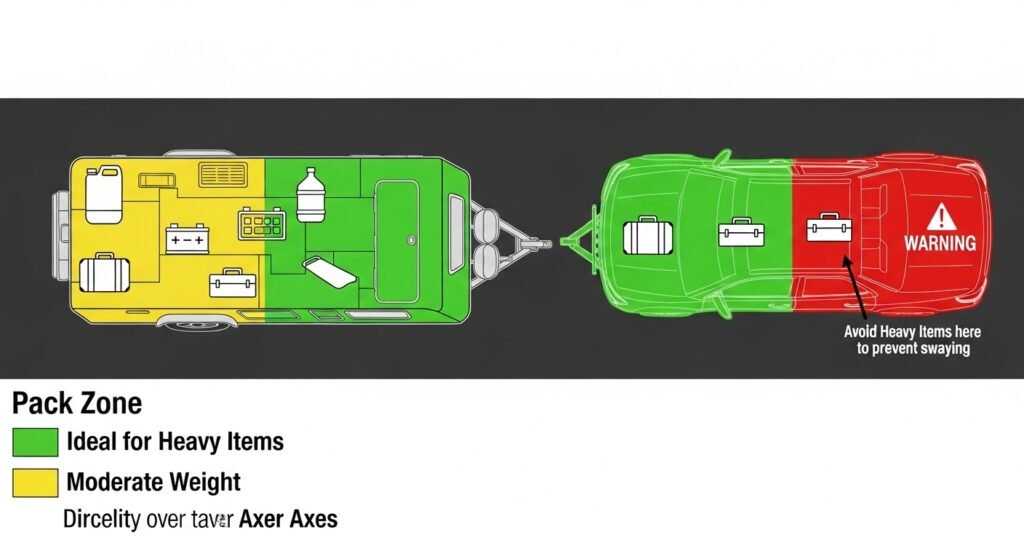
How you pack is just as important as how much. Proper packing keeps your car stable on the road. It prevents your gear from sliding around during turns. A well-packed car is much safer for everyone inside.
- Heavy Items Low: Put the heaviest gear on the floor.
- Over the Axles: Place heavy cargo near the trailer’s wheels.
- Balance Side-to-Side: Make sure the left and right weigh the same.
- Secure the Load: Use straps so nothing shifts during a sudden stop.
Utilizing Weighbridges
A weighbridge is the only way to be 100% sure. They give you a printed slip with your weights. This is great proof for your records and safety. You can find them at many waste centers today.
- Exact Numbers: They take away all the guessing and math errors.
- Axle Weights: Many can weigh each axle one at a time.
- Proof of Weight: Keep the slip to show you are legal.
- Affordable: A weighbridge check usually costs a very small fee.
When to Upgrade
If you always carry heavy loads, consider an upgrade. You can get a legal GVM upgrade for many 4x4s. This allows you to carry more weight safely and legally. It is a smart move for many hard-working tradies.
- Increased Limit: An upgrade gives you a higher legal GVM.
- Better Suspension: It usually includes stronger springs and shocks.
- Engineering Check: Upgrades must be signed off by a pro.
- Peace of Mind: You can pack your tools without any worry.
Vehicle and Trailer Weights Summary Table
| Weight Term | Abbreviation | Definition | What is Included? | Primary Use |
| Tare Mass | TARE | Baseline weight of the vehicle from the factory. | All fluids, 10 litres of fuel. | Starting point for payload math. |
| Kerb Mass | KERB | Weight of the vehicle ready to drive. | All fluids, Full tank of fuel, factory accessories. | Realistic “empty” weight for daily use. |
| Gross Vehicle Mass | GVM | Maximum legal weight of the vehicle. | Kerb mass + all passengers + accessories + cargo + tow ball download. | Legal limit for the vehicle’s chassis. |
| Gross Combination Mass | GCM | Maximum legal weight of the total rig. | Total weight of the loaded vehicle + total weight of the loaded trailer. | Legal limit for the engine, brakes, and drivetrain. |
| Payload | – | The carrying capacity of the vehicle. | Everything added to the Kerb Mass (people, tools, gear, hitch weight). | Determining how much gear you can pack. |
| Gross Axle Weight | GAWR | Maximum weight allowed on a specific axle. | The portion of the total load resting on the front or rear wheels. | Ensuring weight is balanced and tires are safe. |
| Tare Trailer Mass | TARE | Baseline weight of an empty trailer. | The trailer structure and standard fitted equipment only. | Determining trailer payload capacity. |
| Aggregate Trailer Mass | ATM | Maximum legal weight of the trailer alone. | Total weight of the loaded trailer including the weight on the hitch. | The absolute limit for the trailer’s structure. |
| Gross Trailer Mass | GTM | Maximum weight on the trailer’s wheels. | Total loaded trailer weight minus the weight on the tow ball. | Ensuring trailer axles/suspension are not overloaded. |
| Tow Ball Download | TBD | Downward pressure on the vehicle hitch. | The portion of the trailer’s weight supported by the tow vehicle. | Critical for towing stability and vehicle GVM. |
Quick Formula Reference for Calculations:
- Payload = GVM – Kerb Mass
- ATM (Trailer) = GTM + Tow Ball Download
- Remaining Tow Capacity = GCM – Actual Loaded Vehicle Weight
- Total Rig Weight = Actual Vehicle Weight + Actual Trailer Weight (Must be ≤ GCM)
Summary and Next Steps
You now know the basics of tare mass and GVM. This knowledge keeps you safe and legal on every trip. Remember to check your plates and weigh your gear. Being a responsible driver starts with knowing your weights today.
- Check Your Plate: Go look at your car’s compliance plate now.
- Find a Scale: Plan a trip to a local weighbridge soon.
- Do the Math: Calculate your payload before your next big trip.
- Drive Safe: Enjoy your journey with a balanced and legal load.
FAQs
What is the difference between GVM and GVWR?
Gross Vehicle Mass (GVM) and Gross Vehicle Weight Rating (GVWR) are identical terms used in different regions to describe the maximum legal operating weight of a vehicle.
Does a GVM upgrade affect my manufacturer warranty?
A GVM upgrade can void parts of the warranty related to the suspension and drivetrain if the manufacturer determines the modification or the increased load caused the failure.
Can I tow a 3.5-tonne trailer with a Class C car license?
Most standard car licenses allow towing trailers up to the vehicle’s rated capacity, provided the Gross Combination Mass does not exceed specific local weight limits (usually 4.5 tonnes for the vehicle itself).
What is the “unbraked” towing capacity?
This is the maximum weight a vehicle can tow when the trailer does not have its own braking system, typically limited to 750kg regardless of the vehicle’s size.
How does altitude affect my vehicle’s GCM?
High altitudes reduce engine power due to thinner air, meaning your vehicle may struggle to pull its maximum GCM on steep mountain passes.
Do weight limits include the weight of the fuel?
Tare weight includes 10 liters of fuel, while Kerb weight includes a full tank. Your payload calculations must account for the difference if starting from Tare.
Is the Tow Ball Download included in the trailer’s GTM?
No. GTM is the weight on the trailer’s wheels only. The Tow Ball Download is transferred to the tow vehicle and is counted as part of the vehicle’s GVM.
What is a Weight Distribution Hitch (WDH)?
A WDH is a device used to redistribute the Tow Ball Download across all axles of the vehicle and trailer to level the ride, but it does not increase the legal GVM or GCM.
Can I exceed my GVM if I install heavy-duty springs?
No. Installing aftermarket springs does not legally change your GVM. A legal GVM upgrade requires engineering certification and a new compliance plate.
Does the weight of a weight distribution hitch count as payload?
Yes. The physical weight of the hitch head and spring bars is part of the vehicle’s payload.
How do I calculate the payload for a used car with modifications?
You must take the vehicle to a weighbridge to find its current “as-is” weight, then subtract that from the GVM listed on the original compliance plate.
Does a bull bar affect the Front Axle Weight Rating?
Yes. Because bull bars are mounted forward of the front axle, they apply more leverage and weight to the front suspension than their actual physical mass.
Are gas bottles and water tanks included in a caravan’s Tare weight?
No. Caravan Tare weight is “dry,” meaning gas bottles and water tanks must be empty when the weight is recorded.
What happens if my trailer is heavier than my car?
If the Aggregate Trailer Mass exceeds the vehicle’s Kerb weight, the trailer can “push” the car during braking or cornering, leading to dangerous jackknifing.
Can I use a public weighbridge for free?
Most public weighbridges charge a small fee for a certified weight bridge ticket, though some allow “read-only” views for a lower cost.
Does the GCM change if I get a GVM upgrade?
Not always. Many GVM upgrades increase the vehicle’s carrying capacity but do not change the GCM, meaning your towing capacity actually decreases.
What is the difference between ATM and GTM?
ATM is the total weight of the trailer standing alone; GTM is the weight on the trailer’s axles when hitched to a vehicle.
How does tire pressure relate to GVM?
Tires have a maximum load rating. If you are loaded to GVM, you must ensure your tire pressures are adjusted to the manufacturer’s “max load” recommendations.
Is the driver’s weight included in the Kerb weight?
No. Kerb weight includes the vehicle and fluids only. The driver is considered part of the payload.
Why is my “braked towing capacity” lower than 3,500kg?
Towing capacity is limited by the weakest link, which could be the chassis strength, engine cooling, transmission limits, or the tow bar’s own rating.