 Skip to content
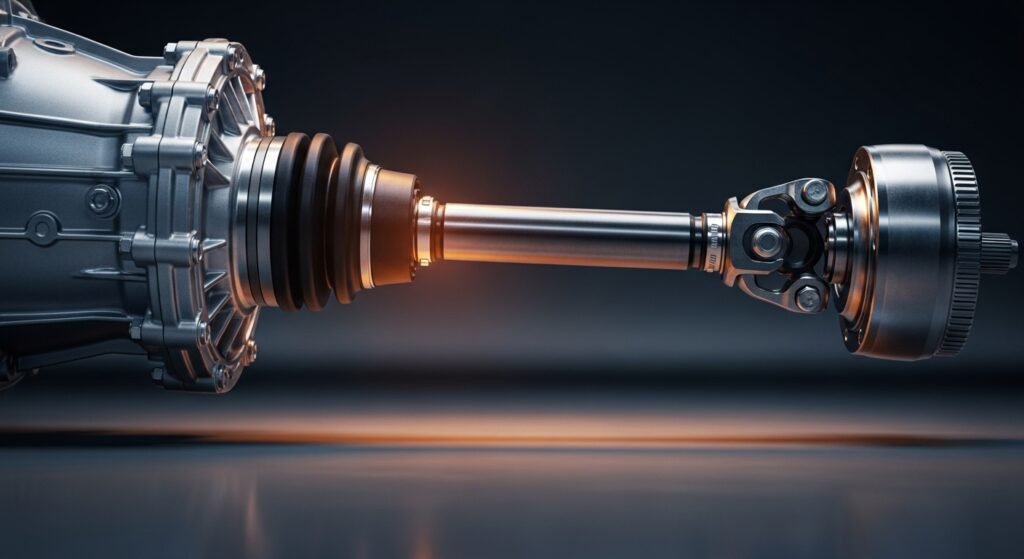
Your car is a beast on the road until it starts acting funky. One of the most important parts under the hood is the drive shaft. People also call it a propshaft or a cardan shaft. This metal rod is the heart of your power transmission system. It takes the twisting power from the engine and sends it to the wheels. When it works, your ride is smooth and fast. When it fails, you are in for a world of trouble.
Spotting the signs of a bad drive shaft early can save your wallet. Small problems like a tiny squeak often grow into full mechanical failure. You do not want to be stranded on the highway because of a snapped drive shaft. This guide will help you find the red flags before things get dangerous. We will look at noises, shakes, and weird steering issues. Let’s dive into what makes your drivetrain tick and how to keep it healthy.
Introduction to the Drive Shaft System
A drive shaft is a long tube that carries rotational force. It is the bridge between your transmission and the differential. Without it, the torque from your gearbox would never reach the tires. It has to spin fast and stay perfectly balanced to work right. If it gets a little wobbly, the whole vehicle feels it.
This system uses several small parts to stay flexible. You have universal joints, or U-joints, that let the shaft move up and down. There are also CV joints that help with smooth power delivery. A center bearing might hold the shaft in place on longer vehicles. Every single one of these parts needs to be in top shape.
Safety is the biggest reason to care about your propshaft. If a shaft breaks while you are driving, it can destroy the underside of your car. It might even cause an accident if it locks up the wheels. Knowing the warning signs is part of being a smart driver. It keeps you safe and keeps your car running like a champ.
Common Signs and Symptoms of a Bad Drive Shaft
The most obvious signs of a bad drive shaft happen while you are moving. You will feel things or hear things that just do not seem right. Your car is trying to tell you that something is wrong downstairs. Never ignore these red flags because they never just go away on their own.
Intense Vibrations Under the Vehicle

Vibration is the number one symptom people notice first. It usually feels like a deep shaking coming from under the floor. As you drive faster, the shaking usually gets worse. This happens because the shaft is no longer spinning in a perfect circle.
- Floorboard shakes are a sign that the balance is totally off.
- Seat vibrations often mean the rear part of the shaft is failing.
- Speed-related tremors usually kick in between 20 and 60 MPH.
- Worn bearings can cause a constant tremor that never stops.
You can try the clutch test if you drive a manual car. If you push the clutch in and the shaking stops, it might be the engine. If the shaking stays, it is almost definitely the drive shaft or tires. An unbalanced shaft puts huge stress on the rest of your drivetrain.
Unusual Noises During Operation
Bad drive shafts are very noisy when they start to give up. These sounds can be scary if you do not know what they are. Different sounds mean different parts of the shaft are breaking.
- Clunking and knocking usually happen when you shift gears or tap the gas.
- Squeaking noises often mean your U-joints are bone dry and need grease.
- Clicking sounds are a classic sign that a CV joint is about to fail.
- Droning or humming sounds like a plane taking off under your car.
- Grinding sounds mean metal is rubbing on metal because the lubrication is gone.
A loud clunk when you put the car in drive is a big warning. It means there is too much play in the universal joints. Squeaking that goes away at high speeds is also a common trick of a bad shaft.
Shuddering and Hesitation During Acceleration
If your car feels like it is tripping over its own feet, check the shaft. Shuddering usually happens when you start moving from a stop. It feels like the car is jerking or vibrating quickly for a second.
This hesitation happens because a bent shaft tube is struggling to spin. It can also be caused by worn splines that are slipping. This is very common when merging onto a fast highway. You need smooth power to be safe in traffic, and a bad shaft ruins that.
Difficulty with Steering and Maneuverability
You might not think a drive shaft affects steering, but it does. If the joints are seized or stiff, they fight against your turns. You might feel a strange resistance when you try to park.
- Hardness in turning happens when the cardan shaft joints lock up.
- Steering wheel resistance can sometimes be felt during tight corners.
- Poor response makes the car feel lazy when you want to turn fast.
This is especially true for four-wheel drive or front-wheel drive vehicles. The drive shaft and steering system have to work together perfectly. If one is stiff, the whole car feels hard to handle.
Visible Physical Damage and Wear

Sometimes you can see the signs of a bad drive shaft just by looking. You will need to crawl under the vehicle with a flashlight. Look for anything that looks broken, dirty, or rusty.
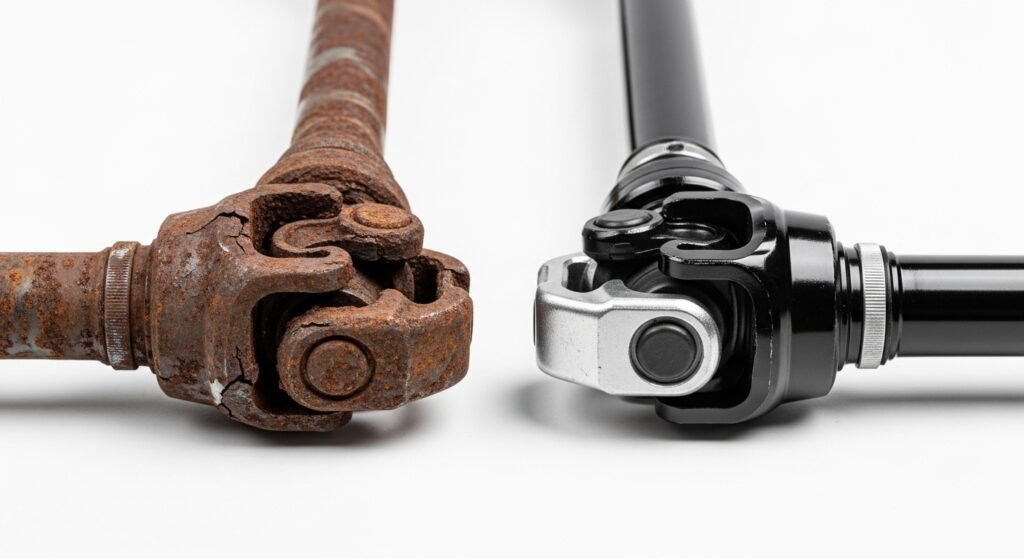
- Rust and corrosion weaken the metal tube over time.
- Dents and cracks can happen from hitting rocks or debris.
- Missing balance weights look like small clean spots where a metal tab used to be.
- Grease leakage around the CV boots means the protective cover is torn.
A rusty drive shaft might look okay, but it is a ticking time bomb. Dents are even worse because they throw off the balance immediately. If you see grease splattered under the car, a joint is failing right now.
Root Causes of Drive Shaft Failure
Drive shafts are tough, but they are not invincible. Most failures happen because of small things that build up. If you know why they break, you can help them last longer.

Lack of Proper Lubrication
Metal parts that rub together need grease to stay cool. If the U-joints or splines go dry, they get hot very fast. Heat makes the metal expand and eventually grind away. This is the most common reason for that annoying squeaking sound.
Many modern shafts are “sealed for life,” but they still fail. If a seal breaks, the grease leaks out and water gets in. Once the lubrication is gone, the internal bearings will disintegrate.
Heavy Loads and Mechanical Overuse
If you use your truck like a workhorse, your shaft feels the strain. Towing heavy trailers or hauling big loads puts massive torque on the metal. Over time, this stress can cause the tube shaft to bow or twist.
- Overloading can snap a weakened shaft during a steep climb.
- Towing trailers adds constant tension to the yokes and flanges.
- Constant heavy use wears out the universal joints much faster.
Poor Installation and Misalignment
A drive shaft must be installed at a very specific angle. If it is tilted too much, the joints have to work too hard. This creates a vibration that you can never quite fix with balancing.
Sometimes mechanics do not seat the flange joint correctly. This creates a tiny wobble that grows into a big problem. Poor alignment is often the “hidden” cause of a vibrating car.
Environmental Factors and Corrosion
Where you live matters for your car’s health. If you live in a place with lots of snow, road salt is your enemy. Salt and water cause rust that eats through the shaft tube.
Mud is also a problem because it can get trapped in the joints. It acts like sandpaper, wearing down the seals and bearings. Over time, corrosion can make the metal so thin that it just snaps.
Road Impacts and External Damage
Driving over big potholes or curbs can ruin a shaft in a second. A hard hit can dent the hollow tube or crack a yoke. Even a small dent changes how the weight is distributed.
- Potholes can jar the shaft and damage the center bearing.
- Debris on the road can fly up and hit the spinning shaft.
- Minor collisions can push the transmission back and bend the shaft.
Driving with an Unbalanced Component
Every drive shaft is balanced at the factory with small weights. If one of those weights falls off, the shaft spins like an off-center washing machine. This vibration does not just stay in the shaft. It travels into the transmission and the differential, damaging them too.
How to Diagnose a Failing Drive Shaft (Self-Check Guide)
You do not always need a mechanic to find the problem. You can do some simple checks at home to see if the shaft is bad. Just be careful and make sure the car is safe before you get under it.
The Hands-On Shake Test

This is the quickest way to find a loose joint. With the car turned off and in park, reach under and grab the shaft. Give it a firm shake near the U-joints.
If you feel any “play” or clicking, the joint is worn out. It should feel solid and tight. Any wobbling means the cross yoke or internal bearings are gone.
Comprehensive Visual Inspection
Grab a bright light and look at the whole length of the shaft. You are looking for anything that does not look like smooth metal.
- Check the CV boots for any signs of wet grease or big rips.
- Look for balance weights to see if any seem to be missing.
- Inspect the seals for signs of oil or fluid leaking from the transmission.
- Search for cracks in the metal, especially near the weld points.
Real-World Road Testing
Take your car for a drive on a quiet road. Turn off the radio and listen closely. Pay attention to when the noises happen.
- Low-speed clicks often mean the CV joints are struggling.
- High-speed shakes usually point to a balance issue.
- U-turn noises are a huge red flag for cardan shaft problems.
- Gear shift clunks tell you the U-joints have too much gap.
Mechanical Inspection Points
If you can get the car on a lift, check the mounting bolts. Sometimes they just get loose and cause a rattle. Check the center bearing to see if the rubber around it is cracked or missing. A bad center bearing will let the shaft bounce around far too much.
Drive Shaft Repair vs. Full Replacement
When you find a problem, you have to decide what to do. Sometimes you can just fix a small part. Other times, the whole thing needs to go in the trash.
When Repair is a Viable Option
Repairing a shaft is usually cheaper than buying a new one. If the main metal tube is fine, you have options.
- U-Joint Replacement is common and fixes most clunking issues.
- Seal and Flange Service stops leaks and keeps the grease inside.
- Bearing Maintenance can save a shaft that is just starting to squeak.
- Boot Replacement is a cheap way to save a very expensive CV joint.
When Full Replacement is Mandatory
Safety should always come first. If the core of the shaft is damaged, do not try to patch it up.
- Bent or Twisted Tubes can never be made perfectly straight again.
- Structural Cracks mean the metal could fail at any moment.
- Severe Corrosion makes the shaft weak and prone to snapping.
- Accident Damage often causes internal damage you cannot see.
Preventive Maintenance and Long-Term Care
You can make your drive shaft last for the life of the car if you take care of it. It does not take much work to keep things spinning smoothly.
- Grease everything if your car has grease fittings on the joints.
- Clean the underside of your car after driving on salty or muddy roads.
- Check the boots every time you get your oil changed.
- Tighten bolts to the right torque so they do not vibrate loose.
Your driving habits also matter. Do not “floor it” every time the light turns green. Smooth starts and stops take the pressure off the splines and joints. If you hear a new sound, do not wait a month to check it out.
Conclusion
The signs of a bad drive shaft are usually pretty loud and clear. If your car starts shaking, clunking, or acting stiff in turns, take it seriously. Your drive shaft is the only thing connecting your engine’s power to the road. Keeping it balanced and greased is the best way to avoid a huge repair bill.
Check your U-joints, look for leaks, and listen to your car. If you catch a bad joint early, you might only spend a little bit on a repair. If you wait until it snaps, you could be looking at a total drivetrain rebuild. Stay safe, stay smart, and keep your ride smooth.
Frequently Asked Questions About Drive Shafts
Can a bad drive shaft cause transmission fluid to leak?
Yes, it can. If the drive shaft is imbalanced or the universal joints are worn, it causes the shaft to wobble. This wobble puts extreme pressure on the transmission output seal. Over time, the seal will fail, allowing transmission fluid to leak out of the rear of the gearbox.
Does a bad drive shaft affect your gas mileage?
A failing drive shaft creates extra friction and mechanical resistance. When joints are seized or the shaft is out of balance, the engine has to work harder to spin the drivetrain. This inefficiency leads to a noticeable drop in your miles per gallon because more energy is wasted on vibration and heat.
Will a failing drive shaft cause the check engine light to turn on?
In most older cars, it will not. However, in modern vehicles with advanced stability control and wheel speed sensors, it might. If the vibration is severe enough to confuse the anti-lock braking system sensors or transmission sensors, it could trigger a warning light on your dashboard.
Is it normal for a drive shaft to have some surface rust?
Light surface rust is fairly common since drive shafts are often made of bare steel or have thin coatings. However, deep scaling or flaking rust is a problem. If the rust begins to pit the metal, it weakens the structural integrity and can lead to the shaft snapping under high torque.
Can a faulty drive shaft ruin my tires?
While it does not affect tire alignment directly like a suspension issue, the vibrations can cause uneven tire wear. Constant shuddering from a bad shaft can lead to “cupping” on the tire tread. This happens because the vibration causes the tire to bounce slightly as it rotates against the road.
What is the average lifespan of a prop shaft?
Most drive shafts are designed to last the life of the vehicle, often exceeding one hundred thousand miles. However, this depends heavily on your driving environment. Vehicles used for heavy towing or off-roading will likely see failure in the joints much earlier than a standard commuter car.
Why does my car clunk only when shifting from Park to Reverse?
This is a classic sign of excessive play in the universal joints or the differential pinion flange. When you shift gears, the direction of the torque changes. If the joints are worn, the shaft “slams” into place because of the gap in the bearings, creating that loud metal clunk.
Can I balance a drive shaft myself at home?
It is almost impossible to balance a drive shaft at home. It requires specialized high-speed balancing machinery similar to what is used for tires but much more precise. You must take the shaft to a dedicated driveline shop to have balance weights professionally welded back on.
Is it safe to tow a trailer if my drive shaft is vibrating?
You should never tow a trailer if you suspect your drive shaft is bad. Towing adds massive amounts of stress and heat to the drivetrain. A shaft that is slightly vibrating under normal conditions can snap instantly when forced to pull the extra weight of a trailer or caravan.
Can a bad drive shaft cause the car to pull to one side?
A drive shaft issue usually causes vibration rather than pulling. If you feel a pull, it is more likely an alignment, brake, or tire issue. However, on front-wheel-drive cars, a seized CV joint can sometimes create “torque steer,” making the car feel like it wants to wander during acceleration.
How much does it cost to replace a center support bearing?
The part itself is usually moderately priced, but the labor can be intensive. On many vehicles, the drive shaft must be removed and disassembled to slide the new bearing on. Depending on your car’s make and model, you can expect a few hours of shop labor.
Does cold weather make drive shaft symptoms worse?
Yes, cold weather can make symptoms more obvious. Grease inside the universal joints or CV joints becomes thicker and less effective in freezing temperatures. If a joint is already starting to seize, you will hear more squeaking and feel more resistance on cold winter mornings.
Can a drive shaft fail without making any noise?
It is rare, but possible. A shaft can lose a balanced weight and start vibrating without making a clunking or squeaking sound. You might feel the shake through your seat but never hear a peep from the underside of the vehicle until the vibration causes something else to break.
What is a “stuck” slip yoke and how does it feel?
The slip yoke allows the drive shaft to change length as the suspension moves up and down. If it gets stuck due to rust or lack of grease, it will cause a “thump” when you come to a stop or start moving. It feels like someone bumped into the back of your car.
Are aluminum drive shafts better than steel ones?
Aluminum shafts are lighter and can reduce rotating mass, which improves acceleration and fuel economy. They are also immune to rust. However, they are more easily dented or damaged by road debris compared to heavy-duty steel shafts used in trucks.
Can a bad drive shaft cause my steering wheel to shake?
While vibrations are usually felt in the floor or seat, they can travel up through the frame to the steering column. This is more common in front-wheel-drive vehicles where the drive axles are directly connected to the hubs that the steering system controls.
Why do some drive shafts have a cardboard liner inside?
Many manufacturers put a cardboard-like material inside the hollow steel tube to dampen noise. It helps reduce the “ringing” sound that a hollow metal tube makes as it spins. If this liner comes loose, it can actually cause a mysterious imbalance or a strange rattling sound.
How do I know if my drive shaft is the cause of a humming sound?
A humming sound that changes pitch exactly with your road speed is a strong indicator. If the hum stays the same regardless of what gear the transmission is in, the problem is likely located “downstream” from the gearbox, which points directly to the drive shaft or differential.
Can a drive shaft be too short or too long?
This usually only happens after a custom modification, such as a suspension lift or a transmission swap. If a shaft is too short, it won’t have enough contact with the splines and can slip out. If it is too long, it will bottom out and destroy the transmission’s internal bearings.
Should I buy a used drive shaft from a junkyard?
Buying a used shaft is a gamble. Since drive shafts are sensitive to balance and straightness, a used one from a wrecked car might have a slight bend you can’t see with the naked eye. It is usually better to buy a reconditioned unit that has been tested and balanced.