 Skip to content
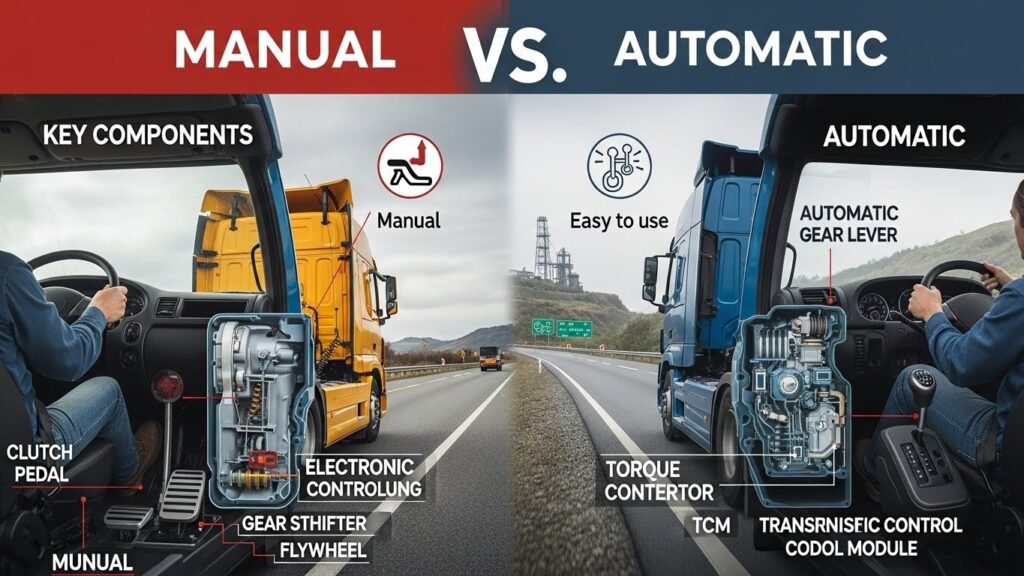
In the world of trucking, one of the most common questions is, “Are semi trucks automatic?” As the trucking industry evolves, transmission systems are a hot topic, especially when comparing manual transmissions and automatic transmissions in semi-trucks. The shift towards automatic transmissions has gained traction, yet many traditionalists argue that manual transmissions still hold their ground.
Understanding the differences between the two types of transmissions is essential for drivers, fleet managers, and companies looking to make informed decisions. This article will cover all aspects of semi truck transmissions, compare the manual vs. automatic debate, and delve into the growing trend of automatic trucks. We will explore everything from driver experience, fuel economy, performance, and safety, to training and the future of transmissions in semi-trucks.
Let’s dive into why this topic matters and what it means for the future of semi-truck driving.
Semi-Truck Transmission Systems: A Breakdown
Manual Transmission

A manual transmission in a semi-truck requires the driver to manually shift gears using a clutch pedal and gear shifter. It’s the traditional system that many truckers have used for decades. In this system:
- The driver has complete control over the shifting of gears, deciding when to change speeds.
- Manual transmissions are still widely used in older models and in certain industries requiring high-performance standards, such as heavy haul trucking or construction.
- Skill requirement is high, and mastering this system provides truckers with a sense of precision control and mastery over the vehicle.
Automatic Transmission

In contrast, automatic transmissions in semi-trucks are controlled by computers, shifting gears automatically without the need for the driver’s input on when to change. The key features of automatic transmissions include:
- Technology advances have enabled computer-controlled shifting, which adjusts the gear ratio based on engine torque, vehicle angle, and speed evaluation.
- Driver workload reduction is a primary benefit, as it eliminates the need for constant gear shifts, allowing truckers to focus more on navigation and road conditions.
- Efficiency has greatly improved in newer automatic systems, offering better fuel economy and smoother driving experiences compared to earlier models.
Comparison Between Manual and Automatic Transmissions
Ease of Driving
- Manual Transmission: Involves more physical effort and skill. The driver must engage the clutch and shift the gears according to the speed and load of the vehicle. This requires more focus and can cause driver fatigue, especially on long-haul trips.
- Automatic Transmission: Simplifies the driving experience. The truck automatically adjusts gears, which means the driver only needs to focus on steering and braking. This is particularly beneficial for new drivers or those on long trips, as it reduces the overall mental strain.
Fuel Efficiency and Economy
- Manual Trucks: Many believe that manual transmissions are more fuel-efficient. Skilled drivers can optimize fuel usage by carefully managing the shifting of gears. However, the fuel efficiency can vary depending on driving conditions, shifting errors, and driver skill.
- Automatic Trucks: Automatic transmissions are now more efficient than ever, thanks to advancements in technology. Modern systems make adjustments in real-time to provide the best possible fuel economy by taking into account various factors like engine torque and vehicle speed.
Vehicle Control

- Manual Transmission: One of the significant advantages of a manual system is the precise control it offers. Truckers can decide exactly when to shift, making it easier to manage different terrains or weather conditions. For example, when driving in icy conditions or on steep grades, the driver can adjust the gear to ensure maximum control.
- Automatic Transmission: While automatic transmissions provide convenience, they can sometimes lack the fine control that manual systems offer. Automatic systems are designed to optimize performance, but they may not always match the driver’s instincts when facing challenging road conditions.
Safety Considerations
- Manual Trucks: The driver’s involvement in shifting gears can sometimes be a double-edged sword. While it provides more control, it also increases the likelihood of driver error, especially in high-pressure situations. Driver distraction can lead to missed shifts or incorrect gear selection, which could affect safety.
- Automatic Trucks: By removing the need for shifting, automatic systems reduce the risk of human error. The computer-driven adjustments in gear ratios make automatic trucks safer for new drivers, as it eliminates the potential for shifting issues.
The Cost of Ownership and Maintenance
Initial Purchase Price
- Manual Trucks: Typically, manual trucks are less expensive than their automatic counterparts. However, as technology continues to advance, the price gap between manual and automatic transmissions has been shrinking.
- Automatic Trucks: Automatic trucks often come at a higher upfront cost due to the advanced technology involved in the transmission system. However, they can save money in the long run by reducing fuel consumption and maintenance needs.
Maintenance Costs
- Manual Trucks: Maintenance for manual trucks can be cheaper because there are fewer components involved in the transmission. However, over time, clutch replacements can be costly.
- Automatic Trucks: Automatic transmissions require more complex maintenance and repairs. The systems are more prone to failure if not maintained correctly, but modern automatic systems have become more reliable, reducing repair costs over time.
Long-Term Value
- Manual Trucks: Manual trucks tend to last longer, as they have fewer electronic parts prone to malfunction. In the used truck market, manual trucks often retain their value better because they’re still sought after by traditionalists who prefer more hands-on control.
- Automatic Trucks: In contrast, automatic trucks are becoming more in demand, especially among fleet operators looking for ease of use and driver comfort. As technology continues to improve, automatic trucks may even outperform manual trucks in terms of long-term value retention.
Training and Licensing Requirements

Manual Transmission Training
To operate a manual semi-truck, drivers must undergo specific training that includes learning how to properly engage the clutch and shift gears. This type of training requires patience and skill but offers increased career flexibility.
- Drivers must pass the CDL skills test using a manual truck, which means they don’t have any restrictions on their commercial driver’s license (CDL).
- It’s the preferred training for those who wish to drive a variety of trucks in the industry.
Automatic Transmission Training
- Automatic transmission training is often quicker and easier for new drivers to learn. Because the truck shifts automatically, there’s no need for the driver to focus on gear shifting, making it easier for them to focus on steering and braking.
- However, drivers trained on automatic trucks will receive an automatic-only restriction on their CDL, limiting their ability to drive manual trucks without additional training.
Impact of Training on Career Opportunities
- Manual Trucks: Having manual transmission experience can provide drivers with greater job flexibility since they can operate both manual and automatic trucks.
- Automatic Trucks: Drivers trained only on automatic trucks may face restrictions when applying for jobs that require manual transmission skills. This can limit their career options, especially in industries where manual trucks are still the norm.
Future of Transmission in Semi-Trucks
Technological Advancements in Automatic Transmissions
- Advancement in Transmission Systems: The trucking world is witnessing rapid advancements in automatic transmission technology. Today’s automatic transmissions use computer-controlled shifting that optimizes gear changes based on engine torque, vehicle speed, and other factors. These systems reduce the need for manual gear shifts, enhancing overall vehicle performance.
- Fuel Efficiency Improvements: Automatic transmissions now offer better fuel efficiency than older models due to technological improvements that automatically adjust gear ratios for maximum fuel economy. In addition, engine torque evaluation helps automatic systems adapt better to road conditions, improving fuel usage and reducing wear on the truck.
- Driver Experience and Convenience: The convenience offered by modern automatic systems has made them a popular choice in the trucking industry. These systems not only reduce the driver workload but also help reduce fatigue, especially during long hauls or when driving through complex terrains. Drivers can focus more on navigation, improving overall driver safety.
- Autonomous Systems on the Horizon: As the trucking industry pushes toward automation, there are talks of autonomous trucks where automatic transmissions play a central role. These self-driving trucks will eliminate the need for manual gear shifting entirely, further emphasizing the shift towards automatic systems in the future.
Manual Transmission’s Continued Relevance
- Manual Transmissions in Niche Markets: Although automatic trucks are on the rise, manual transmissions still have a stronghold in certain sectors. Industries such as heavy haul trucking, agricultural transportation, and construction often prefer manual trucks due to their reliability, cost-effectiveness, and the driver control they provide, especially when navigating rough terrains or steep gradients.
- Traditional Drivers and Skills: Many experienced truck drivers have mastered manual shifting, and they value the sense of control that manual trucks provide. For these drivers, the transition to automatic transmissions may feel like a loss of their traditional skills, and thus, manual trucks still maintain a presence in the trucking world. However, the growing adoption of automatic transmissions indicates a shift in driver preference, especially as training for manual trucks becomes less common in new driver programs.
Converting Manual to Automatic: What You Need to Know
Converting a manual transmission truck to an automatic transmission is a complex and expensive process, but it can offer a variety of benefits depending on the truck owner’s needs. This conversion allows drivers to enjoy the ease and comfort of an automatic transmission while retaining the vehicle’s core functionality. Here’s everything you need to know about converting a manual truck to automatic.
Why Convert a Manual to Automatic?
There are several reasons why someone might consider converting their truck from a manual to an automatic:
- Ease of Use: Automatic transmissions are easier to drive, especially for new or inexperienced drivers. This is particularly true in city driving or on long hauls where frequent gear shifting can become tiring.
- Driver Fatigue: For long-distance drivers, operating a manual truck can become physically exhausting. Automatic transmissions reduce the need for constant gear shifting, which can help alleviate fatigue.
- Improved Fuel Efficiency: Modern automatic transmissions are often more fuel-efficient than manual ones, thanks to advances in technology. They can shift gears more smoothly and accurately, helping the engine perform optimally.
- Better Resale Value: If the truck is intended for resale, automatic trucks are often more in demand than their manual counterparts, especially in markets where automatic vehicles dominate.
Challenges and Considerations of the Conversion
Converting a manual transmission truck to an automatic isn’t a straightforward process and comes with several challenges and considerations:
- Cost: The conversion can be expensive, often costing several thousand dollars. The price includes parts, labor, and possibly additional modifications needed for the truck’s drivetrain and electronics.
- Compatibility: Not all vehicles are compatible with transmission swaps. The frame, drivetrain, and engine might need to be modified to accommodate the automatic transmission.
- Time: The conversion process can take a considerable amount of time, sometimes several days or even weeks, depending on the truck model and the complexity of the conversion.
- Loss of Vehicle Value: Some trucks may lose value after a conversion, especially in markets where manual transmissions are still preferred or in certain industries that value the traditional feel of manual gear shifting.
- Warranty Concerns: Converting a manual transmission truck to automatic could void the manufacturer’s warranty or any existing service agreement.
Steps to Convert a Manual Transmission to Automatic
If you decide to go ahead with the conversion, there are several key steps involved in the process:
- Research and Planning:
- Before beginning the conversion, it’s essential to research and choose the right automatic transmission. The chosen transmission should be compatible with your truck’s engine and drivetrain.
- Consulting with a professional mechanic or auto shop specializing in transmission conversions is highly recommended to understand the specific parts and processes involved.
- Before beginning the conversion, it’s essential to research and choose the right automatic transmission. The chosen transmission should be compatible with your truck’s engine and drivetrain.
- Parts and Equipment Needed:
- Automatic Transmission: The most crucial component of the conversion.
- Transmission Control Module (TCM): This controls the automatic transmission’s shifting.
- Torque Converter: A component that transfers the engine’s power to the automatic transmission.
- Shifter and Linkage: Since you’ll be switching from a manual shifter to an automatic gear lever, you’ll need new parts to control the automatic transmission.
- Cooling System: Automatic transmissions generate more heat than manual transmissions, so adding or upgrading the cooling system is often necessary to ensure proper functioning.
- Wiring and Electronic Components: Converting to automatic often requires modifying the truck’s wiring and electronics to communicate with the new transmission system.
- Automatic Transmission: The most crucial component of the conversion.
- Disassemble the Manual Transmission:
- Begin by removing the manual transmission, clutch system, and other related components. This includes the clutch pedal, flywheel, manual shifter, and all associated parts.
- Begin by removing the manual transmission, clutch system, and other related components. This includes the clutch pedal, flywheel, manual shifter, and all associated parts.
- Install the Automatic Transmission:
- Place the new automatic transmission in the truck. This may require additional modifications to ensure proper fitment, especially if the transmission is from a different make or model than the original.
- Install the torque converter and ensure it is correctly attached to the flywheel or flex plate.
- Place the new automatic transmission in the truck. This may require additional modifications to ensure proper fitment, especially if the transmission is from a different make or model than the original.
- Install the Transmission Control System:
- This includes setting up the Transmission Control Module (TCM), wiring, and integrating the automatic transmission’s shift control mechanism into the truck’s electrical system.
- The truck may require additional sensors or modifications to monitor the automatic system’s performance.
- This includes setting up the Transmission Control Module (TCM), wiring, and integrating the automatic transmission’s shift control mechanism into the truck’s electrical system.
- Install New Shifter and Linkages:
- Replace the manual shifter with an automatic gear lever and ensure the linkage is properly connected to the transmission.
- This may also involve replacing the gear column, depending on whether the truck has a floor-mounted or column-mounted shifter.
- Replace the manual shifter with an automatic gear lever and ensure the linkage is properly connected to the transmission.
- Upgrade the Cooling System:
- Because automatic transmissions produce more heat, it’s important to install or upgrade the truck’s cooling system to prevent overheating and ensure optimal transmission performance.
- Consider installing an external transmission cooler to help manage the added heat load.
- Because automatic transmissions produce more heat, it’s important to install or upgrade the truck’s cooling system to prevent overheating and ensure optimal transmission performance.
- Test the New System:
- Once everything is in place, it’s crucial to thoroughly test the new automatic system. This includes checking the shifting performance, ensuring the transmission is cooling correctly, and making sure there are no leaks.
- Take the truck on a test drive to ensure that the automatic transmission operates smoothly, and there are no issues with shifting or vehicle response.
- Once everything is in place, it’s crucial to thoroughly test the new automatic system. This includes checking the shifting performance, ensuring the transmission is cooling correctly, and making sure there are no leaks.
Costs of Converting Manual to Automatic
The cost of converting a manual transmission to automatic can vary depending on the truck model, the type of automatic transmission used, and labor costs. The general price range for such conversions is:
- Parts: The cost of an automatic transmission itself can range from $1,500 to $4,000, depending on the brand and model.
- Labor: Labor costs typically range from $1,000 to $3,000 for the full conversion, depending on the complexity of the job.
- Additional Costs: Modifications to the cooling system, electronic systems, and shifter installation can add another $500 to $1,500.
In total, the conversion could cost anywhere between $3,000 to $8,000 or more. This is a significant investment, so it’s important to evaluate whether the benefits of converting outweigh the costs for your specific needs.
Is Converting Worth It?
Whether or not converting a manual truck to automatic is worth it depends on several factors, including:
- Driver Preference: If the driver prefers the convenience and ease of an automatic system, the conversion can be worthwhile.
- Industry Demands: In industries where automatic trucks are more common, converting may be a strategic decision for improving efficiency and reducing driver fatigue.
- Cost Considerations: For some truck owners, the high cost of conversion may not be justifiable, especially if the vehicle is older and could be replaced with a more modern automatic truck for a similar price.
- Resale Value: Automatic transmissions tend to have better resale value in most markets, making a conversion potentially beneficial if the truck is intended to be sold later.
Conclusion
Choosing the Right Transmission for Your Needs
- Deciding between a manual or automatic semi-truck comes down to various factors, including driver preference, driving conditions, fuel efficiency, and long-term costs. If you’re someone who values complete control over the truck, and you operate in demanding environments (like construction or heavy hauling), a manual truck might still be the best choice.
- On the other hand, if you’re a driver looking for ease of use and reduced mental strain, especially on long-haul trips, an automatic truck could be a more practical option. The advancements in automatic transmission technology, including better fuel economy and driver workload reduction, make them a popular choice for many in the trucking industry today.
Final Recommendations
- For New Drivers: If you’re just starting out, it’s easier and more comfortable to learn on an automatic truck. The training process is quicker, and you will be equipped to drive modern vehicles that are increasingly common in the industry.
- For Experienced Drivers: Experienced truckers may still prefer manual transmissions for the sense of control they offer, especially if they have years of experience and are accustomed to the skills required. However, with automatic transmissions offering better fuel efficiency and lower operational costs, switching to an automatic truck could make long-term financial sense.
- For Fleet Operators: Fleet managers and companies may find automatic transmissions more cost-effective, considering their fuel efficiency, ease of driver training, and lower maintenance needs. Automated systems also help ensure that drivers can focus on other important aspects of the job, like safety and navigation, without worrying about gear shifting.
- The Industry Shift: The trucking industry is gradually moving toward more automatic trucks, and this trend is likely to continue as technology evolves. However, manual trucks will still play a role, especially in specialized sectors where precision control is necessary.
FAQs About Semi-Trucks: Manual vs. Automatic
1. Are automatic semi-trucks better for long hauls?
Automatic semi-trucks are generally better for long hauls because they reduce the amount of mental and physical strain on the driver. With automatic transmission, the driver doesn’t have to constantly shift gears, making it easier to focus on driving, navigation, and road conditions. This can significantly reduce driver fatigue, which is crucial during long-distance trips. Additionally, automatic trucks typically offer better fuel efficiency, which is a huge advantage for long hauls.
2. Do automatic transmissions reduce the life span of semi-trucks?
Automatic transmissions do not necessarily reduce the lifespan of a semi-truck. In fact, modern automatic transmission systems are designed to be more efficient and reliable compared to earlier versions. Advances in technology have improved the durability of automatic transmissions, meaning that with proper maintenance, automatic trucks can last just as long, if not longer, than manual trucks. However, poor maintenance or neglecting the necessary upkeep can affect the longevity of any transmission system, whether manual or automatic.
3. Can you switch from a manual to an automatic transmission truck?
Yes, you can switch from a manual to an automatic transmission truck. However, it is important to remember that drivers who have trained on manual trucks and passed their CDL skills test in a manual vehicle will have more flexibility in their career. Drivers trained solely on automatic trucks will receive an automatic-only restriction on their CDL, meaning they won’t be able to drive manual trucks unless they receive additional training.
4. What is the difference in shifting patterns between manual and automatic semi-trucks?
The main difference in shifting patterns is that with manual transmissions, the driver must engage the clutch and shift the gears based on road conditions, speed, and load. This gives the driver full control over the truck’s power and speed. In contrast, automatic transmissions handle gear shifting automatically, adjusting to driving conditions and engine performance without the driver’s intervention. The driver only needs to focus on steering, braking, and accelerating.
5. Are automatic semi-trucks more expensive to repair than manual trucks?
Generally, automatic semi-trucks are more expensive to repair compared to manual trucks due to the more complex technology involved. Automatic transmissions have electronic control systems and sensors, which can increase repair costs if they malfunction. Manual trucks, on the other hand, are simpler, and repairs like clutch replacements tend to be less costly. However, the higher repair costs for automatic trucks may be offset by their reliability, fuel efficiency, and ease of maintenance in the long run.
6. How does the choice of transmission affect fuel economy in semi-trucks?
Automatic transmissions typically offer better fuel economy than manual transmissions in modern semi-trucks. Automatic transmissions are able to shift gears more efficiently based on engine torque and vehicle speed, optimizing the fuel consumption. Manual transmissions, while offering better fuel economy in some skilled hands, tend to waste fuel during shifting, especially when shifts are mistimed or inefficient. As automatic truck technology advances, it increasingly outperforms manual systems in fuel efficiency.
7. Is it harder to drive a manual semi-truck compared to an automatic?
Yes, it is generally harder to drive a manual semi-truck compared to an automatic truck, especially for new drivers. Driving a manual truck requires constant gear shifting, which can be physically and mentally tiring, particularly in heavy traffic or on long trips. A manual transmission requires the driver to engage the clutch and carefully manage gear ratios, which can take time to master. Automatic trucks simplify the driving process by eliminating the need to shift gears manually, making them easier to drive for both new and experienced drivers.
8. Are automatic transmissions safer than manual in semi-trucks?
Automatic transmissions can be considered safer than manual transmissions in some cases because they reduce the likelihood of driver error. Automatic systems handle the shifting of gears, ensuring that the truck operates smoothly, which lowers the risk of mistakes such as missing a shift or using the wrong gear in a critical situation. Manual transmissions require more focus and skill, which can lead to mistakes if the driver is distracted or fatigued. Additionally, automatic transmissions can enhance safety in situations where quick gear shifts are necessary, like emergency braking or handling slippery roads.
9. Can semi-trucks with automatic transmissions handle steep grades as well as manual trucks?
Yes, semi-trucks with automatic transmissions can handle steep grades as efficiently as manual trucks. In fact, many newer automatic transmissions are designed to handle challenging driving conditions like steep grades, icy roads, and other difficult terrains. These trucks adjust the gear ratios automatically to maintain power and speed without driver intervention. However, for manual trucks, the driver must carefully select the right gear to maintain the proper balance of engine torque and speed on steep grades, which requires skill and experience.
10. Do automatic semi-trucks require more frequent maintenance?
Automatic semi-trucks do not necessarily require more frequent maintenance than manual trucks. However, due to their complexity, automatic transmissions might require specialized service and repair, especially when dealing with the electronic control systems. If maintained properly, automatic transmissions are reliable and durable. Regular checks on the transmission fluid, filters, and other components can prevent major issues and ensure that the truck performs efficiently over time.
11. Is it harder to train on manual semi-trucks compared to automatic ones?
Training on manual semi-trucks is typically more challenging compared to automatic trucks. Manual transmissions require the driver to learn how to shift gears using a clutch pedal and gear lever, which demands greater coordination and skill. In contrast, training on automatic trucks is easier since the transmission system automatically handles the gear shifts. However, manual transmission training gives drivers a more comprehensive skill set and provides greater job flexibility in the trucking industry.
12. Are manual semi-trucks still popular in the trucking industry?
While automatic semi-trucks are becoming more popular, manual trucks are still common in certain industries and regions. Many experienced drivers still prefer manual trucks for the control and feel they offer. Manual transmissions are also favored in specialized trucking jobs, like heavy-duty or off-road trucking, where precision and control over shifting are important. However, the trend toward automatic transmissions is growing, especially with new drivers and fleets looking for simplicity, efficiency, and driver comfort.
13. What is the lifespan of a semi-truck with an automatic transmission?
The lifespan of a semi-truck with an automatic transmission depends on the quality of the transmission and the maintenance it receives. With proper care, automatic trucks can last as long as manual trucks—often over 1 million miles. The key to ensuring a long lifespan for an automatic truck is regular maintenance, including transmission fluid changes, checking for leaks, and addressing any issues promptly.