Skip to content
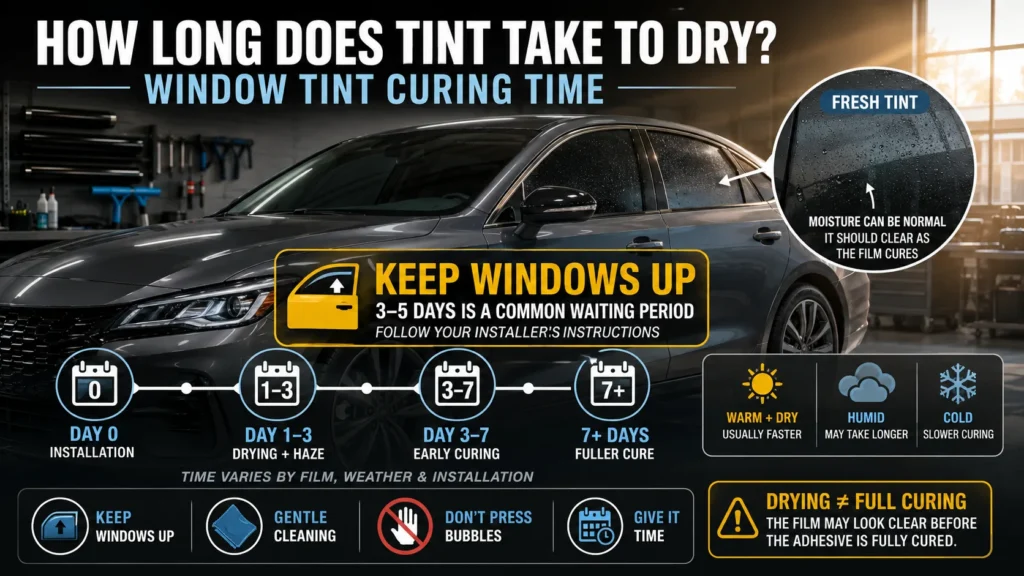
If you just had your car windows tinted, you may be wondering how long you need to wait before using the windows normally. Fresh window tint can look hazy or have small water pockets at first, but this does not always mean something went wrong.
The film needs time to dry and the adhesive needs time to cure. The exact window tint drying time depends on the film, weather, humidity, and installation conditions.
Quick Answer
Most car window tint takes about 3 to 7 days to dry enough for normal use, but full curing can take longer. Warm, dry weather usually helps the process, while cold or humid conditions can slow it down. I recommend keeping the windows up for at least 3 to 5 days and following your tint installer’s instructions.
How Long Does Window Tint Take to Dry?
If you just had your car windows tinted, the safest answer is to give the film several days before treating it like a fully finished window.
For many automotive tint installations, the film can become dry enough for normal use within about 3 to 7 days. Some products and weather conditions may require longer, and full adhesive curing can continue for weeks.
I would not use the first day as a test of whether the tint is ready. Fresh film can still contain moisture between the film and glass even when it looks fairly dry.
The exact window tint curing time depends on:
- Film type
- Adhesive system
- Temperature
- Humidity
- Sunlight
- Film thickness
- Installation method
- The manufacturer’s instructions
This is why two cars tinted on the same day can have different drying times.
Window Tint Drying vs. Curing: What’s the Difference?

Drying and curing are related, but they are not exactly the same thing.
Drying
During installation, the installer uses a water-based solution to position the film on the glass. Some moisture remains trapped between the film and the window after the excess is removed.
As this moisture leaves, the film starts to look clearer and becomes more firmly attached.
Curing
Curing is the longer process in which the adhesive continues to bond to the glass.
This means your tint can look dry before it has reached its full cure. Some films reach a usable cure in several days, while complete adhesive curing can continue for weeks depending on the film and conditions.
That distinction matters because you should not assume that clear-looking film is ready for every type of use.
Window Tint Curing Time at a Glance
| Conditions | What to expect |
| Warm and dry | Usually faster curing |
| Warm and humid | Can still take longer |
| Cool and dry | Slower than warm conditions |
| Cold and humid | Often the slowest |
| Basic or thin film | May cure faster |
| Thick or specialty film | May need more time |
| Full adhesive cure | Can continue for weeks |
There is no single curing time that applies to every car.
For that reason, your installer’s instructions should take priority over a general online timeframe.
What Happens During the First Few Days After Tinting?

Fresh window tint often looks different from the finished product.
You may notice:
- Slight haze
- Cloudiness
- Small water pockets
- Tiny bubbles
- Uneven-looking areas
- A darker or slightly different appearance
I would not panic over mild haze or small moisture pockets during the first few days. The installation process leaves some moisture behind, and it gradually leaves the film as it cures.
The appearance should gradually improve as the film dries.
The key is to leave it alone rather than trying to speed up the process by pressing on the film or moving the window.
When Can I Roll My Windows Down After Tinting?

This is one of the most important parts of window tint aftercare.
For most installations, I would wait at least 3 to 5 days before rolling the windows down. If the weather is cold or humid, waiting closer to a week can be safer.
Why does this matter?
The bottom edge of the window passes through the rubber window seal every time you lower the glass. If the adhesive has not set enough, that movement can catch the fresh film.
Rolling the window down too soon can cause:
- Edge lifting
- Peeling
- Wrinkles
- Creases
- Bubbles
- Film shifting
I would rather wait an extra day than risk damaging a new tint installation.
If your installer gave you a specific waiting period, use that recommendation even if a general guide says you can roll the windows down sooner.
Can I Drive Right After Getting a Window Tint?
In most cases, you can drive the car after the tint installation is finished.
The important part is to avoid using the freshly tinted windows.
You can drive normally while the film cures, but keep the windows up for the recommended period. This is especially important for side windows that move through the door seals.
The tint does not need the car to sit parked for several days. It needs time without being disturbed.
Can I Wash My Car After Getting Window Tint?
You can usually wash the exterior of the vehicle after tinting, but I would be more careful with the inside of the tinted windows.
Fresh film needs time to settle. Avoid scrubbing, pressing, or wiping the film aggressively.
If you need to clean the inside glass, follow the installer’s instructions. Some installers recommend waiting about a week before cleaning, while specific film manufacturers may provide their own care instructions.
When you do clean the film, use:
- A clean microfiber towel
- A tint-safe glass cleaner
- Light pressure
- Gentle wiping
Avoid razor blades, abrasive pads, and harsh cleaning products.
Does Weather Affect Window Tint Drying Time?

Yes. Temperature and humidity can make a noticeable difference.
Warm Weather
Warm, dry conditions generally help moisture leave the film faster.
This is why tint often cures faster during warm sunny weather than during a cold, damp period.
Cold Weather
Cold temperatures can slow the curing process.
If you get your car tinted during winter, do not be surprised if the film stays hazy for longer than it would during summer.
Humidity
High humidity can also slow moisture evaporation.
A warm day does not automatically mean the tint will cure quickly if the air is very humid.
Sunlight
Sunlight warms the glass and can help the curing process. That does not mean you should try to heat the film with extreme temperatures or artificial heat unless your installer specifically recommends it.
The safest approach is to let the film cure naturally and follow the installation instructions.
How Long Does Ceramic Tint Take to Dry?
Ceramic tint does not have one universal drying time.
Like other automotive window films, ceramic tint needs time for the installation moisture to leave and for the adhesive to settle.
The exact time depends on the particular film, adhesive, installation conditions, temperature, and humidity.
I would not assume that ceramic tint automatically needs a specific number of extra days just because it is ceramic. The manufacturer’s instructions and the installer’s guidance are more useful than the film category alone.
Why Does New Window Tint Look Cloudy?
Cloudiness or haze is often normal during the early curing stage.
The film is installed using a liquid solution that helps the installer position it correctly. Some of that moisture remains between the film and glass.
As the moisture leaves, the film should become clearer.
So, if your freshly tinted windows look slightly cloudy on the first few days, give them time.
What I would watch for is a problem that does not improve as the film cures.
If the haze remains well beyond the expected curing period, or the film starts peeling or developing permanent defects, contact the installer.
Are Bubbles Normal After Window Tint Installation?

Small moisture pockets can be normal shortly after installation.
The important difference is between temporary moisture and a lasting installation problem.
Usually less concerning
- Tiny water pockets
- Mild haze
- Small areas that gradually become clearer
- Moisture that changes as the film cures
Worth asking the installer about
- Large bubbles that remain
- A crease in the film
- Dirt trapped under the film
- Edges that start lifting
- Areas that stay cloudy long after the expected cure period
I would not press, pop, or squeeze fresh bubbles. Doing that can damage the film or create a permanent mark.
What Happens If You Roll Down the Window Too Soon?
The biggest risk is damage to the lower edge of the film.
As the glass moves down, the window seal can rub against the film. If the adhesive has not cured enough, the seal can catch the edge and pull it away from the glass.
That can lead to:
- Peeling
- Wrinkles
- Creases
- Bubbles
- Edge separation
In some cases, the damaged section may need to be repaired or the film may need to be replaced.
This is why I treat the waiting period as part of the installation, not an optional extra.
How to Care for Fresh Window Tint

The first few days are simple. The main goal is to avoid disturbing the film.
Keep the windows up
Do not lower freshly tinted windows until the recommended waiting period has passed.
Leave the film alone
Do not press bubbles or touch loose-looking edges.
Avoid aggressive cleaning
Give the film time to settle before cleaning the inside glass.
Use a soft microfiber towel
Once cleaning is allowed, use a clean microfiber towel and gentle pressure.
Use a suitable cleaner
An ammonia-free or tint-safe glass cleaner is a safer choice for automotive window film.
Follow your installer’s instructions
This is the most useful rule because the correct waiting period can vary by film and installation.
How Do I Know When My Tint Is Fully Cured?
There are a few visual signs that the curing process is progressing:
- Haze has cleared
- Small moisture pockets have disappeared
- The film looks even
- The glass looks clear through the tint
- The edges remain firmly attached
- The film no longer changes noticeably from day to day
Still, appearance cannot tell you the exact adhesive strength.
A film can look finished while the adhesive continues to cure. Some automotive films can keep curing for weeks after they become clear enough for normal use.
When Should I Contact the Tint Installer?
I would contact the installer if you notice a problem that does not improve during the expected curing period.
Call the installer if:
- The film starts peeling
- An edge lifts
- Large bubbles remain
- A crease develops
- Dirt is trapped under the film
- Haze remains for an unusually long time
- The film looks damaged
- You accidentally rolled a window down too soon
Do not try to repair a fresh installation yourself unless the installer tells you how.
A professional can tell the difference between normal curing and an installation problem.
Final Takeaway
If you’re asking how long does tint take to dry, plan on several days rather than several hours.
For many automotive tint installations, 3 to 7 days is a useful general range for the early curing period, while cold, humid conditions or certain films can extend the process. Full adhesive curing may continue much longer.
My main advice is simple: keep the tinted windows up, leave the film alone, avoid aggressive cleaning, and follow your installer’s instructions.
A little patience during the first week can help protect the finish you just paid for.
FAQs
Can I park my newly tinted car in the sun?
Yes, normal sunlight can help warm the glass and support curing. You do not need to use artificial heat.
Does window tint cure faster in direct sunlight?
Warm sunlight can help the moisture evaporate faster, but weather conditions still matter. Heat alone does not guarantee a fast cure.
Can I use the defroster after tinting?
Follow the instructions from your installer and film manufacturer. If they recommend avoiding heavy defroster use during the early curing period, follow that advice.
Does rain affect newly installed car tint?
Rain on the outside of the vehicle generally does not mean the interior tint is ruined. The film is applied to the inside of the glass. Still, follow your installer’s specific aftercare instructions.
Can I open a different window after tinting?
If the other window has not been tinted, you can generally use it. Avoid lowering any window that has fresh tint until its recommended waiting period has passed.
Can I remove bubbles from fresh window tint myself?
No. Do not press or pop fresh bubbles yourself. Small moisture pockets can disappear during curing, while permanent bubbles may need professional attention.
Why does my tint look darker immediately after installation?
Moisture trapped between the film and glass can temporarily change how the film looks. The appearance may change as the moisture leaves during curing.
Can cold weather prevent window tint from curing?
Cold weather usually slows curing rather than stopping it completely. A cold, humid period can make the process take much longer than warm, dry weather.
What should I do if the tint edge starts peeling?
Leave it alone and contact the installer. Trying to press or pull the edge back yourself can make the damage worse.