Skip to content
Choosing to run your ride on alternative fuel is a smart move for your wallet and the planet. But you might notice your engine feels a bit sluggish after the switch. This is where the timing advance processor comes into play to save the day. Think of it as the secret sauce that makes your car run like a dream on gas. This guide will walk you through every single detail about these cool devices. We will cover how they work and how to pick the best one for your vehicle.
Understanding the Timing Advance Processor (TAP)
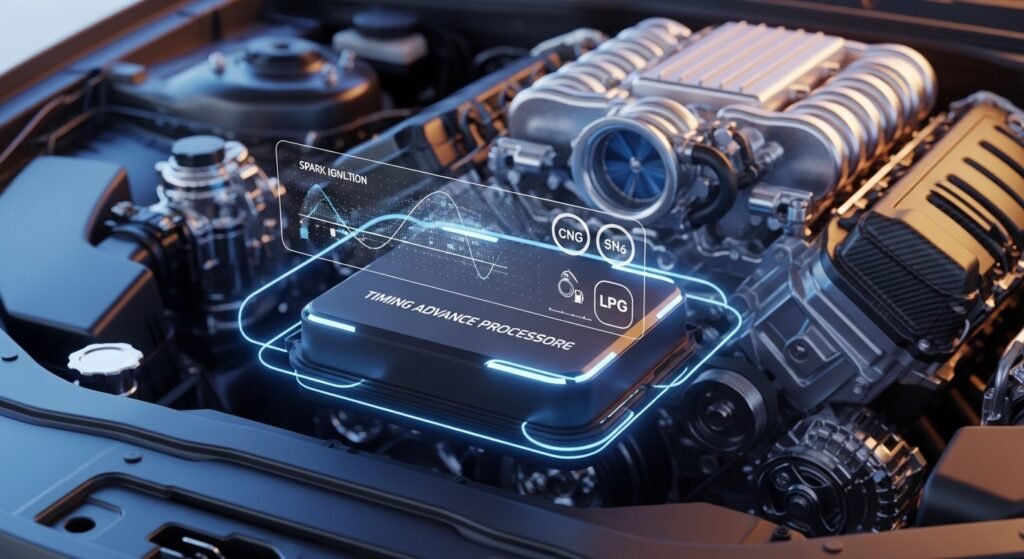
A timing advance processor is basically a tiny brain for your engine’s spark system. It is an electronic control unit that changes when the spark happens in your cylinders. When you use fuels like CNG or LPG, the engine needs a little help to keep up. The timing advance processor steps in to make sure everything stays perfectly in sync. It is the middleman between your fuel and your engine’s power.
Definition and Core Function
At its heart, the timing advance processor is an electronic control unit or ECU. It varies the original spark advance while you are driving on alternative fuels. It intercepts signals to make sure the spark happens at the best possible moment. This helps your car handle the switch from petrol to gas without any hiccups. Without it, your engine might not reach its full potential on cleaner fuels.
The “Why” Behind TAP
Alternative fuels like CNG and LPG burn a bit slower than regular old petrol. Because they burn slower, the factory ignition timing is usually just not fast enough. The timing advance processor fixes this by speeding up the spark timing. This ensures that all the fuel burns up completely inside the engine. It keeps your engine from feeling like it is working too hard for nothing.
The Physics of Combustion

In an internal combustion engine, timing is everything for a smooth ride. The timing advance processor provides offset delays or advances to find the perfect timing. This creates the optimum operating point for the ignition coil during the fuel burn. By getting the timing right, you get the most energy out of every drop of fuel. It is all about making the combustion cycle as efficient as it can be.
System Integration
Installing a timing advance processor is like giving your car’s starter system a modern upgrade. It usually hooks right into the original vehicle starter system without much fuss. It sits there and monitors how your engine is running in real-time. Then it tweaks the signals to make sure your spark is always on point. It integrates smoothly so you can switch between fuels whenever you want.
Key Benefits of Integrating a TAP
Adding a timing advance processor to your setup brings a ton of perks. It is not just about making the car run; it is about making it run better. Most drivers notice a huge difference right away after the installation. From more power to better savings, the benefits really start to add up fast. Let’s dive into why this little box is such a big deal.
Engine Performance
One of the best things about a timing advance processor is the boost in power. When you switch to gas, you usually lose a little bit of that “get up and go”. The processor restores that lost power by optimizing the spark for the new fuel. You get better throttle response and a much smoother acceleration. Your car will feel just as peppy as it did on regular gasoline.
Fuel Economy
Who does not love saving money at the pump every single week? A timing advance processor helps you get better fuel efficiency and lower fuel consumption. By burning the fuel more effectively, you use less of it to go the same distance. This means more miles per tank and more cash in your pocket. Over time, the processor basically pays for itself through these fuel savings.
Environmental Impact
Using alternative fuels is already great for the environment, but a TAP makes it better. It helps reduce air-polluting emissions by ensuring a cleaner burn in the engine. When fuel burns completely, there is less waste coming out of the exhaust pipe. This makes your vehicle much more eco-friendly for your city and the planet. It is a win-win for you and mother nature at the same time.
Safety and Longevity
Keeping your engine healthy is super important for avoiding big repair bills later. A timing advance processor reduces the risk of backfiring, which can hurt your engine. It also helps protect the engine valves from getting too hot and wearing out. By keeping the combustion stable, you extend the overall life of your car’s motor. It acts like a safety shield for your internal engine parts.
- Better Power: You get back the horsepower you lose when switching fuels.
- Lower Costs: You save money because your engine uses gas more efficiently.
- Clean Air: Your car lets out fewer nasty chemicals into the atmosphere.
- Engine Protection: It stops backfiring and keeps your valves in great shape.
Types of Ignition Systems and Processor Compatibility
Every car is a little different, especially when it comes to ignition. You need to make sure your timing advance processor matches your specific system. Some cars use old-school tech, while others are packed with modern digital sensors. Knowing what you have under the hood is the first step to success. Let’s look at the different types of systems you might find.
Mechanical Breaker Point Ignition Systems
If you are rocking a classic ride, you probably have mechanical breaker points. These systems use a distributor to tell the spark when to fire off. They need a specific kind of timing processor to work correctly. The processor intercepts the low-voltage signal between the distributor and the coil. A great example for this setup is the AEB531 model.
Electronic Ignition Systems with Coil and Distributor
Most cars from a few decades ago use electronic ignition with a distributor. These systems ditch the mechanical points for more reliable electronic switching. They still use a distributor to send the spark to each cylinder. Processors like the AEB526N or AEB549N are perfect for these types of engines. They handle the faster signals much better than the older mechanical versions.
Advanced Electronic Systems with Ignition Modules
Newer cars often have ignition modules that do a lot of the heavy lifting. These modules adjust timing based on how fast you are going and engine load. For these advanced setups, you need a reprogrammable timing advance processor. The AEB515N is a top choice because it can be tuned specifically for your car. It allows for custom timing curves that match your engine perfectly.
Crankshaft Position Sensor (CKP) Systems

Modern engines use a crankshaft position sensor, or CKP, for insane precision. This sensor tells the computer exactly where the engine is at every millisecond.
- Inductive Sensors: These generate analog voltage signals from a spinning trigger wheel.
- Hall Effect Sensors: These use magnetic fields to create digital square wave signals.
- Digital Support: Models like the AEB510N or AEB511N are made for these digital systems.
Timing Advance Processor Selection Guide
Picking the right timing advance processor can feel a bit like a puzzle. You don’t want to just grab the first one you see on the shelf. You need to consider how your car is built and what you need. A good choice will make your car run like new again. Let’s break down the main things you should keep in mind.
Critical Factors for Evaluation
The first thing to look at is your ignition architecture under the hood. Do you have points, a distributor, or a fancy CKP sensor system? Next, check if the processor works with your specific fuel, like CNG or LPG. You also need to look at the adjustable timing range it offers. Some engines need a lot of advance, while others only need a little.
Ignition System Compatibility Matrix
It is super helpful to look at a compatibility matrix before buying. This table shows you which processor models fit which types of ignition systems. For example, a Hall effect sensor needs a very different unit than mechanical points. Make sure the unit you pick can handle the signal integrity of your car. Getting the match right is the key to a happy engine.
| Ignition Type | Compatible TAP Model | Key Note |
| Mechanical Points | AEB531 | Simple installation |
| Electronic Distributor | AEB526N / AEB549N | Handles fast switching |
| Ignition Module | AEB515N | Fully programmable unit |
| Inductive CKP | AEB510N / AEB516N | Analog signal processing |
| Hall Effect CKP | AEB511N / AEB518N | Digital signal processing |
Installation and Setting Procedures
Installing a timing advance processor is a job you can definitely handle. You just need to follow the steps and take your time with it. It is all about getting the wires in the right places safely. Once it is in, you get to do the fun part: tuning it. Let’s walk through the general way to get this done right.
General Installation Standards

Safety always comes first when you are working on car electronics. You must start by disconnecting the battery to avoid any nasty electrical shocks. Find a good spot to mount the unit away from extreme heat or water. Follow the wiring diagram provided by the manufacturer very closely for the best results. Good grounding is also vital to keep the signals nice and clear.
Specific Setting Instructions
After the wires are connected, you need to set the timing advance degrees.
- Potentiometers: Some units use a little dial you can turn with a screwdriver.
- DIP Switches: Other units have tiny switches you flip to set the degrees.
- Idle Settings: Make sure you set the idle advance so the car does not stall.
- Verification: Use a timing light or an oscilloscope to make sure it is working.
Troubleshooting Common TAP Issues
Sometimes things don’t go perfectly, but don’t sweat it just yet. Most problems with a timing advance processor are pretty easy to fix. You just have to listen to your engine and see how it behaves. A little bit of tweaking is usually all it takes to get back on track. Here are some common things you might run into while driving.
- Engine Knocking: This usually means you don’t have enough timing advance set yet.
- Slow Acceleration: If the car feels sluggish, you might have too much timing advance.
- No Start: Double check your wiring and make sure the unit has 12V power.
- Rough Idling: You might need to adjust the idle advance exclusion setting on your unit.
Safety and Emergency Features
Manufacturers know that electronics can sometimes act up at the worst times. That is why a good timing advance processor comes with built-in safety features. These features ensure you are never stranded on the side of the road. They give you peace of mind while you are out exploring the world. Let’s look at the most important safety tool you will have.
The Emergency Connector Functionality

The emergency connector is a total lifesaver for any driver using a TAP. It is a simple plug that lets you disable the processor in seconds. If the unit fails, you just plug in the bypass to go back to factory settings. This allows the car to run on gasoline just like it did before. It is a vital tool for diagnosing problems or getting home safely.
Optimizing Performance for Specific Alternative Fuels
Different fuels have their own personalities and needs for the engine. A timing advance processor lets you tailor the engine for each one perfectly. Whether you use CNG or LPG, there is an ideal setting for you. Understanding these fuels helps you get the most out of every single tank. Let’s see how these two popular gases differ from each other.
CNG (Compressed Natural Gas) Considerations
CNG has a very high octane rating, which is awesome for performance. However, it burns much slower than regular gasoline does in the cylinders. This means you need to start the spark much earlier to get full power. A timing advance processor handles this by giving the engine a big head start. It results in a very clean burn with almost no engine knocking.
LPG (Liquefied Petroleum Gas) Considerations
LPG is more like high-grade gasoline but still needs a little timing help. It vaporizes differently, which can change how the timing needs to be set. You usually don’t need as much advance as you do with CNG fuel. The processor helps manage the transition so the engine stays smooth and quiet. It is all about finding that sweet spot for the best driving feel.
Technical Specifications and Hardware Standards
When you look at the back of a timing advance processor, you see numbers. These specs tell you if the unit is tough enough for your car. You want a unit that can handle the heat and the electrical load. High-quality hardware ensures that the unit lasts for many years of driving. Let’s check out the standard technical details you should know.
- Voltage Range: Most units run perfectly on standard DC 10-16V vehicle power.
- Temperature Resistance: Good units work in freezing cold or desert heat (-20°C to 105°C).
- Connectivity: Many kits use a 56-pin connection for complex 6 or 8 cylinder engines.
- Quality Stamps: Look for ISO9001 and CE certifications to ensure the unit is safe.
Maintenance and Long-Term Care
Once your timing advance processor is in, you can’t just forget it forever. Like any part of a car, it needs a little love and attention. Periodic checks ensure that everything is still working exactly as it should be. This keeps your fuel savings high and your engine running very smoothly. Here is how to keep your TAP in tip-top shape.
Recalibration
As your engine gets older, the parts inside might start to wear down slightly. This can change how the engine responds to the timing advance settings. It is a good idea to recalibrate the processor every once in a while. This keeps the timing perfectly matched to the current state of your motor. A quick tune-up can restore any lost efficiency or engine power.
Component Monitoring
You should also keep an eye on the wires and sensors connecting to the TAP. Make sure the signal integrity stays high and there is no fraying or dirt. Clean connections mean the processor gets the right data to make good choices. If you notice the car acting weird, check the grounding wire first thing. Keeping things clean and tight is the best way to avoid trouble.
Final Decision Making: Choosing and Installing

At the end of the day, a timing advance processor is a great investment. It makes the whole experience of using alternative fuels much better for you. You get more power, better savings, and a much cleaner running vehicle. It is the best way to bridge the gap between old tech and new fuel. Just remember to pick a quality unit and install it correctly.
Think about whether you want a simple unit or one you can program yourself. If your car is modern and complex, a professional installation is usually worth it. They have the tools like oscilloscopes to make sure the timing is perfect. The money you spend now will come back to you in fuel savings later. It is a smart choice for any driver looking to go green today.
Frequently Asked Questions
Can a timing advance processor be used on a turbocharged engine?
Yes, you can totally use a TAP on a turbo setup. Turbocharged engines are very sensitive to timing because of the extra air pressure. When you run CNG or LPG in a turbo car, the timing advance processor helps manage that pressure without causing engine knock. It makes the turbo feel way more responsive when you step on it.
Will installing a TAP void my vehicle warranty?
This is a tricky one that depends on your car maker and local laws. In many places, adding aftermarket electronics like a timing advance processor can affect specific parts of your warranty. If the unit is installed correctly and does not damage the engine, you might be fine. Always check with your dealer before you start splicing wires into a brand-new car.
Does the timing advance processor work when the engine is cold?
Most modern units are smart enough to know when your engine is still warming up. They usually wait until the engine reaches a certain temperature before they start tweaking the spark. This ensures that the car idles smoothly right after you start it up on a chilly morning. Cold engines have different needs, and the TAP respects that cycle.
Can I install a timing advance processor on a motorcycle?
You can definitely put one on a bike if it has been converted to run on gas. Motorcycles often have very high-revving engines that need super precise timing. A TAP made for smaller engines can help a bike maintain its speed and power on alternative fuel. Just make sure you find a waterproof spot to mount it since bikes are out in the rain.
How does a TAP interact with the throttle position sensor?
The timing advance processor often watches your throttle position sensor to see how hard you are pushing the car. If you floor it, the processor knows to adjust the spark for maximum power immediately. When you are just cruising, it shifts the timing for the best possible fuel efficiency. It is constantly talking to your sensors to give you the best ride.
What happens if the TAP gets too hot under the hood?
These units are built tough to handle the heat of an engine bay. Most of them have a working temperature limit of around 105 degrees Celsius. If it gets hotter than that, the electronics might get a little glitchy. It is always a good idea to mount it away from the exhaust manifold to keep it cool and happy.
Is a timing advance processor compatible with hybrid vehicles?
Yes, hybrids that run on gas and electricity can still use a TAP if they have a CNG or LPG kit. The processor only cares about the internal combustion engine part of the hybrid system. It will optimize the spark whenever the gas engine kicks in to help the battery. This makes your hybrid even more efficient than it already was.
Can I tune the timing advance processor using my smartphone?
Some of the newest high-end models actually come with Bluetooth connectivity. This lets you connect your phone and adjust the timing degrees through an app. It is way easier than using a screwdriver to turn a tiny dial under the hood. You can see real-time data right on your screen while someone else drives.
Does a TAP improve the sound of the engine?
A well-timed engine usually sounds much smoother and more “solid.” If your timing is off, the engine might sound raspy or make a pinging noise. Once the timing advance processor is dialed in, those weird noises usually go away. Your engine will purr like a kitten because the fuel is burning exactly when it should.
Will a TAP help my car pass an emissions test?
It actually has a very positive impact on emissions testing. By burning the alternative fuel more completely, you produce fewer raw hydrocarbons. Many drivers find that their cars pass with flying colors once a TAP is installed. It is a great way to make an older car run much cleaner for the environment.
Can a timing advance processor be used with bio-ethanol fuels?
TAPs are mostly made for gas like CNG and LPG, but some can be tuned for ethanol. Bio-ethanol has a different burn rate than petrol, just like gas does. You would need a programmable unit that lets you set a specific curve for ethanol. It is all about matching the spark to how fast that specific fuel burns.
Does the unit draw a lot of power from the battery?
Not at all, as these units are very energy-efficient. The current absorption is usually very low, often less than 0.5 amps when running. It will not drain your battery or put any stress on your alternator. Your car’s electrical system won’t even notice that the processor is there.
Can I move my TAP to a different car later?
If the new car has the same type of ignition system, you can usually swap it over. For example, if you move from one car with a Hall effect sensor to another, it should work fine. You might just need a new wiring harness to reach the different plugs. It is a piece of gear that can stay with you for a long time.
How do I know if the TAP is actually working while I drive?
Many units have a small LED light on the casing that changes color or blinks. A green light usually means it is active and advancing the timing correctly. If the light is red or off, it might be in bypass mode or having a power issue. Checking that little light is the easiest way to do a quick health check.
Does a timing advance processor work with high-performance spark plugs?
It works perfectly with fancy spark plugs like iridium or platinum versions. High-performance plugs can handle the optimized spark much better than cheap ones. Combining good plugs with a TAP is a great recipe for a really powerful engine. It ensures that the spark is both strong and perfectly timed.
Can a TAP fix an engine that is already running poorly?
A TAP is meant to optimize a healthy engine, not fix a broken one. If your engine has mechanical problems or bad sensors, the processor can’t hide that. You should make sure your car is in good shape before you add a timing advance processor. Think of it as an upgrade for a car that is already doing okay.
Is it hard to hide the wiring for a clean engine look?
Most installers can tuck the wires into the existing plastic looms for a factory look. Since the wires are relatively thin, they don’t take up much space at all. You can easily keep your engine bay looking tidy and professional. Most people won’t even notice that an extra device has been added.
Does the TAP affect the car’s cruise control?
It should have zero effect on your cruise control system. Cruise control handles the throttle, while the TAP handles the spark timing. They work in two different areas of the engine management system. You can cruise down the highway on gas with total confidence and ease.
Are there any specific weather conditions that affect the TAP?
Extreme humidity or heavy salt air near the ocean can sometimes corrode the connectors. It is a good idea to use a bit of dielectric grease on the plugs during installation. This keeps the moisture out and ensures the signals stay strong in any weather. Aside from that, rain or snow won’t bother the unit itself.
Can I use a TAP on a car with a manual transmission?
Manual cars actually benefit a lot from a TAP because they rely more on throttle feel. It makes shifting smoother because the engine does not bog down when you let off the clutch. You get a much more connected feeling between your foot and the road. It makes driving a stick-shift on gas a lot more fun.