Skip to content
Choosing a new ride is a big deal. You look at the paint and the seats. You check the tech and the speakers. But the most important part is under the floor. The drivetrain changes how the car feels on the road. It affects how you turn and how you stop. It even changes how much room you have for your legs. Understanding the difference between front and rear wheel drive is the key to a happy purchase. We are going to break it all down for you today.
Introduction to Vehicle Drivetrains
A drivetrain is a group of parts that move your car. It takes power from the engine and sends it to the tires. This system includes the transmission and the axles. It also includes the differential and the wheels. Without a good drivetrain, your engine is just making noise. The way these parts are set up changes everything about the drive.
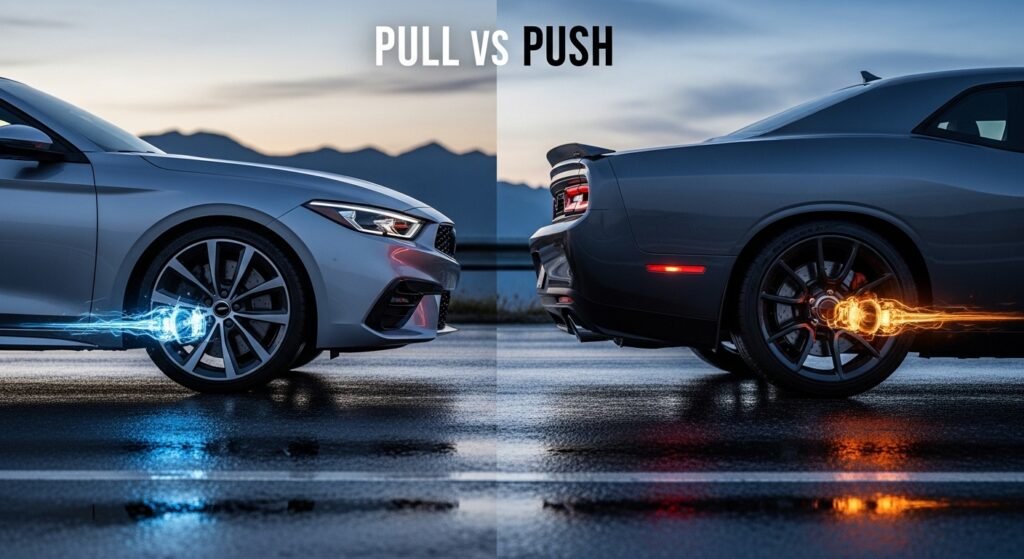
The setup affects your vehicle performance in many ways. It changes your road grip during a storm. It changes how the car balances during a fast turn. Your driving experience depends on which tires get the power. Some cars feel like they are pulling you along. Others feel like they are pushing you from behind.
Safety and efficiency are also tied to this system. A good setup helps you stay on the road. It can help you save money at the gas pump too. There are four main types of setups in the automotive industry today. These are FWD, RWD, AWD, and 4WD. Each one has a specific job to do.
- Front-Wheel Drive is great for saving gas and driving in rain.
- Rear-Wheel Drive is the best for racing and hauling heavy loads.
- All-Wheel Drive gives you extra grip when the road gets slick.
- Four-Wheel Drive is built for mud and rocky trails.
Front-Wheel Drive (FWD) vs. Rear-Wheel Drive (RWD): Basic Definitions
The difference between front and rear wheel drive starts with the layout. Every car has an engine that makes power. That power has to go somewhere. The drivetrain decides which axle gets that energy. This choice changes how the car handles every single mile. It is the mechanical layout that defines the car’s soul.
What Does FWD Mean on a Car?

FWD stands for front-wheel drive. In this setup, the engine sends power to the front wheels only. These wheels have two big jobs to do at once. They have to pull the car forward and steer it left or right. The rear wheels are just there to hold up the back of the car. They roll along like the wheels on a wagon.
This setup is very popular for small cars and family rides. It is easier for engineers to build. Most of the heavy parts are in the front of the car. This includes the engine and the transmission. Keeping everything in one spot saves a lot of space. It also makes the car lighter and more nimble.
The “pulling” concept is easy to visualize. Imagine you are pulling a heavy sled behind you. Your feet are the front tires doing all the work. This helps the car stay in a straight line. It is a very stable way to move a vehicle. Most people find FWD very easy to drive every day.
What Does RWD Mean on a Car?

RWD stands for rear-wheel drive. In this setup, the engine sends power to the back wheels. The front wheels have one job: they steer the car. They do not have to worry about moving the car forward. This separates the tasks of steering and propulsion. It allows each set of wheels to do its job better.
This is the classic way cars used to be built. You will still find it on many sports cars and big trucks. It requires a long pipe called a driveshaft. This pipe goes from the front engine to the rear axle. It takes up some room inside the car. But it provides a very balanced feel while driving.
The “pushing” concept is also very simple. Imagine you are pushing a heavy box from behind. Your legs are the rear tires providing the force. This setup is great for balance and weight transfer. When you hit the gas, the weight moves to the back. This helps the rear tires grab the road and go.
In-Depth Analysis of Front-Wheel Drive (FWD)
Front-wheel drive is the most common setup on the road. You see it on most sedans and crossovers. It is designed to be practical and safe for everyone. If you want a car that is easy on your wallet, FWD is usually the answer. It is the workhorse of the modern automotive world. Let’s look at why so many people choose it.
Pros of Front-Wheel Drive

- Superior Traction in Adverse Conditions is the biggest win for FWD. The engine is heavy and sits right over the front tires. This weight pushes the tires down into the snow or rain. It gives them a better grip on the road when things get slippery.
- Fuel Efficiency and Economy are built into the design. FWD cars are usually lighter because they have fewer parts. A lighter car uses less gas to move down the road. This means you get better MPG and save money every week.
- Cost-Effectiveness helps you at the dealership. These cars are cheaper for companies to make. They pass those savings on to you with a lower price tag. Repairs are often cheaper too because the system is simple.
- Space Efficiency makes the inside of the car feel huge. There is no need for a big tunnel running through the middle of the floor. This gives your passengers more legroom in the back. It also leaves more room for your groceries in the trunk.
Cons of Front-Wheel Drive
- Handling and Understeer can be a bit of a bummer. When you go around a corner too fast, the car might not turn as much as you want. It feels like the front of the car wants to keep going straight. This is because the front tires are trying to do too much at once.
- Torque Steer Issues happen when you slam on the gas. The steering wheel might pull to one side or the other. It feels like the car has a mind of its own for a second. This happens because the power is not hitting both front tires perfectly.
- Performance Limitations are real for speed lovers. FWD cars are not as good at racing as RWD cars. The front tires wear out much faster than the back ones. They are doing the hard work of pulling, steering, and braking all day.
In-Depth Analysis of Rear-Wheel Drive (RWD)
Rear-wheel drive is for people who love the act of driving. It is the setup of choice for luxury cars and high-performance machines. While it might not be as common as FWD, it has a loyal following. If you want a car that feels like a precision tool, RWD is the way to go. It offers a feeling of balance that is hard to beat.
Pros of Rear-Wheel Drive

- Enhanced Handling and Balance makes every turn feel better. By moving some parts to the back, the car is more evenly weighted. This helps the car stay flat and stable when you are driving fast. It feels more professional and controlled.
- Improved Acceleration is a huge plus for sports cars. When you speed up, the weight of the car naturally shifts to the rear. This weight presses the rear tires into the ground. It gives them more grip to launch the car forward quickly.
- High-Performance Capabilities are why racers love RWD. It is the best setup for drifting and track days. You can use the engine power to help the car rotate through a turn. It gives you more ways to control how the car moves.
- Durability and Robustness are key for work vehicles. RWD systems are built very tough to handle high power outputs. This is why almost all big pickup trucks use this setup. It can take a beating and keep on going.
Cons of Rear-Wheel Drive
- Traction Issues in Inclement Weather can be scary. Since there is less weight over the back tires, they can spin easily on ice. The back of the car might slide out to the side in a rainstorm. This is called fishtailing, and it is no fun at all.
- Reduced Interior Space is a common complaint. The driveshaft needs a place to sit under the floor. This creates a large hump in the middle of the back seat area. It makes it harder for three people to sit comfortably in the back.
- Maintenance Complexity can lead to higher bills. There are more moving parts spread across the whole car. Repairing a rear differential or a driveshaft can be pricey. It is a more complex mechanical layout to keep in top shape.
Drivetrain Performance in Inclement Weather
Weather is the big decider for many car buyers. If you live where it never snows, you have more choices. But if you deal with white roads every year, the difference between front and rear wheel drive matters a lot. You need a car that will get you home safely when the storm hits. Your drivetrain choice is your first line of defense against the elements.
Winter Driving and Slippery Surfaces
Drivers in places like Peoria know all about winter. They usually pick FWD for their daily commute. The extra weight on the front tires is like a built-in safety feature. It helps the car pull itself through deep slush. FWD is just more predictable when the road is like a skating rink.
RWD has a hard time in the snow. Without a heavy engine in the back, the tires just spin and spin. You might get stuck in your own driveway. Even with modern traction control, RWD can be tricky on ice. Most people find it stressful to drive RWD when the weather turns bad.
Winter tires can make a huge difference though. A RWD car with good snow tires can actually do okay. They have special rubber that stays soft in the cold. They also have deep treads to grab the snow. But even with great tires, FWD still has the mechanical advantage. It is just the way the physics of the car works.
Beyond FWD and RWD: Maximizing Control with AWD and 4WD
Sometimes two wheels are not enough. If you want the most grip possible, you look at other options. Many people get confused by the names. They think AWD and 4WD are the same thing. But they are actually very different systems for different jobs. Understanding them helps you pick the right tool for your lifestyle.
All-Wheel Drive (AWD) vs. Four-Wheel Drive (4WD)
The main difference is how they work. AWD is usually smart and works on its own. 4WD is usually tough and needs you to turn it on. AWD is for the road, and 4WD is for the dirt. Both send power to all four tires, but in very different ways. Knowing which one you need can save you a lot of trouble.
The Functionality of All-Wheel Drive (AWD)

AWD is like a silent helper. Most of the time, it acts like a 2WD car to save gas. But it has sensors that watch every tire. If one tire slips, the car instantly sends power to the others. It happens so fast that you might not even feel it. It keeps you moving forward without any drama.
The trade-off is a little more weight and cost. AWD cars are heavier because they have more gears. This means you might lose one or two MPG on the highway. But for many people, the peace of mind is worth it. It is the perfect system for rain, light snow, and gravel roads. It is great for busy parents who just want to get to school safely.
The Mechanics of Four-Wheel Drive (4WD)

4WD is the heavy-duty brother. It is built for the hardest conditions on earth. Most 4WD systems are “part-time”. This means you have to push a button or pull a lever to turn it on. When it is on, the front and back axles are locked together. They turn at the same speed to give you maximum muscle.
This system is not for driving fast on dry pavement. It is for crawling through deep mud or over big rocks. It is why the Jeep Wrangler is such a legend. If you plan on hitting the trails, you need 4WD. It is built to take the abuse of off-road adventure. It is the king of the mountain for a reason.
Maintenance, Durability, and Long-Term Ownership
Buying the car is just the start. You have to take care of it for years. The drivetrain you choose will affect your shop visits. Some are easy to fix, and others are more of a headache. You should think about the long-term costs before you sign the papers. A little planning now saves a lot of money later.
Repair Costs and Complexity
FWD is usually the winner for low repair bills. Since everything is in one spot, it is easier for mechanics to work on. There are fewer parts that can break over time. Most shops can fix a FWD car quickly and cheaply. It is the most cost-effective choice for a budget-conscious owner.
RWD and AWD are more complex. They have driveshafts and extra differentials that need oil changes. If a specialized part breaks, it can be expensive to replace. AWD systems in particular have a lot of electronics that can be tricky. You should expect to pay a bit more for service on these vehicles. It is just the price of having more capability.
Tire Rotation and Wear Patterns
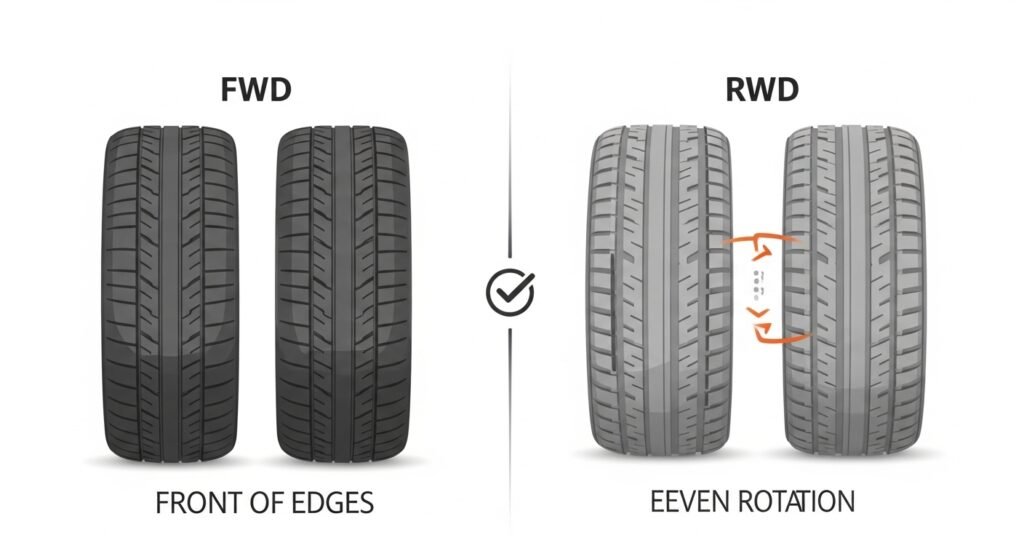
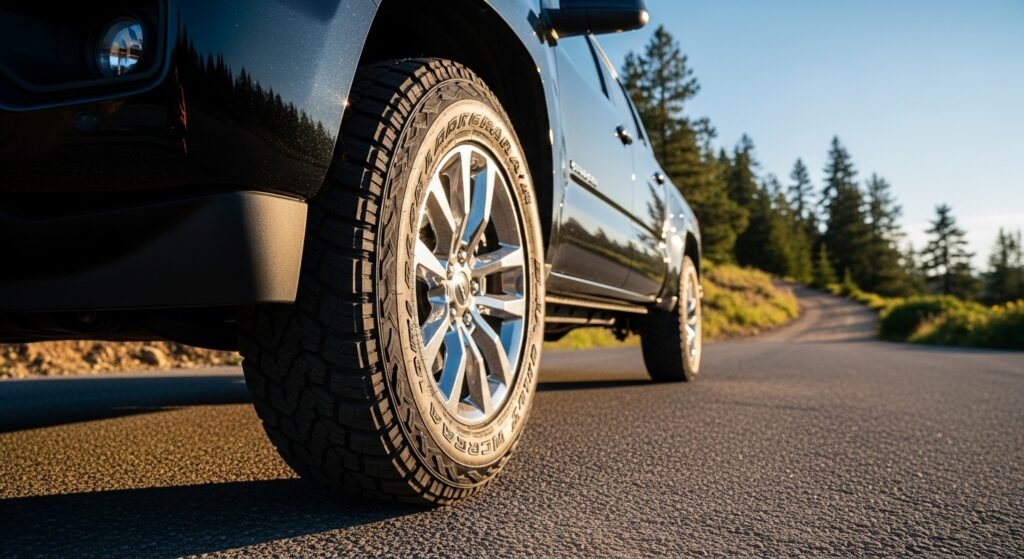
Your tires are the only thing touching the road. You need to keep them in good shape. FWD cars are very hard on front tires. They do all the pulling and most of the stopping. If you don’t rotate them, the front ones will go bald very fast. You should swap them every 5,000 miles to keep things even.
RWD cars wear their tires more evenly. The front tires steer and the back tires push. But you still need to rotate them regularly. This helps maintain the best road grip possible. Good tires are the key to making any drivetrain work its best. Never skimp on your rubber if you want to stay safe.
Comparing Drivetrains by Vehicle Category
Not every drivetrain goes in every car. Manufacturers pick the best setup for the car’s job. Some categories are almost always one way. Others give you more options to choose from. Knowing these patterns helps you narrow down your search. It shows you what the pros think is best for each ride.
Sedans and Commuter Cars
FWD is the king of the commuter world. Most people just want to get to work and back with no fuss. They want a car that is safe in the rain and good on gas. FWD gives them exactly that at a price they can afford. That is why cars like the Toyota Camry and Honda Civic use it. It is the smart choice for a daily driver.
Sports Cars and Muscle Cars
RWD is the heartbeat of the performance world. To get the best feel on a racetrack, you need rear-wheel drive. It allows the car to balance perfectly through a fast corner. Iconic cars like the Dodge Challenger and Ford Mustang rely on it. If you want to feel the power in your seat, RWD is the only way. It turns a car into a thrill ride.
Trucks and Heavy-Duty SUVs
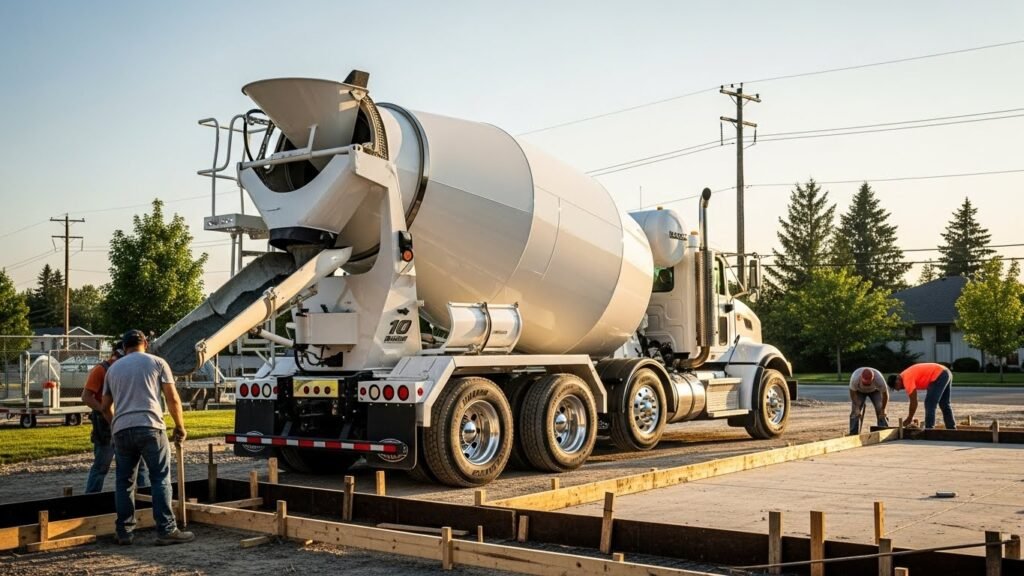
Trucks need to pull heavy trailers. RWD is the best for this because the weight of the trailer pushes down on the drive wheels. It gives the truck the traction it needs to start moving. Most trucks also offer 4WD for work on construction sites. It is a combo built for hard work and heavy loads. These vehicles are all about torque and payload capacity.
Conclusion: Which Drivetrain Is Best for You?
So, what is the final word on the difference between front and rear wheel drive? It all comes down to what you need every day. There is no single “best” choice for everyone. The best choice is the one that fits your life and your roads. Take a moment to think about your typical drive before you decide.
Choosing Based on Priorities
- The Fuel Conscious Driver should look at FWD. It is light and efficient. You will spend less at the pump and less at the mechanic. It is the practical choice for a long-term owner.
- The Performance Enthusiast belongs in a RWD car. You will love the balance and the way it handles turns. It makes every trip feel more exciting. It is the choice for people who truly love to drive.
- The Safety-First Driver will be happiest with AWD. It gives you the best protection against bad weather. You won’t have to worry when the clouds turn gray. It is the ultimate security blanket for the road.
- The Off-Road Adventurer must have 4WD. If you like to get dirty and explore the woods, nothing else will do. It is the tool that lets you go where others can’t. It is built for the wild.
Final Decision Factors
Don’t forget to check your local weather report. If you live in a place with long winters, FWD or AWD is a must. If you live in a sunny state, RWD might be more fun. Also, think about your budget. Remember that more wheels moving often means more money spent. Pick the ride that makes you feel confident and happy every time you turn the key.
FAQs Regarding Drivetrain Systems
Can you mix different types of tires on a FWD or RWD vehicle?
It is strongly recommended to never mix different tire types, such as putting winter tires on the front and all-season tires on the back. This can cause dangerous imbalances in grip, leading to unpredictable spinning or loss of control during braking and cornering.
How does the drivetrain affect the resale value of a vehicle?
Generally, AWD and 4WD vehicles hold their value better in regions with heavy snowfall. FWD vehicles maintain steady value as reliable commuters, while RWD sports cars often become more valuable to enthusiasts and collectors over time compared to their FWD counterparts.
Do FWD cars have different brake wear patterns than RWD cars?
Yes, FWD cars usually experience much faster wear on the front brake pads because those wheels handle the majority of the weight, steering, and braking force. RWD cars tend to have a slightly more balanced brake wear, though the front still does most of the stopping work.
What is a limited-slip differential and why is it common in RWD?
A limited-slip differential (LSD) helps distribute power more evenly between the two drive wheels. In RWD performance cars, an LSD is vital to prevent one wheel from spinning uselessly while the other has grip, which improves cornering and acceleration.
Is insurance more expensive for RWD vehicles?
Insurance rates can be higher for RWD vehicles, particularly sports cars, because they are statistically involved in more high-speed accidents or weather-related spin-outs. FWD sedans are typically seen as lower risk by insurance providers.
Does drivetrain choice affect the lifespan of the transmission?
The lifespan of a transmission usually depends more on maintenance than the layout. However, RWD transmissions are often easier to cool and service because they are not tightly packed into the engine bay like FWD transaxles.
Can a FWD car be used for towing a small trailer?
Yes, many FWD vehicles are rated to tow light loads, such as small utility trailers or bike racks. However, they struggle with heavier tongue weights because the weight of the trailer can lift the front end, reducing the traction needed for steering and power.
What is “oversteer” and why is it associated with RWD?
Oversteer occurs when the rear tires lose grip before the front tires, causing the back of the car to swing out. This is a classic RWD characteristic that allows skilled drivers to drift, but it can be dangerous for inexperienced drivers on wet roads.
Are electric vehicles (EVs) usually FWD or RWD?
Many modern EVs are RWD because electric motors are compact and easy to place on the rear axle. This provides better traction during the instant torque delivery that electric motors provide, though many EVs also offer dual-motor AWD versions.
How does the drivetrain affect the turning radius of a car?
FWD cars often have a larger turning radius because the front axles have CV joints that can only bend so far while still providing power. RWD cars often have a tighter turning circle because the front wheels only need to pivot for steering.
What are CV joints and why do FWD cars use them?
Constant Velocity (CV) joints allow the front wheels to receive power while they move up and down with the suspension and turn left and right for steering. They are a critical maintenance item for FWD owners, as they can wear out and click over time.
Is it possible to convert a FWD car to RWD?
While technically possible, converting a FWD car to RWD is an extremely expensive and difficult engineering task. It requires custom fabrication of the floor pan, a new transmission tunnel, and a completely different rear suspension and axle setup.
Does a RWD car have a different engine orientation than a FWD car?
Most RWD cars have a longitudinal engine (mounted front-to-back), while most FWD cars use a transverse engine (mounted side-to-side). This orientation is what dictates how the power flows to the wheels.
Why do some FWD cars feel “twitchy” on the highway?
This sensation is often due to the weight distribution. Since most of the weight is over the front wheels, the rear can feel light and bouncy over bumps at high speeds, making the car feel less planted than a balanced RWD vehicle.
Are RWD cars more fun to drive in the rain?
For a professional driver, RWD can be fun for controlled sliding, but for the average person, it is much more stressful. The risk of the rear end stepping out unexpectedly makes RWD less relaxing to drive in rainy conditions compared to FWD.
Does the drivetrain impact the car’s center of gravity?
RWD cars often have a lower and more centered center of gravity because the heavy transmission and driveshaft are spread out along the middle of the chassis. FWD cars have most of their heavy components high up and far forward.
What is the difference between a transaxle and a standard transmission?
A transaxle, found in FWD cars, combines the transmission and the differential into one single unit. In RWD cars, the transmission and differential are usually separate parts connected by a driveshaft.
Can a FWD car perform a “burnout”?
Yes, FWD cars can spin their front tires, but it is often harder on the car’s components like the CV joints and motor mounts. RWD burnouts are more common because the weight transfer naturally assists the front of the car in staying still while the rear tires spin.
How does the drivetrain affect the cabin noise?
FWD cars can sometimes be noisier because the engine, transmission, and drive axles are all right in front of the dashboard. RWD cars move some of that mechanical noise further back under the floor and toward the rear of the vehicle.
Why are most luxury cars still RWD?
Luxury manufacturers prefer RWD because it provides a smoother “pushing” sensation and better steering feel. It also allows for longer hoods and more prestigious proportions that are difficult to achieve with a FWD layout.