Skip to content
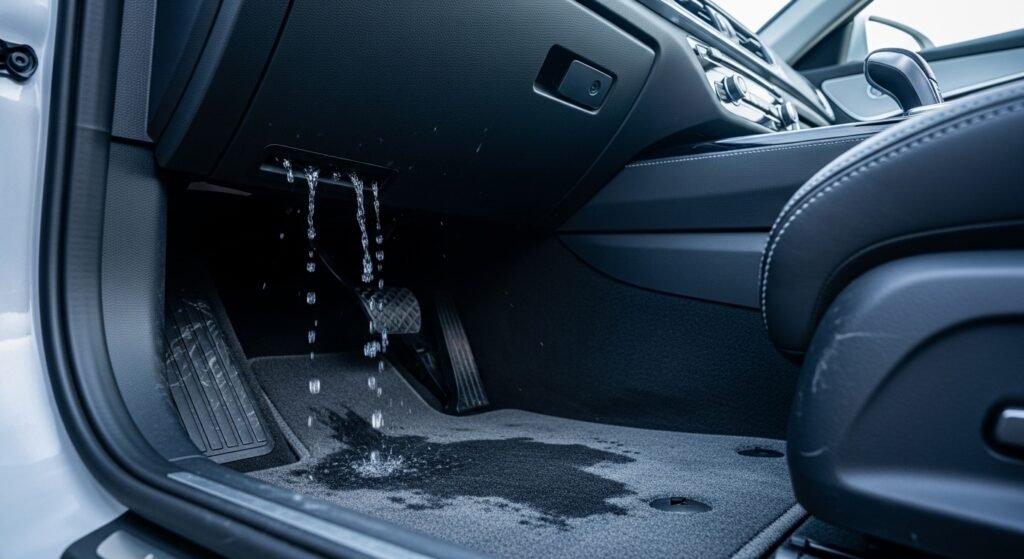
Finding a puddle on your floor mat is a total bummer. It’s a hot day and you just want to stay cool. You turn on the AC and everything feels great at first. Then you feel something wet on your feet. Or maybe your passenger complains about a soggy carpet. This is a common problem for many drivers. It usually means your air conditioner is leaking inside the car. Dealing with it early saves you from big headaches later. We are going to break down everything you need to know. You will learn why it happens and how to fix it fast.
Understanding How Your Car’s Air Conditioning System Manages Water
Your car AC does more than just blow cold air. It actually acts like a big dehumidifier for your cabin. It pulls heat and moisture out of the air to keep you comfy. This moisture has to go somewhere so it doesn’t stay in the car. The system is designed to catch this water and send it outside. When it works right, you never even think about it. But when something breaks, that water ends up right under your feet.
Dehumidification Process
The system grabs humidity from the cabin air to make things dry and cool. This process is essential for comfort during those humid summer months in places like Plano, TX.
The Role of the Evaporator Coil
Cold refrigerant runs through this coil while air blows over it. Moisture in the air hits the cold metal and turns into liquid water. It works exactly like a cold soda can sweating on a table.
The Drainage Path
Liquid water falls into a drain pan under the dashboard. It then travels through a rubber hose called the AC drain line to the ground. This path must remain clear for the system to function.
Normal vs. Abnormal Leaks
Clear water under the car is totally normal after a long drive. Water inside the cabin or smelly, colored fluid is a sign of trouble. If you see water dripping inside, it is time for an inspection.
Is it Normal for a Car AC Unit to Leak Water?
Yes, seeing water under your car is usually a good sign. It means your system is successfully pulling humidity out of the air. If it is a super hot day, you might see a bigger puddle than usual. The harder the AC works, the more water it produces. You just need to make sure the water is going to the right place. If the ground is dry but your carpet is wet, you have a problem.
Heat and Humidity Factors
On a swampy, humid day, your AC generates way more liquid. This is just the cooling mechanism doing its job under pressure. The thermal expansion valve and blower motor work together to process the heavy air.
The Saucer Test
A small puddle about the size of a saucer is perfect. If it looks like a waterfall or a river, you might have a bigger issue. Excessive water could mean the system is overworking or the drain is partially restricted.
Identifying the Fluid
Clear and odorless liquid is just plain old water. It is simply the moisture from the air that has been condensed by the cooling system.
Warning Signs
Yellow or green fluid that smells sweet is actually engine coolant. This means your heater core might be leaking, not your AC. This requires immediate automotive maintenance to prevent engine overheating.
Why is Water Dripping Inside My Car When the AC is On?
When your air conditioner leaks inside the car, it means the exit path is blocked. The water is still being created, but it has nowhere to go. It fills up the plastic housing under your dashboard like a bucket. Once that bucket is full, the water spills over the sides. This is why you see drips near the glove box or the pedals. It is annoying, but it is a very common mechanical hiccup.
The Interior Leak Phenomenon
Water follows the path of least resistance when the drain is plugged. It often leaks through the floor vents or seams in the plastic. This can lead to a very wet carpet if left unchecked.
The Impact of Parking Conditions
Parking under trees is a major cause of clogs. Leaves and pine needles fall into the air intake and move into the drain system. Over time, these organic materials turn into a thick sludge.
Initial Warning Signs
Keep an eye out for a musty smell when you first start the car. You might also notice the windows fogging up more than they should. These are early clues that moisture is trapped in the HVAC system.
Common Causes of Interior AC Water Leaks
Most of the time, the cause is pretty simple. Your car is exposed to a lot of dirt and debris every day. Over time, these things build up in small spaces. The AC system has some very small parts that get clogged easily. If you live in a place like Plano, TX, the heat makes you run the AC constantly. This constant use means more chances for things to go wrong. Let’s look at the main reasons why your floor is getting wet.
Clogged Condensate Drain Line
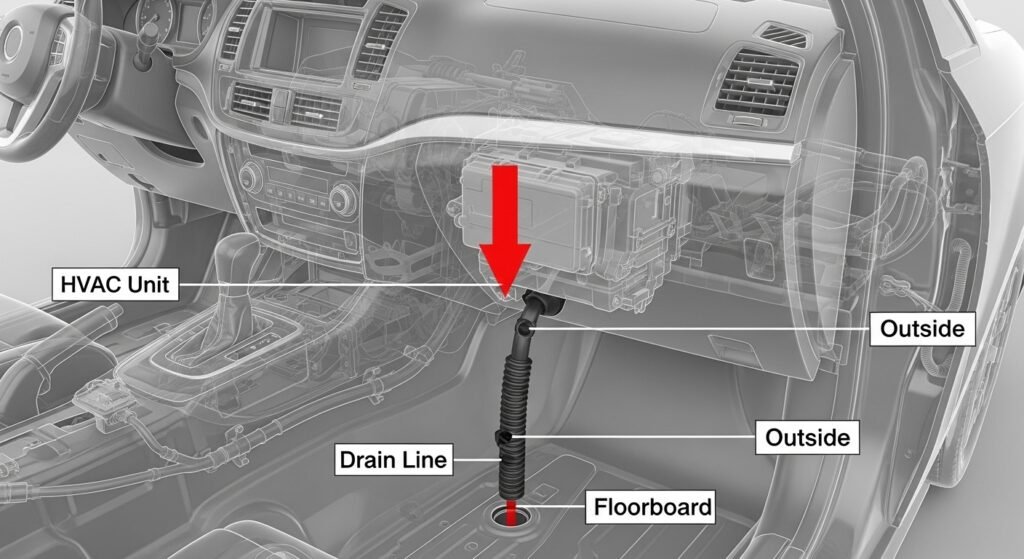
The drain line is the most common culprit for an air conditioner leaking inside car. This small rubber hose is the only way for water to get out. If it gets stopped up, the water has to go somewhere else. Usually, that somewhere else is your expensive carpet.
- Accumulation of Debris: Dirt, dust, and tiny bits of leaves get sucked into the system. They mix with the water and create a sludge that blocks the hose.
- The Backup Effect: Once the hose is plugged, water stays in the HVAC housing. It fills up until it finds a hole or a vent to spill out of.
- Common Symptoms: You will see a wet spot on the passenger-side floor. It might start as a tiny damp patch and grow into a large puddle.
Disconnected or Damaged Drain Hose
Sometimes the hose isn’t clogged; it just isn’t attached anymore. This hose connects the bottom of the AC unit to a hole in the floor. If it falls off, the water just pours straight onto your floorboards. This can happen if you hit a big bump or if someone worked on your car recently.
- Mechanical Failure: Rubber can get old and brittle over time. It might crack or split, letting water escape before it reaches the outside.
- Improper Repairs: If a technician was working under your dash, they might have bumped the hose. It only takes a little bit of force to knock it loose.
- Direct Leaking: This usually results in a lot of water very quickly. Since the hose is totally off, every drop of condensation goes inside.
Frozen or Dirty Evaporator Coil

Your evaporator coil needs good airflow to work right. If it gets covered in dust, it can’t breathe. This causes the temperature to drop way too low. Instead of just making cold air, the coil starts making ice. This is a big problem for your drainage system.
- Reduced Airflow: A dirty coil blocks the air from moving through the system. This makes the coil get colder and colder.
- Ice Formation: Eventually, the whole coil turns into a block of ice. This ice blocks the drain and stops the AC from cooling your car.
- The Melt Cycle: When you turn the car off, all that ice starts to melt. There is too much water for the drain to handle all at once, so it overflows.
Air Conditioning System Needs Regassing
It might sound weird, but low refrigerant can cause a leak. When you don’t have enough gas, the pressure in the system drops. This drop in pressure makes the evaporator coil get too cold. Just like a dirty coil, this leads to ice buildup.
- Refrigerant Levels: Your AC needs a specific amount of gas to stay at the right temperature. If you have a tiny leak, the levels will eventually get too low.
- Coil Freezing: Low pressure causes the moisture on the coil to freeze instantly. This creates a massive ice block inside your dashboard.
- Fluctuating Temperatures: You might notice the air starts out cold but then gets warm. This happens because the ice is blocking the airflow.
Risks of Ignoring an AC Water Leak
You might think a little water isn’t a big deal. You can just put a towel down, right? Wrong. Ignoring an air conditioner leaking inside car can lead to expensive repairs. Water and cars do not mix well on the inside. You need to dry it out and fix the leak as soon as you find it.

Mold and Mildew Growth
Damp carpets are the perfect home for mold. It grows fast and can make you and your family sick. Mold spores can also get sucked into the HVAC system and blow through the vents.
Persistent Musty Odors
Once that “old basement” smell gets into your seats and carpet, it is hard to get out. You might have to replace the whole interior to fix the smell. This significantly reduces the resale value of your vehicle.
Electrical Damage
There are many wires and computers under your dashboard. Water can cause shorts that lead to very expensive electrical failures. This could affect your radio, navigation, or even safety sensors.
Structural Rust
If water sits on the metal floor of your car, it will start to rust. This can eventually eat holes through the bottom of your vehicle. It is a slow process but a very destructive one.
Diagnostic Steps for Vehicle Owners
You don’t always need a mechanic to find the problem. You can do some simple checks at home first. This helps you understand what is happening before you take it to a shop. Being a smart car owner saves you money and time.
Exterior Inspection
Turn your AC on full blast and let the car sit for 10 minutes. Look underneath to see if water is dripping from the AC drain line onto the pavement. If it is dry, you have a clog.
The Carpet Test
Press your hand firmly into the carpet on the passenger side. Sometimes the top feels dry, but the padding underneath is soaking wet. Check all the way forward toward the firewall.
Airflow Observation
Pay attention to how much air is coming out of your vents. If it feels weak or smells like a locker room, you have a drainage issue. Humidity in the air is another sign that the moisture isn’t leaving.
Professional Air Conditioning Service and Tools
Sometimes a simple fix isn’t enough. Modern cars have very complex AC systems. Professional shops use high-tech tools to get the job done right. If you live in Plano, TX, you want a team that knows how to handle the Texas heat.
Specialized Equipment
Experts use machines like the RobinAir AC650 Pro. These tools can pull out old refrigerants and check for tiny leaks. They ensure the system is sealed and pressurized correctly.
System Dehydration
Mechanics can vacuum out all the moisture from inside the lines. This keeps the system from rusting on the inside. It also ensures the refrigerant can do its job efficiently.
Refrigerant Specifications
Every car is different. Pros know exactly how much oil and gas your specific model needs. Overfilling or underfilling can lead to a frozen evaporator coil.
ARC Authorization
Look for shops with the right licenses. This means they follow the law and protect the environment. Licensed technicians are trained to handle automotive AC service safely.
How to Stop and Prevent Future AC Water Leaks
The best way to deal with a leak is to stop it before it starts. Routine maintenance is the key to a dry car. You can do a few small things to keep your AC running smooth for years. It doesn’t take much effort to avoid a soggy floor.

Manual Drain Unblocking
You can find the drain hose under the car and give it a squeeze. Sometimes this is enough to pop a clog loose. Be careful not to puncture the rubber hose.
Cabin Air Filter Maintenance
Change your filter every year. This keeps dirt out of the system so it can’t clog the drain. A clean filter also improves the airflow and cooling power of your unit.
System Dry-Out Technique
Turn off the AC but keep the fan running for the last few minutes of your drive. This dries out the evaporator so mold doesn’t grow. It helps prevent those musty smells from starting.
Professional Flush
Ask your mechanic to blow out the drain lines with air. This clears out any gunk before it becomes a real blockage. It is a quick and cheap addition to any routine service.
When to Consult a Professional Mechanic
Don’t be afraid to ask for help if you’re in over your head. Some AC parts are very hard to reach. If you try to fix it yourself and break something, it will cost way more. Know your limits and trust the experts when things get complicated.
Persistent Interior Wetness
If you cleared the drain but the floor is still getting wet, there might be a hidden leak. There could be a crack in the drain pan or a sealing issue with the HVAC unit.
Signs of Coolant
If the liquid is oily or colorful, stop driving and call a pro. Coolant leaks can cause your engine to overheat. This is a cooling system issue rather than an AC condensation problem.
Complex Dashboard Access
If you have to take the whole dashboard apart, let a mechanic do it. They have the right tools to avoid breaking plastic clips. This is often necessary to reach a damaged drain hose.
Refrigerant Issues
Working with AC gas is dangerous for you and the planet. Only licensed techs should handle refrigerants. If your system needs regassing, it is a job for the pros.
Frequently Asked Questions
Can a clogged cabin air filter cause water to leak inside the car?
While a cabin air filter doesn’t leak water itself, a filthy filter restricts airflow significantly. This lack of air causes the temperature around the evaporator coil to plummet, leading to ice buildup. When that ice eventually melts, it can overwhelm the drain pan and spill onto your floorboards.
Why does water leak into my car only when I turn corners?
If you hear a sloshing sound or feel water hit your feet during a turn, your drain pan is likely full of standing water. When the car tilts during a curve, the water sloshes over the side of the reservoir because it cannot exit through the clogged drain line fast enough.
Will running the AC on the “Recirculate” setting reduce water buildup?
Yes, using the recirculate mode helps because the system is cooling air that has already been dehumidified. When you pull in fresh air from outside, the AC has to work much harder to remove constant new moisture, which creates more liquid condensation for the drain system to handle.
Can spider webs actually block an AC drain line?
It sounds strange, but small spiders and insects are often attracted to the moisture in the rubber drain hose. They can crawl inside and build webs or nests that act as a plug. This is a very common cause for a sudden air conditioner leaking inside the car during the spring and summer.
Is the water leaking from my AC toxic to pets?
If the liquid is pure condensation, it is just water and is not toxic. However, if the leak is actually mixed with mold from the HVAC box or if it is actually a coolant leak from the heater core, it can be extremely dangerous or fatal if licked by a pet.
How can I tell if the leak is from the AC or a leaky windshield?
Try running the AC on a completely dry day; if the floor gets wet, it is the AC system. If the floor only gets wet after it rains or after you go through a car wash, the problem is likely a failing seal on your windshield or a clogged sunroof drain.
Can a water leak cause my car battery to die?
If the water drips onto electrical components or wire harnesses under the dashboard, it can cause a “parasitic draw.” This means electricity is leaking out of the wires through the water even when the car is off, which will eventually drain your battery overnight.
Does a car AC leak affect the fuel economy?
An indirect link exists because a system struggling with a frozen coil or a blockage causes the compressor to run much longer than necessary. This puts a constant load on the engine, which can slightly decrease your miles per gallon over time.
Can I use a vacuum to clear a clogged AC drain?
Yes, many people use a wet/dry vacuum on the exterior end of the drain hose to suck out the clog. This is often safer than blowing compressed air into the line, which could potentially pop the hose off the connection inside the dashboard.
Why is the water leaking on the driver side instead of the passenger side?
While most drains are on the passenger side, some vehicle designs have the drain centered or on the driver side. Also, if the car is parked on an incline, the water may travel along the HVAC housing and drip out on the opposite side from the actual clog.
What should I do if my carpet already smells like vinegar?
A vinegar or gym locker smell means bacteria has already started growing. You will likely need to use an automotive HVAC disinfectant spray through the air intake and professional steam cleaning for the carpets to kill the spores.
Can a car AC leak damage the airbag system?
Many cars have airbag control modules or sensors located near the center console or under the seats. If water from an AC leak reaches these sensitive electronics, it can trigger a warning light and potentially disable the safety system.
Does the age of the vehicle make AC leaks more likely?
Older vehicles are more prone to leaks because the rubber drain hoses become brittle and the seals around the HVAC box begin to shrink. Debris also has had more years to accumulate inside the deep corners of the ventilation system.
Can I use a coat hanger to poke through the drain line?
Using a metal coat hanger is risky because the wire can easily puncture the soft rubber hose or damage the delicate evaporator coil. It is much better to use a flexible plastic weed-eater string or low-pressure air.
Why is the air coming out of the vents foggy?
If you see a “mist” or “fog” coming from your vents, your evaporator is likely freezing over or the humidity is not being drained. This means the air is so saturated with moisture that it turns into a visible vapor as it exits the vents.
Does parking in a garage prevent AC drain clogs?
A garage helps significantly because it protects the car from falling leaves, twigs, and organic debris that usually cause clogs. However, dust and pet hair from inside the cabin can still cause issues over time.
Can a faulty thermostat cause an AC water leak?
If the engine thermostat is stuck, it can affect the overall temperature of the car, but it is usually a faulty AC pressure switch that causes the evaporator to freeze and eventually leak water into the cabin.
How much water can an AC system produce in an hour?
In extremely humid conditions, a car AC can produce up to a quart of water per hour of operation. This is why a clear and functioning drain line is so vital to preventing an interior flood.
Will the water eventually dry on its own?
While it might seem to dry on the surface, the thick padding under your car carpet acts like a sponge. It can stay wet for weeks even if the top feels dry, which is why you must pull the mat up and use a fan to dry it properly.
Are certain car brands more prone to this issue?
No specific brand is immune, but cars with very horizontal drain designs or those with cabin air intakes that are easily accessible to debris tend to have these problems more frequently than others.