Skip to content
Tires are the only thing between your car and the road. Most folks wonder what a good treadwear rating is when they see those numbers on the side. This guide helps you pick the right rubber for your ride. You will learn how these scores work and what they mean for your wallet. We make it easy to understand the math behind the miles. Let’s dive into the world of tire longevity.
Introduction to Tire Treadwear and Longevity
Tire tread is the part that actually touches the asphalt. It is made of a special rubber compound designed for grip. As you drive, this rubber slowly wears away. This process is what we call treadwear. Understanding these ratings is the best way to guess how long your tires will last. It helps you see if a tire is worth the price. You want to know if you are getting a deal or a dud.
- Defining Tire Tread: This is the outer ring of the tire with grooves and blocks.
- The Concept of Treadwear: It describes the rate at which the rubber disappears over time.
- The Importance of Ratings: These numbers help you compare different brands before you buy.
The UTQG Rating System Explained

The government wanted to make tire shopping easier for everyone. They created a system called UTQG back in the 1970s. It stands for Uniform Tire Quality Grading. This system is a standard for all passenger vehicle tires. It gives you a snapshot of three main things. These are treadwear, traction, and temperature. It is a handy way to see how a tire stacks up.
- Origin of the System: The Department of Transportation (DOT) started this to help buyers.
- Treadwear: This part of the grade tells you about expected durability.
- Traction: This score shows how well the tire stops on wet pavement.
- Temperature: This measures how well the tire handles heat at high speeds.
- The Role of the NHTSA: Manufacturers send their test data to this federal agency.
How Tire Treadwear is Tested and Rated

You might think the government does the testing itself. Actually, the tire makers do the work on their own. They use a special government test track to keep things fair. They drive for 7,200 miles to see how much rubber is left. Then they compare it to a base tire. This helps them assign a final treadwear number. It is a standardized way to measure wear.
- The Government Test Track: Testing happens on a specific course to ensure consistency.
- The Control Tire Concept: Every test tire is compared to a standard tire rated at 100.
- Interpreting the Multiplier: A tire with a 200 rating lasts twice as long as the control tire.
- Rating of 400: This tire should last four times as long as the base tire.
- Rating of 600: These tires are built to last six times longer than the standard.
- Manufacturer Responsibility: Since companies do their own tests, ratings can vary between brands.
The Science of Rubber Compounds: Grip vs. Durability

Tire engineers have a tough job balancing grip and wear. Soft rubber is great for sticking to the road. It helps you take corners fast and stop quickly. However, soft rubber wears out very fast. Hard rubber is the opposite of that. It lasts a long time but might feel slippery. This is the classic trade-off in tire design.
- Soft vs. Hard Rubber: Soft tires are for performance, while hard tires are for mileage.
- The Stickiness Factor: High-grip tires use sticky compounds that disappear quickly.
- Harder Compounds: These tires offer better fuel efficiency and long life.
Categorizing Treadwear Ratings by Application

Different cars need different types of tires. A racecar does not need a tire that lasts 80,000 miles. A minivan does not need tires that stick like glue to a track. Knowing what a good treadwear rating is depends on what you drive. You have to match the tire to your specific needs. Let’s look at the three main groups of ratings. Each group serves a very different purpose.
Low Treadwear Applications (200 and Less)
- Maximum Performance Focus: These tires are made for sports cars and track days.
- Street-Legal Racing Limits: Many racing groups require a rating of at least 200 for street classes.
- Extreme Wear Scenarios: Some of these tires may only last a few thousand miles.
Medium Treadwear Applications (200 to 500)
- The Industry Standard: This is what most people have in their daily cars.
- All-Season Balance: These provide good grip in the rain and last for several years.
- Premium Passenger Comfort: These tires focus on a smooth ride and low road noise.
High Treadwear Applications (500 and Above)
- Specialized Longevity: These tires are built for the long haul.
- Commuter and Commercial Use: Great for people who drive many miles every day.
- The 800 Plus Club: These are the kings of durability in the tire world.
Comprehensive Tire Treadwear by Category
Not all tire types are created equal. Some categories naturally have higher ratings than others. This chart shows you what to expect for different styles. It helps you see if a tire is average for its class. You can use this to spot a tire that stands out. It is a great way to start your research. Here are the industry averages for various categories.
- All-Season Tires: These average around 504 and are very versatile.
- All-Terrain Tires: Built for trucks, these average about 506.
- Highway All-Season: These focus on comfort and average 428.
- Passenger All-Season: A common choice that averages 554.
- Performance Summer: These focus on grip and average a low 264.
- Touring All-Season: These offer a great mix of life and comfort at 546.
- Winter Tires: Most are rated at 500 but are meant only for cold weather.
Why Treadwear Ratings Don’t Equal Guaranteed Mileage
A high number is great, but it is not a promise. The rating is a relative measure, not an absolute one. It tells you how one tire compares to another in a lab. Real-world driving is much different than a test track. Many things can change how long your rubber stays on the wheel. You should view the rating as a helpful guide. Do not expect it to be 100% accurate for your life.
- The Treadwear vs. Mileage Myth: No dealer can give you a specific mileage guarantee based on UTQG.
- Treadwear as a Relative Measure: Use the numbers to compare two tires side by side.
- The Impact of Warranties: A mileage warranty is a better hint at how long a tire should last.
Factors That Accelerate Tire Wear

Your tires are under attack from the moment you drive away. Your style of driving matters more than you think. Fast starts and hard stops eat up rubber quickly. The world around you also plays a big role. Hot roads can bake the tires and make them soft. Rough roads can chip away at the tread blocks. Even the weight of your car changes how fast the tread goes.
- Driving Habits: Aggressive driving is the fastest way to kill your tires.
- Climate and Environment: Severe heat and cold can damage the rubber compound.
- Road Conditions: Potholes and debris cause physical damage to the tread.
- Tire Pressure: Low pressure causes the tire to flex and get too hot.
- Wheel Alignment: Bad alignment makes one side of the tire wear out fast.
- Tire Rotation: Moving tires around helps them wear out evenly.
- Tire Balancing: Unbalanced wheels cause vibrations that damage the tread.
- Vehicle Load Index: Carrying too much weight puts extra stress on the tires.
- Speed Ratings: High-speed tires use softer rubber that wears faster.
- Vehicle Suspension: Worn shocks can cause tires to bounce and wear unevenly.
How to Locate Treadwear Information

Finding the rating is actually quite simple once you know where to look. It is printed right on the side of every tire. You can also find it online before you even leave your house. Most tire shops list these details in the product specs. It is important to check this before you pull the trigger. Being informed helps you avoid buying the wrong tire for your car.
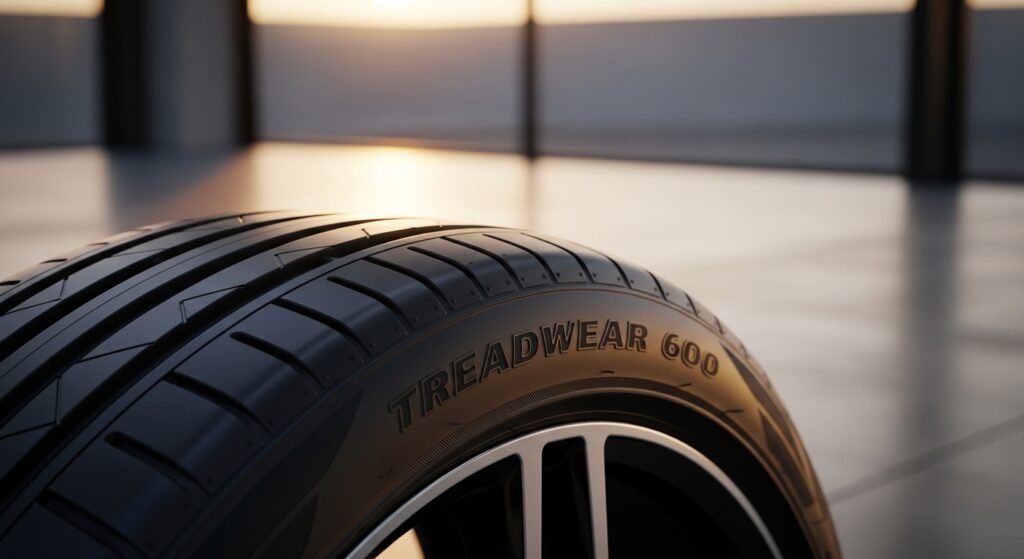
- Finding Ratings on the Sidewall: Look for the word Treadwear followed by a number.
- Online Research: Check the specifications tab on websites like Tire Agent.
- Vehicle Specific Matching: Use tools that filter tires by your car’s year and model.
Beyond Treadwear: Other Critical Buying Factors
Longevity is important, but it is not the only thing. You have to think about how the tire feels and sounds. Some long-lasting tires are very noisy on the highway. Others might not be great in the rain. You want a tire that keeps you safe in all conditions. Fuel efficiency is another big factor for modern drivers. Make sure you look at the whole package.
- Warranty Coverage: Look for a solid mileage warranty from the manufacturer.
- Road Noise and Comfort: Some tread patterns are much quieter than others.
- Fuel Efficiency: Tires with low rolling resistance can save you money at the pump.
- Load Capacity: Make sure the tires can handle the weight of your passengers and gear.
- Seasonality: Choose tires that match the weather where you live.
Conclusion: Making an Informed Purchase
Finding what a good treadwear rating is all about your goals. If you drive a lot, aim for a high number. If you have a sports car, you might prefer a lower number for better grip. Always remember that maintenance is the key to tire life. Keep them inflated and rotated to get the most for your money. Happy driving and stay safe on the road.
- Identifying Your Driver Profile: Think about how and where you drive every day.
- The Value Equation: Compare the price to the expected lifespan of the tire.
- Safety First: Never sacrifice traction just to get a tire that lasts longer.
| Tire Type Category | Average UTQG Treadwear | Lowest UTQG Rating | Highest UTQG Rating |
| All Season | 504 | 180 | 820 |
| All Terrain | 506 | 320 | 680 |
| All Terrain All Season | 546 | 300 | 680 |
| All Weather | 509 | 400 | 700 |
| Highway All-Season | 428 | 300 | 500 |
| Highway Terrain | 480 | 480 | 480 |
| Highway Terrain All Season | 632 | 420 | 740 |
| Highway / Regional | 600 | 600 | 600 |
| Mud Terrain | 413 | 380 | 420 |
| On / Off Road | 474 | 320 | 600 |
| Passenger All Season | 554 | 240 | 680 |
| Performance All Season | 429 | 140 | 760 |
| Performance Summer | 264 | 30 | 500 |
| Performance Touring All Season | 509 | 320 | 700 |
| Summer | 323 | 60 | 560 |
| Touring All Season | 546 | 140 | 860 |
| Touring Summer | 392 | 140 | 640 |
| Winter | 500 | 500 | 500 |
FAQs About Tire Treadwear and UTQG Ratings
Do all tires sold in the USA require a treadwear rating?
No, the law does not require ratings for every single tire type. Deep-treaded light truck tires and winter tires are often exempt from these rules. Small tires for trailers or temporary spare tires usually do not have these grades either. If you do not see a rating, it does not mean the tire is bad.
Can I mix tires with different treadwear ratings on the same car?
It is best to keep all four tires identical for the best safety. If you must mix them, put the tires with the same rating on the same axle. Having different grip levels on the left and right sides can make your car pull. This can be dangerous during a sudden stop or a sharp turn.
Does a higher treadwear rating affect my car’s gas mileage?
Higher treadwear tires often use harder rubber, which can help with gas mileage. This is because harder rubber usually has lower rolling resistance on the road. Your engine does not have to work as hard to keep the car moving. This is a big plus for people who want to save money.
Why do some expensive tires have very low treadwear ratings?
High price does not always mean a tire will last a long time. Many luxury sports tires cost a lot because they offer amazing grip. These tires use expensive racing technology that wears out very quickly. You are paying for performance and safety rather than just longevity.
How often should I check my tread depth to ensure safety?
You should check your tread depth at least once every month. Using the penny test is a quick and easy way to do this. Insert a penny into the groove with Lincoln’s head facing down. If you can see the top of his head, your tread is too low.
Does the age of a tire matter if the treadwear is still good?
Yes, the age of the rubber is just as important as the tread. Rubber gets brittle and cracks as it gets older, which is called dry rot. Most experts say you should replace tires every six years regardless of wear. An old tire can fail even if it looks like it has plenty of tread left.
Will a high treadwear rating help me drive better in the snow?
Not necessarily, because treadwear ratings do not measure snow performance. A high rating often means harder rubber, which can get very stiff in the cold. Stiff rubber loses its grip on ice and snow quite easily. Look for the mountain snowflake symbol for true winter performance.
Do electric vehicles wear out tires faster than gas cars?
Electric vehicles are much heavier because of their large battery packs. They also have instant torque, which puts more stress on the rubber. This means a tire with a 500 rating might wear out faster on an EV. You might need to look for tires specifically made for electric cars.
What happens to the treadwear rating if I drive on underinflated tires?
The rating becomes useless if you do not keep the right air pressure. Low pressure causes the edges of the tire to wear down extremely fast. It also creates extra heat that can cause the tire to fall apart. Check your door sticker for the right PSI for your vehicle.
Is the treadwear rating the same thing as a mileage warranty?
These are two different things provided by the tire manufacturer. The rating is a lab test result based on a government standard. The warranty is a legal promise that the tire will last a certain number of miles. Always look at both to get a clear picture of the tire’s value.
Can a tire’s treadwear rating change over time for the same model?
Manufacturers sometimes update their rubber formulas without changing the tire’s name. They might improve the compound to get a better rating for newer batches. Always check the sidewall of the specific tires you are buying today. Do not assume they are the same as the ones you bought years ago.
Do specialized off-road tires have high treadwear ratings?
Off-road tires often have lower ratings because they use softer rubber for rock gripping. The large blocks on the tread can also wear unevenly when driven on hot pavement. If you spend most of your time on the highway, these tires will wear out fast. They are best kept for dirt and mud.
Why do some tires have a rating of 100 or less?
These are usually professional racing tires or extreme summer tires. They are designed to stay soft and sticky at very high temperatures. They provide the most grip possible for a car on a track. You should expect to replace these tires very frequently.
Does the weight of my vehicle change how I should view the rating?
A heavy SUV will always be harder on tires than a small compact car. A tire with a 400 rating will likely last longer on a lighter vehicle. If you have a heavy truck, you should aim for the highest rating possible. This helps offset the extra wear caused by the vehicle’s weight.
Can alignment issues make a high-rated tire fail early?
Even a tire with an 800 rating can be ruined in a few weeks by bad alignment. If your wheels are not straight, they “scrub” against the road as you drive. This peels the rubber off the tire much faster than normal. Getting an alignment check is a smart move when buying new tires.
Does heat impact the treadwear rating differently than cold?
Heat is the biggest enemy of tire longevity and safety. Driving on hot asphalt makes the rubber softer and more prone to wearing away. This is why tires often seem to wear out faster during the summer months. High-speed driving also adds to this heat buildup.
Are treadwear ratings verified by an independent third party?
No, the tire manufacturers are responsible for their own testing and reporting. While they follow government guidelines, there is no outside lab that checks every tire. This is why you should compare ratings within the same brand for the best accuracy. Some brands are known to be more conservative with their numbers.
Do run-flat tires have different treadwear ratings?
Run-flat tires often have similar ratings to standard tires in the same category. However, some drivers find they wear out a bit faster due to their stiff sidewalls. They are built to keep moving after a puncture, which changes how they handle heat. Check the specs carefully if you are switching to run-flats.
What is the highest treadwear rating currently available?
Some modern touring tires have reached ratings as high as 800 or 860. These tires are designed for maximum efficiency and long-distance commuting. They are a great choice for people who want to avoid the tire shop for a long time. Technology continues to improve, so these numbers may go even higher.
Should I care about the treadwear rating on a used tire?
The rating still tells you about the rubber quality, but it does not tell the whole story. You must check the actual remaining tread depth with a gauge. A tire with an 800 rating that is already mostly worn is not a good deal. Always inspect used tires for plugs, patches, or side damage.