Skip to content
Buying tires feels like a win for your truck. You see that deep tread and feel ready for the mud. But there is a secret hiding on that sidewall. Many folks do not realize that rubber has an expiration date. Just because a tire looks shiny does not mean it is fresh. You need to know exactly how old should new tires be when you buy them. This guide will help you spot the duds. We will break down the codes and the risks. You will learn how to get the best rubber for your money. Stay safe and keep your ride smooth with these pro tips.
Why Tire Age is a Critical Safety Factor
Tires are not like wine or fine cheese. They do not get better as they sit on a shelf. The rubber in a tire is a complex mix of chemicals. These chemicals are designed to grip the road and handle heat. Over time, these chemicals start to change and break down. This happens even if the tire is just sitting in a shop. It is a natural process that you cannot stop completely. Knowing the age helps you avoid buying a tire that is already dying.
The Chemical Composition of Tire Rubber and Its Shelf Life
Rubber compounds are made to be flexible and strong. Manufacturers add oils and waxes to keep the rubber soft. These ingredients move through the rubber while you drive. If a tire sits still, these oils stay put. The rubber starts to dry out from the inside out. This makes the tire brittle and prone to cracking. A tire that is too old loses its ability to stretch. This is why checking the date is so important.
Oxidative Aging and Internal Components
Oxygen is actually an enemy to the inside of your tires. It seeps through the rubber layers over time. This process is called oxidative aging. It causes the rubber to harden and lose its bond. The internal steel belts can also start to rust or pull away. You cannot see this damage from the outside easily. It happens silently while the tire sits in a warehouse. This is a major reason why age matters so much.
Why Tread Depth is Not the Only Indicator
Most drivers only look at the tread of a tire. They think deep grooves mean the tire is perfect. This is a dangerous mistake to make. An old tire can have full tread but zero grip. The rubber might be too hard to grab the pavement. It can feel like driving on plastic pucks. You must look past the tread to the manufacture date. Safety depends on both tread depth and rubber freshness.
The Dangers of Dry Rot in Older Tires

Dry rot is a common term for rubber decay. You might see tiny cracks along the sidewall or grooves. These cracks are a sign that the rubber is brittle. They can lead to air leaks or tread separation. Dry rot can happen to tires that look brand new. If a tire has been sitting for years, it is at risk. Never ignore these small signs of aging. There are warnings of a much bigger problem coming.
Why Tire Age Matters for Performance and Safety
When you hit the brakes, you rely on your tires. If the rubber is old, your truck will not stop fast. This is a huge deal when you are off-roading or in the rain. New rubber is sticky and grabs the road well. Old rubber is hard and slides across the surface. This change in performance can lead to accidents. Understanding how old should new tires be when you buy them keeps you in control. Do not compromise on your safety for a cheap deal.
Rubber Degradation and Structural Integrity
The structure of a tire depends on flexible rubber. As the rubber degrades, the bond between layers weakens. This can cause the tire to lose its shape at high speeds. You might feel a vibration or a wobble while driving. This is often the internal structure failing due to age. A fresh tire holds its shape under heavy loads. An old tire might give up when you need it most. Keep your structural integrity high by buying fresh rubber.
Diminished Traction and Handling
Handling is all about how the tire deforms on the road. Fresh rubber bends and conforms to the asphalt. This gives you a smooth and predictable turn. Hardened rubber resists this movement and stays stiff. This makes your steering feel numb or unresponsive. You might find yourself sliding in corners you usually take easily. This loss of traction is a direct result of old rubber. Always prioritize fresh tires for the best handling.
Increased Risk of Catastrophic Failure
The worst-case scenario for any driver is a blowout. Blowouts often happen because the tire structure fails. Heat builds up faster in old, brittle rubber. This heat causes the internal layers to peel apart. At highway speeds, this leads to a sudden explosion of the tire. It is terrifying and very dangerous for everyone on the road. Buying fresh tires significantly lowers this specific risk. Do not let an old tire ruin your day or your truck.
Understanding the DOT Tire Identification Number

Every tire sold in the USA has a birth certificate. It is printed right on the sidewall for you to see. This is called the DOT Tire Identification Number. It tells you exactly when and where the tire was made. Most people ignore these letters and numbers entirely. That is a mistake if you want to be a smart buyer. Learning to read this code is the best way to stay safe. It gives you the power to verify the age yourself.
How to Locate the DOT Code
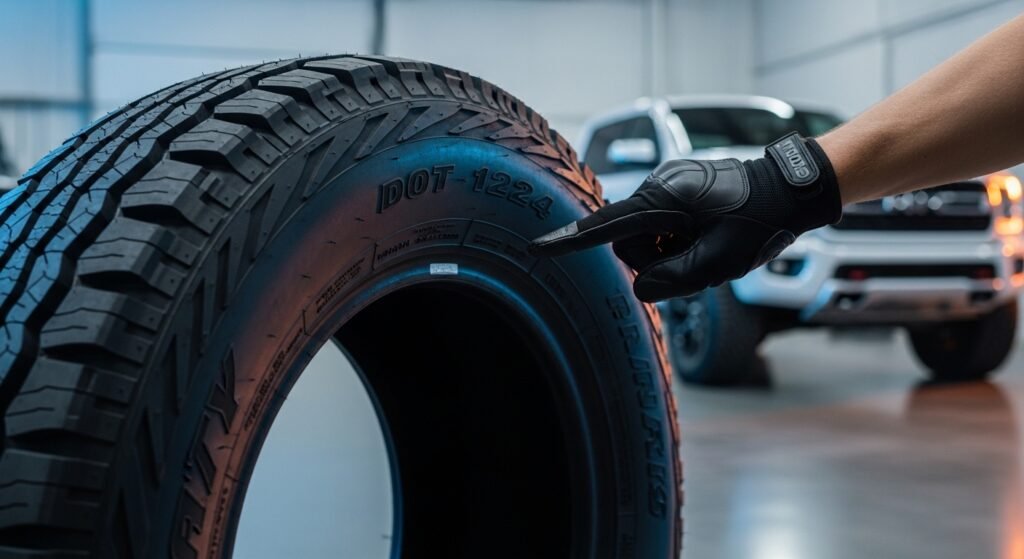
You can find the DOT code near the rim of the tire. Look for the letters “DOT” followed by a string of characters. Sometimes this code is only on one side of the tire. If you do not see it, check the inner sidewall. It is usually inside a small raised oval or box. This is the official mark of the Department of Transportation. Once you find it, you are halfway to knowing the truth. It is the most important stamp on your entire vehicle.
Decoding the Date of Manufacture
The last four digits of the DOT code are the key. These numbers tell you the week and the year of production.
- The first two digits represent the week of the year (01 to 52).
- The last two digits represent the year the tire was made.
- For example, a code ending in 1223 means the 12th week of 2023.
- A code like 4522 means the tire was made in late 2022.
- Tires with three digits were made before the year 2000 and are dangerous.
- Always check all four tires, as they might have different dates.
Other Information in the DOT Code
The DOT code contains more than just the date. It includes a code for the factory where it was built. This helps if there is ever a massive safety recall. It also has a code for the tire size and brand. These letters are mostly for the manufacturer and the government. As a buyer, you should focus mostly on those last four digits. They are your primary tool for checking the age of the rubber. Knowledge is power when you are at the tire shop.
Essential Tire Ratings and Specifications to Check

Age is not the only thing that makes a tire good. You also need to look at the performance ratings. These are usually stamped right next to the brand name. They tell you how the tire will act in the real world. Many folks ignore these because they look like gibberish. However, they are vital for matching the tire to your driving style. Check these ratings alongside the manufacture date for the best results.
UTQG (Uniform Tire Quality Grading)
The UTQG is a standard system for comparing tires. It covers three main areas of tire performance.
- Treadwear Grade is a number that shows how long the tire lasts.
- A higher number means the tire should survive more miles.
- Traction Grade uses letters like AA, A, B, or C.
- AA is the best rating for braking on wet pavement.
- Temperature Grade shows how well the tire handles heat.
- An A rating is best for high-speed highway driving.
Load Rating and Speed Rating
Every tire has a limit on how much weight it can carry. This is the load rating, usually a two or three-digit number. You must make sure this matches your vehicle’s requirements. If you carry heavy gear, you need a higher load rating. The speed rating is a letter that tells you the max safe speed. For example, an “H” rating means the tire is safe up to 130 mph. Never put a tire with a low speed rating on a fast car. Matching these specs ensures your tires can handle your specific lifestyle.
What is the Ideal Age for New Tires?
This is the big question everyone asks at the shop. You want the freshest rubber possible for your money. Generally, you should look for tires made in the last year. This ensures the rubber is still soft and the oils are active. Anything older than two years should start to raise some questions. While they might be okay, they have already lost some life. Knowing how old should new tires be when you buy them helps you negotiate.
The Industry Standard for Freshness
Most shops try to sell tires within a year of getting them. This is considered the “gold standard” for tire retail. These tires have the most life left and the best grip. They have spent the least amount of time sitting in a warehouse. If you find tires from the current year, you are in great shape. Always ask the tech to show you the dates before they mount them. It only takes a second to verify the freshness of your purchase.
Is it Ever Okay to Buy 3 or 4-Year-Old Tires?
Sometimes you might find a deal on older “new” tires. If they are three or four years old, proceed with caution. These tires have already used up a large chunk of their safe life. Most experts say tires should be replaced after six years of use. If they are already four years old, you only get two good years. This is only okay if the price is extremely low. Even then, you are sacrificing safety for a few bucks.
When to Ask for a Discount Based on Date
If a dealer hands you tires that are over two years old, speak up. You are paying for a new product, but getting an older one. Ask if they have a fresher set in the back of the shop. If they don’t, ask for a discount on the older set. Many shops will knock some money off to move older stock. Use the DOT code as your evidence during the negotiation. It is a fair request since the tire’s lifespan is shorter.
Factors that Accelerate Tire Aging
Not all years are the same for a tire’s health. Where a tire lives matters just as much as how long it lives. Some environments kill rubber much faster than others. If you live in a harsh climate, your tires age twice as fast. You need to be aware of these external factors. They can turn a three-year-old tire into a piece of junk. Protecting your tires from these elements will help them last longer.
Environmental Conditions and UV Exposure
The sun is one of the biggest enemies of rubber. UV rays break down the molecular bonds in the tire sidewall.
- Park in the shade whenever you can to block out the sun.
- Use tire covers if your truck sits for a long time.
- Heat cycles from hot pavement also speed up the aging process.
- Freezing temperatures can cause the rubber to crack if it gets too stiff.
- Ozone from pollution or electric motors eats away at the rubber.
- Living near the ocean can expose tires to salt that hurts the structure.
Storage Conditions in the Warehouse

How a tire is stored before you buy it is very important. A good warehouse is cool, dry, and dark. If tires are stacked outside in the sun, they are already aging. You want to buy from a shop that keeps its stock inside. Humidity can also be an issue for the internal steel parts. Excess moisture can lead to corrosion before the tire is even mounted. Always try to buy from reputable dealers who value proper storage.
Usage Frequency and Tire Exercise
Tires actually like to be driven and moved around. Driving helps distribute the protective waxes inside the rubber. These waxes come to the surface and shield the tire from oxygen. If a vehicle sits for months, this process stops happening. This is why “low mileage” tires often fail sooner than high mileage ones. If you have a weekend toy, try to take it for a spin. Regular “exercise” keeps the rubber healthy and prevents early rot.
How to Inspect Tires Like a Pro Before Buying
Do not just trust the guy behind the counter. You need to use your own eyes and hands to check the goods. A pro inspection takes less than five minutes per tire. It can save you from a major headache down the road. You are looking for imperfections that the factory or shipper missed. Being picky now prevents problems later when you are on the trail. Check every tire in the set before you pay.
Physical Inspection Checklist
Take a close look at the surface of the tire.
- Check the sidewalls for any tiny cracks or spiderweb patterns.
- Look at the bead (the part that touches the rim) for tears.
- Rub your hand over the tread to feel for any weird bumps.
- Check for discoloration, such as a brownish or dull grey tint.
- Look for flat spots if the tire was stored at the bottom of a pile.
- Ensure the labels are still attached and match the other tires.
Verifying the Warranty and Registration
A tire warranty is your safety net if things go wrong. Most warranties start on the day you buy the tire, not the manufacture date. However, you must keep your receipt to prove when you bought them. Always ask for the warranty paperwork and read the fine print. You should also register your tires with the manufacturer. This ensures you get a letter if there is a safety recall. It is a simple step that adds a lot of protection for your investment.
When Should You Replace Your Existing Tires?
Even the best tires do not last forever. You need to know when to call it quits and get a new set. Most people wait until the tread is totally bald. This is a very dangerous way to maintain your vehicle. You should replace them based on time as well as wear. There are industry guidelines that every driver should follow. Knowing these rules helps you plan for the expense of new rubber.
The Six-Year Rule vs. The Ten-Year Rule
Most tire makers say you should check tires every year after age five.
- The Six-Year Rule suggests replacing tires after six years of use.
- The Ten-Year Rule is the absolute maximum limit for any tire.
- Even if the tread looks brand new, a ten-year-old tire is unsafe.
- Spare tires often reach this age without anyone noticing.
- Always follow the more conservative advice if you drive in extreme heat.
- Safety experts agree that fresher is always better for road grip.
Identifying Signs of Aging on Your Vehicle
Your truck will often tell you when the tires are getting old. Listen for an increase in road noise or a humming sound. This often means the rubber has hardened and is hitting the road differently. Look for deep cracks in the grooves of the tread. If you see the internal cords or wire, stop driving immediately. If your tires lose air every few days, the structure might be porous. Pay attention to these signs to avoid being stranded.
Special Considerations for Specific Tire Types
Not all tires are built the same way. Some are more sensitive to age than others. If you drive a specialty vehicle, you need to be extra careful. The way you use your tires changes how much age matters. For example, a track tire ages much differently than a mud tire. You should tailor your inspection to the type of driving you do. This ensures your specific needs are always met by your equipment.
Off-Road and All-Terrain Tires

Off-road tires need to be soft to grip rocks and dirt. As they age, they lose this “sticky” quality. An old mud tire might look tough but fail on a slippery climb. The sidewalls of off-road tires are also under a lot of stress. Brittle rubber can crack when you air down your tires for traction. If you hit the trails, you want the freshest rubber possible. It can be the difference between getting home and getting stuck.
Spare Tires: The Hidden Danger
Spare tires are the most neglected part of a vehicle. They sit in the trunk or under the chassis for years. Many people have a spare tire that is 15 years old. This tire might look perfect because it has never touched the ground. However, it is likely a ticking time bomb due to age. If you have a flat, an old spare could fail within miles. Check your spare’s DOT code today and replace it if it’s over ten years old.
Winter and Snow Tires
Winter tires use a very special, soft rubber compound. This rubber stays flexible even in sub-zero temperatures. Over time, the chemicals that allow this flexibility evaporate. An old winter tire will get hard in the cold, just like a summer tire. This makes them useless for driving on ice or snow. If your winter tires are over five years old, they may not grip. Test them early in the season to make sure they are still soft.
Consumer Rights and Retailer Responsibilities
You have rights as a customer when you buy tires. You are paying for a safe, reliable product. Retailers have a duty to provide tires that are fit for use. If they sell you ancient tires without telling you, that is a problem. Being an informed consumer helps you stand your ground. Don’t be afraid to walk away from a bad deal. There are plenty of shops that value honesty and safety.
What to Ask Your Tire Dealer Before Installation
Communication is the key to a good tire-buying experience.
- Ask for the DOT codes before the tires are taken into the shop.
- Confirm the warranty starts on the date of your purchase.
- Ask how the tires were stored before they arrived at the shop.
- Check if the shop offers a road hazard protection plan.
- Inquire about their policy for returning tires with old manufacturing dates.
- Get everything in writing on your final service invoice.
Returning Aged Tires and Handling Disputes
If you get home and realize your tires are five years old, you can take action. Most reputable shops will swap them out for a fresher set. If the shop refuses, you can contact the tire manufacturer directly. You can also file a complaint with the Better Business Bureau. It is much easier to catch this issue before the tires are mounted. That is why checking the sidewall at the shop is so vital. Your safety is worth the five minutes of extra effort.
Conclusion: Prioritizing Freshness for Peace of Mind
At the end of the day, your tires are the only thing touching the road. Knowing how old should new tires be when you buy them is a vital skill. It protects your wallet from bad deals and your life from blowouts. Aim for tires that are less than two years old whenever possible. Always look for the DOT code and verify the date yourself. Don’t let a shiny tire fool you into buying old rubber.
Taking care of your tires keeps your truck running strong. Store them properly, drive them often, and inspect them regularly. If you find yourself with old, cracked rubber, do not risk it. Head to a trusted shop like Off-Road Rim Financing to get a fresh set. Investing in new tires is an investment in your safety and performance. Stay smart, check those codes, and enjoy the ride on fresh rubber.
Frequently Asked Questions About Tire Age and Selection
How does tire age affect my vehicle’s fuel economy?
As tires age, the rubber hardens, and the rolling resistance can actually change. While hardened rubber might theoretically roll more easily, the loss of proper inflation and structural integrity usually forces the engine to work harder. Fresh rubber ensures the tire maintains the optimal shape for fuel efficiency.
Can I use the manufacture date to identify a counterfeit tire?
Yes, checking the DOT code is a great way to spot fakes. Counterfeiters often mess up the font or the spacing of the date code. If the numbers look uneven or the week code is higher than 52, you are likely looking at a dangerous knock-off.
Do run-flat tires age differently from standard tires?
Run-flat tires have much thicker, reinforced sidewalls to support the vehicle without air. Because these sidewalls are under more tension, the degradation of the rubber can be more critical. Even if they don’t show cracks, the internal support can become brittle over time.
Does the tire’s color tell me anything about its age?
A brand-new tire should be a deep, dark black with a slightly dull sheen. As a tire ages and is exposed to the elements, it may turn a brownish hue or a chalky grey. This “blooming” is often a sign that the protective waxes are being exhausted.
Is it safe to buy used tires if the date code is recent?
Even if the date code is only a year old, used tires are risky. You do not know if the previous owner ran them with low pressure or hit curbs. Internal damage from impact can exist even on a “young” tire that was used poorly.
How do I check the age of tires on a travel trailer or RV?
The process is the same, using the DOT code on the sidewall. RV tires are especially prone to aging because they sit for long periods under heavy weight. Most RV experts recommend replacing these every five to seven years, regardless of tread.
Does nitrogen inflation slow down the aging of a tire?
Nitrogen can actually help slow down internal oxidative aging. Regular air contains moisture and oxygen that seep through the rubber. High-purity nitrogen is dry and less reactive, which helps preserve the inner liner of the tire for a longer period.
Can tire dressings and cleaners cause tires to age faster?
Some cheap, petroleum-based tire shine can actually strip away the natural waxes in the rubber. This can lead to premature cracking and dry rot. Always use water-based dressings that offer UV protection to keep your rubber healthy.
Does the speed rating of a tire impact its shelf life?
Higher speed-rated tires often have more complex chemical compounds and extra layers of reinforcement. While the shelf life is generally the same, the failure of an aged high-speed tire is much more dangerous. The softer compounds in high-performance tires may also harden more noticeably.
Why do some tires have the DOT code on only one side?
The Department of Transportation only requires the full identification number and date code to be on one sidewall. This is why you should always check the “inner” side of the tire if you don’t see the date code on the outside when it’s mounted.
How does altitude affect the aging process of rubber?
At higher altitudes, the atmosphere is thinner, and UV radiation is much stronger. Tires on vehicles in mountain regions often show signs of dry rot and sidewall cracking much sooner than those at sea level.
Should I worry about the age of the tires on a leased vehicle?
Yes, because most lease agreements require you to return the car with tires that meet specific safety standards. If the tires are aged and cracking when you return the car, the dealership may charge you for a brand-new set at a premium price.
Does the size of the tire change how fast it ages?
Generally, no, but smaller tires rotate more times per mile than larger tires. This means a smaller tire generates more internal heat during use. This heat can accelerate the breakdown of the rubber chemicals over several years.
Can I find the tire age in my vehicle’s VIN report?
No, the Vehicle Identification Number (VIN) only tracks the car’s history. Since tires are replaceable parts, their specific manufacturing dates are not tied to the vehicle’s permanent record. You must check the tires manually.
Do eco-friendly tires age faster than traditional tires?
Tires made with sustainable materials like orange oil or silica are designed to last just as long as traditional tires. However, the unique chemical bonds in these “green” tires still degrade over time, so the 6-to-10-year rule still applies.
How do I know if my tire has been recalled due to age-related defects?
Once you have the DOT code, you can enter it into the database on the manufacturer’s website or the NHTSA website. This will tell you if that specific batch of tires was recalled for safety issues like tread separation.
Does parking on concrete vs. dirt affect tire aging?
Concrete can actually pull oils out of the rubber over long periods, especially if it is very dry. Parking on dirt or grass is worse because moisture can seep into the tire’s structure. Parking on a rubber mat or a clean garage floor is best for long-term storage.
Can a tire’s “birth date” affect its balance?
Age itself doesn’t affect balance, but the flat spots that develop on old tires while sitting can make them impossible to balance. If a tire has been sitting in one position for two years, it might have a permanent “set” that causes vibrations.
Are retreaded tires a good option if the casing is young?
Retreading is common for heavy trucks but less so for passenger cars. While a young casing is better than an old one, the bond between the new tread and the old rubber is a potential point of failure that increases with the age of the base tire.
What should I do if a shop refuses to tell me the DOT code?
If a retailer will not let you see the manufacture date before you buy, take your business elsewhere. A reputable shop understands that “how old should new tires be when you buy them” is a valid safety concern for every driver.