Skip to content
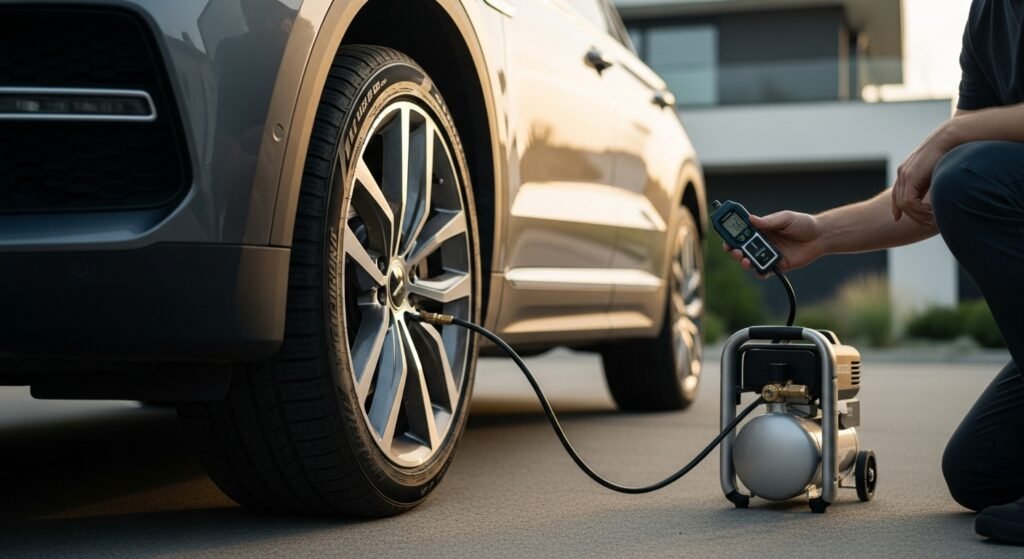
Learning how to put air in tires is a total game-changer for your ride. Keeping your tires full is the easiest way to stay safe on the road. Most folks forget about their rubber until a light pops up on the dashboard. That is a bummer because your tires do a lot of heavy lifting. Proper tire inflation keeps your vehicle’s performance at its absolute peak. It also makes sure your driving stays smooth and predictable.
The Importance of Proper Tire Inflation
Your car needs the right amount of air to move correctly. When you know how to put air in tires, you protect your wallet too. Fresh air in your tires keeps them from wearing out too fast. It also helps your car handle the road like a pro.
Vehicle Safety and Performance
Safety is the number one reason to check your air pressure. Having the right p.s.i. gives you the best traction on the road. This means your car grips the pavement better when it is wet or slippery. It also helps with braking and cornering so you stay in control. If your tires are low, your car might feel sluggish or hard to turn.
Tire Longevity
Tires are expensive, so you want them to last a long time. Proper tire inflation is the best way to prevent premature wear. When tires have the right pressure, the tread wears down evenly. This increases your tire longevity, so you do not have to buy new ones as often. It is a simple trick to save a ton of cash.
Fuel Efficiency
Under-inflated tires are a real drag on your fuel economy. They create more rolling resistance, which makes your engine work harder. This burns more gas and costs you more at the pump. By learning how to put air in tires, you keep your vehicle’s efficiency high. It is an easy way to get more miles out of every tank.
Weight Distribution
Your car’s weight needs to be spread out evenly across all four tires. Correct pressure ensures the tire footprint hits the ground just right. This helps with stopping and starting without any drama. It makes your ride quality much better for everyone in the car. Engineers design cars to work best at a specific pressure.
Determining the Correct Tire Pressure for Your Vehicle
You cannot just guess how much air to put in your tires. Every car is different and needs a specific amount of pressure. Using the wrong number can actually be dangerous for your car.
Manufacturer Specifications vs. Sidewall Max
You should always follow what the vehicle manufacturer says. Do not look at the number on the tire sidewall for your daily driving. That number is the maximum pressure the tire can hold before it fails. It is not the recommended pressure for your specific car. Following the manufacturer keeps your ride safe and comfy.
Where to Find PSI Recommendations
Finding the right number is actually pretty easy if you know where to look. Most cars have a sticker or placard with all the info you need.
- Door edge or door jamb: Look for a sticker on the driver’s side door frame.
- Glove box door: Some older cars hide the info inside the glove box.
- Fuel door: Check the inside of your gas flap for a pressure chart.
- Owner’s manual: Your book in the glove box has every detail about your car.
The Role of Engineering
Automotive engineering teams spend a lot of time testing tires. They figure out the perfect balance for your car’s weight. They want to make sure you have the best ride quality possible. This pressure helps the car handle corners and bumps smoothly. It is all about making the car work the way it was designed to.
Essential Tools for Tire Pressure Maintenance
You do not need a whole shop to take care of your tires. A few simple tools will make the job a breeze. Having your own gear means you can check your air anywhere.
Types of Tire Pressure Gauges
A good tire gauge is your best friend for tire care. You should keep one in your car at all times.
- Pencil or stick gauges: These are small, cheap, and fit in your pocket.
- Digital gauges: These give you a super clear reading on an LCD screen.
- Dial gauges: These look like a clock and are very easy to read.
Portable Air Compressors vs. Gas Station Pumps
Using a gas station air dispenser is common, but it can be a hassle. Sometimes they are broken or cost a few bucks to use. A portable air compressor plugs right into your car’s power outlet. This lets you top up your tires in your own driveway. It is much more convenient than hunting for a station with a working pump.
Valve Stem Accessories
The tire valve is what keeps the air inside your tire. You need to keep it protected so it does not leak. Use high-quality valve caps to keep out dirt and moisture. If you have a big truck, you might need valve extenders to reach the inner tires. These little parts are cheap but very important for tire safety.
Preparing to Inflate Your Tires
Before you start, you need to make sure your tires are ready. Taking a second to prep will give you a better result.
The Necessity of Cold Tire Readings
You should always check your pressure when you have cold tires. This means the car has been sitting for at least three hours. Or, you have driven less than one mile. If the tires are hot, the air inside expands and gives a fake high reading. Checking them cold is the only way to be 100% accurate.
Managing Heat-Induced Pressure Changes
Driving creates friction, which makes your tires get warm. This tire heating causes the air pressure to rise naturally. If you check hot tires, they might look fine even if they are low. Never bleed air out of a hot tire just because the number looks high. Wait for them to cool down before you make any big changes.
The Problem with Gas Station Gauges
Most gas station air hoses have a gauge built right in. These are often banged up and not very accurate. It is always better to use your own pressure gauge for a final check. Your personal gauge is more likely to give you the truth. This ensures you do not end up with under-inflated or over-inflated tires.
Positioning Your Vehicle
When you pull up to a pump, make sure you have enough room. You need the air hose to reach all four tires easily. Park close enough so the hose is not stretched too tight. Check that you can reach the spare tire if you need to fill it too. Good positioning saves you from having to move the car twice.
Step-by-Step Guide to Adding Air to Your Tires
Now it is time to get down to business. Follow these steps to learn exactly how to put air in tires.
Initial Pressure Check

Start by taking the valve cap off your first tire. Put it somewhere safe, like your pocket, so you do not lose it. Press your tire gauge firmly onto the tire valve. You might hear a little hiss, but keep pressing until it stops. Read the number on the gauge and see how much air you need.
Operating the Air Hose
Pick up the air hose nozzle from the machine. Press it onto the metal stem of the valve. You need a tight seal so the air goes into the tire, not out. Most hoses have a lever you pull to start the air flowing. Hold it steady so the connection stays strong while it fills.
The Filling Process

Add air in short bursts instead of one long squeeze. This helps you stay in control and not overfill the tire. Check the pressure with your gauge every few seconds. Keep doing this until you hit the p.s.i. listed on your door sticker. It only takes a minute or two per tire.
Addressing Overinflation
Sometimes you might put in a little too much air by mistake. Do not sweat it, because it is easy to fix.
- Metal stem method: Use your fingernail to press the small pin inside the valve.
- Gauge method: Many gauges have a little knob on the back for this.
- Air nozzle method: Use the back of the air hose nozzle to push the pin.
Securing the Valve
Once the pressure is perfect, put the valve cap back on. Turn it to the right until it is snug but not too tight. This cap protects the valve pin from road salt and grime. It also acts as a backup seal to prevent a slow air leak. Now you can move on to the next tire.
Specialized Tire Inflation Scenarios
Not every tire on your car is the same. Some situations require a little extra knowledge to get it right.
Checking and Inflating the Spare Tire

Most people forget their spare tire until they actually need it. You should check it every time you check your other tires. Many “donut” spares need a much higher pressure, like 60 p.s.i. A flat spare is useless when you have a roadside emergency. Keep it topped up so it is ready to save the day.
Towing and Heavy Payloads
If you are hauling a heavy trailer, your tires need more support. Check your owner’s manual for “heavy load” pressure settings. Adding a bit more air helps the tires handle the extra weight. It prevents the sidewalls from flexing too much and getting hot. Just make sure you do not go over the maximum pressure on the tire.
Nitrogen vs. Compressed Air
Some shops offer to fill your tires with nitrogen instead of air.
- Nitrogen benefits: It leaks out smore slowlyand keeps moisture out of the tire.
- Cost factors: Nitrogen usually costs money, while air is often free.
- Practicality: You can always mix regular air with nitrogen if you are in a pinch.
Environmental Factors and Seasonal Maintenance
The weather has a huge impact on your tire air pressure. You need to keep an eye on the thermometer to stay safe.
Seasonal Temperature Fluctuations
The air inside your tires changes with the ambient air temperature. When it gets cold, the air shrinks and your pressure drops. When it gets hot, the air expands, and the pressure goes up. You can expect about a 1 to 2 pound change for every 10 degrees. This is why your light often comes on during the first cold day.
Winter Tire Care
Winter is the toughest time for tire maintenance. Cold snaps will trigger your tire warning light constantly. Make it a habit to check your air once a month during the winter. This keeps your traction high when the roads are icy or snowy. Proper inflation is your best defense against winter road hazards.
High Altitude Considerations
If you drive up into the mountains, your tire pressure will change. The air outside gets thinner, which makes the pressure inside look higher. It is a good idea to check your tires if you are on a long road trip through different elevations. This keeps your vehicle handling feeling consistent and safe.
Visual and Physical Tire Inspections
Your eyes are great tools for catching tire problems early. A quick walk around your car can save you from a blowout.
Identifying External Damage
Take a close look at the tread of each tire. Look for nails, screws, or pieces of glass stuck in the rubber. These can cause a slow air leak that might leave you stranded. If you see something, take the car to an automotive service shop. They can often do a tire repair if the hole is in the right spot.
Sidewall Integrity
The side of your tire is very important for safety. Look for any gouges, cuts, or bulges on the sidewalls. A bulge usually means the internal structure of the tire is failing. This is a serious issue that could cause the tire to pop while driving. If you see sidewall damage, you need to replace the tire immediately.
Tread Wear Patterns

The way your tires wear out tells a story about their health.
- Center wear: This usually means you have over-inflated tires.
- Edge wear: This is a classic sign of under-inflated tires.
- Uneven wear: This might mean you need a wheel alignment or tire rotation.
Understanding and Managing the Tire Pressure Monitoring System (TPMS)
Modern cars have a tire pressure monitoring system or TPMS. It is a built-in helper that tells you when a tire is low.
Automatic vs. Manual Resetting
Many new cars will reset the TPMS light automatically. Once you add air, you just drive for a few minutes, and the light goes out. Other cars need you to push a button or go through a menu. Check your owner’s manual to see which system your car uses. It saves you from worrying if the light stays on for a second.
Standard Manual Reset Methods

If your light stays on after you add air, you might need to reset it.
- Speed method: Drive at 50 mph for about 10 minutes to trigger the sensors.
- Dashboard button: Look for a TPMS reset button near the steering wheel.
- Relearn technique: Some cars need you to cycle the air pressure to reset.
- Hard reset: You can disconnect the battery for a few minutes to clear the computer.
Troubleshooting TPMS Light Issues
Sometimes the tire pressure light acts a bit weird. Knowing what the signals mean will help you stay calm.
Steady Light vs. Flashing Light
A steady light means at least one tire has low air pressure. You should pull over and check your tires as soon as possible. A flashing light is a different story entirely. It usually means there is a problem with the tire pressure monitoring device itself. It might stay flashing for a minute and then stay solid.
TPMS Battery Failure
Each tire has a sensor with a small battery inside. These batteries usually last about 5 to 10 years. If the battery dies, the sensor stops sending a signal to the dashboard. This often causes a flashing light on your dashboard. You will need a service department to replace the sensor.
Sensor Malfunctions
Sensors can get damaged by potholes or during a tire change. If a sensor is broken, it cannot give an accurate pressure reading. You might see a “service TPMS” message on your screen. A tire center can test your sensors to find the broken one. This keeps your safety systems working the way they should.
Environmental Triggers
On a very cold morning, your light might come on right away. As you drive, the tires warm up, and the light might go off. This is just the air expanding as it gets hot from the road. Even if it goes off, you should still check the pressure. You likely need a small top-up to stay at the right level.
Common Signs of Incorrect Tire Pressure
You can often feel when your tires are not quite right. Your car will give you a few clues while you are driving.
Underinflated Symptoms
Low tires make the car feel heavy and slow to respond. You might hear squealing tires when you turn a corner at low speeds. Your steering might feel “mushy” or less precise. This is dangerous because it increases your braking distance. It also makes the tires get way too hot, which can lead to a flat.
Overinflated Symptoms
Tires with too much air become very hard and stiff. This makes your ride quality feel bouncy or harsh. You will feel every single bump and crack in the road. It also reduces the amount of rubber touching the pavement. This can make the car slide more easily in rain or snow.
Braking Distances
The right amount of air is vital for stopping quickly. If your tires are too low, they can’t stay firm during a hard stop. This adds precious feet to your braking distance in an emergency. Keeping your air right is one of the best things you can do for tire safety. It gives you the best chance to avoid an accident.
Tire Inflation Process Summary Table
| Step | Action Item | Description | Key Focus Point |
| 1 | Check Specifications | Locate the tire pressure placard on the driver’s side door jamb or in the owner’s manual. | Identify the target PSI for both front and rear tires. |
| 2 | Verify Cold Status | Ensure the vehicle has been parked for at least 3 hours or driven less than a mile. | Accuracy depends on the tires being at ambient temperature. |
| 3 | Position Vehicle | Pull up to the air compressor so that the hose can comfortably reach all four wheels. | Avoid stretching the hose, which can damage the valve stems. |
| 4 | Remove Valve Caps | Unscrew the protective caps from the valve stems and place them in a secure spot, like your pocket. | Prevent loss of caps to keep dirt out of the valve core. |
| 5 | Measure Baseline | Use your personal tire gauge to check the current pressure in the tire before adding air. | Calculate exactly how many PSI you need to add. |
| 6 | Connect Air Hose | Press the air hose nozzle firmly onto the valve stem until the hissing sound stops. | Maintain a tight seal to ensure air flows into the tire. |
| 7 | Inflate in Bursts | Add air for 5–10 seconds at a time rather than holding the trigger indefinitely. | Control the flow to avoid accidental over-inflation. |
| 8 | Re-check Pressure | Use your gauge frequently between bursts of air to monitor progress. | Stop immediately once the gauge matches the door sticker. |
| 9 | Bleed Excess Air | If the pressure is too high, press the pin inside the valve to release small amounts of air. | Precision is key for optimal vehicle handling. |
| 10 | Check Spare Tire | Locate the spare (trunk or undercarriage) and check its pressure as well. | Safety first—spare tires often require much higher PSI. |
| 11 | Replace Caps | Screw the valve caps back on tightly by hand. | Seal the system from moisture and road debris. |
| 12 | System Reset | Drive the vehicle or use the dashboard button to reset the TPMS light if necessary. | Monitor the dashboard to ensure the warning light clears. |
Long-term Tire Health and Professional Services
Good tire care is a marathon, not a sprint. A few regular habits will keep your tires happy for years.
The Importance of Regular Rotations
You should get a tire rotation every 5,000 to 7,500 miles. This involves moving the tires to different positions on the car. It helps all four tires wear out at the same rate. This maximizes your tire life and keeps the car balanced. Most shops do this during an oil change.
Wheel Alignment and Balancing
If your car pulls to one side, your wheel alignment might be off. This can cause your tires to wear out in just a few months. Balancing is also important to prevent shaky steering. These services help your tires stay in contact with the road properly. It is a key part of total automotive care.
When to Replace a Tire
No tire lasts forever, even with perfect care. Check your tread depth regularly with a penny or a gauge. If the rubber is cracked or has “dry rot,” it is time for a tire change. Old tires lose their grip and become brittle. Replacing them before they fail is the smartest move for any driver.
FAQ: Frequently Asked Questions About Putting Air in Tires
Can I use a bicycle floor pump to inflate my car tires?
Yes, a standard floor pump with a Schrader valve attachment will work. However, because of the large volume of air required for car tires, it will take significant physical effort and time compared to a compressor.
Does tire pressure affect the accuracy of my speedometer?
Significantly under-inflated tires have a smaller rolling radius. This causes the tire to rotate more times per mile, which can lead to a speedometer reading that is slightly higher than your actual speed.
Why does my tire pressure light turn on and then off?
This usually happens due to temperature changes. Air contracts in the cold overnight, triggering the sensor. As you drive, friction warms the air, increasing the pressure enough to turn the light off. You should still add air.
Is it safe to drive to the gas station if my tire looks completely flat?
Driving on a completely flat tire can destroy the tire’s internal structure and damage your expensive rims within blocks. If the tire is pancaked to the ground, use a portable inflator or change to your spare.
Do custom aftermarket wheels require different PSI than the factory wheels?
Usually, yes. If you have “plus-sized” wheels with low-profile tires, you should consult the tire manufacturer’s load and inflation tables, as the factory door sticker only applies to the original equipment.
What is the difference between a Schrader valve and a Presta valve?
Car tires use Schrader valves, which are wider and have a spring-loaded pin. Presta valves are skinny and found on high-end bicycles. You cannot use a Presta-only pump on a car without an adapter.
Does altitude affect how I should inflate my tires?
As you gain altitude, atmospheric pressure drops, making the pressure inside the tire relatively higher. However, the difference is negligible for safety; always stick to your manufacturer’s recommended PSI regardless of elevation.
Can over-inflated tires cause suspension damage?
Yes. Over-inflated tires are extremely stiff and cannot absorb road shocks. This forces the shocks, struts, and bushings to take the full impact of potholes, leading to faster wear on suspension components.
What does it mean if I find oil inside my tire valve?
This is a sign that the air compressor used to fill the tire is leaking oil into the air line. Oil can degrade the rubber seal in the valve core and the inner liner of the tire.
Should I inflate my tires more during the winter?
Stick to the pressure level listed on your door sticker even during the winter, but be prepared to refill the air more frequently. This is because you are not over-filling the tire, but simply replacing the pressure that naturally vanishes when cold air shrinks.
Does tire pressure affect the life of my brakes?
Indirectly, yes. Improperly inflated tires reduce traction, which can cause the Anti-lock Braking System (ABS) to engage more frequently. This increases the load and wear on the braking system over time.
How do I check the age of my tires to ensure they are safe to hold air?
Look for the DOT code on the sidewall. The last four digits represent the week and year of manufacture. Tires older than six years should be inspected closely, and those over ten years should be replaced.
Why is my tire losing air if there are no nails in it?
The leak could be coming from a corroded rim flange, a faulty valve core, or a “bead leak” where the tire meets the metal wheel. A soapy water spray can help identify the bubbles.
Can I use a CO2 tire inflator on car tires?
CO2 cartridges are great for emergency bicycle repairs, but are insufficient for cars. A single car tire would require dozens of expensive cartridges to reach a safe driving pressure.
Does the “Penny Test” measure air pressure?
No. The penny test measures tread depth. While tread depth and air pressure both affect safety, they are two different maintenance checks.
Is it normal for tires to lose air over time?
Yes. Tires naturally lose about 1 to 3 PSI per month through a process called permeation, where air molecules slowly pass through the rubber.
Will the TPMS tell me if my tires are over-inflated?
Most standard TPMS systems only alert you when pressure is too low (usually 25% below the door sticker). They rarely provide an alert for over-inflation unless it is a high-end system.
Can a tire explode from being filled with too much air?
While rare, it is possible. Tires have a “burst pressure,” but it is usually hundreds of PSI. The more common danger is the tire “beading” or popping off the rim during the inflation process.
Should I check my pressure before or after a car wash?
Check it before. High-pressure water and chemicals can sometimes enter the valve if the cap is off, and some car washes involve driving that warms the tires.
What should I do if the valve cap is stuck?
Use a pair of pliers to gently turn it. If it is “galvanic corrosion” (common with metal caps on metal stems), be careful not to snap the stem, which would cause an immediate flat.