Skip to content
Searching for a quick fix when your car battery won’t jump is a real headache. You are likely stuck in a driveway or a parking lot right now. It feels like the world is against you when those jumper cables fail to spark life into your ride. Most folks think a jump start is a magic cure for every starting problem. This guide will show you why that is not always the case. We will dig deep into why your car battery won’t jump and how to fix it fast.
Understanding Jump Starting and Battery Basics
What is Jump Starting?
Jump starting is a way to boost a dead battery using an outside power source. You usually use another car or a portable jump box to send a surge of electricity to your engine. This extra juice provides the amperage needed to crank the motor and get things moving. It is a temporary bridge designed to get you to a shop or back home. Once the engine kicks over, your car should be able to run on its own power.
The Role of the Alternator
The alternator is the unsung hero of your vehicle’s electrical system. While the battery starts the car, the alternator keeps it running and charges the battery back up. It turns mechanical energy from the engine into electrical power for your lights and radio. If your alternator is weak, your battery will never stay charged for long. Think of the battery as a gas tank and the alternator as the pump that keeps it full.
Battery Lifespan
Most standard car batteries are built to last between three and five years. Over time, the chemicals inside the lead-acid battery start to break down and lose their punch. Extreme heat or bitter cold can make this aging process happen even faster. If your battery is older than four years, it might be time to stop jumping it and just replace it. Keeping track of your battery’s age can save you from being stranded in the future.
How Car Batteries Work
Inside that heavy plastic box, lead plates and an electrolyte solution create a chemical reaction. This reaction produces the electrical energy your car needs to power everything from the starter to the dome lights. When the engine is off, the battery is the sole source of power for the vehicle. When you turn the key, the battery sends a huge burst of current to the starter motor. Understanding this simple flow helps you see why a car battery won’t jump when the chemistry is dead.
Why Your Car Won’t Start with a Jump
Completely Dead or Damaged Battery
Sometimes a battery is so far gone that it acts like a black hole for electricity. If the internal lead plates are touching or a cell is shorted, it won’t pass power through to the starter. Even with a high-powered donor car, a physically damaged battery cannot complete the circuit. In these cases, no amount of waiting or revving will make the car start. You will likely need a battery replacement to solve this issue for good.
Corroded Battery Terminals

Have you noticed white or green crusty powder on your battery posts? That stuff is corrosion, and it blocks the flow of electricity like a wall. High resistance from this buildup prevents the jump start current from reaching your car’s electrical system. It is one of the most common reasons why a car battery won’t jump. Cleaning the terminals with a wire brush can often fix the problem instantly.
Loose Cable Connections
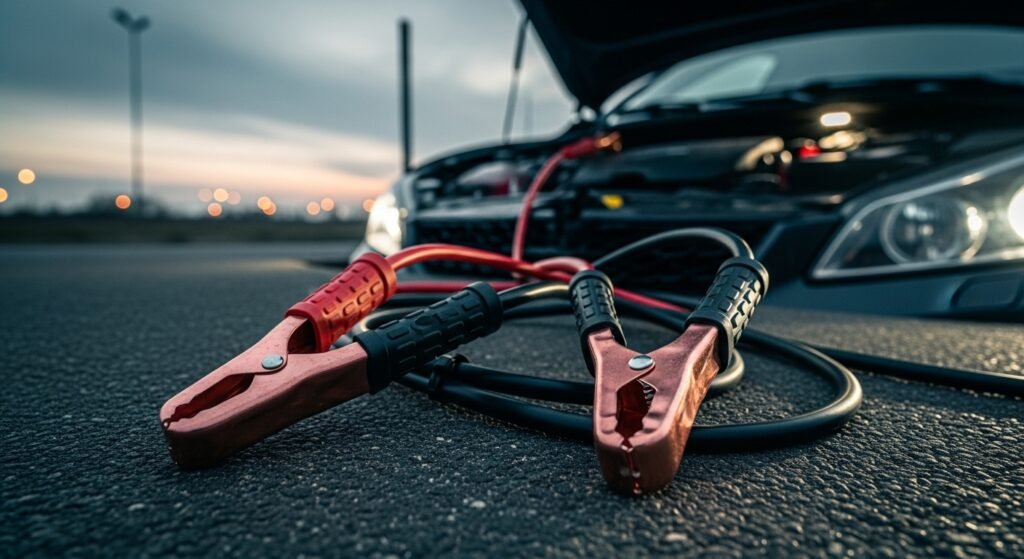
Your jumper cables need to bite into solid, clean metal to work properly. If the clamps are wobbly or just touching plastic, the electricity won’t flow into your car. Vibration from driving can also cause your permanent battery cables to wiggle loose over time. Always double-check that every connection is tight and secure before you give up. A simple twist of a wrench might be all you really need.
Faulty Starter Motor

If you hear a loud clicking sound when you turn the key, your starter might be the villain. The clicking means the battery is trying to help, but the starter motor is stuck or dead. A jump start provides power, but it cannot fix a mechanical failure inside the starter itself. If the starter won’t spin, your engine will never turn over no matter how much voltage you add. This usually requires a trip to a service center for a new motor.
Alternator Failure
An alternator that has failed completely can prevent the electrical system from ever stabilizing. If the alternator is shorted internally, it can actually drain the jump start power immediately. Even if the car starts, it will likely die the second you take the jumper cables off. This is because there is no charging system to keep the spark plugs firing. A bad alternator is a major reason a car won’t stay running after a jump.
Ignition Switch Issues
The ignition switch is the gatekeeper that tells the car when it is time to start. If the electrical contacts inside the steering column are worn out, the “start” signal never reaches the engine. You might have a perfectly good battery, but the car acts like it is dead because the switch is broken. This is a mechanical or electrical failure that a jump start cannot fix. It often requires a mechanic to take apart the dash to repair.
Fuel System Malfunctions
Your car needs three things to start: air, spark, and fuel. If your fuel pump is dead or your filter is clogged, the engine will crank forever but never fire up. You might think the car battery won’t jump because the engine isn’t running, but the battery is doing its job. Listen for a faint hum from the back of the car when you turn the key to check the pump. If there is no fuel, the best battery in the world won’t help.
Ignition Component Failure
Worn-out spark plugs or a bad ignition coil can prevent the engine from igniting the fuel. If you have been jumping your car for weeks, you might have fouled the plugs with unburned gas. Electrical power from a jump start will turn the engine over, but it won’t create the necessary spark. This is common in older vehicles that have skipped a few tune-ups. Replacing these small parts is often cheaper than buying a whole new battery.
Blown Fuses and Relays
Modern cars are full of fuses that protect the delicate electrical system. If the main starter fuse or the fuel pump relay has popped, the car will stay silent. Sometimes, an improper jump start attempt can actually blow these fuses instantly. Always check the fuse box under the hood if your car battery won’t jump after several tries. A small piece of plastic and metal could be the only thing stopping you.
The Proper Way to Jump Start a Car Battery
Preparation and Safety
- Park both vehicles close together but make sure they do not touch each other at any point.
- Engage the parking brakes on both cars to ensure nobody rolls away during the process.
- Turn off all electronics including the radio, headlights, and air conditioning to save every bit of power.
- Locate the terminals and remove any plastic caps covering the positive and negative posts.
The Connection Sequence
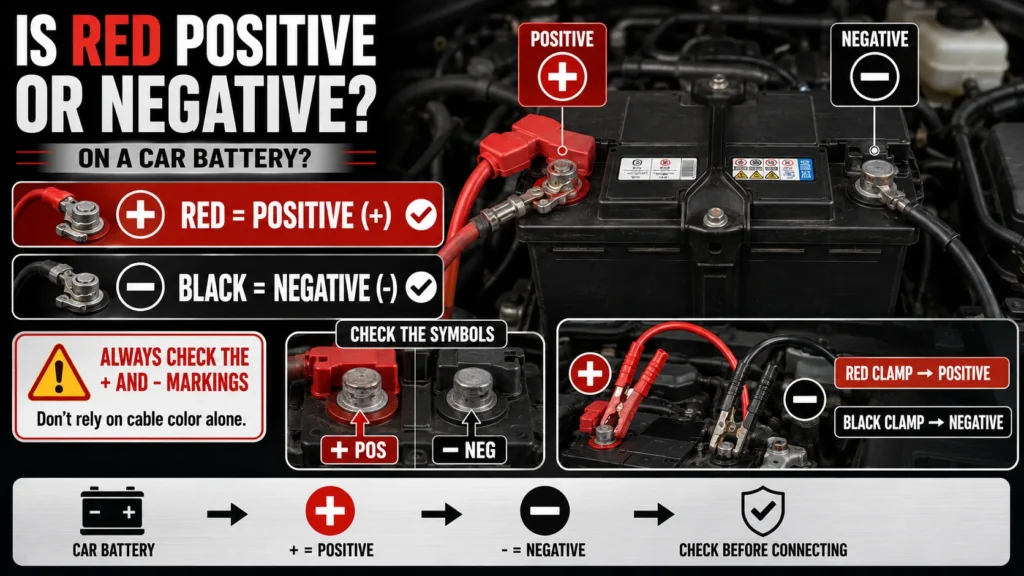
- Connect the red clamp to the positive (+) terminal of the dead battery first.
- Attach the other red clamp to the positive (+) terminal of the donor car’s working battery.
- Place the black clamp on the negative (-) terminal of the donor car’s working battery.
- Ground the final black clamp to an unpainted metal surface on the stalled car’s engine block or frame.
The Starting Process
- Run the donor vehicle for about two to five minutes to send a “surface charge” to the dead battery.
- Try to start the stalled engine while the donor car is still running at a slightly higher idle.
- Check the clamps if the car still won’t crank, as wiggling them can create a better electrical connection.
- Wait longer if the battery was deeply discharged, as it might need more time to soak up the energy.
The Disconnection Sequence
- Remove the cables in the exact reverse order of how you put them on.
- Start with the black clamp on the grounded metal of the car that was just jumped.
- Take off the black clamp from the donor car’s negative battery terminal next.
- Remove the red clamps from the donor car and then finally from the vehicle that was dead.
Advanced Electrical Troubleshooting
Parasitic Draw: The Silent Battery Killer
A parasitic draw happens when something stays on after you turn the car off. This could be a trunk light that won’t quit or a faulty aftermarket alarm system. Over a few hours, this drain will eat enough power that your car battery won’t jump easily. You can use a multimeter to see if there is a weird power pull while the car is sleeping. Fixing a draw is the only way to stop a healthy battery from dying every night.
Extreme Temperature Impacts
- Cold Cranking Amps (CCA) are vital in winter because cold weather slows down the battery’s chemical reaction.
- Thick oil in a cold engine makes it much harder for a weak battery to turn the motor over.
- Summer heat is actually harder on battery life because it evaporates the internal fluids and corrodes plates.
- Voltage drops occur faster in extreme temperatures, making a jump start much less likely to work.
Neutral Safety Switch and Security Systems
Sometimes the car won’t start because it thinks it is in the wrong gear. If your shifter isn’t perfectly in “Park,” the neutral safety switch will kill the starter. Also, many modern cars have anti-theft systems that lock out the ignition if they detect a power loss. You might need to reset your security system using the key fob before the car will accept a jump. Always check your dashboard for security lights if the car battery won’t jump.
Specialized Starting Scenarios
Using a Portable Jump Starter (Battery Pack)

Portable jump packs are small lithium-ion batteries that you can keep in your trunk. They are great because you do not need a second vehicle to get a boost. Most of these packs have built-in safety features to prevent sparks or reverse polarity. You connect them just like jumper cables, turn them on, and crank the engine. They are a lifesaver for people who often park in isolated areas.
Jump Starting in Adverse Weather

- Stay safe in the rain by making sure your hands are as dry as possible to avoid mild shocks.
- Moisture increases risk of a short circuit, so keep the jumper cable ends away from puddles.
- Proper grounding is extra important in the wet to ensure the current goes into the engine and not the frame.
- Wear insulated gear like rubber-soled shoes if you have to jump a car in a storm.
Dealing with a Bad Alternator
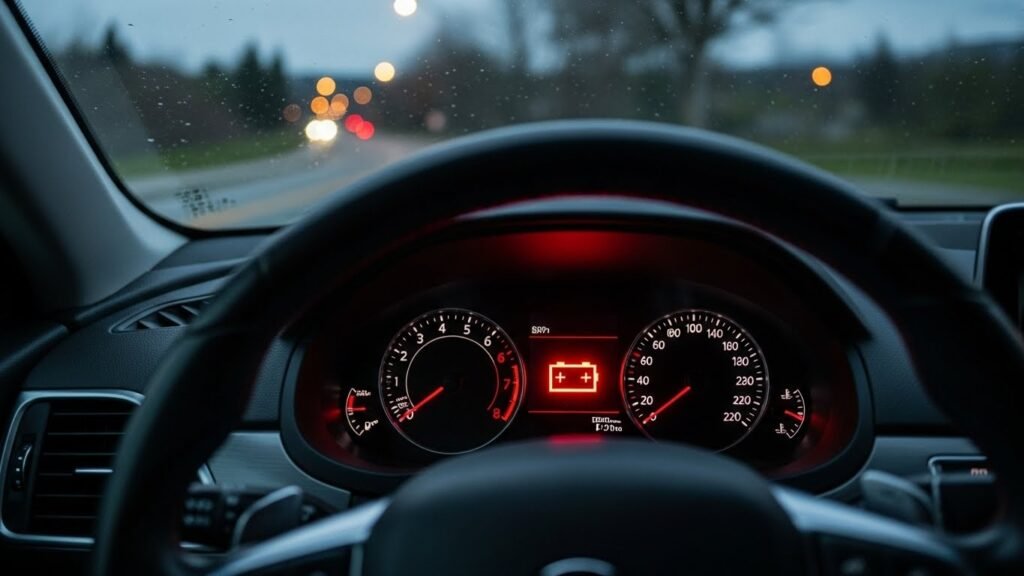
If you suspect your alternator is toast, a jump start might be a waste of time. A car with a dead alternator will suck all the power out of the battery in minutes. You might see your dashboard lights dimming or smell something like burning rubber. If the battery light stays on while driving, your alternator is not doing its job. In this situation, it is safer to tow the car than to try and drive it on a jump.
Diagnosing Specific Symptoms
The Car Won’t Jump but the Lights Come On
This is a classic sign that you have voltage but not enough amperage. It takes very little power to light up a small LED bulb on your dash. However, it takes hundreds of amps to physically move the heavy metal parts inside your engine. This usually means your battery is weak or your jumper cables are too thin. It could also point to a bad ignition switch that is failing to bridge the gap.
Jumper Cables Not Transferring Power
- Cheap, thin cables often have too much internal resistance to jump start a large truck or SUV.
- Low-gauge cables are thicker and can carry much more electrical current than the thin ones found in cheap kits.
- Hidden corrosion inside the cable insulation can happen over years of storage in a damp trunk.
- Frayed wires near the clamps can cause a massive loss of power and create a fire hazard.
Understanding Different Battery Types
Standard Lead-Acid vs. AGM (Absorbed Glass Mat)
Standard lead-acid batteries are the basic, affordable option for most older cars. AGM batteries are more advanced and can handle more vibration and deeper discharges. If your car has “Stop-Start” technology, it likely requires an AGM battery to function. Using the wrong battery type can lead to a situation where the car battery won’t jump properly. Always check your owner’s manual before buying a replacement.
Hybrid and Electric Vehicle (EV) Jump Starting
Hybrids still have a small 12V auxiliary battery to run the computers and lights. If this small battery dies, the whole hybrid system will refuse to turn on. You can jump a hybrid, but you must find the specific jump points under the hood. Warning: You should never use a hybrid vehicle to jump start a big gas-guzzling truck. The delicate electronics in a hybrid can be fried by the massive power draw of a traditional starter.
Maintenance and Prevention of Future Issues
Battery Care and Maintenance
- Clean your terminals once a year using a simple mix of baking soda and water to stop corrosion.
- Tighten the tie-down bracket because a battery that bounces around will fail much sooner.
- Get a load test done at your local auto parts store to see how much life is left in your battery.
- Check fluid levels if you have a non-sealed battery, adding distilled water if the plates are dry.
Monitoring the Charging System
If your car is starting slowly in the morning, your battery is trying to tell you something. Do not ignore a slow crank, as it is the first sign of a failing battery or starter. You should also keep an eye on your serpentine belt. If that belt is slipping or cracked, your alternator won’t spin fast enough to keep the battery charged. Regular car service can catch these issues before they leave you stranded.
Emergency Preparedness
Every driver should carry a set of high-quality, heavy-duty jumper cables in their trunk. Look for cables that are at least 4-gauge or 2-gauge for the best results. A portable power bank jump starter is another great investment for peace of mind. Knowing where your battery is located and how to access it is the first step in being prepared. A little knowledge goes a long way when your car battery won’t jump.
Professional Solutions and Next Steps
When to Call a Mechanic
If you successfully jump your car but it dies again at the next stoplight, call a pro. This behavior usually means your charging system has completely failed. Also, if you see a “Check Engine” or “Battery” light on the dash after a jump, don’t ignore it. Driving with these lights on can lead to much more expensive repairs later on. A technician can use professional tools to find the exact problem in minutes.
Professional Diagnostic Services

Mechanics use specialized tools that can see deep into your car’s electrical health. A load test will simulate a cold winter start to see if the battery is truly dead. They can also test the alternator’s output to make sure it is providing enough voltage and amperage. A starter draw test will tell them if the motor is pulling too much power to turn. These tests are much more accurate than just guessing and buying new parts.
Summary of Troubleshooting Steps
When your car battery won’t jump, stay calm and go through a mental checklist. First, check your connections and look for any blue or white corrosion on the posts. Next, listen for clicking sounds that point to a bad starter or ignition switch. Consider the age of your battery and whether it is just time for a replacement. Always prioritize safety when working around electricity and moving engine parts. With the right steps, you will be back on the road in no time.
| Problem Symptom | Likely Cause | Recommended Fix |
| Rapid Clicking Noise | Weak Battery or Bad Starter | Jump Start or Replace Starter |
| No Noise at All | Dead Battery or Ignition Switch | Check Connections or Replace Switch |
| Engine Cranks but won’t Start | Fuel or Spark Issue | Check Fuel Pump or Spark Plugs |
| Car Dies After Cables Removed | Bad Alternator | Replace Alternator |
Frequently Asked Questions
Why does my car battery won’t jump even with a new battery?
This usually points to a problem with the starter motor or the battery cables themselves. If the cables have internal rot, they can’t carry enough power to the starter.
Can a totally dead battery be revived with a jump?
Sometimes, but if the battery has sat dead for months, the internal plates are likely ruined. A jump might start the car, but the battery won’t hold that charge for long.
Is it dangerous to jump a car?
It can be if you cross the cables or connect them in the wrong order. This can cause a battery explosion or fry the expensive computers in modern cars. Always follow the red-to-positive and black-to-ground rules.
How long should I drive after a jump start?
You should drive for at least 20 to 30 minutes at highway speeds. This gives the alternator enough time to put a solid charge back into the battery.
Can a blown head gasket prevent a car from starting even with a jump?
Yes. If coolant leaks into the cylinders, it can cause “hydro-lock,” a state where the engine cannot physically rotate because liquid cannot be compressed. No amount of electrical power will overcome this mechanical seizure.
Does the gauge of jumper cables really matter?
Absolutely. Heavy-duty cables (2 to 4 gauge) carry significantly more current than thin, cheap ones (8 to 10 gauge). If you are jumping a large engine or a completely flat battery, thin cables may get hot but fail to transfer enough power to crank the motor.
Can I jump-start a car that has a manual transmission by pushing it?
Yes, this is called “bump starting” or “pop-starting.” By putting the car in second gear and releasing the clutch while the car is rolling, you use the wheels to turn the engine over, bypassing the need for a starter motor.
Is it safe to jump-start a car with a frozen battery?
No. If you see ice inside the battery or the sides are bulging, do not jump it. Attempting to charge or jump a frozen battery can cause it to explode. Bring the battery into a warm environment to thaw completely before testing.
Why do my jumper cables spark when I connect them?
Small sparks are common as the circuit completes and current begins to flow. However, large sparks usually indicate a short circuit or that the cables are connected with reverse polarity (positive to negative).
Can a bad ground wire cause a jump start to fail?
Yes. The electrical system requires a complete loop. If the heavy cable connecting the engine or battery to the car’s frame is rusted or loose, the power from the jump cables won’t reach the starter.
What happens if I connect the jumper cables backward?
This is “reverse polarity.” It can blow the main fuse, fry the car’s Engine Control Unit (ECU), damage the alternator diodes, and potentially cause the battery to vent gas or explode.
Can I use a screwdriver to jump a starter solenoid?
While possible in emergencies by bridging the terminals, it is extremely dangerous. It can cause severe electrical burns, weld the screwdriver to the starter, or cause the car to move unexpectedly if it is in gear.
Does the donor car need to be running during the jump?
While not strictly required, it is highly recommended. A running donor car provides a higher voltage (around 14V from the alternator) and ensures the donor’s battery doesn’t accidentally get drained during the process.
Can a faulty Crankshaft Position Sensor prevent a jump start?
Yes. If this sensor fails, the car’s computer won’t know when to fire the spark plugs or fuel injectors. The engine will crank vigorously during the jump but will never actually “catch” and run.
Why does my car start with a jump but die when I turn on the headlights?
This indicates a total alternator failure. The engine is running solely on the surface charge provided by the jump. The moment you add a high-load accessory like headlights, the voltage drops below what the ignition system needs to function.
Can I jump-start a car using a 24V truck system?
Never jump a standard 12V car with a 24V system (common in some military or heavy duty vehicles). The 24V surge will instantly destroy the car’s light bulbs, sensors, and computers.
Is there a risk of “ECU Spiking” during a jump?
Yes. To minimize the risk of voltage spikes damaging car computers, some mechanics recommend turning on the heater fan or rear defroster in the dead car before disconnecting the cables to absorb the surge.
Can a security system “lockout” prevent a jump start?
Yes. Many modern vehicles enter a “theft mode” if they detect a battery disconnect. You may need to perform a specific key-turn sequence or use the remote to “re-arm” and “disarm” the system before the starter is allowed to engage.
Why does my car only start if I wiggle the jumper clamps?
This proves there is a layer of oxidation or dirt on the battery terminals. Wiggling the clamps bites through the grime to reach the lead post. This is a sign you need to clean your terminals immediately.
Can I jump a car from the battery in the trunk?
If your car’s battery is in the trunk, there are usually specific “jump posts” located under the hood. Using these is safer and more efficient than connecting directly to the battery in the rear.
Does it matter which car I connect to first?
Standard safety procedure dictates connecting to the dead battery first. This ensures that you aren’t carrying “live” clamps around, reducing the risk of accidentally touching them to the car frame and causing a short.
How do I know if the battery is “leaking”?
If you see wetness on top of the battery, a rotten egg smell (sulfuric acid), or heavy corrosion on the tray below, the battery is leaking. Do not jump-start it; replace it immediately.
Can a bad ignition coil cause a car to seem like it needs a jump?
A weak coil can cause the car to struggle to start, making the battery work harder until it dies. You might jump the car, but the underlying ignition problem will leave you stranded again shortly.
Can I use a battery charger instead of a jump start?
Yes. A “trickle charger” or “fast charger” is actually better for the battery’s long-term health than the violent surge of a jump start, though it takes much longer (hours vs. minutes).