Skip to content
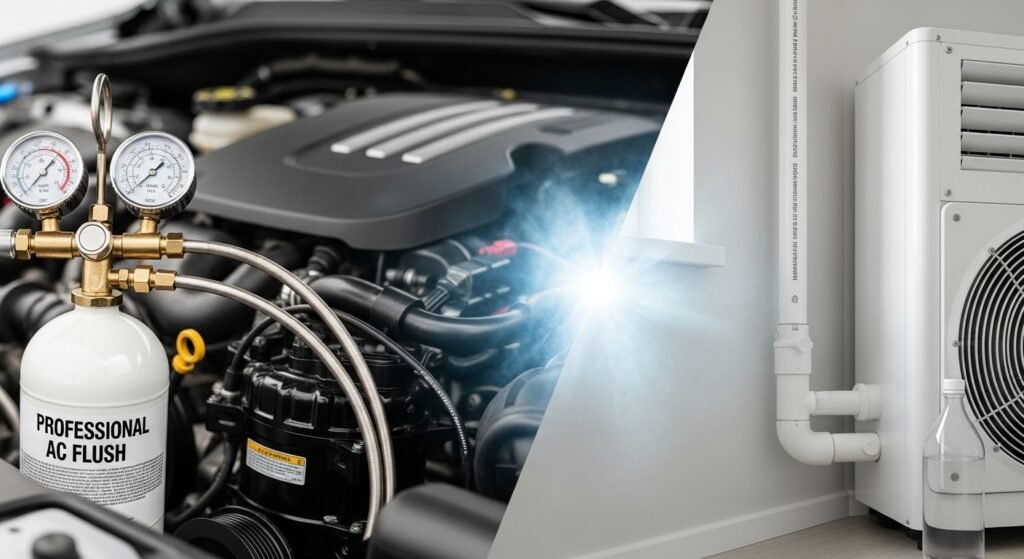
Performing an ac system flush is a game changer for your ride and home. This guide shows you how to handle deep cleaning like a pro. You will save money and stay cool all summer long. Let’s dive into the world of thermal management and clear lines.
Introduction to AC Maintenance and System Flushing
Your car climate control and home HVAC systems are complex machines. They rely on clean pathways to move heat and moisture. Over time, these systems get dirty and lose their cooling power. This is where an ac system flush becomes your best friend.
Maintaining your AC is about more than just a quick fix. It is about keeping the air smelling fresh and the temp low. A clean system runs better and lasts much longer. You want to avoid big repair bills whenever you can.
System flushing is the ultimate deep clean for your AC unit. It targets the parts you cannot see from the outside. By the end of this guide, you will be an expert. You will know exactly how to keep your systems in top shape.
- Proper maintenance stops your compressor from burning out too early.
- System flushing removes tiny metal shavings that act like sandpaper.
- Clean lines ensure that the refrigerant flows without any hiccups.
- Regular checks help you find small leaks before they become disasters.
Understanding the AC Flushing Process
The ac system flush process is a deep scrub for internal parts. It involves pushing a special cleaner through the AC hoses. This liquid grabs onto dirt and pulls it out of the system. It is a necessary step for any major AC repair job.
In a car, the flush cleans the refrigerant circuit of sludge. In a house, it usually targets the condensate drain line for gunk. Both jobs aim to clear out blockages that stop the cooling. You need the right tools to do this job safely.
The process uses a mix of chemicals and high-pressure air. The ac flush solution breaks down old, sticky oil and dirt. Then, the air compressor blows it all out into a waste bucket. This leaves the inside of your AC parts looking brand new.
- Solvents are designed to evaporate quickly and leave no residue behind.
- Compressed air provides the force needed to dislodge stubborn clogs.
- Flushing tools connect directly to the parts for a mess-free job.
- Waste containers catch the old fluid so you can dispose of it.
Why AC Systems Require Regular Flushing
Your AC system is like a highway for heat and cold air. If there is a wreck on the road, traffic stops completely. In your AC, a system blockage is that traffic jam. Flushing clears the road so everything moves fast again.
Contamination control is the biggest reason to flush your AC system. When a compressor dies, it often throws metal shavings into the lines. If you don’t clean those out, your new compressor will die fast. Most warranties will not cover a part if you didn’t flush.
Thermal efficiency is another huge benefit of a good clean. Old oil turns into a thick sludge that coats the evaporator. This coating makes it harder for the system to grab heat. Removing that sludge makes your AC feel much colder and crisper.
- Warranty protection is a major reason to document your flush process.
- Sludge removal prevents the system from overworking on hot days.
- Oxidized oil can become acidic and eat your seals from the inside.
- Debris can clog the orifice tube or thermal expansion valve easily.
Recognizing the Signs of a Clogged AC System
You need to know when your system is crying out for help. Clogs do not happen overnight; they usually grow slowly over time. If you catch them early, you save yourself a lot of grief. Listen to your car and your home for these signs.
In Automotive Systems
A car AC system usually fails by blowing warm air at you. You might notice the air is not as cold as it was last year. Sometimes the compressor makes a loud clicking or grinding noise. This means the system is struggling to move the refrigerant.
Another sign is when your AC works fine for a bit then stops. This often happens because moisture is freezing inside the system. A system flush removes that moisture and gets things back on track. Do not ignore these warning signs in your vehicle.
- Warm air coming from the vents is the most common symptom.
- Grinding noises suggest that the compressor is fighting a blockage.
- Cycling off frequently means the pressure is too high or low.
- Visible leaks on the ground might actually be old, dirty oil.
In Residential Systems

Your home AC has a different way of telling you it is clogged. High humidity inside your house is a massive red flag for HVAC. You might see water pooling around the indoor air handler unit. This usually means the ac drain line is completely backed up.
Rising energy bills are another subtle sign of a system clog. If your AC runs all day but nothing changes, check the lines. A float switch might even shut the whole unit off to prevent a flood. This is a safety feature that saves your floors from water damage.
- Musty odors often mean mold is growing in a clogged drain line.
- Water stains on the ceiling are a sign of an overflowing pan.
- Ice buildup on the evaporator coil can be caused by poor airflow.
- Unit shutdown happens when the safety switch detects standing water.
Safety First: Essential Tips for a Successful Flush
Working on AC systems involves high pressure and strong chemicals. You cannot just jump in without thinking about your own safety. Protect your body and the environment by following a few simple rules. Always stay alert and focused when handling pressurized refrigerant.
Personal Protection and Gear

Your eyes and skin are very sensitive to AC chemicals. You must wear safety goggles to prevent any liquid from splashing. Chemical-resistant gloves are also a must-have for this DIY project. Some of these solvents can cause a chemical burn if left on skin.
If you are cleaning a drain line, wear a face mask too. Mold and bacteria like to hide in damp AC systems and lines. You do not want to breathe in those spores while you work. Staying protected ensures you can finish the job without getting hurt.
- Safety goggles protect your eyes from high-pressure spray and chemicals.
- Nitrile gloves keep the harsh solvents from soaking into your skin.
- Long sleeves add an extra layer of protection against accidental splashes.
- Closed-toe shoes are vital when working with heavy tools and equipment.
Environmental and Workspace Safety
AC chemicals are toxic and cannot just be dumped down the drain. You must follow local rules for the disposal of chemicals and oil. Keep a clean bucket ready to catch all the waste fluid. This keeps your garage floor clean and protects the local water supply.
Make sure you work in a well-ventilated area like an open garage. The fumes from ac flush solution can be very strong and dizzying. If you feel lightheaded, step away and get some fresh air. Safety is more important than finishing the job fast.
- Open doors to ensure plenty of fresh air moves through the space.
- Drop cloths can catch small spills before they stain your driveway.
- Proper containers labeled for waste help at the recycling center.
- Clear paths around the car prevent trips and falls while working.
Chemical Safety Warnings
There is one rule you must never ever break when cleaning. Never mix bleach and vinegar together in any AC drain line. This creates a toxic cloud of chlorine gas that is very deadly. Pick one cleaner and stick with it for the whole job.
Before you open any car AC lines, you must depressurize the system. Spraying refrigerant into the air is dangerous and illegal in many places. Ensure the system is empty before you start unbolting any of the hoses. Use a proper recovery machine or visit a shop for this.
- Chlorine gas is the result of mixing common household cleaning supplies.
- Pressure release must be done slowly to avoid any sudden sprays.
- Label check all your chemicals to make sure they are AC-safe.
- Flash point awareness is key as some flush liquids are flammable.
Tools and Materials Required for the Job
You cannot do a professional job with just a screwdriver and a bucket. You need a specific set of tools for a proper ac system flush. Having everything ready before you start saves you from extra trips. Check your tool box for these essential items.
Automotive Flush Kit

The heart of the job is the ac flush tool and the solvent. You can often rent these tools from your local auto parts store. You also need an air compressor that can hold steady pressure. This gives you the power to push the solvent through the coils.
You will also need a set of manifold gauges to check pressures. A vacuum pump is required to remove air and moisture at the end. Do not forget to buy a pack of new O-rings for the hoses. These small rubber rings prevent expensive leaks down the road.
- Flush canister holds the solvent and connects to your air line.
- Solvent bottles usually come in quart sizes for a full car.
- Manifold gauges show you exactly what is happening inside the system.
- Vacuum pump is the only way to get the system 100% dry.
- New O-rings are cheap insurance against future refrigerant leaks.
Residential Drain Line Kit
Cleaning a home AC drain is much simpler but still needs tools. You will need a good amount of distilled white vinegar or bleach. A funnel makes it much easier to pour liquid into small pipes. A wire brush helps scrub away any gunk you can reach.
Some people like to use a wet/dry vacuum to suck out the clogs. This is often more effective than just pushing from the top. A shop vac with a good seal can pull out massive clogs. Keep some hot water handy to help melt away any slimy buildup.
- White vinegar is great for killing algae without using harsh toxins.
- Funnel set prevents you from spilling liquids all over your floor.
- Shop vac is the pro way to clear a totally blocked drain.
- Drain snake can reach deep into the pipe to break up hair.
- Measuring cup ensures you use the right amount of cleaning solution.
Step-by-Step Guide to Flushing Your Car’s AC System
Now we get into the nitty-gritty of the car AC flush process. This job takes a few hours, so do not try to rush it. Follow these steps to ensure your system is cleaner than ever. Your car will thank you with ice-cold air on hot days.
System Disconnection and Preparation
First, you have to take the system apart to get to the dirty parts. Disconnect the AC hoses from the back of the compressor. You must remove the receiver drier or the accumulator from the car. These parts have filters inside that cannot be flushed or cleaned.
You also need to find the orifice tube or the expansion valve. These parts act as tiny nozzles and will catch all the debris. They must be removed or bypassed before you start the flush. Label your hoses so you know where they go when you are done.
- Remove drier because the desiccant inside will trap the flush fluid.
- Bypass valves to ensure the solvent flows freely through the system.
- Plug openings you aren’t working on to keep out dust and bugs.
- Organize bolts in a tray so you don’t lose any small parts.
Flushing the Evaporator

The evaporator is the part inside your dash that gets cold. Attach a long heater hose to one side of the evaporator pipe. Run that hose into a bucket to catch the dirty liquid that comes out. This keeps your car’s interior clean while you work on the dash.
Inject the ac system flush into the other side of the evaporator. Use short bursts of air to move the liquid through the metal coils. Keep doing this until the fluid coming out is clear and bright. This means all the old oil and dirt are finally gone.
- Seal connections with a rag to prevent the spray from hitting you.
- Use gravity by flushing from the top down whenever you can.
- Check fluid color to see how much junk was hiding in there.
- Dry it out by blowing just air through it for several minutes.
Flushing the Condenser
The condenser is the big radiator-looking part at the front of the car. It gets hit with bugs and road debris, so it is often very dirty. Flush from the bottom fitting so gravity helps the liquid move. This part is critical for getting rid of the heat from your car.
Be careful with newer cars that have parallel-flow condensers. These have tiny tubes that are almost impossible to flush completely. If your car has one and the compressor died, just buy a new one. Trying to flush these often leads to failure later on.
- Bottom-up flush is sometimes better for dislodging heavy metal particles.
- Inspect fins for damage while you have the hoses disconnected.
- Solvent soak for ten minutes can help break up hard carbon deposits.
- Replace if unsure because a condenser is cheaper than a new compressor.
Individual Hose Maintenance
Do not forget the rubber and metal AC hoses that connect everything. Flush these one at a time to make sure they are completely open. Some hoses have built-in mufflers that can trap metal shavings. If a hose feels heavy or blocked, it is time to get a new one.
Check the rubber for any cracks or soft spots while you have it off. High pressure can cause old hoses to burst when you least expect it. A fresh set of hoses makes the whole system much more reliable. Clean the metal ends with a wire brush for a better seal.
- Straight hoses are the easiest to clean with a quick blast.
- Muffler check is vital since you cannot see inside these small cans.
- Rub test the outside to see if the rubber is dry-rotting or hard.
- Clear path is confirmed when the solvent shoots out the other side.
Reassembly and Component Replacement
Once everything is clean and dry, it is time to put it back together. Install your brand-new receiver drier and a new orifice tube. These are the most important new parts for a successful AC repair. They act as the final filters for your clean system.
Use a tiny bit of AC oil to lubricate your new O-rings. This helps them slide into place without tearing or pinching. Tighten all your bolts to the right spec so they do not vibrate loose. A solid reassembly is the key to a leak-free AC system.
- New filters are mandatory for every single AC repair job you do.
- Lube seals with the same oil you will put in the compressor.
- Double-check every connection before you move to the next step.
- Avoid over-tightening as aluminum threads can strip very easily.
Final Leak Testing and Recharging
The last step is to make sure your hard work stays inside the system. Hook up your vacuum pump and let it run for at least 45 minutes. This pulls a deep vacuum that boils away any leftover moisture. Moisture is the number one enemy of a healthy AC system.
Watch your manifold gauges to see if the vacuum holds steady. If the needle moves, you have a leak that needs to be fixed. Once it is sealed, add the right amount of oil and refrigerant. Now you can enjoy the fruits of your labor with cold air.
- Vacuum pull removes the air that would otherwise block the cooling.
- Gauge watch for 15 minutes to confirm there are no tiny leaks.
- Oil balance is crucial so the compressor stays properly lubricated.
- Recharge slow to avoid slugging the compressor with liquid refrigerant.
How to Flush and Clean a Residential AC Drain Line
Your home AC needs love too, especially the drainage system. A clogged drain can cause thousands of dollars in water damage to your home. This process is easy and should be done every single year. Let’s walk through the steps to keep your floors dry.
System Shutdown Procedures
Never work on your HVAC system while the power is still on. Go to your thermostat and turn the cooling mode completely off. Then, find the circuit breaker or the power switch near the unit. Flipping this off ensures that the fan or motor won’t start suddenly.
This also stops the unit from making more water while you work. It gives the system a chance to rest and settle down. Safety is the first step in any home maintenance project you take on. Once the power is dead, you are ready to begin the clean.
- Thermostat off prevents the system from trying to kick on.
- Breaker flip is the only way to be 100% sure the power is out.
- Unplug pump if your unit uses a small condensate pump to move water.
- Warn family so nobody turns the AC back on while you are working.
Accessing the Drain Line
Look for a PVC pipe coming out of the side of your indoor air handler. This is the condensate drain line that carries water outside. There is usually a T-shaped vent or a cap you can pull off. This is your access point for the ac system flush.
If you don’t see an easy access port, you might need to cut the pipe. You can then install a proper clean-out port for future use. This makes the job much easier the next time you need to do it. Inspect the area for any signs of leaks or cracks in the plastic.
- Find the T-joint which is usually located near the evaporator coil.
- Pop the cap off carefully so you don’t crack the old PVC.
- Check the pan to see if there is standing water inside the unit.
- Flashlight check down the pipe to see how bad the clog looks.
Manual Debris Removal
Before pouring chemicals, try to pull out any big chunks of gunk. You can use a wire brush or even an old toothbrush for this. Algae and slime love to grow right at the mouth of the drain. Removing this stuff first makes the vinegar flush much more effective.
If the pipe is totally full of water, you have a major blockage. Use a wet/dry vacuum on the outside end of the pipe to suck it out. This often pulls out “snakes” of algae that are several inches long. It is gross but very satisfying to see the water flow again.
- Wire brush helps scrub the walls of the pipe where slime hides.
- Shop vac seal can be made with a wet rag around the pipe end.
- Suction power is usually enough to clear most household drain clogs.
- Gloves on because the slime in AC drains is full of bacteria.
The Vinegar/Chemical Flush Process

Now it is time for the secret weapon: distilled white vinegar. Pour about 1/4 cup of the vinegar into the drain access port. The acid in the vinegar kills algae, mold, and any funky bacteria. It is safe for your pipes and won’t hurt the environment.
Let the vinegar sit in the line for at least 30 to 60 minutes. This gives it time to “eat” through the organic buildup and slime. Do not rush this part, as the soaking time is what does the work. You can even use a bit of hot water to help things move along.
- Distilled vinegar is the best choice for regular monthly cleaning.
- Wait time allows the chemicals to break down the sticky biological bonds.
- Funnel use ensures all the liquid goes into the pipe and not your floor.
- Avoid bleach if you have a condensate pump with rubber seals.
Verification and Restoration
After the soak, flush the line with a gallon of fresh, clean water. Go outside and check the end of the drain pipe to see if it’s working. You should see a steady stream of water and some dirty bits coming out. This proves that the path is now clear and open.
Replace the cap on the T-vent and head back to the power switch. Turn the breaker on and set your thermostat back to a cool temp. Listen for the unit to start up and check for any new leaks. Your home AC is now ready for the peak of summer heat.
- Check the flow to make sure the water isn’t backing up anymore.
- Replace the cap so the system can maintain its proper vacuum.
- Restart unit and wait for the cold air to start flowing again.
- Monitor pan for the next hour to ensure everything stays dry.
Troubleshooting Common Blockages and Issues
Sometimes a simple flush isn’t enough to fix a stubborn system. If you still have problems, you need to dig a little deeper. Do not get frustrated, as most AC issues can be solved with patience. Here are some tips for those tough-to-crack cases.
If a car AC line is still blocked, try reverse flushing it. This means pushing the solvent in the opposite direction of normal flow. Often, this will pop a piece of debris loose and save the part. If that fails, the component might be physically damaged inside.
For home systems, check the P-trap or U-trap in the drain line. These curves are designed to hold water but they also trap a lot of dirt. You might need to take the trap apart to clean it out manually. A clear trap is essential for a gravity-based drainage system.
- Reverse flush is the best way to dislodge stuck metal shavings.
- Trap check should be your first stop for home drainage issues.
- Air pressure can be increased slightly for very tough blockages.
- Part replacement is necessary if the internal coils are collapsed.
Long-Term Maintenance and Prevention Strategies
The best way to handle a clog is to prevent it from ever happening. A little work once a month saves you from a massive headache later. Create a simple schedule for your car and home AC care. This keeps your systems running at peak cooling efficiency.
For your home, pour a little vinegar down the drain every time you pay your power bill. This stops algae from ever getting a foothold in your pipes. For your car, change your cabin air filter at least once a year. This keeps dust and dirt away from the cold evaporator core.

- Monthly flushes with vinegar keep home drains clear year-round.
- Filter changes prevent dust from turning into mud inside your unit.
- Spring cleaning is a great time to check your car’s AC pressures.
- Visual inspections help you spot oil leaks or cracked hoses early.
Summary and Final Takeaways
An ac system flush is a vital skill for any homeowner or car owner. It ensures that your cooling stays strong and your repair bills stay low. By following this guide, you have the knowledge to do the job right. You can now tackle any AC issue with total confidence.
Remember to always put safety first and use the right tools for the job. Whether it is a car or a house, cleanliness is the key to AC performance. Keep those lines clear and enjoy the refreshing, cold air. You have done a great job taking care of your equipment.
- Cleanliness is the number one factor in AC system longevity.
- Preventive care is always cheaper than emergency repairs.
- Follow steps carefully to ensure a professional-level result.
- Enjoy the cool because you earned it with your hard work.
Frequently Asked Questions
What is the average cost of a professional AC system flush?
A professional automotive flush usually ranges from $150 to $300, depending on the vehicle and local labor rates. For residential HVAC drain lines, a service call for a clog typically costs between $75 and $200. Doing it yourself can save you significant money, as the materials usually cost less than $50.
Can I use rubbing alcohol instead of a specialized AC flush solution?
No, you should never use rubbing alcohol in a car’s AC system. Rubbing alcohol contains water, which is a major contaminant in refrigerant circuits. Professional flush solutions are designed to be anhydrous and evaporate completely without leaving any moisture or residue behind.
Is it possible to flush an AC system without an air compressor?
For a residential drain line, you do not need a compressor; gravity or a shop vac is enough. However, for a car’s refrigerant circuit, a compressor is essential. Without the high-pressure “blast” of air, the solvent will not have enough force to push heavy metal shavings and thick sludge out of the narrow internal tubes.
How do I know if my car has a parallel-flow or serpentine condenser?
Serpentine condensers look like one long, continuous tube snaked back and forth. Parallel-flow condensers look like many tiny horizontal tubes connected to vertical tanks on the sides. If you see many tiny tubes, it is likely parallel-flow and should be replaced rather than flushed if the system is heavily contaminated.
Will a system flush fix a leak in my AC?
A flush will not fix a leak. In fact, flushing a system with a hole might just cause the solvent to spray out of the leak point. You must repair any leaks or replace damaged hoses before performing the final vacuum pull and recharge.
Can I reuse the refrigerant that I removed before the flush?
Only if it was recovered using a professional recycling machine. If you are a DIYer, you should take your car to a shop to have the refrigerant professionally recovered. You should always use fresh, virgin refrigerant when recharging a flushed system to ensure there are no existing contaminants.
What happens if I accidentally mix bleach and vinegar in my drain line?
If you mix them, you must leave the area immediately. The mixture creates chlorine gas, which causes coughing, burning eyes, and breathing problems. Open all windows, turn off the AC to stop the gas from circulating, and do not return until the smell is completely gone.
Does a flush remove the acid caused by moisture in the system?
Yes, one of the main goals of a chemical flush is to neutralize and wash away acidic buildup. Acid forms when moisture reacts with refrigerant and oil, which can eat through the aluminum parts of your AC. The solvent breaks these acids down and carries them out into the waste bucket.
How do I dispose of the used AC flush solvent?
You should treat used solvent like old motor oil or hazardous waste. Pour it into a sealed, labeled container and take it to a local automotive recycling center or a hazardous waste collection site. Never pour it on the ground or down a household drain.
Can a clogged cabin air filter cause the AC drain line to back up?
Indirectly, yes. A dirty cabin filter reduces airflow, which can cause the evaporator coil to freeze into a block of ice. When that ice melts all at once, it can overwhelm the drain pan and cause it to overflow, especially if there is already a small amount of gunk in the line.
Why is my AC still not cold after a full flush and recharge?
If the flush was successful, the issue might be a faulty blend door actuator in your dash or a weak compressor clutch. It could also mean the expansion valve was not replaced and is now stuck closed. Double-check your pressure gauges to see if the compressor is actually building enough pressure.
Does every car have an orifice tube that needs to be replaced?
Not every car. Some vehicles use a Thermal Expansion Valve (TXV) instead. While orifice tubes are cheap and always replaced, TXVs are more complex. However, if the system was heavily contaminated, most pros recommend replacing the TXV as well because they are very difficult to clean internally.
Is it safe to use a pressure washer to clean the outside of my condenser?
You can use a garden hose, but be very careful with a pressure washer. The high pressure can easily bend the soft aluminum fins, which will block airflow and cause the system to overheat. If you use a pressure washer, keep the nozzle at least two feet away and use a wide-angle tip.
How long does it take for a residential AC drain to clog again?
In humid climates like Florida or Texas, algae can grow very fast. If you don’t do a monthly vinegar flush, a line can clog up in as little as three to six months. In dryer climates, you might go years without a clog, but an annual check is still recommended.
Can I flush my AC system if I have a hybrid or electric vehicle?
Yes, but you must be extremely careful with the oil. Most hybrids use high-voltage electric compressors that require special POE oil. Using standard PAG oil from a gas car can cause a “high voltage leak,” which will disable the car and could be dangerous.
What is the “black death” in automotive AC systems?
“Black death” is a nickname for a specific type of failure where the Teflon coating inside the compressor breaks down and creates a thick, black goo. This goo spreads through the entire system. If you see black sludge during your flush, you must be extremely thorough or replace almost every component.
Can I use a garden hose to flush the inside of my car’s AC lines?
Absolutely not. Introducing tap water into the refrigerant lines is a recipe for disaster. Tap water contains minerals that cause scale and moisture that is nearly impossible to remove with a standard vacuum pump. Only use pressurized air and approved chemical solvents.
Should I flush my AC if the compressor didn’t fail?
If you are just changing a leaky hose, a full flush usually isn’t necessary. However, if the system has been open to the air for a long time, moisture may have turned the oil into sludge. In that case, a flush is a good “reset” for the system to ensure it lasts another ten years.
What size air compressor do I need for an AC flush?
You don’t need a massive industrial compressor, but a tiny “pancake” compressor might struggle. Ideally, you want a tank that can hold at least 6 to 10 gallons and provide a steady 90 PSI. This ensures you have a long enough “blast” of air to move the liquid through the longer lines.
Is a “liquid line filter” a good idea after a flush?
Some technicians install an extra “inline filter” in the liquid line after a major compressor failure. This acts as a backup to catch any tiny bits of metal that the flush might have missed. It is an extra layer of protection for your brand-new compressor.