Skip to content
Most folks think a car is done once the odometer hits six figures. That is just plain wrong if you know the secrets of car care. You can keep your ride on the road for decades. It just takes some love and a little bit of sweat. This guide shows you exactly how to keep your car running forever. We will dive deep into every nut and bolt. You do not need to be a pro to do this. Just follow these steps and stay consistent.
Understanding the Philosophy of Preventative Maintenance
You gotta change how you look at your car. It is not just a hunk of metal that gets you to work. It is a complex machine that needs constant attention. If you wait for things to break, you already lost the game. Preventative care is the name of the game here. It keeps small issues from becoming massive headaches later on.
The Quirk Factor
Every car has its own little personality. You need to learn the normal sounds your engine makes. Listen for new rattles, squeaks, or weird vibrations. If you catch a tiny noise early, you save big bucks. Smells are also a huge warning sign for drivers. Sweet smells might mean a coolant leak is happening. Burning smells could be oil hitting a hot exhaust pipe.
- Listen closely to the engine at every cold start.
- Feel for vibrations through the steering wheel or seat.
- Watch your gauges for any slight changes in temp or pressure.
The Financial Impact
Taking care of small stuff is cheap. An air filter costs maybe ten dollars. A new engine costs thousands of dollars. You are basically trading a few bucks now for thousands later. It is the best investment you can make. Most people skip the small stuff and pay for it later. Do not be like most people.
The Lifetime Mindset
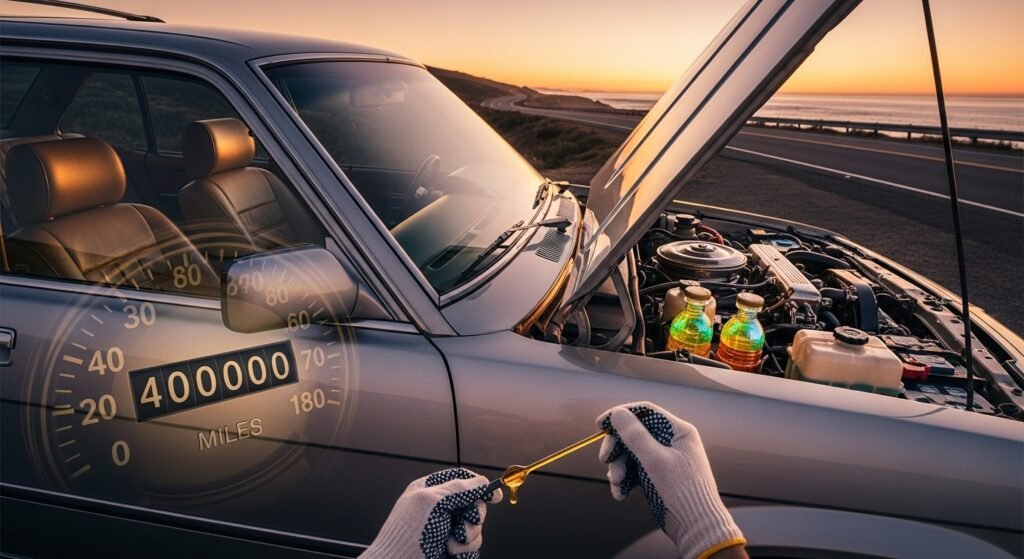
Treat your car like it is a treasured friend. If you respect the machine, it will respect you back. This means no slamming doors or redlining the engine. Keep it clean and keep it serviced. This mindset is the real secret to vehicle longevity. Your car will reward you with 400,000 miles if you do.
Essential Fluid Management

Fluids are the lifeblood of your entire vehicle. Without them, metal rubs on metal and things explode. You have to keep these levels topped up at all times. Checking them once a week is a great habit. It only takes five minutes of your time.
The Lifeblood of the Engine: Oil and Filters
Engine oil reduces friction and carries away heat. If the oil gets dirty, it turns into sludge. Sludge will kill an engine faster than anything else. You need to keep it fresh and clean.
- Proper Viscosity is key so check your owner’s manual for the right grade like 5W-30.
- Service Intervals should be every 3,000 to 5,000 miles for most rides.
- Filter Quality matters because cheap filters let contaminants through to the engine.
- High-Mileage Care involves checking levels weekly since old engines burn more oil.
Secondary Vital Fluids
Your engine is not the only thing that needs juice. Other systems rely on specific hydraulic fluids to function. If these run dry, you lose control of the car. That is a scary situation you want to avoid.
- Engine Coolant prevents the block from melting in the summer heat.
- Brake Fluid absorbs moisture over time so it needs regular testing.
- Power Steering Fluid keeps your turns smooth and your pump quiet.
- Transmission Fluid handles the heat inside your gearbox during shifts.
- Windshield Washer Fluid is a basic safety item for clear vision.
Differential and Gear Lubricants
If you have a truck or an SUV, you have extra gears. These parts live under the car and get forgotten. They need heavy-duty protection from thick lubricants.
- Differential Fluid stays in the rear or front axle to protect gears.
- Transfer Case Fluid is vital for folks with 4WD or AWD systems.
- Lube Service usually happens every 30,000 to 60,000 miles for these parts.
Engine Health and Efficiency
The engine is the heart of your car. If the heart stops, the car dies. Keeping it efficient is how to keep car running forever. You want it to breathe easy and spark right.
Air Intake and Combustion
An engine needs air to burn fuel. If the air is dirty, the engine suffers. A clean air filter ensures the gas burns perfectly. This keeps your fuel economy high and emissions low.
- The $10 Life-Saver is a fresh air filter replaced every year.
- Symptoms of Clog include a rough idle or a sudden power loss.
- Fuel Quality can be boosted by using premium gas once in a while.
Belts, Chains, and Gaskets

Rubber parts do not last forever. They dry out and crack over time. If a belt snaps, you might lose your steering or cooling. If a timing belt snaps, the engine is likely toast.
- Serpentine Belts should be checked for cracks or missing teeth.
- Timing Belts must be replaced between 60,000 and 100,000 miles.
- Gasket Vigilance means looking for wet spots on the engine block.
Spark Plugs and Ignition System

Spark plugs create the fire that moves the pistons. Over time, the tips wear down and the spark gets weak. This leads to misfires and wasted gas.
- Replacement Intervals vary but usually happen every 30k to 100k miles.
- Ignition Coils should be tested if you feel the engine stumbling.
- Wires and Boots can leak electricity if they get old and brittle.
Electrical and Diagnostic Systems
Modern cars are like rolling computers. They have miles of wiring and dozens of sensors. If the electricity fails, nothing works right. You have to keep the power flowing steady.
Battery and Connectivity

Your battery starts the engine and runs the lights. It needs a solid connection to do its job. Corrosion is the number one enemy of car batteries.
- Terminal Checks ensure the cables are tight and do not wiggle.
- Clean Connections using water or soda to eat away the white crust.
- Trickle Charging keeps the battery alive if you do not drive often.
The Onboard Diagnostic System
Your car talks to you through the dashboard. If a light comes on, it is a warning. Do not put a piece of tape over it. That light is trying to save your engine.
- Check Engine Light means the computer found a problem with a sensor.
- OBDII Scanners can tell you exactly what part is failing.
- Emissions Parts like oxygen sensors often trigger these warning lights.
Alternator and Charging System
The alternator makes power while you drive. It recharges the battery and runs the electronics. If it fails, the car will die while you are driving.
- Test Voltage to make sure it stays around 14 volts when running.
- Clean Grounds prevent weird electrical glitches from driving you crazy.
Smart Driving Habits and Operation
How you drive is just as important as what you fix. If you drive like a maniac, parts wear out fast. Smoothness is the key to a long-lived vehicle.
Operating Techniques

Think of your car as an athlete. It needs to warm up before a sprint. Do not just floor it the second you start it up.
- Gentle Starts reduce the initial load on the engine and transmission.
- Warm-Up Rituals allow oil to reach the top of the engine.
- Smooth Braking saves your pads and rotors from excessive heat.
Mileage and Frequency Management
Driving too much is bad, but not driving enough is worse. Cars hate sitting around doing nothing. Fluids settle and seals dry out when a car sits.
- Balance Usage by avoiding constant short trips that never warm the engine.
- Prevent Dry Rot by moving the car to keep tires and belts flexible.
- Pest Control is easier if you drive often so mice do not move in.
The Importance of Highway Miles
Your car loves the highway. It is the easiest environment for an engine. Constant speeds and high airflow keep things clean.
- Burn Off Deposits by driving at highway speeds for 20 minutes weekly.
- Deep Charging happens best during long drives with the alternator spinning fast.
External Protection and Body Maintenance
Rust is the “car killer.” Once it starts, it is very hard to stop. You have to protect the metal from the elements.
Climate and Shelter
The sun and rain are brutal on your car. UV rays ruin paint and crack the interior. Rain and snow lead to oxidation and rust.
- Garage Parking is the best thing you can do for your car’s body.
- Car Covers help if you have to park outside in the sun.
Winter and Corrosive Care

If you live where it snows, you have a big problem. Salt on the roads will melt your car from the bottom up. It is incredibly aggressive.
- Regular Washes in winter remove salt from the doors and fenders.
- Undercarriage Rinsing is vital to protect the frame and brake lines.
Paint and Waxing
Wax is like sunscreen for your car. It creates a barrier between the paint and the world. It also makes the car look amazing.
- Apply Wax twice a year to keep the paint from fading out.
- Clear Drains so water does not get trapped inside the doors.
Transmission and Chassis Care
The chassis holds everything together. The transmission sends power to the wheels. These systems are expensive to fix so treat them right.
The Parking Brake Protocol

Most people only use the “P” on the shifter. That is a mistake that puts stress on a tiny metal pin. You should use your handbrake every time you park.
- Engage Brake First before letting go of the main brake pedal.
- Relieve Stress on the internal transmission components this way.
Suspension and Steering
Your suspension soaks up the bumps. If it is worn out, the car feels loose and unsafe. It can also cause your tires to wear out in weeks.
- Speed Bumps should be taken slow to protect your shocks.
- Tire Rotations ensure all four tires wear down at the same rate.
- Proper PSI keeps the tires from overheating and blowing out.
Bushings and Ball Joints
There are rubber bits between the metal parts of your suspension. These are called bushings. They crack and fall apart over time.
- Inspect Rubber for cracks or signs of dry rot annually.
- Grease Fittings if your car has them to keep joints moving freely.
Critical Safety Components
You can’t drive forever if you crash. Safety components keep you on the road and out of the ditch. Never compromise on these parts.
Visibility and Glass
If you can’t see, you can’t drive. Windshield wipers are small but they are huge for safety. Old wipers can actually ruin your glass.
- Replace Blades every six months to ensure a clean sweep.
- Check for Chips in the glass before they turn into huge cracks.
Braking System
Brakes are the most important safety feature you have. They use friction to turn motion into heat. This wears down the pads and rotors.
- Listen for Grinding which means the pads are totally gone.
- Change Pads Early to avoid the high cost of new rotors.
Long-Term Administration
Keeping a car forever involves some paperwork. You need to stay organized and informed. It helps you stay ahead of the curve.
Managing Recalls
Sometimes manufacturers make mistakes. They will fix these for free if you bring the car in. This is a great way to get free repairs.
- Search Online using your VIN to see if any recalls are open.
- Visit Dealers to get the work done at no cost to you.
The Owner-Mechanic Partnership
You don’t have to do everything yourself. Find a mechanic you trust. A good ASE-certified technician is worth their weight in gold.
- Keep Records of every single oil change and repair.
- Get Inspections done by a pro at least once a year.
- Clean the Interior to keep the seats and dash from falling apart.
Vehicle Longevity Maintenance and Service Schedule
| Maintenance Task | Components Included | Recommended Interval | Benefit for Longevity |
| Oil and Filter Change | Synthetic or Conventional Oil, Oil Filter, Drain Plug Gasket | Every 3,000 to 5,000 miles | Prevents sludge and reduces internal friction. |
| Air Filter Replacement | Engine Air Filter, Intake Housing Cleaning | Every 12,000 miles or Annually | Ensures clean combustion and maintains fuel economy. |
| Spark Plug Service | Spark Plugs, Ignition Coils, Ignition Wires | Every 30,000 to 100,000 miles | Prevents misfires and protects the catalytic converter. |
| Timing Belt Replacement | Timing Belt, Water Pump, Tensioners, Idler Pulleys | Every 60,000 to 100,000 miles | Critical prevention of catastrophic engine failure. |
| Serpentine Belt Service | Drive Belt, Alternator Pulley, AC Compressor Pulley | Every 50,000 miles or if cracked | Maintains charging, steering, and cooling systems. |
| Transmission Service | Transmission Fluid, Pan Gasket, Internal Filter | Every 30,000 to 60,000 miles | Protects complex gears from heat and metal debris. |
| Differential/4WD Lube | Differential Fluid, Transfer Case Fluid (4WD/AWD) | Every 50,000 miles | Prevents gear grinding and drivetrain binding. |
| Brake System Service | Brake Pads, Rotors, Brake Fluid Flush | Inspect every oil change; Flush every 2 years | Ensures stopping power and prevents caliper seizure. |
| Tire Maintenance | Rotation, Balancing, Pressure Check (PSI) | Every 5,000 to 8,000 miles | Ensures even wear and prevents suspension strain. |
| Visibility Service | Windshield Wiper Blades, Washer Fluid Top-off | Every 6 to 12 months | Prevents windshield scratching and ensures clear view. |
| Radiator Flush | Antifreeze/Coolant, Thermostat, Radiator Cap | Every 3 to 5 years | Prevents internal corrosion and engine overheating. |
| Battery Maintenance | Terminal Cleaning, Voltage Test, Cable Inspection | Every 6 months | Ensures reliable starts and protects the alternator. |
| Power Steering Service | Power Steering Fluid, Pump Inspection, Hoses | Every 50,000 miles | Maintains smooth turning and prevents pump burnout. |
| Suspension Inspection | Shocks, Struts, Ball Joints, Control Arm Bushings | Annually or every 15,000 miles | Protects the frame and maintains ride stability. |
| Winter Salt Wash | Underbody Rinse, Wheel Well Cleaning | Weekly during winter months | Stops road salt from eating through the metal frame. |
| Paint Protection | High-Quality Wax or Paint Sealant | Twice per year | Blocks UV rays and prevents oxidation/fading. |
| Fuel System Cleaning | Fuel Injector Cleaner, Fuel Filter (if external) | Every 15,000 miles | Maintains optimal spray pattern for efficiency. |
| OBD-II System Scan | Computer Module Health, Emission Sensor Check | Whenever a dashboard light appears | Catches electronic failures before they damage parts. |
| Cabin Air Filter | HVAC Filter, Vent Sanitization | Every 15,000 miles | Protects the blower motor and improves air quality. |
| Garage/Indoor Storage | Shelter from UV, Rain, Snow, and Pests | Daily/Nightly | Reduces thermal stress on all rubber and plastic. |
Advanced Longevity Secrets
If you want to go the extra mile, try these pro tips. These are the things that separate a 10-year car from a 30-year car.
Cooling System Flush
Old coolant becomes acidic over time. It can eat through your radiator from the inside. A flush removes all that junk.
- Periodic Flushes remove scale buildup and keep the engine cool.
- Hose Replacement should happen every decade to prevent bursts.
Maximizing Fuel Efficiency and Injector Health
Modern fuel injectors are very precise. A tiny bit of dirt can ruin the spray pattern. This causes poor performance and bad gas mileage.
- System Cleaners added to the tank help keep injectors clean.
- Fuel Filters should be swapped if your car has an external one.
| Maintenance Task | Frequency | Estimated Cost |
| Oil Change | 3,000 – 5,000 Miles | $40 – $80 |
| Air Filter | Once a Year | $10 – $20 |
| Tire Rotation | Every 6,000 Miles | $30 – $50 |
| Brake Pads | As Needed | $150 – $300 |
| Car Wash/Wax | Monthly | $10 – $50 |
Following these tips is the best way to ensure your car stays on the road. It takes effort, but the savings are massive. You won’t have a car payment for years. That is a huge win for your bank account. Keep your fluids full and your eyes open. Your car will thank you by running forever. Now get out there and check your oil!
FAQs About How to Keep Your Car Running Forever
Keeping a vehicle for the long haul involves a lot of curiosity and specific scenarios. Here are twenty important questions and answers that provide even more depth on how to keep your car running forever beyond the standard maintenance routines.
What is the best way to break in a brand-new engine for longevity?
To ensure your engine lasts, avoid driving at a constant speed for the first 1,000 miles. Varying your RPMs and avoiding full-throttle starts helps the piston rings seat perfectly against the cylinder walls. This early care sets the foundation for the entire life of the motor.
Does the type of fuel brand really matter for engine health?
Yes, using Top Tier licensed gasoline brands can make a significant difference. These brands contain higher levels of detergents that prevent carbon buildup on fuel injectors and intake valves. Staying away from “no-name” gas stations helps keep the internal combustion process much cleaner over time.
How does aggressive shifting affect a manual transmission’s life?
Slamming gears or “power shifting” puts immense stress on the synchronizers and gear teeth. Shifting with a smooth, deliberate motion allows the transmission internals to align without grinding. This practice prevents the need for a costly transmission rebuild down the road.
Is it okay to downshift to slow down instead of using the brakes?
While engine braking is a valid technique, remember that brake pads are much cheaper and easier to replace than a clutch or transmission components. Using your brakes for the majority of your stopping needs preserves the more expensive drivetrain parts.
Can a dirty interior actually lead to mechanical problems?
A trashed interior can lead to electrical greasy buildup on buttons or spilled liquids seeping into the center console electronics. Dust and debris can also clog cabin air filters, putting extra strain on the blower motor and A/C system. Keeping it clean is about more than just looks; it is about protecting the electronics.
How often should I replace the PCV valve?
The Positive Crankcase Ventilation (PCV) valve should be checked every 30,000 miles. A clogged PCV valve causes pressure to build up in the crankcase, which leads to oil leaks and blown gaskets. It is a very cheap part that prevents very expensive oil leaks.
Should I replace my car’s water pump proactively?
Yes, most mechanics recommend replacing the water pump whenever you change the timing belt. Since the technician is already working in that area, replacing it then saves you from paying for the same labor twice if the pump fails later.
Does carrying heavy weight in the trunk hurt the car?
Constant heavy loads put extra strain on the rear suspension, tires, and brakes. It also forces the engine to work harder, which can slightly shorten its lifespan. If you are not using heavy gear, take it out of the car to reduce unnecessary wear.
Is it bad to run my gas tank down to empty?
Keeping your tank at least a quarter full is a smart move. The fuel in the tank actually acts as a coolant for the electric fuel pump. When you run it low, the pump can overheat, and any sediment at the bottom of the tank might get sucked into the system.
How do I protect the rubber weatherstripping around the doors?
Applying a silicone-based lubricant to the door seals once a year keeps them from drying out and cracking. This prevents wind noise and water leaks from entering the cabin. Soft seals also prevent the doors from freezing shut during harsh winter months.
Does a car’s alignment affect the engine?
While alignment mostly affects tires and handling, a severely misaligned car creates extra rolling resistance. This means the engine has to work harder to maintain speed, which decreases fuel efficiency. Keeping the wheels straight makes the whole journey easier on the powertrain.
Should I get my transmission flushed or just a fluid change?
A simple fluid and filter change is usually safer than a high-pressure flush, especially on high-mileage cars. Flushes can sometimes dislodge old debris that ends up clogging the small passages inside the transmission. Check your manual for the manufacturer’s specific preference.
Can short trips in the winter damage the exhaust system?
Short trips don’t allow the exhaust system to get hot enough to evaporate the condensation that forms inside. This trapped water leads to internal rust and mufflers that rot out from the inside. A long drive once a week helps “cook” that moisture out.
Is it worth it to buy a car bra or hood protector?
While they protect against rock chips, car bras can actually trap dirt and moisture against the paint, causing scratches and clouding. A better alternative for long-term protection is a clear paint protection film (PPF).
How do I maintain the car’s computer system?
Ensure your battery is always healthy, as low voltage can cause software glitches and “ghost” codes. If your car is newer, check with the dealer occasionally for software updates that can improve shifting logic or fuel maps.
What is the impact of “dry steering” on the vehicle?
Turning the steering wheel while the car is completely stationary puts maximum stress on the power steering pump and linkage. Creeping forward even a tiny bit while turning the wheel significantly reduces the load on these components.
Should I ever wash the engine bay?
A clean engine runs cooler and makes it easier to spot leaks. However, you must cover sensitive electrical parts like the alternator and air intake with plastic. Use a gentle degreaser and low-pressure water to avoid forcing moisture into electrical connectors.
Is there a benefit to using fuel stabilizers?
If your car is going to sit for more than a month, a fuel stabilizer is essential. Gas starts to degrade and turn into “varnish” after about 30 days. The stabilizer keeps the fuel fresh and prevents the fuel lines from gumming up.
How do I keep my headlights from turning yellow and cloudy?
Yellowing is caused by UV damage to the plastic lens. Applying a coat of wax or a specific UV-protectant sealant to the headlights can keep them clear. Clear headlights are vital for night driving safety and the overall “young” look of the car.
Should I change my brake hoses even if they aren’t leaking?
Rubber brake hoses can degrade from the inside out, becoming “spongy” or even collapsing internally over 10 or 15 years. Replacing them as they get old ensures you maintain a firm brake pedal and consistent stopping power.