Skip to content
Every time you hit the road, you trust your car to stop on a dime. Your braking system is the most important safety feature you have. When it starts acting up, it can be super stressful. You might hear weird sounds or feel a shake in the wheel. These are signs of brake issues that you should never ignore. Taking care of your car keeps you and everyone else on the road safe.
Learning about your brakes doesn’t have to be hard. Most problems follow a pattern that you can spot early on. If you catch these brake issues now, you save a lot of cash later. Nobody wants to be stuck on the side of the highway. Let’s dive into how your brakes work and what to look for when things go wrong.
Keeping your ride in top shape is a big part of being a car owner. You don’t need to be a pro mechanic to understand the basics. Just paying attention to how your car feels can tell you a lot. This guide will help you spot trouble before it turns into a total disaster.
Introduction to Brake System Health
Your car uses a complex network of parts to slow down. It all starts when you step on the brake pedal. This sends hydraulic pressure through the brake lines to the wheels. It is a smart system designed to handle a lot of heat and friction. But even the best parts wear out over time.
There is a big link between how old your car is and its brakes. Older cars often have more brake issues because parts get rusty. Rubber hoses can get brittle and start to leak fluid. If your car is more than ten years old, you need to check it often. Regular inspections are the best way to stay ahead of trouble.
You should always be on the lookout for red flags. This means listening for high-pitched sounds or smelling something funky. If the car feels different when you stop, pay attention. Your car is usually trying to tell you something is wrong. Being proactive is much better than waiting for a total brake failure.
Squealing and Squeaking Noises
Brake Pad Wear Indicators

- Small metal tabs are built into your brake pads to act as a warning.
- The wear indicator hits the rotor when the pads get too thin.
- A high-pitched sound will start chirping every time you drive or stop.
- Early warning is the goal so you replace the pads before they damage other parts.
These metal shims are like an alarm clock for your car. They let you know that your friction material is almost gone. If you hear this sound, don’t panic, but do get it checked soon. It is the cheapest time to fix your brake issues. Waiting longer will only make the repair more expensive.
Glazed Brake Pads
- Excessive heat can make the surface of your pads look like glass.
- Friction loss happens because the pads become too smooth to grip the rotor.
- Constant squealing is common even if the pads are still thick.
- Sanding the pads might fix it, but usually, you need new ones.
Glazing happens when you ride the brakes too hard. This heat changes the chemical structure of the pad material. It makes the brakes feel less powerful than they used to be. You might notice you have to press the pedal harder to stop. This is a clear sign of brake issues caused by heat.
Grinding and Metal-on-Metal Sounds
Complete Brake Pad Depletion
- Total wear means the soft material is completely gone.
- Metal backing plates end up rubbing directly against the iron rotors.
- Harsh grinding sounds like two pieces of sandpaper rubbing together.
- Immediate damage occurs to your rotors the second this starts happening.
When you hear grinding, the situation is very serious. This means you have no stopping power left on that wheel. It can cause your car to skid or take much longer to stop. This is one of the most dangerous brake issues you can have. You should stop driving the car until it is fixed.
Debris Interference
- Road debris like small rocks or gravel can get stuck in the brake assembly.
- Scraping sounds might happen even when you aren’t touching the pedal.
- Rust scales can also flake off and get caught between parts.
- Cleaning the brakes is usually all you need to do to fix this.
Sometimes a scary sound isn’t a broken part. A tiny pebble can make a huge racket if it’s in the wrong spot. It might sound like your whole wheel is falling off. A quick inspection can reveal if it’s just a bit of dirt. It is a relief when brake issues turn out to be simple.
Vibrations and Pulsating Sensations
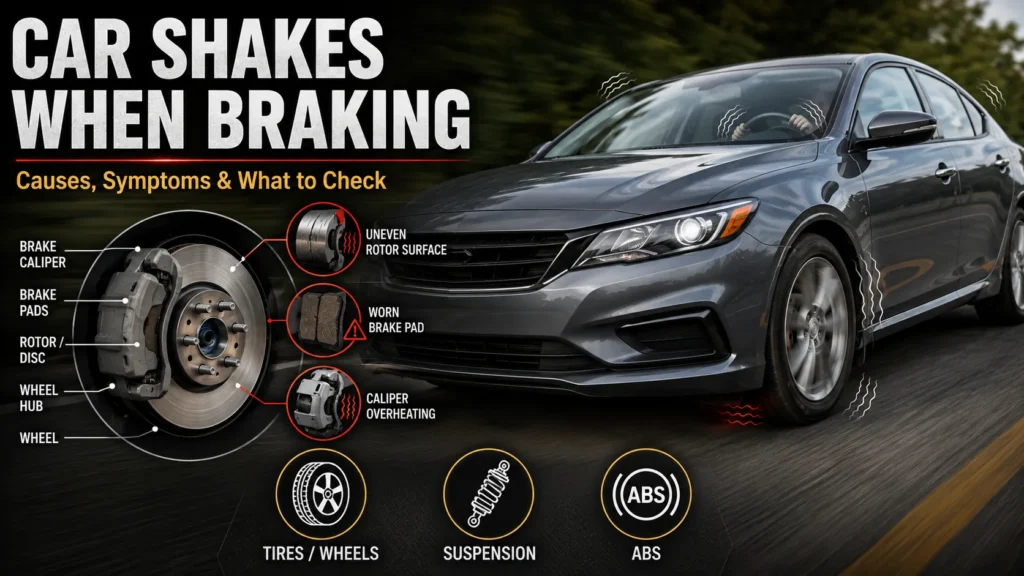
Warped Brake Rotors
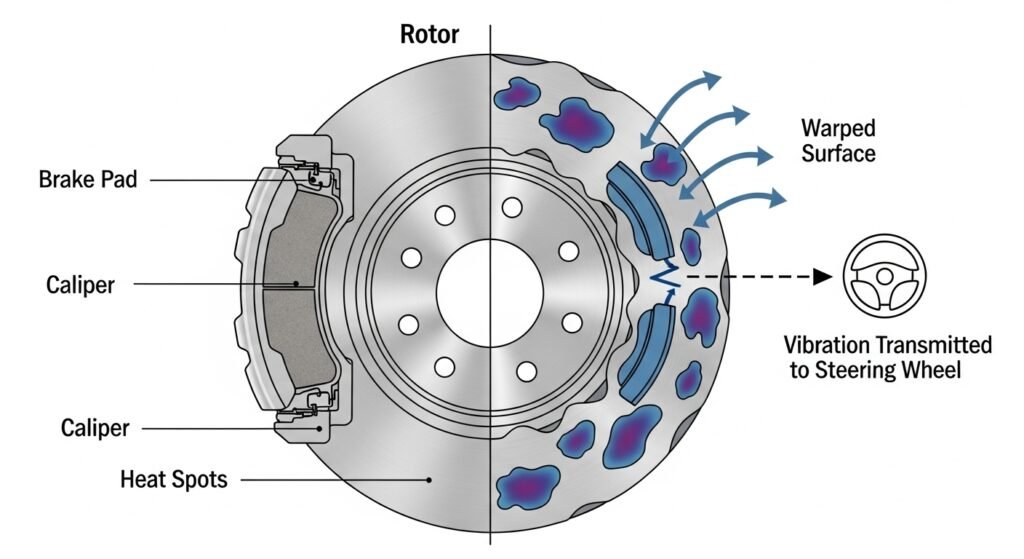
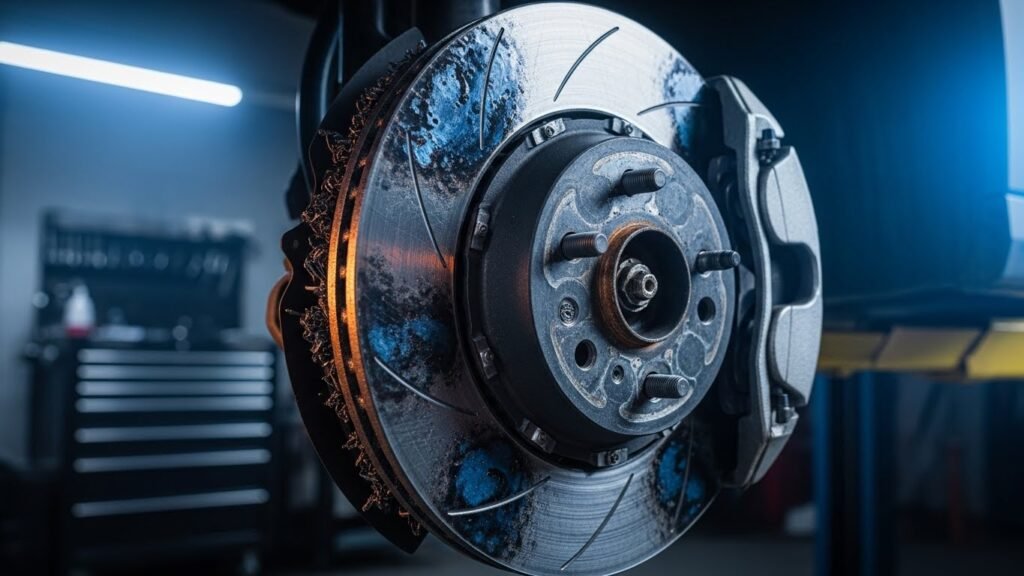
- Uneven surfaces develop on the rotors due to extreme heat.
- Pulsing sensations are felt through the pedal as the pads skip over the bumps.
- Steering wheel shake is a big clue that your front rotors are warped.
- Resurfacing or replacing the rotors will restore a smooth stop.
Rotors are big metal discs that need to stay perfectly flat. If they get too hot, they can bend or develop thin spots. This makes braking feel very bumpy and uncomfortable. It can also vibrate other parts of your car loose over time. Fix these brake issues to keep your ride smooth.
Lateral Runout
- Improper installation of the rotor can cause it to wobble as it spins.
- Hub issues like dirt or rust behind the rotor prevent a flat fit.
- Rhythmic vibration happens every time the wheel makes a full turn.
- Re-indexing the rotor involves moving it to a better position on the hub.
Sometimes the rotor itself is fine, but it isn’t sitting right. This wobble is called runout and it feels just like a warped rotor. Mechanics use special tools to measure this tiny movement. Getting the rotor perfectly centered is key for a quiet ride. It is a common fix for many vibration-related brake issues.
Soft, Spongy, or Low Brake Pedal
Air in the Hydraulic Lines
- Trapped air is the enemy because air compresses while fluid does not.
- Mushy pedal feel happens when the air bubbles squish under pressure.
- Floorboard travel is when the pedal goes way too deep before the car stops.
- Brake bleeding is the process used to push all the air out of the lines.
Your brakes work on a closed hydraulic system. If air gets in, the whole system loses its strength. It feels like you are stepping on a sponge instead of a solid pedal. This is a major safety risk that needs a pro to look at it. Never drive with these kinds of brake issues.
Master Cylinder Failure
- Internal seals can wear out and let fluid leak past the piston.
- Sinking pedal is the classic sign when you are holding the brakes at a light.
- Loss of pressure means you might not have enough power for a panic stop.
- Full replacement of the master cylinder is usually required for a safe fix.
The master cylinder is the heart of your braking system. It creates the pressure that moves all the other parts. If it fails, your car won’t stop correctly no matter how hard you push. It is one of the most critical parts to keep in good shape. Catching this avoids total brake failure down the road.
Hard or Stiff Brake Pedal
Brake Booster Malfunction
- Power assist is provided by the booster so you don’t have to push so hard.
- Diaphragm failure inside the booster stops it from helping you.
- Extreme effort is needed to slow the car down even a little bit.
- Testing vacuum is the first step a mechanic takes to find the problem.
If your brake pedal feels like a brick, the booster is likely dead. It makes driving very tiring and much more dangerous. You might think you can just push harder, but in an emergency, it won’t be enough. This is a common part of many serious brake issues.
Vacuum Hose Leaks
- Cracked hoses can prevent the vacuum from reaching the booster.
- Hissing sounds under the dashboard often signal a air leak.
- Stiff pedal feel happens because the booster isn’t getting the “fuel” it needs.
- New hoses are a cheap and easy way to restore your power brakes.
The booster relies on a vacuum from the engine to work. If the rubber hose is leaking, the booster becomes useless. These hoses get old and crack just like your tires do. It is a simple fix that solves a very scary problem. Always check the easy stuff first when dealing with brake issues.
Vehicle Pulling to One Side
Seized or Stuck Caliper
- Corrosion or dirt can cause the metal piston to get stuck.
- Uneven pressure happens because one wheel is braking harder than the others.
- Veering sensation occurs when the car pulls toward the side that is working.
- Caliper replacement is the standard way to fix a seized unit.
A caliper is like a clamp that squeezes the pads against the rotor. If it gets stuck, it can either stay “on” or never turn “on” at all. This makes the car unstable when you try to stop. It can be especially scary in the rain or on ice. Don’t let these brake issues throw you off the road.
Collapsed Brake Hose
- Internal breakdown of the rubber can create a flap that acts as a valve.
- Fluid blockage prevents the pressure from releasing once you let go.
- Constant drag on one wheel causes heat and pulling to one side.
- Rubber line replacement is necessary to get the fluid flowing both ways.
Brake hoses look fine on the outside but can rot on the inside. This is a “silent” problem that is hard to see with your eyes. If your car pulls after you let go of the pedal, this might be why. It is a tricky part of diagnosing complex brake issues.
Dashboard Warning Lights

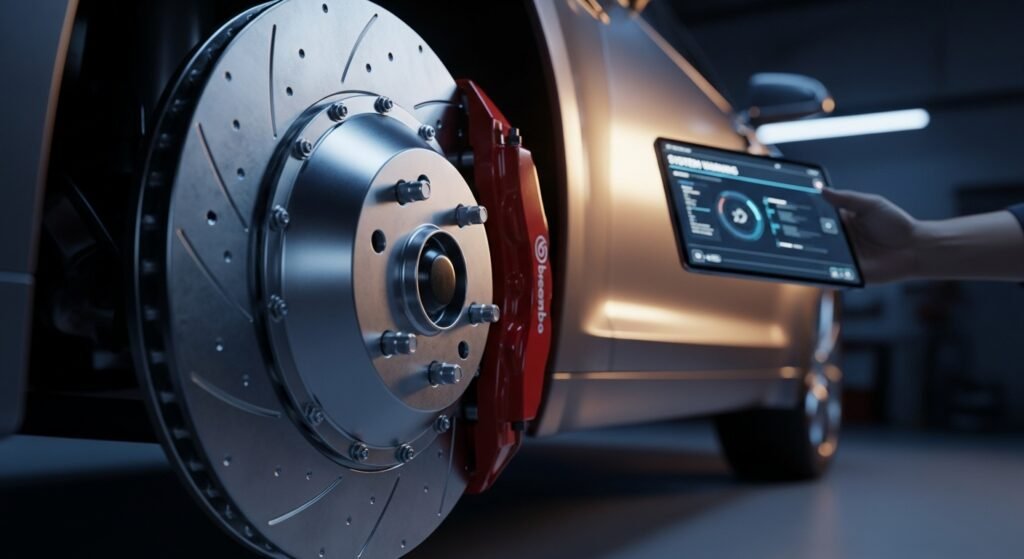
ABS (Anti-lock Braking System) Indicator
- Wheel speed sensors can get dirty or break and trigger the light.
- ABS module failure means your tires might lock up in a skid.
- Normal braking usually still works, but the safety backup is gone.
- Diagnostic scans tell the mechanic exactly which sensor is acting up.
The ABS light is a warning that your computer found a problem. It is there to keep you from sliding in the rain or snow. While you can still stop, you won’t have that extra layer of safety. It’s best to fix these brake issues before the next big storm. Safety is always the top priority.
Brake System Warning Light
- Low brake fluid is the most common reason this light comes on.
- Parking brake being left on will also make the light stay lit.
- Hydraulic pressure loss is a major danger that the light is trying to signal.
- Fluid top-off might help, but you must find out where the leak is.
If you see a red brake light, pull over as soon as it is safe. This light often means your fluid is dangerously low. If the fluid runs out, your brakes will stop working completely. It is the most urgent of all the brake issues you might see. Check your reservoir immediately to see what’s going on.
Burning Smells and Overheating
Overheated Brake Components
- Riding the brakes down a long hill generates way too much heat.
- Acrid smell that is very sharp and chemical-like is a dead giveaway.
- Visible smoke might even come out from behind your wheels.
- Cooling down is the first thing you should do if you smell burning.
Brakes work by turning movement into heat. But if they get too hot, they stop working. This is why you should use your engine to slow down on mountain roads. If you smell that burning scent, your brakes are at their limit. Overheating is a temporary but very dangerous phase of brake issues.
Friction Material Failure
- Brake fade happens when the pads are so hot they can’t grip anymore.
- Poor quality pads are more likely to fail under heavy stress.
- Loss of control can happen if you need to stop suddenly and can’t.
- Upgrading pads to ceramic or high-performance types can help.
Cheap pads might save money now but can fail when you need them most. High-quality pads are designed to handle more heat without fading. If you do a lot of city driving or towing, get the good stuff. It is a smart way to avoid heat-related brake issues.
Dragging or “Heavy” Vehicle Feel
Parking Brake Malfunction
- Rusted cables can get stuck and keep the rear brakes applied.
- Frozen linkages are common in cold climates where road salt is used.
- Sluggish feeling makes it seem like your engine has lost power.
- Lubrication or replacement of the cables will set your wheels free.
The parking brake is a separate system that can also fail. If it doesn’t release all the way, you are basically driving with the brakes on. This wears out your rear pads very fast and kills your gas mileage. It is one of the more annoying brake issues to deal with in the winter.
Changes in Stopping Distance
Brake Fluid Contamination
- Moisture absorption happens because brake fluid naturally pulls water from the air.
- Lower boiling point means the fluid can turn into gas when it gets hot.
- Internal corrosion starts to eat away at your metal brake lines from the inside.
- Fluid flush every two years keeps the system clean and dry.
Water is the enemy of your brake fluid. Over time, your fluid turns dark and gets “dirty” with moisture. This makes your brakes feel less responsive. A simple fluid change can make an old car feel brand new again. It is an often-forgotten part of solving brake issues.
Fluid Leaks Under the Vehicle
Compromised Brake Lines
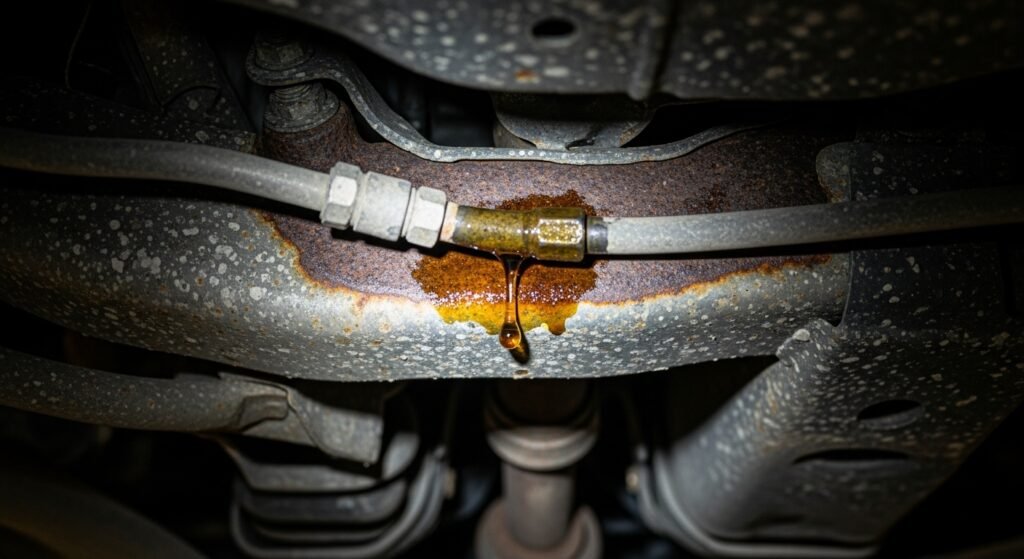
- Steel line rust is a major problem in states that use road salt.
- Amber fluid puddles on your driveway are a sign of a serious leak.
- Slippery texture is how you can tell brake fluid from just plain water.
- New lines must be installed immediately to restore safety.
Your brake lines are the veins of the system. If they leak, the pressure is gone, and so are your brakes. Never try to drive a car that is leaking brake fluid. This leads to total brake failure faster than almost anything else. It is the most critical of all the brake issues to fix.
Advanced Modern Braking Issues
Electronic Parking Brake (EPB) Failure
- Actuator motors can burn out or get stuck due to road grime.
- Software glitches sometimes require a computer reset to fix.
- Dashboard switch might not respond when you try to park.
- Diagnostic reset by a pro is often the only way to get it moving again.
Modern cars use buttons instead of levers for the parking brake. While cool, these electronic systems have their own brake issues. A dead battery can even leave your parking brake stuck on. It is important to know how to manually release it in an emergency.
Regenerative Braking Issues in Hybrids/EVs
- Transition sensors can fail when switching between the motor and the pads.
- Jerky sensation happens if the two systems don’t work together smoothly.
- Lurching at low speeds is a common complaint for hybrid owners.
- Software updates from the dealer often solve these computer-based problems.
Electric cars use the motor to slow down and save energy. This is great, but it can feel weird if the software is buggy. If your EV stops in a weird way, it might be a computer issue rather than a physical part. These are the new types of brake issues we see today.
Choosing the Right Components for Your Driving Style

| Pad Type | Best For | Pros | Cons |
| Semi-Metallic | Towing / Racing | Handles extreme heat | Noisy, lots of dust |
| Ceramic | Daily Driving | Super quiet, clean wheels | Expensive, not for heavy loads |
| Organic | Light Driving | Very cheap, soft feel | Wears out very fast |
Picking the right pads can change how your car feels every day. If you hate dirty wheels, go with ceramic. If you pull a heavy trailer, stick with semi-metallic. Matching the part to your needs helps prevent many common brake issues.
Drilled vs. Slotted vs. Blank Rotors
- Drilled rotors have holes to help heat and water escape quickly.
- Slotted rotors use grooves to scrape away gas and dust from the pads.
- Blank rotors are the solid standard discs found on most cars.
- Durability is highest with blanks, which is why most people use them.
For most drivers, standard blank rotors are the best choice. They last a long time and don’t crack as easily as drilled ones. Unless you are racing on a track, you don’t need the fancy stuff. Keep it simple to avoid unnecessary brake issues.
Environmental and Seasonal Impact on Brakes
Road Salt and Winter Corrosion
- Salt damage eats away at the metal parts of your brakes.
- Seized pins happen when the lubricant dries out and rust takes over.
- Prevention means washing your car’s belly often during the winter.
Winter is the hardest season for your car. Salt stays on the brakes and causes them to stick. A quick spray at the car wash can save you hundreds in repairs. It is the best way to fight off winter-related brake issues.
High Humidity and Brake Fluid Health
- Moisture buildup happens faster in wet or humid areas.
- Internal rust can form in the lines even if the car looks clean.
If you live near the coast, you need to change your brake fluid more often. The salty, humid air is tough on everything. Keeping the fluid fresh prevents the system from rotting from the inside out. This is a key step in managing long-term brake issues.
Critical Maintenance and Inspection Standards
The 1/4 Inch Rule for Brake Pads

- Visual check involves looking through your wheel spokes at the pads.
- Thickness measurement of 1/4 inch (6.4 mm) is the “danger zone”.
- Flashlight use helps you see the pads clearly without taking the wheel off.
You can check your own pads in about five minutes. If they look thinner than a pencil, it is time for new ones. Doing this once a month can save you from a huge headache. It is the easiest way to stay on top of your brake issues.
Rotor Lifespan and Thickness
- Minimum discard is a number stamped on the edge of every rotor.
- Resurfacing can save money if the rotor is still thick enough.
- Replacement is safer if the rotor has deep grooves or is too thin.
Rotors don’t last forever. Every time you stop, a tiny bit of metal wears away. Eventually, they get too thin to handle the heat. A mechanic will measure them to see if they are still safe. Proper rotors are a must for avoiding serious brake issues.
Summary of Service Intervals
- Brake pads usually need to be swapped every 25,000 to 65,000 miles.
- Rotors can last between 30,000 and 70,000 miles depending on how you drive.
- City driving wears out brakes much faster than highway cruising.
Everyone drives differently, so these numbers are just a guide. If you are aggressive with the pedal, you will be in the shop sooner. Checking your brakes at every oil change is a great habit. It’s the best way to catch brake issues early.
Conclusion: The Importance of Prompt Action
Don’t let a small sound turn into a big accident. Ignoring weird noises or feelings only makes things worse. A set of pads is cheap, but a new set of rotors and calipers is not. Taking care of your brakes saves you money and keeps you safe.
Use this guide to stay informed about your car’s health. You don’t have to be an expert, just an observant driver. If something feels off, trust your gut and get a pro to look at it. There is no such thing as being too safe when it comes to your brakes.
Keep your ride running smooth and stopping fast. Regular maintenance is the secret to a long-lasting car. Stay ahead of those brake issues and enjoy the peace of mind that comes with a safe vehicle.
| Brake Issues | Common Symptoms | Potential Causes | Recommended Solution |
| Worn Friction Material | High-pitched squealing or chirping | Wear indicator shim touching rotor | Replace brake pads immediately |
| Total Pad Failure | Harsh metal grinding sounds | Friction material completely gone | Replace pads and rotors |
| Overheated Pads | Squealing and reduced stopping power | Glazed pad surface from high heat | Sand or replace brake pads |
| Warped Rotors | Pulsating pedal or shaking steering wheel | Thin spots or heat-warped discs | Resurface or replace rotors |
| Air Contamination | Spongy or soft brake pedal | Air bubbles trapped in hydraulic lines | Bleed the braking system |
| Hydraulic Failure | Pedal sinks slowly to the floorboard | Failing master cylinder internal seals | Replace master cylinder |
| Booster Failure | Hard pedal that is difficult to press | Failed vacuum diaphragm or check valve | Replace brake booster |
| Vacuum Leak | Hissing sound and stiff brake pedal | Cracked or loose vacuum supply hose | Replace vacuum hoses |
| Seized Caliper | Vehicle pulls to one side during braking | Rust or dirt stuck in caliper piston | Replace or rebuild caliper |
| Clogged Hose | Vehicle pulls or brakes drag after release | Internal collapse of rubber brake line | Replace flexible brake hoses |
| ABS Malfunction | ABS light stays on dashboard | Dirty or broken wheel speed sensor | Clean or replace ABS sensors |
| Low Hydraulic Pressure | Brake warning light on dashboard | Low brake fluid or system leak | Top off fluid and fix leaks |
| Brake Fade | Burning smell and loss of stopping power | Overheated pads or old brake fluid | Pull over to cool; flush fluid |
| Stuck Parking Brake | Vehicle feels heavy or sluggish | Rusted parking brake cables | Lubricate or replace cables |
| Fluid Degradation | Increased stopping distance | Moisture-contaminated brake fluid | Perform a full brake fluid flush |
| Line Corrosion | Puddles of amber fluid under the car | Rusted steel lines or punctured hoses | Replace damaged brake lines |
| Electronic Failure | Parking brake won’t engage/disengage | EPB actuator or software glitch | Electronic reset or motor swap |
| Regen Blending | Jerky stops in Hybrid or EV models | Sensor sync issues in regenerative system | Dealer software update |
| Debris Trap | Constant scraping or ticking noise | Rocks or rust scale lodged in assembly | Clean brake components |
| Lateral Runout | Rhythmic vibration while driving | Improperly seated or dirty rotor hub | Clean hub and re-index rotor |
Frequently Asked Questions About Brake Issues
What is the difference between a brake flush and a brake bleed?
A brake bleed focuses on removing air bubbles from the hydraulic lines to restore a firm pedal. A brake flush is more comprehensive, involving the removal of all old, dirty brake fluid and replacing it with fresh fluid. While bleeding is for performance, a flush is for long-term system health.
Why do my brakes smell like rotten eggs?
A sulfur or rotten egg smell usually isn’t caused by the braking system directly. It often points to a failing catalytic converter or a battery issue. However, if the smell is accompanied by a dragging sensation, a seized caliper might be overheating the wheel bearing grease.
Is it safe to use brake cleaner on all parts of the car?
Brake cleaner is a powerful solvent designed specifically for metal hydraulic parts and friction surfaces. You should never spray it on rubber hoses, plastic sensors, or painted surfaces. It can cause rubber to swell or crack, leading to even more severe brake issues.
Can a bad wheel bearing mimic brake vibrations?
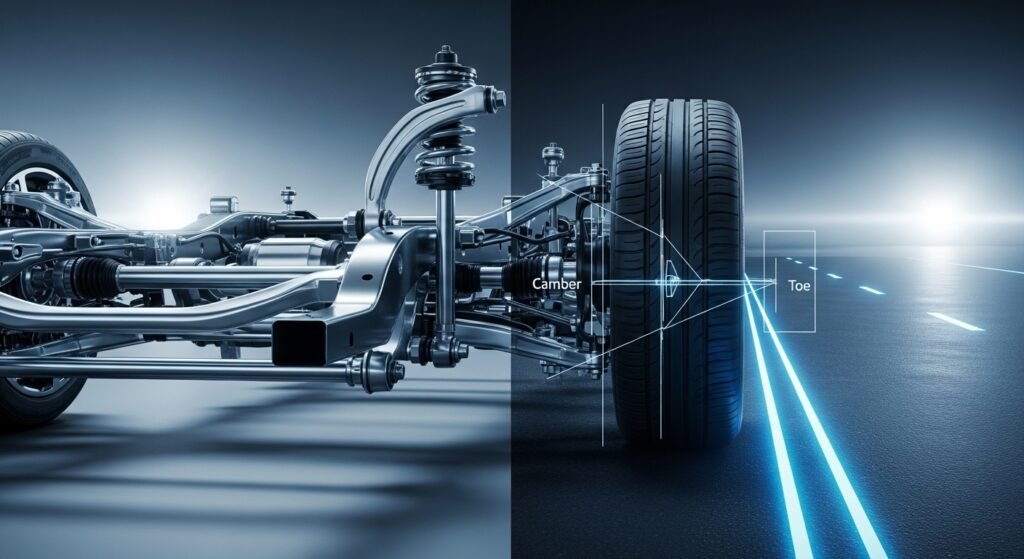
Yes, a worn wheel bearing can cause the wheel to wobble, which feels very similar to warped rotors. If the vibration happens even when you aren’t touching the brake pedal, it is more likely a bearing or an alignment issue than a rotor problem.
Does cold weather affect my stopping distance?
Cold weather can make the rubber in your tires harder, which reduces grip and increases stopping distance. Additionally, if moisture has contaminated your brake fluid, it can freeze or thicken in the lines. This makes the pedal feel stiff until the engine bay warms up.
Why do my brakes only squeak in reverse?
Squeaking in reverse is often caused by the brake pads shifting slightly in the caliper bracket. Over time, pads develop a wear pattern for forward movement. When you reverse, they press against the bracket in a new way, causing a temporary vibration or “moan.”
Can I drive with an ABS light on if the car stops fine?
You can technically drive, but you should not. Without ABS, your wheels can lock up during a sudden stop, causing you to skid and lose steering control. It is a safety feature that exists for emergencies, and driving without it is a major risk.
What causes a brake pedal to pulsate at low speeds only?
If you feel a pulse just as you come to a complete stop, it is often a sign of a dirty or faulty ABS wheel speed sensor. The computer gets a “false” reading that a wheel is locking up and triggers the anti-lock system unnecessarily.
Should I always replace both front or both rear pads at the same time?
Yes, you must always replace pads in “axle sets.” If you only replace the pads on one side, the car will pull violently to the side with the newer, grippier pads. This ensures balanced stopping power and keeps the vehicle stable.
Why does my brake fluid look dark or black?
Brake fluid starts as a clear or light amber color. As it age, it absorbs moisture and the internal rubber seals of the system begin to break down. The dark color is a mix of water contamination and tiny particles of degraded rubber.
Can low tire pressure trigger a brake warning light?
On many modern cars, the Traction Control and ABS systems are linked. If a tire is very low on air, it spins at a different speed than the others. The computer might interpret this as a sensor failure and turn on the brake-related warning lights.
What is “bedding in” new brakes?
Bedding in is a process of performing several controlled stops after installing new pads and rotors. This transfers a thin, even layer of friction material from the pads onto the rotors. It helps prevent future squealing and ensures the best stopping performance.
Does my driving style affect how long my brakes last?
Drivers who “ride” the pedal or wait until the last second to stop will experience brake issues much sooner. Using engine braking and coasting toward red lights can double the life of your pads. Smoothness is the key to longevity.
Can a faulty engine sensor cause brake problems?
On cars with vacuum-assisted boosters, a vacuum leak anywhere in the engine can affect the brakes. If your engine is idling poorly due to a bad sensor, it might not provide enough vacuum to the booster, making the pedal hard to press.
What is the “copper test” for brake fluid?
Mechanics use copper test strips to check for internal corrosion in the brake lines. When the protective coating inside the lines breaks down, copper leathers into the fluid. High copper levels mean it is time for an immediate fluid flush.
Why do my brakes make a “clunk” sound when I first start driving?
This is common after rain or a car wash. A thin layer of surface rust can bond the pad to the rotor overnight. The clunk is simply the sound of the pad breaking free from that light rust when you first move the car.
Is it normal for new brakes to smell for the first few miles?
Yes, a light “cooking” smell is normal for the first 10 to 20 miles. This is the resin in the new friction material curing as it gets hot for the first time. However, if you see smoke or the smell is overwhelming, pull over.
Can I mix different types of brake fluid?
You should never mix DOT 3, 4, or 5 fluid unless your owner’s manual says it is okay. DOT 5 is silicone-based and will react poorly with the glycol-based DOT 3 and 4. Mixing them can turn your brake fluid into a gel that clogs the system.
Why does my steering wheel shake only when I am braking downhill?
Braking downhill puts the most stress and heat on your front rotors. Rotors that seem fine on flat ground can expand and show their “warped” nature when they get extra hot on a descent. It is a classic sign of early rotor failure.
Do rear drum brakes require different maintenance than disc brakes?
Drum brakes are more complex because they have springs and adjusters inside. They need to be cleaned and adjusted periodically to ensure they are contributing to the stop. If the rear drums aren’t adjusted, the front brakes will wear out twice as fast.