Skip to content
It is a total bummer when you are ready to roll but your ride stays silent. You turn the key and nothing happens. You start asking yourself, is my car battery dead or just having a bad day? Most folks do not think about their battery until it quits on them. This guide will help you figure out what is going wrong under the hood. We will look at the signs of a dying battery and how to fix them. You will learn how to save cash by doing your own checks. Let us dive into the world of car juice and get you back on the road.
Understanding Car Battery Health and Functionality
Your car battery is like the heart of your vehicle’s electrical system. It does way more than just get the motor spinning when you crank the ignition. It keeps the power steady so your car’s computer does not freak out. Think of it as a big bucket of energy that stays ready for action. Without it, your high-tech ride is just a heavy piece of metal sitting in the driveway.
- The Role of the Battery: It provides the big zap needed to start the engine. It also powers the lights and radio when the engine is off. The battery acts as a filter for messy electrical spikes from the alternator. It keeps the clock and computer memory alive even when you sleep.
- The Battery vs. The Alternator: The battery is like a storage tank for electricity. The alternator is like a small power plant that makes electricity while you drive. If the battery starts the car but it dies while driving, the alternator is likely the culprit. If it will not start at all, the battery is usually the one to blame.
- Why Battery Health Matters: A weak battery makes the starter motor work way harder than it should. This extra stress can burn out the starter and cost you more money. A bad battery also makes the alternator run at full blast all the time. Keeping the battery healthy protects all the expensive parts under your hood.
Discharged vs. Dead: Knowing the Critical Difference
One of the biggest questions is: is my car battery dead for real or just out of juice? There is a huge difference between a battery that is “empty” and one that is “broken”. If it is just discharged, you can usually save it. If it is dead, it is trash and you need a new one. Understanding this can save you from buying a new battery when you do not need to.
Defining a Discharged (Low) Battery

A discharged battery is just a battery that lost its charge. It is like a phone that hit zero percent battery life. The internal parts are still good and ready to work. You just need to put the energy back into the cells.
- Reversibility: You can bring a discharged battery back to life with a good charge.
- Common Causes: Leaving the dome light on all night is a classic mistake. Taking too many short trips prevents the alternator from doing its job. A small electrical leak can also drain the juice while the car sits.
- The Solution: A jump start from a friend can get you going again. A slow charger or “trickle charger” is the best way to fill it back up safely. Once it is full, it should work like new.
Defining a Dead (Failed) Battery
A dead battery is a whole different animal. This means the chemical stuff inside the battery has stopped working. No matter how much you charge it, it will not hold onto the power. It is basically a paperweight at this point.
- Chemical Exhaustion: The lead plates inside get covered in hard stuff that stops the reaction.
- Irreversibility: You cannot fix the internal damage of a dead battery. It might take a jump start, but it will leave you stranded again very soon.
- The Solution: You have to go to the store and buy a replacement. Driving on a dead battery is a recipe for a bad day.
Visible Physical Signs of Battery Failure
Sometimes you do not even need tools to know is my car battery dead. You can just use your eyes and nose to spot trouble. Pop the hood and take a good look at that black box. If it looks weird or smells funky, you have your answer.
Swelling and Bloating of the Battery Case

A battery should have flat, straight sides. If it looks like it ate too much and is bulging out, that is a bad sign. This usually means something is wrong with the chemistry inside.
- Gas Accumulation: Hydrogen gas can build up inside when things get too hot.
- Overcharging Issues: If your alternator is pushing too much power, it can cook the battery. This makes the case swell up like a balloon.
- Temperature Impact: Hot summers are actually tougher on batteries than cold winters. The heat warps the parts inside and ruins the case.
Corrosion and Buildup at the Terminals

Look at the metal posts where the wires connect. If you see stuff that looks like blue or white sugar, you have corrosion. This gunk acts like a wall that stops electricity from moving.
- Identifying Corrosion: It looks like crusty, powdery stuff on the metal bits.
- Electrical Resistance: The crust makes it hard for the power to get to the starter. This can make a good battery act like it is dead.
- Cleaning vs. Failure: Sometimes cleaning the gunk off fixes everything. But if the metal is eaten away, the battery might be done for.
The “Rotten Egg” Battery Odor
If you walk near the front of your car and it smells like a sewer, watch out. Batteries use acid to work, and that acid can get smelly when things go wrong.
- Sulfuric Acid Leaks: A leaking battery smells like rotten eggs because of the sulfur.
- Venting Issues: When a battery is dying, it might vent gas that is dangerous to breathe. If you smell eggs, do not ignore it.
Performance-Based Symptoms of a Dying Battery
Your car will often try to tell you something is wrong before it quits for good. Pay attention to how the car acts when you start it up. These little clues can answer the question, is my car battery dead?
Engine Cranking and Starting Issues
The way the engine sounds when you turn the key is a huge hint. It should sound sharp and fast, not tired and slow.
- The Slow Crank: If the engine sounds like it is struggling to turn, the battery is likely low. It sounds like it is groaning before it finally starts.
- The Rapid Clicking Sound: This means the battery has enough power to move a small switch but not the big motor. It sounds like a machine gun clicking under the hood.
- Total Silence/No Response: This is the worst sign. It means the battery is so dead it cannot even light up a single bulb.
Dimming and Flickering Electrical Components
The battery is the boss of all things electric in your car. If the boss is tired, the whole crew suffers. Check your lights and gadgets for weird behavior.
- Headlight Performance: Do your headlights look yellow and dim when you are parked?. If they get bright when you hit the gas, the battery is definitely weak.
- Interior Lighting: The dome lights should be bright as soon as you open the door. If they flicker or look faint, your juice is running low.
- Sluggish Power Accessories: Your windows should zip up and down. If they move like they are stuck in molasses, the battery is struggling.
Malfunctioning Electronics and Infotainment
Modern cars are like computers on wheels. They need steady power to stay happy. If the voltage drops, the computer starts acting crazy.
- Radio and Bluetooth Instability: Your radio might reset itself or lose your favorite stations. It might also take a long time to turn on.
- Dashboard Warning Lights: A weak battery can trick the car into thinking other parts are broken. You might see an ABS or Airbag light pop up for no reason.
Diagnostic Testing Procedures
If you want to be 100% sure about is my car battery dead, you need to test it. You do not always need a mechanic to do this. You can use some simple tools or tricks to find out the truth.
The At-Home Multimeter Test

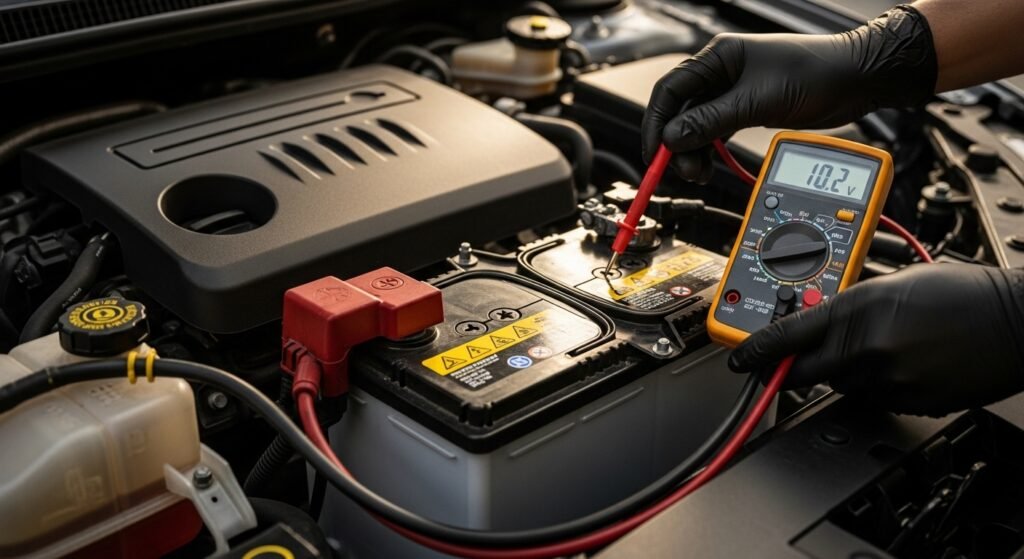
A multimeter is a cheap tool that measures electrical pressure, called voltage. It is the best way to see what is happening inside the battery.
- Voltage Benchmarks: A fully charged battery should show 12.6 volts. If it shows 12.2 volts, it is only half full. If it shows 10 volts or less, it likely has a dead cell.
- Testing Under Load: Have a friend start the car while you watch the meter. If the voltage drops below 10 volts during the crank, the battery is weak.
The Headlight Stress Test
This is a quick way to test the battery without any tools. Turn on your headlights while the engine is off.
- Manual Diagnosis: Watch the lights as you try to start the engine. If the lights go out or get very dim, the battery cannot handle the load. If they stay bright but the car won’t start, you might have a bad starter motor instead.
Professional Load Testing
Sometimes a battery looks good on a voltmeter but still fails. This is where a professional load test comes in.
- Cold Cranking Amps (CCA): This test checks if the battery can deliver a huge burst of power in the cold. A shop uses a big machine to simulate a hard start. This is the only way to be totally sure a battery is healthy.
Factors That Accelerate Battery Decay
Batteries do not last forever. Knowing why they fail can help you guess is my car battery dead. Some things make them die faster than others.
The Impact of Vehicle Age
Just like people, batteries get old and tired. You cannot stop the clock on a chemical reaction.
- The 3 to 5 Year Rule: Most car batteries are designed to last about 3 to 5 years. If yours is 4 years old, it is on its last legs. Check the sticker on the top of the battery to see when it was made.
- Manufacturing Quality: Cheap batteries usually die faster than premium ones. AGM batteries last longer than standard lead-acid ones but cost more.
Environmental and Driving Habits

Where you live and how you drive changes everything. Your battery is sensitive to the world around it.
- Extreme Temperatures: Heat is the silent killer. It causes the liquid inside to evaporate. While batteries often fail in the winter, the damage was actually done during the hot summer.
- The “Short Trip” Syndrome: If you only drive 5 minutes to the store, the battery never gets full. The alternator needs time to put back the energy you used to start the car. Constant short trips will kill a battery in a year or two.
Survival and Maintenance Best Practices
You can keep your battery happy with a little bit of love. Maintenance is much cheaper than a tow truck. Here is how to keep the juice flowing.
Jump-Starting Etiquette and Safety
If your battery is just discharged, a jump start is your best friend. But you have to do it right so you don’t blow up any electronics.
- The “Fail-to-Hold” Test: After you jump the car, let it run for 20 minutes. Turn it off and try to start it again. If it won’t start, the battery is dead and cannot hold the charge you just gave it.
Routine Maintenance for Longevity

A little cleaning goes a long way. Check your battery every time you change your oil.
- Ensuring Secure Connections: Make sure the cables cannot wiggle on the posts. Loose cables cause sparks and bad starting.
- Terminal Cleaning: Use a mix of baking soda and water to scrub off the corrosion. A clean connection lets the power flow easily.
- Regular Battery Recharging: If you don’t drive your car for a week, use a trickle charger. It keeps the battery topped off so it doesn’t get “lazy” and die.
Final Steps: When to Seek Professional Assistance
Sometimes you just need to call in the pros. If you are still asking is my car battery dead after trying everything, head to a shop.
- When to Recharge vs. When to Replace: If the battery is under 3 years old, try a slow charge. If it is older than 5, just replace it and save yourself the headache.
- The Importance of Professional Installation: New cars often need to be “told” they have a new battery via a computer. A pro can make sure the car’s charging system knows exactly how to treat the new battery.
- Safe Battery Disposal: Never throw a battery in the trash! They are full of lead and acid. Most shops will take your old one and give you a discount on the new one. This is called a “core charge.”
| Battery Status | Voltage Reading | Action Needed |
| Healthy | 12.6V | None |
| Discharged | 12.2V – 12.4V | Recharge |
| Drained | 12.0V | Deep Charge |
| Dead | Below 10.5V | Replace |
Understanding your car’s electrical health doesn’t have to be a mystery. By watching for the signs of swelling, listening for slow cranks, and checking for that rotten egg smell, you can stay ahead of the game. Next time you wonder if my car battery is dead, you will have the tools and knowledge to find out for yourself. Stay charged and drive safe!
FAQs: Everything Else You Need to Know About Your Car Battery
While the signs of a dead battery are clear, many car owners have specific questions about unusual situations, modern technology, and safety. Here are the most common questions related to battery health that will help you become an expert on your vehicle’s power system.
Can a bad battery cause my car to jerk while driving?
While a battery is mostly for starting, a battery with an internal short can cause electrical noise. This interferes with the engine control module and sensors. This interference can lead to engine hesitations or a jerking feeling because the computer is getting “dirty” power.
Will a dead battery cause my car alarm to go off?
Yes, this is a very common and frustrating issue. When the voltage drops below a certain level, the alarm system’s sensors can get confused and trigger the siren. It is the car’s way of thinking someone is tampering with the electrical system.
Does using the heater or AC drain the battery faster?
If the engine is running, the alternator handles the load of the heater and AC. However, if the engine is off, using the blower motor for heat or AC will drain a healthy battery in less than an hour. The AC compressor itself doesn’t run without the engine, but the fans use a lot of juice.
Can I jump start a car in the rain safely?
It is generally safe to jump start a car in the rain, as the 12-volt system isn’t high enough voltage to electrocute you through the water. However, you should try to keep the battery terminals as dry as possible to prevent sparks or poor connections. Always avoid letting the jumper cable clamps touch each other.
Why does my battery light stay on after I just bought a new battery?
If you see the battery icon on your dash with a brand new battery, the problem is likely your alternator. The light actually monitors the charging system, not just the battery. It means the new battery isn’t being recharged while you drive.
Is it okay to use a smaller battery than what the factory recommends?
You should never “size down” your battery. A smaller battery will have lower Cold Cranking Amps and won’t be able to handle the electrical load of your vehicle. This will lead to a very short lifespan and potential starting issues in cold weather.
Can a dead battery affect my car’s fuel economy?
Surprisingly, yes. When a battery is struggling to hold a charge, the alternator has to work overtime to keep it filled. This puts a constant mechanical load on the engine, which uses more gasoline. A healthy battery allows the alternator to “rest” more often.
How long can a car sit before the battery dies completely?
Most modern cars can sit for about two to three weeks before the battery gets too low to start the engine. This is because of “parasitic draw” from the clock, security system, and keyless entry sensors that stay on 24/7.
Does a car battery lose charge faster in the garage or on the street?
Temperature is the main factor here. A garage-kept car usually stays at a more stable temperature, which helps the battery last longer. Cars parked on the street face extreme heat and cold, which speeds up the chemical breakdown inside the battery.
Can I revive a dead battery with distilled water?
If you have a “serviceable” battery with removable caps and the fluid levels are low, adding distilled water can sometimes help. However, if the plates have been dry for too long, they are likely damaged beyond repair. Most modern batteries are “maintenance-free” and cannot be opened.
Why do my power locks click but won’t move when the battery is low?
The actuators that move your door locks require a quick, strong burst of amperage. When the battery is dying, it might have enough power for the dash lights but not enough “muscle” to physically move the locking mechanism, resulting in a clicking or humming sound.
Will a jump start damage my car’s computer?
There is always a small risk of a power surge when jump starting. To stay safe, always connect the cables in the correct order and never let the clamps touch. Using a portable jump starter pack is generally safer for the computer than jumping from another vehicle.
Can a bad battery cause my transmission to shift poorly?
Modern automatic transmissions use electronic solenoids to change gears. If the battery is weak and the voltage is fluctuating, these solenoids may not fire correctly. This can cause “hard shifts” or make the transmission feel like it is slipping.
What is a “parasitic draw” and how do I find it?
A parasitic draw is an electrical component like a glove box light or an aftermarket radio that stays on when the car is off. You can find it by using a multimeter to check the “milliamps” being pulled from the battery while the car is asleep.
Can I test my battery by removing the terminal while the engine is running?
Never do this on a modern car. This old-school trick can cause a massive voltage spike that can fry your car’s expensive Engine Control Unit (ECU). Use a multimeter or a battery tester instead.
Does a battery’s physical size tell you how powerful it is?
Not necessarily. Battery power is measured in Cold Cranking Amps (CCA) and Reserve Capacity (RC). Some small, high-density batteries (like AGM) can be much more powerful than larger, traditional lead-acid batteries.
Why does my battery die every time it gets below freezing?
Cold weather slows down the chemical reaction inside the battery. A battery that has 100% power at 80 degrees only has about 40% of its starting power at 0 degrees. If the battery was already weak, the cold is just the final blow.
Can a completely dead battery freeze and crack?
Yes. A fully charged battery has acid that acts like antifreeze. However, as a battery discharges, the acid turns into mostly water. This water can freeze at 32 degrees, expand, and crack the plastic case, making the battery dangerous.
What should I do if my battery starts leaking fluid?
Battery acid is highly corrosive and can eat through your car’s frame and wiring. If you see a leak, wear gloves and eye protection. Neutralize the spill with baking soda and water, and replace the battery immediately.
Why do some batteries have a “magic eye” green dot?
This is a built-in hydrometer that shows the state of charge in one of the battery cells. If it is green, that cell is good. If it is dark or clear, the battery needs a charge or is dead. However, it only monitors one cell, so the battery can still be bad even if the dot is green.