Skip to content
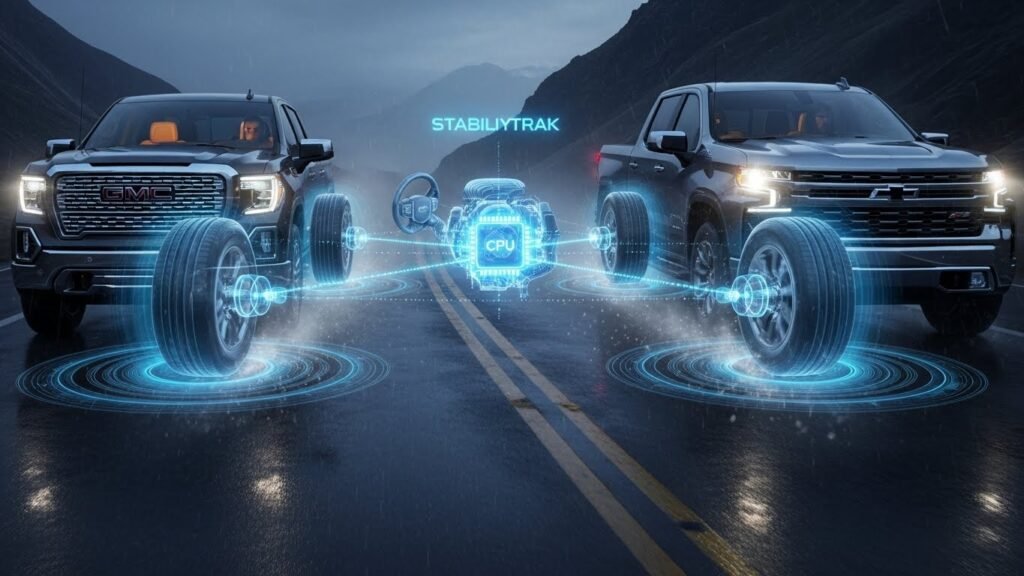
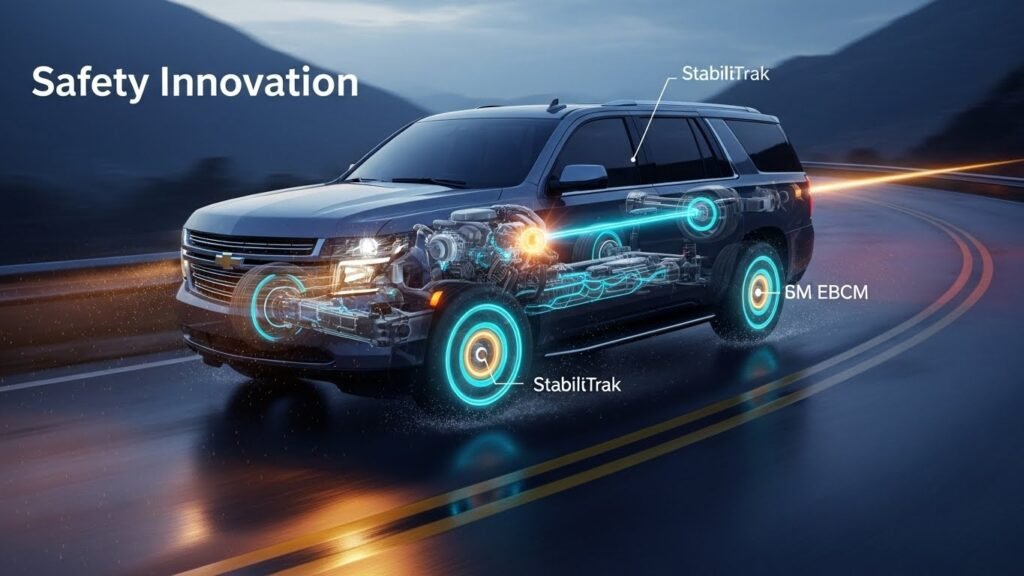
The automotive world is full of complicated terms that can sound like gibberish to the average driver. One of the most common but misunderstood terms is stabilitrak. If you drive a General Motors vehicle like a Chevy Silverado, a GMC Sierra, or a Cadillac Escalade, you have likely seen this name pop up on your dashboard or in your owner’s manual. It is not just a fancy marketing buzzword; it is a critical safety shield that works behind the scenes to keep you on the road when things get slippery. This guide will walk you through everything you need to know about this system, from how it works to how you can fix it when things go wrong.
Understanding StabiliTrak in GM Vehicles
Defining StabiliTrak is the first step to appreciating your vehicle’s safety. At its core, stabilitrak is a sophisticated electronic stability control system designed to help you maintain control in challenging conditions. It was developed to bridge the gap between human steering and the physical limits of the road. When you turn the wheel, you are telling the car where to go, and stabilitrak makes sure the car actually follows that path.
- GM’s Proprietary Tech: StabiliTrak is the official name for the stability control software used exclusively in General Motors vehicles.
- The Safety Shield: It acts as an invisible co-pilot that monitors your driving every single second you are on the move.
- A Standard Feature: Since the mid-2000s, this technology has become standard on almost every GM truck, SUV, and sedan.
The Core Technology behind the system is a blend of hardware sensors and high-speed software. It does not just wait for you to crash; it looks for the signs of a slide before you even feel it. By constantly reading data from different parts of the car, the computer can decide if it needs to step in and help.
- Millisecond Response: The system can process data and react in a fraction of a second, much faster than any human driver.
- Predictive Nature: It uses complex algorithms to predict where the car might slide and applies corrections to prevent it.
- Integration: It is not a standalone part but a network that talks to the engine, transmission, and brakes simultaneously.
Vehicle Compatibility is wide-reaching because GM committed to making this a baseline safety requirement. Whether you are driving a heavy-duty GMC Sierra or a compact Chevy Equinox, the logic remains the same.
- Trucks and SUVs: These vehicles have a higher center of gravity, making stabilitrak even more important for preventing rollovers.
- Modern Lineups: Every new model coming off the assembly line features the latest version of this software.
- Performance Models: Even high-performance cars like the Corvette use it, though they often have “Track” modes that allow for a bit more sliding before the system takes over.
The Evolution of GM Stability Systems shows how far we have come. The tech first appeared in the late 1990s on high-end Cadillacs. Back then, it was bulky and slow. Today, it is so seamless that you might not even realize it is working until you hit a patch of black ice and feel the car “tighten up” to stay straight.
What is Traction Control and How Does it Work?

The Relationship with ABS is the foundation of the whole system. You cannot have stabilitrak without an Anti-lock Braking System (ABS). While ABS prevents your brakes from locking up when you slam on them, traction control uses that same hardware to prevent your wheels from spinning when you hit the gas.
- Shared Components: Both systems use the same pump, valves, and fluid lines to control the brakes.
- Digital Handshake: When the sensors detect a problem, they send a signal to the ABS module to start pumping the brakes on a specific wheel.
- Efficiency: By using the existing ABS setup, GM saved weight and made the car safer without adding hundreds of extra parts.
Sensor Technology is the “eyes” of the stabilitrak system. There are speed sensors located at each wheel hub. These sensors watch how fast each tire is spinning. If one tire starts spinning way faster than the others, the computer knows you have lost grip on that corner of the car.
- Magnetic Pickups: The sensors often use magnets to track the rotation of a metal ring on the axle.
- High Precision: They can detect even a tiny difference in speed between the left and right tires.
- Harsh Environments: These sensors live right behind the wheels, so they are built to handle mud, salt, and water.
Independent Braking Force is the secret sauce of this tech. In the old days, if you hit the brakes, all four wheels slowed down. With stabilitrak, the car can brake just the front-left wheel or just the back-right wheel. This creates a “pivot” effect that pulls the car back into line.
- Targeted Intervention: By braking just one wheel, the system creates a force that counteracts a skid.
- Automatic Modulation: You do not have to touch the brake pedal; the car does it for you.
- Stability Restoration: This is often the difference between spinning into a ditch and staying in your lane.
Determining Driver Intent is how the car knows if you are actually in trouble. It looks at the steering wheel angle. If you have the wheel turned hard to the left, but the car is sliding straight ahead, the system knows there is a “mismatch” and jumps into action.
- Steering Logic: It compares where you are pointing the wheel with where the car is actually moving.
- Path Correction: If the two directions do not match, stabilitrak assumes you are losing control.
- Confidence Booster: This allows drivers to steer out of trouble with much more precision.
Primary Goal is simple: keep you alive. Whether it is preventing a collision or just helping you get up a snowy driveway, the system is there to minimize the human errors that lead to accidents.
The Technical Components of the StabiliTrak Network
The Electronic Control Unit (ECU) is the brain of the operation. It is a computer tucked away under the hood that takes in thousands of data points every second. It calculates the physics of your car’s movement and decides exactly how much brake pressure or engine power is needed to keep things stable.
- Main Processor: It handles the complex math required to balance a multi-ton vehicle on a slippery road.
- Communication Hub: It talks to the engine computer to tell it to “back off” the throttle if the tires are spinning too much.
- Error Logging: If a sensor fails, the ECU is what turns on that annoying light on your dash.
Yaw Rate Sensor is one of the coolest parts of the system. It measures “yaw,” which is just a fancy word for the car’s rotation. If the car starts to spin like a top, this sensor catches it immediately.
- Angular Velocity: It measures how fast the car is turning around its center point.
- Spin Detection: It can tell if the back end of the truck is trying to pass the front end (fishtailing).
- Critical Accuracy: If this sensor goes bad, the car might think it is spinning when it isn’t, which can lead to “phantom” braking.
Lateral Acceleration Sensor tracks “G-forces.” When you take a sharp turn, you feel yourself getting pushed to the side of your seat. This sensor measures that force. If you are cornering so hard that the tires are about to give up, this sensor tells stabilitrak to intervene.
- Side-to-Side Force: It monitors the centrifugal force acting on the vehicle during turns.
- Rollover Prevention: This is vital for tall SUVs to make sure they do not tip over during emergency swerves.
- Terrain Sensing: It helps the car understand if you are on a tilted road or a steep hill.
The Hydraulic Brake Booster is the muscle. Once the computer decides which wheel needs to slow down, it uses this booster to push fluid to that specific brake caliper.
- Power Source: It provides the high pressure needed to stop a wheel instantly.
- Valving System: A complex set of valves opens and closes to direct fluid exactly where it is needed.
- Seamless Operation: Most drivers will only hear a faint buzzing or clicking sound when this is working.
StabiliTrak vs. Electronic Stability Control (ESC)
Standard ESC vs. GM Engineering is a common point of confusion. While “ESC” is the generic name for this technology across the industry, stabilitrak is GM’s specific, highly-tuned version. It is like the difference between a generic soda and a brand-name one; they are similar, but the recipe is different.
- Custom Software: GM engineers spent years testing this system on tracks to make it feel natural to Chevy and GMC drivers.
- Heavier Standards: Because GM makes so many big trucks, their system is built to handle much heavier loads than the stability control in a small sedan.
- Brand Identity: StabiliTrak has become synonymous with GM’s “Safe and Secure” marketing.
Custom Calibration is why stabilitrak feels different in a Cadillac than it does in a Silverado. The system is programmed with the specific weight, height, and tire size of the vehicle it is in.
- Weight Dynamics: The computer knows how much weight is over the front tires versus the back.
- Brake Bias: It adjusts how hard it bites the brakes based on whether the truck is empty or loaded with gravel.
- Center of Gravity: The software is tuned to account for the “tippiness” of different models.
Operational Differences exist in how the system interacts with the driver. Some generic ESC systems can feel very intrusive, cutting your power so abruptly that it feels like the car died. StabiliTrak is designed to be smoother.
- Smooth Power Cuts: Instead of just killing the engine, it might just pull back a little bit of timing to reduce torque.
- Layered Support: It often works in stages, giving you a little help first and only getting aggressive if the situation gets worse.
- Driver Feedback: You might feel a slight vibration in the pedal or see a flashing light, but the goal is to keep you in control, not take it away entirely.
Synergy with Other GM Safety Features
Standard Tech Integration makes stabilitrak a team player. It does not work in a vacuum. For example, GM’s Teen Driver technology uses stabilitrak data to generate a “report card” for parents, showing if the system had to intervene because the teen was driving too aggressively.
- Teen Driver Mode: It tracks how many times stability control was triggered during a drive.
- Speed Limits: The system can be set to limit top speeds, and stabilitrak helps ensure those speeds are safe for the road conditions.
- Audio Controls: It can even mute the radio until the seatbelts are buckled, emphasizing a total safety environment.
Driver Awareness Tools like the Rear Seat Reminder are also part of the safety suite. While stabilitrak handles the physics of the drive, these other tools handle the human element.
- Holistic Safety: GM aims to protect you from the moment you open the door until you park.
- Alert Systems: Many vehicles will vibrate the seat (Safety Alert Seat) if stabilitrak detects you are drifting out of your lane.
- Peace of Mind: Knowing the car is “watching” both the road and the cabin makes for a less stressful drive.
Active Safety Packages take things even further. When you combine stabilitrak with high-tech cameras and radar, you get a car that can almost drive itself in an emergency.
- Adaptive Cruise Control: Uses stabilitrak to maintain a safe distance and stay stable even during sudden braking.
- Rear Cross-Traffic Alert: Helps you back out of parking spots by watching for cars you can’t see.
- Blind-Spot Monitoring: Warns you if there is a car in your “no-zone” before you try to change lanes.
StabiliTrak Performance in Diverse Driving Conditions
Winter Driving is where this system shines the most. If you live in a place with snow, you know the heart-sinking feeling of your truck’s rear end sliding out on a turn. StabiliTrak catches that slide and straightens you out before you can even say “oops.”
- Ice Management: It detects if one tire is on ice and others are on dry pavement, adjusting the power to keep you moving straight.
- Slush Control: It helps the car cut through heavy slush without pulling the steering wheel out of your hands.
- Snow Starts: Traction control keeps the wheels from spinning uselessly when you are trying to take off from a stoplight in a blizzard.
Heavy Rain and Hydroplaning can be terrifying. This happens when a layer of water builds up between your tire and the road, making the car float like a boat. StabiliTrak cannot stop physics, but it can help you regain control the second your tires touch the pavement again.
- Water Detection: The system feels the “drag” of the water on the wheels.
- Stabilizing Corrections: It applies tiny amounts of brake pressure to keep the car pointed forward while you slow down.
- Safety Buffer: It gives you that extra second of stability to react to a sudden puddle.
Off-Roading and Loose Surfaces are a bit different. Sometimes, you actually want your wheels to spin to clear mud out of the tire treads. This is why GM gives you a button to turn the system off.
- Mud and Sand: Turning “StabiliTrak Off” allows the tires to spin and dig for traction.
- Deep Snow: If you are stuck, you might need to disable the system to “rock” the vehicle back and forth.
- Automatic Re-enable: For safety, most GM vehicles will turn stabilitrak back on automatically once you reach a certain speed.
Towing and Hauling is a huge deal for GMC Sierra and Chevy Silverado owners. A heavy trailer can act like a giant sail in the wind, pushing your truck around.
- Trailer Sway Control: StabiliTrak uses the sensors to detect if a trailer is starting to “wag” the truck.
- Emergency Counter-Steering: It brakes the truck’s wheels in a specific pattern to stop the trailer from swaying.
- Confidence Under Load: It makes towing a 10,000-pound camper feel much more stable on the highway.
Identifying Signs of a StabiliTrak System Problem

Dashboard Warning Lights are your first clue. If you see a light that looks like a car with two “squiggly” lines behind it, your system has an issue. If the light is flashing, it just means the system is working. If it stays on, it means the system is broken.
- Service StabiliTrak: This text message on your dash means the system is offline and needs a mechanic.
- Traction Control Off: This usually lights up at the same time, because the two systems share parts.
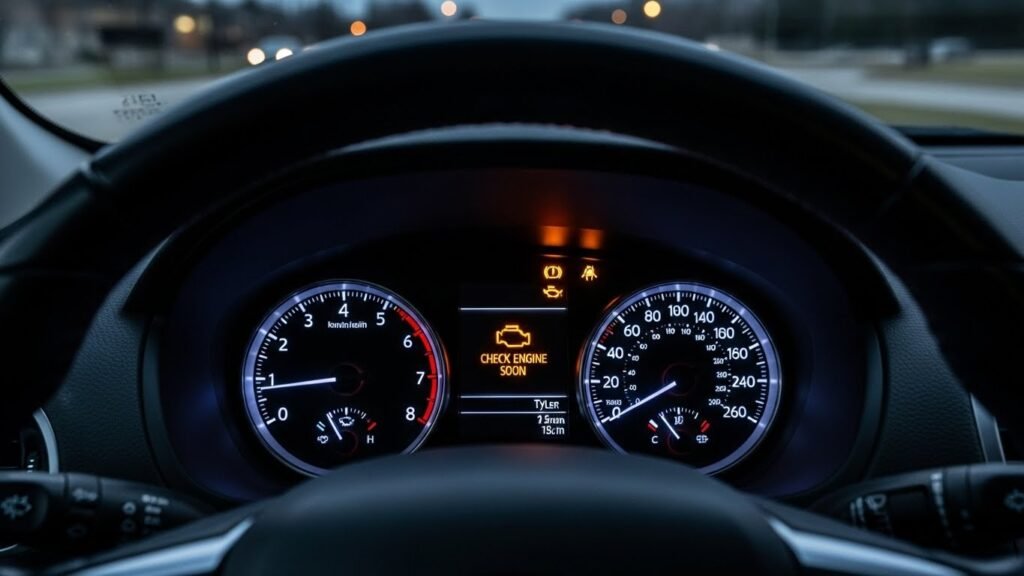
- Check Engine Light: Surprisingly, an engine problem can actually cause the stabilitrak system to turn itself off.
Difficulty Toggling the System can be a physical problem. If you press the button to turn off traction control and nothing happens, the switch might just be dirty or broken.
- Button Failure: Spilled coffee or dust can gum up the dashboard switch.
- Software Glitch: Sometimes the computer “freezes” and won’t respond to the button.
- Damage: If you have had work done on the dash, the wires to the switch might have been pinched.
Ineffective Cruise Control is a weird symptom that confuses many people. Because stabilitrak is a safety system, the car will not let you use cruise control if it isn’t sure the stability system is working.
- Safety Lockout: If the car can’t stabilize itself, it doesn’t want to be in charge of the throttle.
- System Linked: The cruise control and stabilitrak modules talk to each other constantly.
- Warning Sign: If your cruise control suddenly stops working, check your dash for a stabilitrak light.
Loss of ABS Function is the most serious sign. Since stabilitrak uses the ABS pump to work, a failure in the brakes will always kill the stability control.
- Hard Pedals: You might notice the brake pedal feels different or harder to push.
- Longer Stopping Distances: Without ABS, your tires could lock up and slide on wet roads.
- Combined Lights: You will usually see both the ABS and StabiliTrak lights on at the same time.
Handling Changes might be felt before you see a light. This is often called “Limp Mode.” The car might feel sluggish or refuse to go fast because it is trying to protect itself from a potential crash it can’t prevent.
- Reduced Engine Power: The car might limit you to 20 or 30 miles per hour.
- Jerky Shifting: The transmission might shift hard because it is not getting good data from the engine.
- Vibrations: A bad sensor can cause the car to try and brake when it shouldn’t, leading to a weird shaking feeling.
Common Causes of StabiliTrak System Failure
Steering Wheel Position Sensor is a top culprit. This sensor sits in your steering column. It tells the computer exactly where you are pointing the car. If it gets “lost,” the computer gets confused and shuts down the whole system for safety.
- Alignment Issues: Getting a bad wheel alignment can actually trick this sensor into thinking you are turning when you are going straight.
- Wear and Tear: Like any electronic part, it can simply burn out after 100,000 miles.
- Calibration Loss: Sometimes the sensor just needs to be “re-learned” by the computer.
Throttle Position Sensor is another common one. StabiliTrak needs to be able to cut the engine power to stop a slide. If the sensor that tells the computer how far you are pressing the gas pedal is broken, it can’t do its job.
- Dirty Throttle Body: Carbon buildup can make the throttle “stick,” triggering an error.
- Electrical Faults: The tiny wires inside the sensor can break over time.
- Intermittent Issues: This often causes the light to come on and off randomly.
ABS/Wheel Speed Sensors are the most likely to fail because they live in the worst environment. They are constantly pelted with rocks, salt, and mud from the road.
- Debris Buildup: A layer of mud can block the sensor’s “view” of the wheel.
- Corroded Wires: Salt from winter roads eats through the plastic coatings on the wires.
- Physical Damage: Hitting a large pothole or a piece of road debris can snap the sensor right off.
Wiring Harness Issues are a headache for GMC Sierra owners. There are specific spots where the wires rub against the frame or get pinched, leading to a “ghost” stabilitrak light that comes on when you hit a bump.
- Grounding Problems: If a wire isn’t touching the metal frame properly, the electricity can’t flow.
- Heat Damage: Wires near the engine can get brittle and crack from the heat.
- Rodent Damage: Believe it or not, mice love to chew on the soy-based insulation GM uses on some wires.
Low Battery Voltage is a “hidden” cause. Modern cars are basically rolling computers. If your battery is weak, the voltage can drop just enough to make the stabilitrak computer “reboot” while you are driving.
- Cold Starts: A battery that struggles in the winter will often trigger a stabilitrak light first thing in the morning.
- Bad Alternator: If your charging system isn’t keeping up, the safety systems will be the first things to turn off.
- Old Age: If your battery is more than 3-4 years old, it might be the reason for your dash lights.
Faulty Spark Plugs/Ignition Coils are a surprise to many drivers. If your engine has a “misfire” (it skips a beat), the engine computer will temporarily disable stabilitrak. Why? Because it can’t accurately control the engine power if the engine isn’t running perfectly.
- Misfire Codes: You will often see a “P0300” code along with the stabilitrak light.
- Rough Idle: If your truck is shaking at stoplights, your stabilitrak light might be a side effect of old spark plugs.
- Cheap Fix: Sometimes a $50 set of spark plugs fixes a “thousand dollar” stabilitrak problem.
How To Reset the Service StabiliTrak Light on a GMC Sierra

The Steering Wheel Method is a great trick that many people don’t know about. It essentially “re-centers” the steering sensor. If your light came on after a jump start or a battery change, this is the first thing you should try.
- Step 1: Find a flat spot, put the truck in Park, and turn it off.
- Step 2: Start the truck and turn the steering wheel all the way to the right until it stops.
- Step 3: Turn it all the way to the left until it stops.
- Step 4: Center the wheel, turn the truck off, and wait about 15 seconds before starting it again.
The Battery Disconnect Method is a “hard reset.” It clears the temporary memory of the car’s computer. This is perfect for clearing a “glitch” that happened once but isn’t a real mechanical failure.

- Negative First: Always disconnect the black (negative) cable first to avoid sparks.
- The Wait: You must leave it disconnected for at least 10 minutes to let all the electricity drain out of the system.
- The Reconnect: Hook it back up tight. When you start the truck, the lights might stay on for a minute while the computer “wakes up” and runs its tests.
The OBD-II Scanner Reset is the most professional way. You can buy a small scanner for $20 at any auto parts store. It plugs into a port under your dashboard and tells you exactly why the light is on.
- Read the Code: It will give you a code like “C0121.” You can look this up on Google to find the exact part that is broken.
- Clear the Code: The scanner has a “Clear” button that will turn the light off.
- Test Drive: If the light comes back on immediately, you have a real hardware problem that needs a part replaced.
Diagnostic and Repair Costs
Basic Repair Estimates are usually not as scary as people think. Most stabilitrak problems are just a bad sensor. These parts are relatively cheap and easy to swap out.
- Wheel Speed Sensor: Usually costs between $30 and $80 for the part, plus about an hour of labor.
- Total for Sensors: You can expect to pay between $100 and $300 at a local shop for a single sensor fix.
- DIY Savings: If you are handy with a wrench, you can do a wheel sensor yourself for under $50.
Complex System Overhauls happen when the “brain” of the system dies. This is much rarer, but it does happen, especially in older trucks that have seen a lot of salt.
- EBCM Replacement: The Electronic Brake Control Module can cost $300 to $600 for the part alone.
- Programming Fees: New modules often have to be “flashed” with software at a dealership, which can add another $150 to the bill.
- Wiring Harnesses: Finding a broken wire can take hours of labor, which is why these bills can sometimes hit $500 or more.
Labor and Timeframe is where the money goes. Diagnosing a “ghost” light is the hardest part for a mechanic.
- The Hunt: A mechanic might have to drive the truck with a computer plugged in to see which sensor is “glitching”.
- Quick Fixes: Once the problem is found, the actual repair usually takes less than two hours.
- Shop Rates: Most dealerships charge between $120 and $180 per hour for labor, so keep that in mind when budgeting.
Professional Maintenance and Repair Services

When to Visit a Service Center is a matter of safety. If your brakes feel weird, or if the “Service StabiliTrak” light stays on even after you try to reset it, do not wait. You are driving without a major safety net.
- Flashing Lights: If the light is flashing while you are driving normally on a dry road, the system is malfunctioning and could brake your wheels at the wrong time.
- Paired Warnings: If you see “Reduced Engine Power” along with the light, your truck is in a dangerous state.
- Post-Accident: If you hit a curb or another car, your sensors could be knocked out of alignment.
Expert Diagnosis in Fond Du Lac and Youngstown means taking your vehicle to a technician who speaks “GM.” These shops have specialized computers that can see things a generic scanner cannot.
- Factory Scanners: Dealers use a tool called “GDS2” that can test every single wire in the stabilitrak system.
- Certified Techs: These guys have seen the same stabilitrak problems on hundreds of Sierras and Silverados.
- Warranty Work: If your truck is still under warranty, these repairs should be free.
Advanced Diagnostic Tools are the only way to be 100% sure. A cheap scanner might say “Sensor Failure,” but a pro tool will say “Sensor 3 has an open circuit on the ground wire.”
- Pinpoint Accuracy: This saves you money by making sure you don’t replace parts that are still good.
- Live Data: Mechanics can watch the wheel speeds in real-time as they drive the car.
- History Codes: Pro tools can see codes that happened weeks ago, even if the light is off right now.
StabiliTrak Troubleshooting, Causes, and Solutions
| Problem | Potential Cause | Recommended Solution |
| Service StabiliTrak Light (Intermittent) | Loose or corroded battery cables or a weak battery providing inconsistent voltage. | Clean battery terminals and tighten cables. Test the battery health and replace if it is over 3–4 years old. |
| Service StabiliTrak Light (Constant) | A failed wheel speed sensor or a broken sensor wire at the hub. | Use an OBD-II scanner to identify which wheel is reporting the error. Replace the specific ABS/Wheel speed sensor. |
| Steering Wheel Off-Center | Recent suspension work or a bad wheel alignment causing sensor mismatch. | Perform a professional wheel alignment and reset the Steering Angle Sensor (SAS) using a scan tool. |
| “Reduced Engine Power” Mode | A faulty Throttle Position Sensor (TPS) or a heavily carbon-filmed throttle body. | Clean the throttle body with specialized cleaner. If the error persists, replace the throttle position sensor or the entire throttle body assembly. |
| Hard Braking or Grinding Noises | A malfunctioning ABS modulator or Electronic Brake Control Module (EBCM). | Inspect the EBCM for internal shorts or corrosion. This component may require professional replacement and software “flashing” at a dealer. |
| StabiliTrak Light + Misfire | Fouled spark plugs, a cracked ignition coil, or poor fuel quality. | Perform an engine tune-up. Replace spark plugs and ignition coils to restore smooth engine operation, which allows the system to re-engage. |
| Cruise Control Won’t Engage | The vehicle computer has disabled “luxury” features due to an active safety system fault. | Repair the primary StabiliTrak fault first. Once the stability error is cleared, cruise control functionality will automatically return. |
| Unresponsive Dashboard Switch | Physical damage to the button or a blown fuse in the interior fuse block. | Check the specific fuse associated with the instrument panel. If the fuse is good, the physical dash switch assembly may need replacement. |
| Traction Control Light (Spinning) | Dirty or debris-clogged magnetic reluctor rings on the wheel hubs. | Power-wash the undercarriage and the area behind the brake rotors to clear mud, salt, or metal shavings from the sensors. |
| Service Light After Jump-Starting | The steering angle sensor has lost its “home” calibration due to a power surge. | Perform the “Lock-to-Lock” reset: Turn the steering wheel fully right, then fully left, then center it and restart the engine. |
| Trailer Sway Warning Light | Improperly weighted trailer or a fault in the 7-pin trailer wiring connector. | Rearrange the trailer load to ensure 10%–15% of the weight is on the tongue. Inspect the trailer wiring plug for corrosion or “crossed” wires. |
| Ghost Codes (Codes with No Parts Failure) | A frayed or pinched wiring harness rubbing against the vehicle frame. | Inspect the wiring harness specifically near the front wheel wells and the engine block for exposed copper or rub marks. |
Preventative Maintenance for Longevity
Keeping Sensors Clean is the easiest way to avoid a repair bill. Every time you wash your car, take the spray wand and spray behind the wheels. This clears out the salt and mud that eats through the sensors.
- Undercarriage Wash: Focus on the area around the brake rotors.
- Avoid Clogs: Keeping the magnetic rings clean ensures the computer gets a clear signal.
- Post-Off-Roading: If you go through deep mud, wash the sensors immediately before the mud dries into a “brick”.
Maintaining Brake Fluid is often overlooked. Your stabilitrak system uses a series of tiny valves to move fluid around. If your fluid is old and full of moisture, it can cause those valves to rust and stick.
- Fluid Flush: GM recommends flushing your brake fluid every 2-3 years.
- Corrosion Prevention: Fresh fluid keeps the ABS pump lubricated and happy.
- System Performance: Clean fluid translates to faster response times when you are skidding.
Regular Battery Testing is your best defense against “ghost” lights. Most auto parts stores will test your battery for free. If it is putting out less than 12.4 volts while the car is off, it is time for a new one.
- Annual Checks: Get your battery tested before every winter.
- Clean Terminals: If you see white “fuzz” on your battery terminals, clean it off with some baking water and a brush.
- Tight Connections: A loose battery cable is the #1 cause of random dash lights.
Important Summary Points and Safety Considerations
Safety Impact cannot be overstated. StabiliTrak is not a luxury; it is a life-saving tool. Studies have shown that stability control systems like this reduce the risk of fatal crashes by nearly 40%.
- Non-Negotiable: It is the most important safety feature on your car besides your seatbelts.
- Critical in SUVs: If you drive a tall vehicle, stabilitrak is your primary defense against rolling over.
- Modern Necessity: We have become so used to this tech that many drivers don’t know how to handle a car without it.
The Risk of Ignoring Warnings is high. If you drive with the “Service StabiliTrak” light on, you are essentially driving an old car from the 1980s. In a panic situation, your wheels will lock up, and your truck will slide whichever way the wind is blowing.
- No Emergency Help: The car will not help you if you have to swerve to miss a deer.
- Higher Insurance Risk: If you have an accident while a safety light is on, you could face higher rates or liability issues.
- Potential for Cascading Failure: A bad sensor can eventually damage the expensive ABS pump if left alone.
Professional Intervention is the final word. While a simple reset can get you home, it is not a permanent fix. If your truck is telling you it needs service, listen to it.
- Don’t DIY Safety: You wouldn’t try to fix your own airbags; don’t take chances with your stability control.
- Long-Term Reliability: A proper repair now will keep your truck on the road for another 100,000 miles.
- Your Safety Matters: At the end of the day, a $200 repair is a small price to pay for the peace of mind that your family is safe.
FAQs
Can a bad wheel alignment trigger the Service StabiliTrak light?
Yes. If your steering wheel is off-center after an alignment, the steering angle sensor sends data that conflicts with the actual direction of travel. This “mismatch” confuses the system and causes it to shut down for safety.
Will StabiliTrak prevent my car from starting?
Generally, no. StabiliTrak is a chassis system, not an anti-theft or ignition system. However, if the warning light is caused by a massive electrical short or a dead battery, those underlying electrical issues will prevent the engine from cranking.
Does StabiliTrak increase brake pad wear?
It can. If you frequently drive aggressively or on slippery surfaces where the system must constantly intervene by applying independent braking to different wheels, your brake pads will wear down faster than they would under normal conditions.
Can aftermarket wheels and tires cause StabiliTrak errors?
Yes. If you install tires with a significantly different diameter than the factory size, or if the tires on the front and back have different tread heights, the wheel speed sensors will report inconsistent speeds, triggering a system fault.
Why does the light come on only when I turn the steering wheel?
This usually points to a failing clock spring or a damaged wire in the steering column. As the wheel turns, the physical movement breaks a fragile electrical connection, causing the steering angle sensor to momentarily lose signal.
Is StabiliTrak the same as Active Fuel Management (AFM)?
No, but they are linked. When GM’s AFM system (which deactivates cylinders to save fuel) detects an engine misfire, it often disables StabiliTrak. This is why a mechanical engine issue can unexpectedly cause a stability control light.
Can a faulty gas cap trigger a Service StabiliTrak message?
In some GM models, a loose or damaged gas cap triggers a Check Engine light for emissions. Because StabiliTrak relies on perfect engine communication to manage torque, it may deactivate as a result of that initial engine fault.
What happens if StabiliTrak activates on dry pavement at high speeds?
If a faulty sensor sends a “phantom” skid signal, the system might apply a single brake suddenly. This can cause the vehicle to jerk or pull to one side unexpectedly, which is why a malfunctioning system should be serviced immediately.
Does the system work when the vehicle is in reverse?
Most versions of StabiliTrak are designed for forward motion and may have limited or no functionality while reversing. However, the ABS sensors remain active to prevent wheel lock-up during backward braking.
Can low tire pressure affect StabiliTrak performance?
Yes. A significantly underinflated tire has a different rotational speed than the others. The system may interpret this speed difference as a loss of traction and attempt to “correct” a skid that isn’t actually happening.
Will the system still work if my Check Engine light is on?
Not always. Many engine-related fault codes (like those for the throttle body or mass airflow sensor) will cause the computer to automatically disable StabiliTrak as a “fail-safe” measure.
Is there a fuse for the StabiliTrak system?
There isn’t a single fuse labeled “StabiliTrak.” Instead, the system relies on the ABS and Electronic Brake Control Module (EBCM) fuses. If one of these high-amp fuses blows, the stability system will go offline.
Can a bad fuel pump cause a StabiliTrak warning?
Surprisingly, yes. If the fuel pump is failing and causes the engine to sputter or lose power, the lack of consistent torque delivery prevents StabiliTrak from being able to safely manage vehicle stability, leading to a shutdown.
Why does the Service StabiliTrak light come on when it’s raining?
Water can seep into cracked wheel speed sensor housings or corroded wiring connectors. This creates a temporary electrical short that disappears once the components dry out.
Does StabiliTrak affect the transmission’s shifting?
Yes. When the system is active or faulted, the computer may command the transmission to shift more firmly or alter shift points to help maintain vehicle control and prevent wheel spin.
Can a failing alternator trigger the light?
Yes. StabiliTrak modules are highly sensitive to voltage. If the alternator isn’t providing a steady 13-14 volts, the “noise” in the electrical system can cause the stability module to lose communication with other sensors.
Does StabiliTrak help with trailer sway?
On modern GM trucks, StabiliTrak includes specific “Trailer Sway Control” logic. It uses the yaw sensors to detect the side-to-side oscillation of a trailer and applies the truck’s brakes to pull the trailer back into line.
Can I permanently disable StabiliTrak?
While you can turn it off using the dashboard button, it will almost always turn back on automatically every time you restart the car. There is no factory setting to permanently disable it due to federal safety regulations.
Why does my car make a grinding noise when StabiliTrak activates?
That noise is the ABS pump rapidly cycling the brake fluid to individual wheels. It is a normal mechanical sound indicating that the system is physically intervening to keep the car straight.
Will a “limp mode” event always accompany a StabiliTrak light?
Not always, but it is common. If the computer determines that the lack of stability control makes the vehicle unsafe to drive at high speeds, it will restrict the engine’s RPM and power to protect the driver.