Skip to content
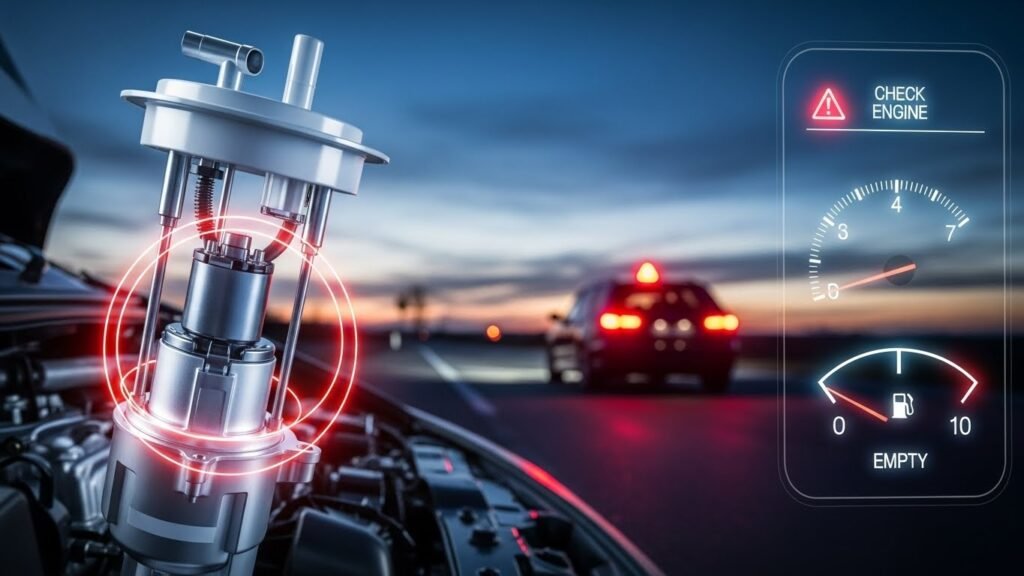
Maintaining your ride means keeping a close eye on the fuel system. The fuel pump is the heart of this entire setup. It pushes gasoline from the gas tank to the engine at a steady rate. When it works right, your car feels smooth and powerful. If it fails, you might get stranded on the side of the road. Knowing the early signs of a bad fuel pump can save you a ton of cash. It also keeps you safe while driving in heavy traffic. Most modern cars use an electric fuel pump tucked away inside the fuel tank. This pump must deliver the right quantity of fuel for the combustion process to work. If you ignore small issues, your engine performance will suffer. This guide will walk you through every warning sign and fix you need to know.
Understanding the Fuel Pump and Its Role
The fuel delivery system is complex but easy to understand once you break it down. Your car needs a constant flow of fuel to keep the motor running. Without a working pump, the fuel injectors won’t have anything to spray into the combustion chamber.
Definition and Function of the System
A fuel pump is a small but mighty motor that moves gas. Its main job is to send fuel through the fuel line to the engine rail.
- Moving Fuel: It transfers gasoline from the storage tank to the front of the vehicle.
- Pressure Control: The pump creates fuel pressure so the injectors can mist the fuel properly.
- System Balance: It helps maintain the perfect air-fuel ratio for a clean burn.
The Pushing Mechanism of Modern Pumps
Most cars today use an electric fuel pump located inside the gas tank. These pumps use an impeller-style system to push liquid forward.
- Positive Pressure: By pushing rather than pulling, the system avoids vapor lock.
- Priming the Line: When you turn the key, the pump builds pressure to keep the line primed for a quick start.
- Submerged Design: Being inside the tank helps keep the pump from getting too loud.
Why the Pump Needs Proper Pressure and Volume
The engine needs more than just a little bit of gas. It needs a specific volume and pressure to handle different speeds.
- Consistent Flow: A steady stream ensures the engine does not stumble or misfire.
- Load Response: When you hit the gas, the pump must increase the fuel flow instantly.
- Volume Matters: High pressure with low volume will still cause the engine to starve under load.
The Essential Cooling Factor of Gasoline
Did you know that gasoline actually helps your pump stay healthy? The fuel acts as a coolant for the electric motor.
- Heat Transfer: As gas flows through the pump, it absorbs heat from the internal components.
- Lubrication: The chemicals in the gas lubricate the moving parts of the pump motor.
- Risk of Low Fuel: Running on empty means the pump is exposed to air and can overheat quickly.
Lifespan and Common Factors of Failure
Most drivers expect their car parts to last forever, but the fuel pump has a limit. It is a mechanical part that wears out over time.
Average Longevity of the Component
You can usually expect a fuel pump to last about 100,000 miles. Some might even go longer if you take great care of your vehicle.
- Ten-Year Mark: Many experts suggest that ten years is the typical lifespan for an average pump.
- Wear and Tear: Constant spinning eventually wears down the brushes in the electric motor.
The Dangers of Overheating Issues
The biggest enemy of your fuel pump is heat. Keeping your gas tank full is the best way to fight this.
- Low Fuel Levels: Driving with less than a quarter tank makes the pump run much hotter.
- Motor Stress: Excessive heat can cause the pump’s internal valve or diaphragm to fail.
Contamination and Blockage Problems
Dirty fuel can kill a pump faster than high mileage. Rust and sediment act like sandpaper on the internal parts.
- Rust in Tank: Older cars with metal tanks can develop rust that clogs the fuel filter.
- Strainer Issues: The “sock” or strainer can get coated in gunk, stopping the fuel flow.
- Sediment Buildup: Dirt from the bottom of the tank can get sucked into the motor and jam it.
The Impact of Bad Fuel Quality
Not all gas is created equal. Using low-quality fuel can lead to big problems for your fuel delivery system.
- Old Gas: Gasoline that sits too long turns into a sticky varnish that clogs injectors.
- Manufacturer Defects: Sometimes a pump has a defect from the factory that causes an early electrical short.
Warning Signs of a Bad Fuel Pump
You need to be a bit of a detective to catch these problems. Your car will give you several signs of a bad fuel pump before it dies completely.
Auditory Indicators and Fuel Tank Noise
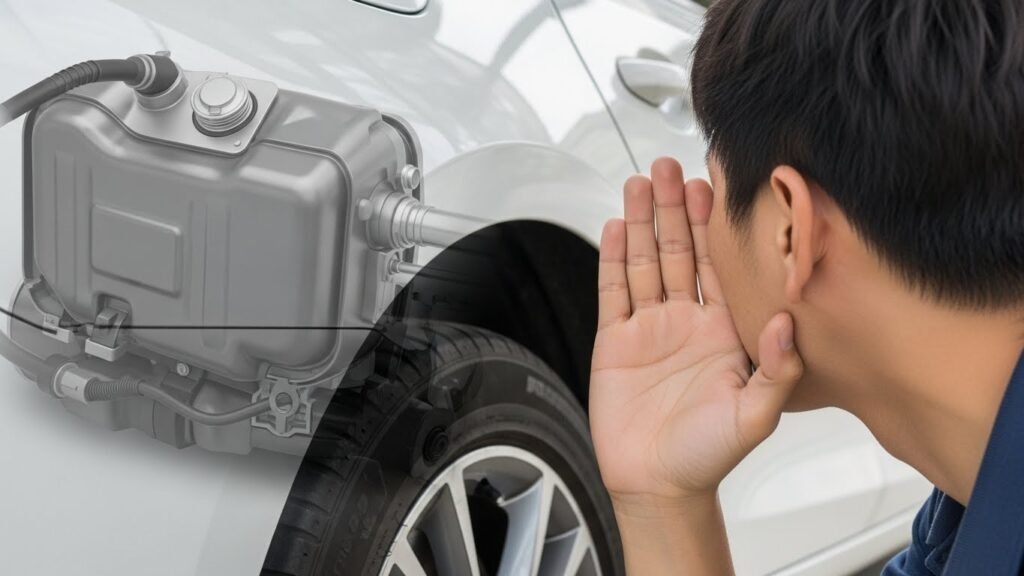
Your ears are great tools for checking car health. A healthy pump makes a very low hum that you can barely hear.
- Loud Whining: A high-pitched screeching sound from the gas tank is a huge red flag.
- Howling Sounds: If the pump starts howling, the motor is likely struggling to spin.
- Vibration: You might feel a slight vibration near the back seat if the pump is failing.
Starting and Ignition Problems
If your car won’t fire up, the pump might be the culprit. It can’t send the gas needed for that first spark.
- Difficult Starts: You might have to turn the key several times to get the motor to run.
- Long Cranking Time: The engine cranks for a long time because the fuel line lost its pressure.
- Dead Engine: This is the worst-case scenario where the pump stops and the car won’t start at all.
Performance and Driving Issues
When you are on the road, pay attention to how the car feels. Most signs of a bad fuel pump show up while you are moving.

- Engine Sputtering: At high speeds, the car might jerk or stutter because it isn’t getting enough gas.
- Loss of Power: You might feel a lack of power when climbing hills or carrying heavy loads.
- Sudden Stalling: The engine might just quit while you are sitting at a stoplight or driving.
- Unexpected Surging: Sometimes the pump fails and sends too much fuel, causing the car to lunge forward.
- Engine Hesitation: There might be a delay when you step on the gas pedal before the car accelerates.
Efficiency and Emissions Signs
A failing pump doesn’t just hurt performance; it hurts your wallet. You will likely spend more money at the pump.
- Lower Fuel Efficiency: If the pump pushes too much fuel, your gas mileage will drop fast.
- Dashboard Lights: The check engine light might turn on because the computer sees a “lean” fuel mix.
- High Consumption: You might notice you are filling up much more often than usual.
Early Warning Signs Most Drivers Ignore
Many people write off small car glitches as “bad days.” However, these are often the first signs of a bad fuel pump.
Momentary Hesitations During Travel
Have you ever felt the car lose power for just a second? This is a warning that the pump is starting to slip.
- Brief Stutters: These tiny jerks usually happen when you try to speed up quickly.
- Intermittent Issues: The problem might go away for a week and then come back even worse.
Fluctuating Idle RPM and Rough Runs
When you are stopped, your engine should sound steady. A bad pump makes the idle feel rough and shaky.
- Bouncing Needle: Watch your RPM gauge to see if it jumps around while you are idling.
- Rough Idling: The car might feel like it wants to die while you are waiting at a light.
Temperature-Dependent Failure
Sometimes the pump only acts up when things get hot. This is a very common sign of a weak electric motor.
- Hot Day Issues: You might notice stalling only when the weather is extremely hot outside.
- Long Drive Stress: The car might run great for ten minutes but start sputtering after an hour.
Diagnostic Procedures: Is My Pump Failing or Just Weak?
You don’t always need a mechanic to do a basic check. There are a few things you can do in your own driveway.
DIY Checks You Can Do at Home
Before spending big bucks, try these simple tests. They can help you confirm if you are seeing signs of a bad fuel pump.
- The Ignition Listen Test: Turn your key to the “on” position and listen for a two-second whirring sound from the back.
- The Tank Tap Method: If the car won’t start, have someone tap the bottom of the gas tank while you crank the engine.
- Fuse and Relay Check: Look in your fuse box for any blown fuses or burnt-out fuel pump relays.
Professional Diagnostic Tools and Methods
If the DIY tests don’t work, you might need some tools. These will give you a clear answer on the pump’s health.
- Fuel Pressure Gauge Test: Hook up a gauge to the fuel rail to see if the pressure matches the factory specs.
- Multimeter Testing: Use this to check if the pump is actually getting the right amount of electricity.
- OBD2 Scanner Analysis: Plug this into your car to look for specific error codes like P0087 or P0171.
- Noid Light Tester: This tool checks if the electrical signals are reaching your fuel injectors correctly.
Evolution of Fuel Delivery Systems
Cars have changed a lot over the last few decades. The way they get gas to the engine has also evolved.
Mechanical Fuel Pumps vs Electric
Old-school cars used mechanical pumps that were bolted to the engine.
- Camshaft Driven: These pumps used a lever moved by the engine’s camshaft to suck fuel up.
- Low Pressure: They didn’t need to be very strong because carburetors don’t need much pressure.
- Modern Switch: Today’s fuel injection needs high pressure, which is why we use electric pumps.
Direct Injection and Lift Pumps
Some high-performance cars use two different pumps. This ensures the engine gets fuel at incredibly high pressures.
- Low-Pressure Lift Pump: This pump sits in the tank and moves gas to the front of the car.
- High-Pressure Pump: A second pump on the engine cranks the pressure up even higher for direct injection.
Anatomical Breakdown of a Modern Fuel Pump Assembly
A fuel pump isn’t just one part; it’s a whole assembly of gadgets. Each piece has a specific job to do.
The Heart: The Electric Motor
The motor is what does all the heavy lifting. It uses copper windings to create a magnetic field that spins the pump.
- Commutator and Brushes: These electrical parts can wear down and cause the motor to stop spinning.
- Internal Bearings: If these get dry or dirty, the pump will start making that famous whining noise.
The Impeller and Check Valve
The impeller is the fan-like part that actually moves the liquid. The check valve keeps the gas from flowing backward.
- Creating Flow: As the impeller spins, it creates the suction needed to pull gas in.
- Holding Prime: The check valve keeps pressure in the lines so your car starts fast the next morning.
Filtering and Sending Units
The assembly also includes the parts that filter your gas and tell you how much you have left.
- The Fuel Strainer: This “sock” catches the big pieces of dirt before they enter the pump.
- Fuel Level Sensor: A float arm sends a signal to your dashboard fuel gauge.
Scientific Factors Leading to Pump Degradation
There is some serious science behind why these parts fail. Understanding this can help you prevent signs of a bad fuel pump.
Ethanol and Phase Separation
Most gas in the USA has ethanol in it. While it burns clean, it can be hard on your fuel system.
- Water Absorption: Ethanol can pull moisture out of the air and into your gas tank.
- Corrosion: Water in the tank leads to rust, which destroys the delicate parts of the pump.
Cavitation and Vapor Lock
If the pump is struggling, it can create air bubbles in the fuel. This is called cavitation, and it’s bad news.
- Pitting Damage: These tiny bubbles can actually blast small holes in the pump’s impeller.
- Vapor Lock: On hot days, gas can turn into a vapor in the lines, stopping the liquid flow.
Related Components: Is it Really the Pump?
Sometimes the pump is fine, but another part is causing trouble. You should check these before buying a new pump.
The Fuel Pump Driver Module
In many newer cars, a computer module controls the pump speed. If this box gets wet or corroded, the pump won’t work.
- Speed Control: The module tells the pump to slow down when you are idling to save energy.
- Failure Symptoms: A bad module can cause the exact same stalling and power loss as a bad pump.
Clogged Filters and Faulty Sensors
A simple clog can mimic the signs of a bad fuel pump. Always check your filters first.
- Inline Filters: Some trucks have an extra filter along the frame rail that can get plugged with dirt.
- Pressure Sensors: If the sensor on the fuel rail goes bad, it might tell the car to shut down.
The Economics of Fuel Pump Repair
Fixing a fuel system isn’t always cheap. However, it is much cheaper than buying a new engine.
Cost Breakdown of Parts and Labor
The price you pay depends on what kind of car you drive. Some pumps are easy to reach, while others are a nightmare.
- Parts Price: You can find aftermarket pumps for a few hundred dollars, but OEM parts cost more.
- Labor Hours: Some cars have an access hole under the seat, but others require dropping the whole gas tank.
The “While You’re In There” Checklist
If you are paying to pull the tank, you should do a few extra things. This prevents you from having to do the job twice.
- Clean the Tank: Always wash out any dirt or rust from the bottom of the tank before putting in a new pump.
- Replace the Gasket: Use a new seal on the top of the tank to prevent gas smells or evap leaks.
Step-by-Step Maintenance Routine for Longevity

You can make your fuel pump last a lot longer with just a little effort. It all comes down to clean gas and good habits.
The Quarter-Tank Rule and Quality Gas
This is the easiest tip to follow. Never let your gas gauge hit the “E” mark.
- Keep it Cool: Always try to keep at least a quarter tank of gas to act as a coolant for the pump.
- Top-Tier Fuel: Use high-quality gasoline that has cleaning additives to keep your injectors clear.
Routine Filter Changes
If your car has an external filter, change it every 30,000 miles. This keeps the pump from having to work too hard.
- Reduced Strain: A clean filter allows fuel to flow easily, which keeps the pump motor cool.
- Sediment Protection: The filter catches the tiny rust particles before they can reach your engine.
Conclusion: The Roadmap to a Reliable Fuel System
Keeping your car running smooth means paying attention to the signs of a bad fuel pump. If you hear loud whining, feel the car stutter at high speeds, or struggle to start in the morning, don’t wait. Addressing these issues early can save your engine from serious damage. Remember to keep your gas tank at least a quarter full and use high-quality fuel. With a little care and regular maintenance, you can keep your fuel delivery system healthy for years to come.
Frequently Asked Questions About Fuel Pump Issues
Can a bad fuel pump cause the car to fail an emissions test?
Yes, it certainly can. If the pump is weak, the engine may run lean, which increases the output of nitrogen oxides. Alternatively, if it is surging, it can cause a rich condition that damages the catalytic converter. Either scenario will likely trigger a check engine light and lead to an automatic failure during an inspection.
Does a bad fuel pump affect the car more in the morning or at night?
Temperature plays a huge role in how a failing pump behaves. You might find that the car starts fine in the cool morning air but struggles in the afternoon heat. High ambient temperatures thin out the fuel and make it harder for a worn-out motor to maintain the necessary pressure.
Can I replace just the fuel pump motor instead of the whole assembly?
In some older vehicles, you can swap out just the electric motor inside the plastic housing. However, most modern cars use a sealed modular assembly that includes the filter and sending unit. Replacing the entire assembly is usually smarter because it ensures all the small internal seals and valves are brand new.
Is it possible for a fuel pump to work only intermittently?
This is actually one of the most frustrating ways a pump fails. A loose internal wire or a dead spot on the motor armature can cause the pump to quit and then start working again after a bump in the road. It makes the car feel unreliable because you never know when it will decide to act up.
How does a fuel pump issue differ from a clogged fuel injector?
While the symptoms are similar, a bad pump usually affects the entire engine, causing it to stumble or lose power across all cylinders. A clogged injector typically only affects one cylinder, which leads to a localized misfire and a very specific shaking sensation.
Can jumping my car damage the fuel pump?
A standard jump start shouldn’t hurt the pump if done correctly. However, if there is a major power surge or if the cables are connected backward, it can fry the fuel pump relay or the pump driver module. Always follow the proper safety steps when using jumper cables to protect the sensitive electronics.
Why does my fuel pump keep burning out every few months?
If you are on your third pump in a year, you likely have a hidden electrical problem or a very dirty gas tank. High electrical resistance in the wiring harness can cook a new motor in weeks. Also, if you don’t clean out the sediment in the tank, the new pump will suck up debris and die immediately.
Will a fuel system cleaning service fix a bad pump?
Unfortunately, no. Fuel system cleaners are designed to remove carbon from injectors and intake valves. They cannot fix a mechanical failure or an electrical short inside a pump motor. If the pump is already whining or losing pressure, a chemical cleaner is a waste of money.
Can a bad fuel pump cause my car to smell like raw gas?
Usually, a bad pump won’t cause a smell unless there is a physical leak. If the lock ring on top of the tank is loose or if a fuel line has a crack, you will smell fumes. If the pump is leaking internally, you won’t smell it, but you will notice the drop in pressure.
Does the fuel pump run while the car is coasting downhill?
Yes, as long as the engine is running, the fuel pump is working. Even if you aren’t pressing the gas pedal, the engine needs fuel to stay at an idle state. The pump continues to circulate fuel to keep the lines pressurized and the injectors ready for when you accelerate again.
Can I bypass a fuel pump relay for a temporary fix?
Mechanics sometimes use a jumper wire to bypass a relay for testing purposes. However, you should never drive the car like this. Bypassing the relay removes the safety shut-off feature that stops the pump in a crash, which creates a major fire risk.
Is it true that hitting the gas tank can make a car start?
This is an old-school trick that actually works sometimes. If the pump motor has a “dead spot,” a physical jar or vibration can move the internal components just enough to get it spinning again. This is a clear sign that you need to drive straight to a repair shop.
How much fuel pressure does a typical car actually need?
Most modern fuel-injected cars require between 40 and 60 PSI to run correctly. Turbocharged engines or those with direct injection may require significantly more. If your pressure drops even 10 PSI below the minimum spec, you will start seeing performance issues.
Can a bad fuel pump ruin my spark plugs?
Indirectly, yes. If the pump is failing and causing the engine to run lean, the spark plugs can overheat and develop white crusty deposits. If it causes a misfire, the plugs can become fouled with unburned fuel, eventually requiring you to replace both the pump and the plugs.
Does using a higher octane fuel help a weak pump?
Octane rating relates to how fuel burns, not how easily it is pumped. Using 91 or 93 octane gas will not help a weak pump push the fuel any better. It is better to spend that extra money on a proper diagnostic test rather than expensive gasoline.
Can a bad fuel pump cause the car to shake at stoplights?
A weak pump can cause a “rough idle,” which feels like a vibration or shaking throughout the cabin. This happens because the engine is struggling to stay at a steady RPM due to an inconsistent supply of gasoline.
Why do some fuel pumps have two electrical connectors?
In many vehicles, one connector provides the heavy current needed to run the pump motor. The second, smaller connector sends the data from the fuel level sensor to the gas gauge on your dashboard. If only one fails, your car might run fine but show an empty tank.
Does a fuel pump sound different if the tank is full versus empty?
Yes, a full tank of gasoline acts as an insulator that muffles the sound of the pump. When the tank is low, the hollow space acts like an echo chamber, making a failing, whining pump sound much louder than it actually is.
Can an overfilled gas tank damage the fuel pump?
Overfilling, or “topping off,” usually damages the charcoal canister and the EVAP system rather than the pump itself. However, liquid fuel getting into the vent lines can create backpressure that makes the pump work harder than it was designed to.
How do I know if the fuel pump is actually getting power?
The best way to check is with a test light or a multimeter at the pump’s wiring harness. If the light glows when you turn the key, you know the electrical circuit is good. If you have power but no noise or pressure, the pump motor is dead.
Can a bad fuel pump cause the check engine light to come on?
Yes, a failing pump often causes the computer to trigger a lean fuel mixture code. Look for codes like P0171 or P0087.
Will a car start with a bad fuel pump?
Sometimes it will start after several tries, but it will likely stall once you begin driving. If the pump is completely dead, the car will not start at all.
Is it safe to drive with a whining fuel pump?
It is not recommended. A loud whining noise is a clear warning that the pump is about to fail. You could end up stranded in a dangerous spot.
How much does it cost to replace a fuel pump?
The cost varies wildly but usually falls between $400 and $1,000 including parts and labor. High-end SUVs and trucks might cost even more.