Skip to content
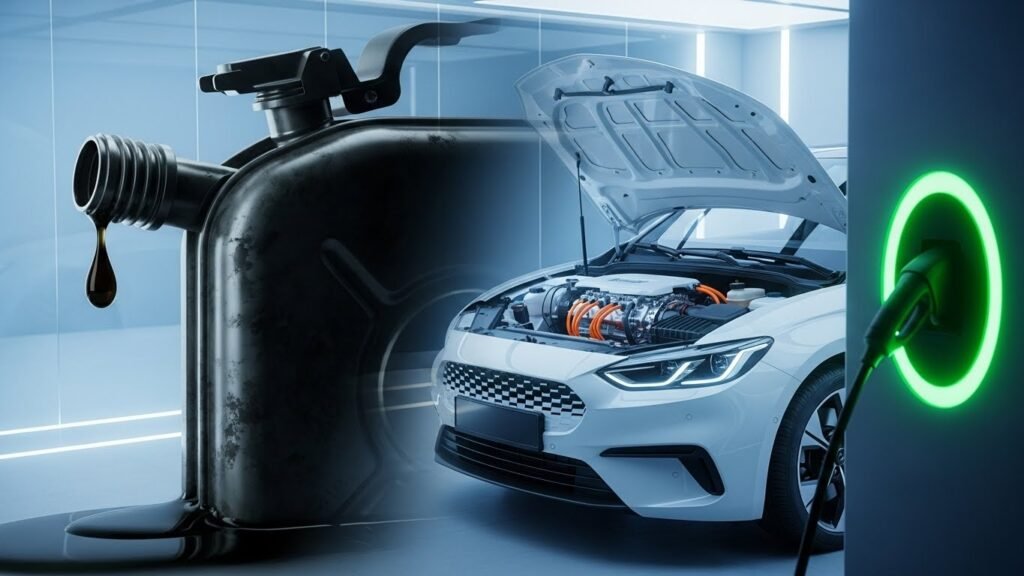
Electric cars are completely changing how we think about driving, and one of the most common questions people ask is whether they need the same care as traditional cars. The most significant shift is the total removal of a messy, recurring task that has been a staple of car ownership for over a century: the oil changes. You can finally say goodbye to those pesky oil spots on your driveway because electric vehicles (EVs) operate on an entirely different mechanical principle.
Do Electric Vehicles Need Oil Changes?
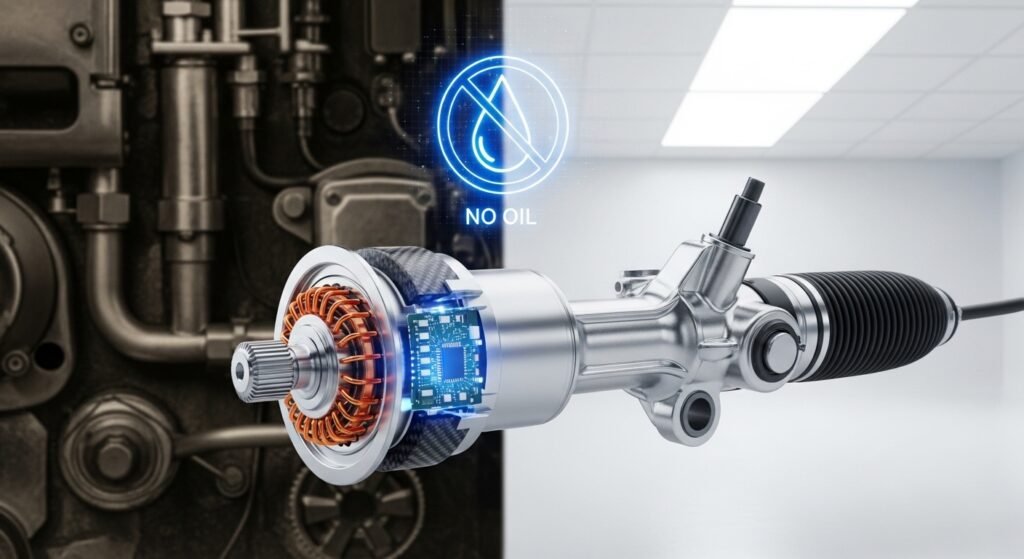
The simple and definitive truth is that electric vehicles do not use motor oil and will never require an oil change. Gas-powered cars have an internal combustion engine (ICE) that creates immense heat and friction. These engines use thousands of metal parts like pistons, valves, and crankshafts that must stay slippery to avoid melting or breaking. Because an EV uses an electric motor instead of an engine, there are no pistons to lubricate, making traditional motor oil completely unnecessary.
The Definitive Answer
You can stop worrying about oil life monitors or searching for “oil change near me” once you switch to an electric car. These vehicles rely on a battery pack and an electric motor to spin the wheels, leaving no place in the drivetrain where motor oil could even be used. This is a massive relief for drivers who want to save time and avoid the dirty work or high costs of frequent shop visits.
No Internal Combustion Engine (ICE)
Traditional vehicles are powered by internal combustion, a process involving thousands of controlled explosions every minute. This violent mechanical process requires a constant supply of fresh oil to clean, cool, and protect the engine. In contrast, an electric motor uses magnets and electricity to create motion without any internal explosions. Without a complex engine under the hood, the very need for engine oil simply vanishes.
Maintenance Simplification
Owning an EV makes your life significantly easier by removing one of the most frequent maintenance chores. You no longer have to keep track of service stickers on your windshield or worry about engine sludge. This simplification reduces the number of components that can fail, leading to a much more reliable vehicle over many years. Most drivers find that having one less major item on their “to-do” list makes the transition to electric well worth it.
Servicing an Electric Vehicle
While they skip the oil bay, EVs are not “zero-maintenance” machines and still require regular checkups to stay safe and efficient. These cars are high-tech computers on wheels that require a specialized kind of care. Instead of focusing on greasy mechanical repairs, technicians use advanced diagnostics to monitor battery health and electrical systems. Regular service ensures your high-tech investment remains road-ready for a very long time.
Cost Offset and Financial Benefits
Electric cars often have a higher upfront sticker price, but the savings begin the moment you drive away from the dealership. You instantly eliminate the costs of oil filters, spark plugs, and expensive synthetic oil blends. Over the lifetime of the vehicle, these small, consistent savings add up to thousands of dollars back in your pocket. Most owners discover that the total cost of ownership is actually lower than that of a comparable gas car.
Estimated Savings
Data suggests that EV owners can save roughly 40% on scheduled maintenance compared to owners of gas-powered cars. This dramatic drop is because you aren’t paying for timing belts, mufflers, or exhaust system repairs. While some individual repairs (like electronics) can be more expensive, the day-to-day upkeep is much cheaper. These long-term savings make EVs a very attractive option for budget-conscious families.
Environmental Impact
Driving an EV is one of the best ways to reduce your personal environmental footprint. By eliminating oil changes, you are preventing millions of gallons of used motor oil and dirty metal filters from entering landfills each year. When you charge using renewable energy like wind or solar, your driving becomes truly zero-emission. It is a powerful way to protect the planet while enjoying a modern, high-performance vehicle.
Fewer Moving Parts and Service Visits
A traditional gas engine is a complex puzzle with over 2,000 moving parts, each of which is a potential point of failure. Electric motors, however, typically have fewer than 20 moving parts, which drastically lowers the chance of a breakdown. This mechanical simplicity means you spend far less time in the dealership waiting room and more time on the road. Your car stays reliable and ready for adventure without needing constant mechanical intervention.
Minimal Mechanical Wear
The electric motor in your vehicle is designed for incredible durability and can often outlast the car itself. It does not suffer from the intense vibration or heavy friction found in a gas engine. Components in modern EV platforms, like the GM Ultium system, are engineered to handle high loads with minimal wear. This lack of friction means your drivetrain won’t feel “tired” or lose power as the miles pile up.
Efficiency and Longevity
Electric motors are vastly superior at converting energy into motion, reaching efficiency levels of over 90%. Gas engines waste more than 60% of their energy as useless heat and loud noise. Because EVs run much cooler, the internal components are not subjected to the damaging heat cycles that destroy gas engines over time. This inherent efficiency translates directly into a longer, more reliable life for your vehicle.
Software Updates (OTA)
One of the coolest features of modern EVs is their ability to receive “over-the-air” (OTA) updates. Just like your smartphone, your car can download new features, improve its range, or fix software bugs while parked in your driveway. This digital maintenance means fewer trips to the shop for minor adjustments or recall fixes. It is the most convenient way to ensure your car actually gets better over time rather than just getting older.
Electric Vehicle Parts and Propulsion Systems
While the overall design is simpler, an EV still contains sophisticated parts that work together to provide power. These components are tucked away to maximize space and safety, creating a clean look under the hood. Understanding these parts helps you realize why the maintenance schedule is so different from a gas car. Each component is designed to be low-maintenance and high-performance.
- Power Conversion: This system takes the raw energy from the battery and transforms it into the specific type of electricity the motor needs to move.
- Traction Motors: These high-performance motors are the muscle of the car, directly spinning the axles to provide instant acceleration.
- Charging Ports: These are the access points where you connect to external power to refuel your battery pack.
- Onboard Charger: This device acts as a translator, converting AC power from your home outlet into DC power that the battery can store.
- DC-DC Converter: This small but vital part steps down high-voltage power to run your car’s 12v systems, like lights and the radio.
- Battery Pack: This massive array of cells is the “fuel tank” of the EV, storing all the energy needed for your journey.
- Thermal System: This complex cooling and heating network ensures the battery and electronics stay at the perfect temperature.
What Fluids Do Electric Vehicles Use?
Even though the engine oil is gone, your EV still relies on several important fluids to operate safely. You cannot ignore these levels, as they are vital for everything from stopping to keeping the battery healthy. Most of these fluids are in sealed systems and require much less frequent attention than gas car fluids. Checking them is a standard part of any routine EV service visit.
Essential Fluids for Performance and Safety

- Brake Fluid: This hydraulic liquid is critical for your safety, ensuring your brakes respond instantly when you press the pedal.
- Transmission Fluid: Most EVs have a simple gearbox that still needs specialized lubrication to keep gears turning smoothly.
- Coolant: This specialized liquid moves through the battery and motor to carry away heat, preventing dangerous overheating.
- Windshield Washer Fluid: Just like a gas car, you need this to keep your view clear during rain, snow, or dusty conditions.
Typical Electric Vehicle Maintenance Checklist
You should generally plan to bring your EV in for a checkup every 7,500 to 10,000 miles. A certified technician will run through a specific checklist to ensure every system is performing at its peak. These visits are much faster than traditional service because there are no messy oil drains or filter swaps. Staying on top of this schedule is the best way to maintain your vehicle’s value and range.
- Tire Care: Tires on an EV often wear faster due to instant power, so regular rotations and pressure checks are mandatory.
- Brake System Maintenance: While pads last longer, the lines and fluid must be checked for leaks or moisture buildup.
- Wiper Blade Replacements: It is recommended to swap your blades every 15,000 miles to ensure clear visibility in all weather.
- Multi-Point Inspections: Technicians will inspect the charging port for debris and ensure all high-voltage seals are intact.
- Air Filter Changes: You should replace your cabin air filter every 36,000 miles to keep the interior air fresh and free of allergens.
Battery Care and Maintenance
The battery is the most valuable part of your electric vehicle, and proper care can extend its life to over 20 years. While it is designed to be tough, following a few simple habits can prevent early degradation. Good battery management ensures you maintain your maximum driving range for the entire time you own the car. It is mostly about being smart with how and when you charge.

Battery Health Monitoring
Most modern EVs come with a built-in battery management system (BMS) that does the heavy lifting for you. You can often check your battery’s “state of health” through the car’s touchscreen or a mobile app. During professional service, technicians use deeper tools to balance the individual cells within the pack. This proactive monitoring catches potential issues before they ever leave you stranded.
Battery Care Tips for Longevity
- Optimal Charging: Try to keep your daily charge between 20% and 80%, as staying in this “sweet spot” reduces stress on the battery cells.
- Deep Discharge Prevention: Avoid letting your battery stay at 0% for long periods, as this can cause permanent damage to the battery’s chemistry.
- Temperature Management: Whenever possible, use your car’s “pre-conditioning” feature to warm or cool the battery before you start a drive or a charge.
Braking Systems in EVs
Stopping an electric car is a high-tech process that actually helps you drive further. EVs use a technology called regenerative braking, which turns the electric motor into a generator when you lift off the accelerator. This process captures kinetic energy that would normally be wasted as heat and sends it back into the battery. It provides a smooth slowing sensation while increasing your overall driving efficiency.
Extended Brake Life
Because the electric motor does the heavy lifting for slowing the car, your physical brake pads are used much less often. This means EV brake pads can easily last over 100,000 miles, compared to the 30,000–50,000 miles common in gas cars. While you still have traditional brakes for emergency stops, they stay fresh and thick for years. This is another major maintenance cost that effectively disappears with an EV.
One-Pedal Driving
Many EVs offer a “one-pedal driving” mode that allows you to control the car’s speed almost entirely with the accelerator. When you lift your foot, the regenerative braking is strong enough to bring the car to a complete stop. This makes city driving much more relaxed and significantly reduces the wear and tear on your braking hardware. It is a unique EV experience that many drivers quickly grow to prefer over traditional two-pedal setups.
Professional Servicing and Expert Care
Even though maintenance is simpler, you should only trust your EV to a shop with certified high-voltage training. Electric cars use thick orange cables that carry enough power to be dangerous if handled by someone without the right tools. A professional service center has the safety equipment and training required to work on these systems. This expertise ensures that your car stays safe for you and your family.
Factory-Trained Technicians
A certified technician has spent hundreds of hours learning the specific electrical architecture of your vehicle. They understand how the battery management system talks to the motor and how to safely disconnect the high-voltage system for repairs. This specialized knowledge is something you won’t find at a corner oil-change shop. Always check for certifications before letting someone touch your EV’s powertrain.
Why Dealership Service Matters

Dealerships like Hall Ford or Lupient Chevrolet have direct access to the latest factory software and diagnostic equipment. They use genuine OEM parts that are specifically designed to meet the weight and performance requirements of an electric car. Bringing your car to the dealer also ensures that all your services are officially recorded, which helps protect your long-term battery warranty. It is the best way to keep your modern marvel running like new.
Tax Credits and Incentives
Choosing a zero-emission electric vehicle often comes with significant financial rewards from the government. You may be eligible for a federal tax credit of up to $7,500, along with various state and local rebates. Some utilities even offer cheaper electricity rates if you charge your car during the middle of the night. These perks can drastically lower the cost of owning and maintaining your vehicle over the long run.
| Maintenance Task | Gas Vehicle Frequency | Electric Vehicle Frequency |
| Oil Change | Every 5,000 – 7,500 miles | Never Needed |
| Tire Rotation | Every 5,000 – 8,000 miles | Every 5,000 – 8,000 miles |
| Brake Pads | Every 30,000 – 50,000 miles | Every 100,000+ miles |
| Cabin Air Filter | Every 15,000 – 30,000 miles | Every 36,000 miles |
| Transmission Fluid | Every 30,000 – 60,000 miles | Every 80,000 – 100,000+ miles |
Summary of EV Benefits
Making the switch to an electric vehicle is one of the smartest upgrades you can make for your daily commute. You get a car that is faster, quieter, and significantly more reliable than anything powered by gas. Removing the need for oil changes is just the beginning of a stress-free ownership experience. By following a few simple care tips, you can enjoy a high-performance vehicle that saves you money and helps protect the environment for years to come.
FAQs
Do electric cars have a catalytic converter?
No, electric cars do not have catalytic converters because they do not have an exhaust system. Catalytic converters are designed to filter out harmful gases from an internal combustion engine, but since EVs produce zero tailpipe emissions, this part is entirely absent. This also means EV owners are safe from the common issue of catalytic converter theft.
Is it necessary to replace spark plugs or timing belts?
Electric vehicles do not use spark plugs or timing belts. In a gas car, spark plugs ignite fuel and timing belts keep engine parts moving in sync. Because an electric motor uses magnets and electricity to create rotation, these high-wear mechanical parts are not part of the design, further reducing your long-term maintenance costs.
How often should the 12-volt battery be replaced?
Even though EVs have a massive high-voltage battery to move the wheels, they still have a standard 12-volt battery to run lights, wipers, and the infotainment system. This smaller battery typically needs to be replaced every 3 to 5 years, just like in a traditional car. If this battery dies, your EV may not “start” or unlock, even if the main battery is full.
Do EVs require a traditional smog or emissions test?
Because electric vehicles have no tailpipe and produce no exhaust gases, they are exempt from smog and emissions testing. This saves owners the annual or biennial hassle and cost of visiting a testing station to comply with environmental regulations.
Can an electric car be towed with its wheels on the ground?
Generally, you should never tow an electric car with its wheels on the ground unless it has a specific “tow mode.” Most EVs should only be moved on a flatbed truck. Because the wheels are directly connected to the motor, turning them while towing can cause the motor to generate electricity, which can overheat and permanently damage the powertrain.
Do electric vehicles have a radiator?
Yes, most modern electric vehicles still use a radiator. While they don’t have an engine to cool, they use a liquid cooling system to manage the temperature of the battery pack and the electric motors. The radiator helps dissipate the heat collected by the coolant to keep the electronics within a safe operating range.
Are there fuel filters in an electric car?
Electric cars do not have fuel filters because they do not have a fuel system. There are no gas tanks, fuel lines, or injectors to clog. The only filters you will typically need to replace are the cabin air filter and, in some models, a filter for the battery’s cooling system.
How do I maintain an EV that is stored for a long time?
If you plan to store your EV for more than a few weeks, do not leave it at 100% or 0% charge. Most manufacturers recommend leaving the battery at around 50% to 60% capacity. You should also keep the 12-volt battery on a trickle charger to prevent it from draining while the car’s computer systems remain active in standby mode.
Do electric cars use a standard alternator?
Electric cars do not have an alternator. In a gas car, the alternator uses the engine’s rotation to charge the 12-volt battery. In an EV, a device called a DC-DC converter takes power from the large high-voltage battery and converts it to 12 volts to keep the smaller battery charged and the electronics running.
What happens if an EV runs out of coolant?
If the coolant level drops too low, the vehicle’s thermal management system will struggle to keep the battery and motor at the right temperature. This can lead to a significant loss in performance, slower charging speeds, and potential long-term damage to the battery cells. Most EVs will display a warning light or enter a “limp mode” to protect the hardware.
Do electric cars have a multi-speed transmission?
The vast majority of electric cars use a single-speed transmission. Unlike gas engines that need multiple gears to stay in a power band, electric motors provide maximum torque instantly and can spin at very high RPMs. This simplicity eliminates the need for complex gear-shifting components and the maintenance associated with them.
Is it safe to drive an EV through a deep puddle or car wash?
Yes, electric vehicles are designed with highly sealed electrical systems to prevent water intrusion. They undergo rigorous testing to ensure they can handle heavy rain, deep puddles, and high-pressure car washes without any risk of electric shock or short-circuiting the battery.
Do EVs have a muffler or exhaust pipe?
Electric vehicles are nearly silent because they do not have an exhaust system, muffler, or tailpipe. There are no combustion noises to dampen. Many EVs actually use external speakers to create artificial sound at low speeds to alert pedestrians that the vehicle is approaching.
How does towing a trailer affect EV maintenance?
Towing puts extra strain on an EV’s cooling system and motors. If you tow frequently, you may need to inspect the suspension, brakes, and cooling fluid levels more often. Towing also significantly reduces driving range, so it is important to plan for more frequent charging stops.
Does the regenerative braking system ever need service?
The regenerative braking system is mostly electronic and requires very little physical maintenance. However, because the traditional friction brakes are used so infrequently, the brake rotors can sometimes develop surface rust. Occasional firm braking can help “clean” the rotors and keep the mechanical parts moving freely.
Do electric cars have a clutch?
Electric vehicles do not have a clutch pedal or a traditional clutch assembly. Because the motor can start from zero RPM and does not need to be disconnected from the wheels when stopped, the entire clutch system is unnecessary. This removes another common high-cost repair item found in manual and some automatic gas cars.
Can rodents damage an electric car’s wiring?
Yes, rodents can be a problem for EVs just as they are for gas cars. Some manufacturers use soy-based insulation on wiring, which can attract animals. Because EVs have extensive high-voltage cabling and sensitive sensors, rodent damage can be particularly expensive to repair.
Do EVs require a different type of insurance?
While not a direct mechanical maintenance task, insurance is a part of vehicle upkeep. EV insurance can sometimes be slightly higher than gas car insurance because of the high cost of the battery and the need for specialized repair shops. However, these costs are often offset by the savings in fuel and routine maintenance.
How do I clean the undercarriage of an electric car?
Cleaning the undercarriage is important, especially in winter climates where salt is used on roads. Salt can cause corrosion on the metal shields and suspension parts. It is safe to use a standard undercarriage wash at a car wash, as the high-voltage battery is encased in a protective, waterproof housing.
Does an EV’s air conditioning system use more energy?
In an EV, the air conditioning and heating are powered entirely by the battery. Using the AC can reduce your driving range by about 10% to 15%. To minimize this, many owners use “pre-conditioning” while the car is still plugged into a charger to get the cabin to the right temperature before they start their drive.