Skip to content
Why Your VW Atlas Maintenance Schedule is a Game-Changer
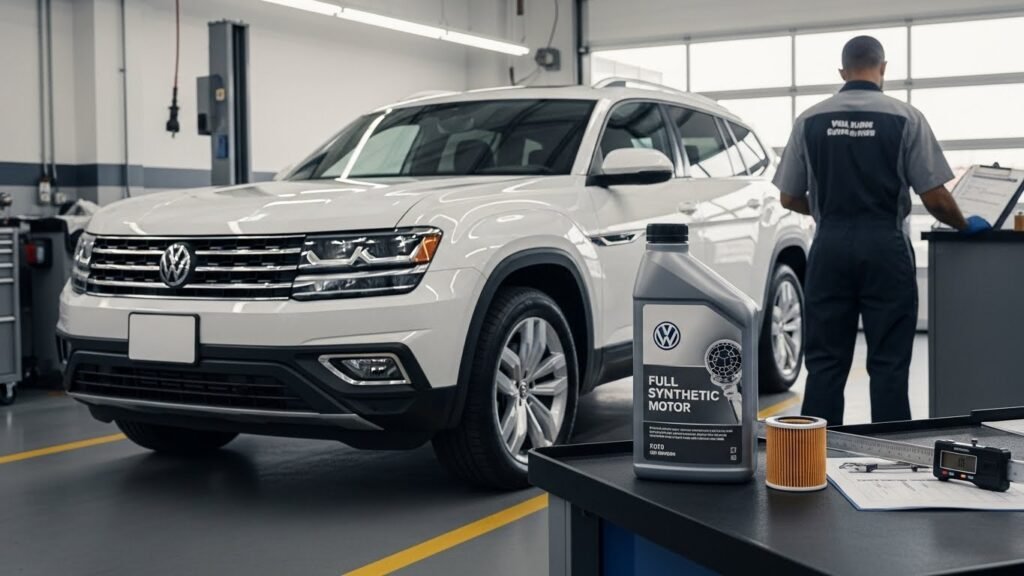
Owning a Volkswagen Atlas is awesome. You’ve got a family-friendly SUV with excellent fuel economy and a powerful engine. To keep it running like new, you need to follow the service schedule. This isn’t just a suggestion; it is the secret to vehicle longevity. Sticking to the plan prevents costly repairs later on. It also ensures your SUV is always safe on the road. The most important part is knowing your vw atlas oil change interval.
Understanding VW’s Service Philosophy
Volkswagen engineered the Atlas for performance and dependability. Modern engineering allows for longer service intervals than older models. This is great news for you. Using full synthetic oil is key to this schedule. It protects the engine’s precision parts better than conventional oil.
- Proactive maintenance maximizes your vehicle’s performance.
- Following the schedule is crucial for maintaining your warranty coverage.
- It protects your investment and provides peace of mind.
Determining the Correct Service Interval
The standard service interval is straightforward. Most new Atlas models need service every 10,000 miles or once a year. This 10,000-mile mark is your standard vw atlas oil change interval.
It means you’ll get a full synthetic oil change at this time. Always use the recommended 0W-30 full synthetic oil, often Castrol brand. However, check your owner’s manual for your specific model’s needs. If you drive in dusty conditions or extreme heat, your service technicians might suggest a shorter interval. Some drivers need service every 7,000 or 8,000 miles.
The Synthetic Oil Advantage

The Atlas’s turbocharged engine demands premium lubrication. Synthetic oil offers superior protection and flow.
- It is less viscous at low temperatures for better cold starts.
- Synthetic oil has enhanced engine cleaning properties.
- It better protects critical turbocharger components.
- It resists oxidation and maintains its protective qualities longer than regular oil.
Comprehensive Maintenance Schedule: 10,000 Mile Increments
The Atlas maintenance schedule is easy to track. It alternates between minor and major services. Here’s a breakdown of what happens at each milestone.
10,000 Miles or One Year (Initial Service)
This is the first essential service. It sets the baseline for regular care.
- Oil Change (Full Synthetic Oil Change)
- New Oil Filter Replacement
- Tire Rotation
- Inspect the Brake Pads and brake system
- AdBlue fluid check (if equipped)
- Airbag system inspection
- Wiper blade inspection
- Headlight cleaning system inspection
- Service Interval Display Reset (if needed)
20,000 Miles or Two Years (Intermediate Inspection)
The second visit is more comprehensive. It includes the standard oil change and a long list of inspections. This is a critical check-up.
- Perform the 10,000-mile service tasks.
- Filter Replacement:
- Fuel filter replacement
- Dust and pollen filter replacement (cabin air filter)
- Check and inspect these key areas:
- Battery inspection
- Tire inspection and alignment
- Brake system inspection
- Tire filler bottle expiration date check
30,000 Miles or Three Years (Minor Service Plus)
This service includes the core maintenance tasks and a vital fluid exchange. The vw atlas oil change interval resets here.
- Perform all the recommended 10,000-mile services.
- Preventative Maintenance:
- Brake disc inspection
- Brake and clutch unit fluid change (Brake Fluid Flush)
- Inspect the second battery and main battery condition
- Coolant level and frost protection check
40,000 Miles or Four Years (Major Component Replacement)

At 40,000 miles, the service is thorough and includes significant replacements for performance. This interval may take more time to complete.
- Perform the 10,000-mile service tasks.
- Component Replacement:
- Spark plugs replacement
- Fuel filter replacement
- Dust and pollen filter replacement (cabin)
- In-Depth Inspection:
- Coolant system flush (often recommended)
- Transmission fluid check (replacement if equipped with DSG, otherwise check level/condition)
- Suspension and steering components: Ball Joints, Wheel Bearings, Axles, Tie Rod Ends, Coil Springs, and Shock Absorbers
- Check underbody sealant and CV joints
- Sunroof and Panoramic Sunroof (functionality)
50,000 Miles or Five Years (Fluid and Wear Check-up)
This service returns to the core maintenance while introducing checks for long-term wear. The fluid checks are key here.
- Perform all the recommended 10,000-mile services.
- Fluid and Wear Inspection:
- Brake disc inspection and brake fluid change (repeat from 30k, or check fluid condition)
- Drive belts and hoses (Condition of radiator and engine belts)
- Full diagnostic test to detect hidden issues
- Note on Wear Items: Your battery, tires, or brake parts may need replacement now based on condition.
Extended Service Intervals for Atlas Sport and High Mileage
These services address the long-term wear on major systems. The comprehensive service prevents severe mechanical issues.
60,000 Miles (Major Service)
This is one of the most comprehensive major service events, often bundling items from the 20k and 40k intervals.
- Perform all 10,000-mile services.
- Component Replacement:
- Fuel filter replacement
- Dust and pollen filter replacement
- Brake Fluid Replacement (essential to prevent moisture damage)
- Comprehensive Inspection:
- Battery, Tire, and Brake system inspection
- Detailed inspection of engine and exhaust system components
- Timing Chain Check: Modern Atlas models use a timing chain, not a belt. Chains generally last longer but must be inspected for stretch at this interval.
90,000 Miles (High-Mileage Service)

This comprehensive service is vital for vehicles with high mileage. It requires a detailed inspection of the engine’s internal workings.
- Perform all 10,000-mile services.
- Replacement/Inspection:
- Brake disc inspection and brake fluid change
- DSG transmission fluid and filter change (if applicable)
- Hoses and belts inspection
- Power steering fluid levels check
100,000 Miles and Beyond
The 100,000-mile service often repeats the major service items. It requires deep-dive inspections of all systems.
- Major Service: Repeat the 20,000-mile and 60,000-mile services.
- Critical Checks: Timing chain inspection, suspension check, exhaust system check, and all fluid changes.
Key Components and Fluid Management Details
Engine Oil and Filtration: The VW Atlas Oil Change Interval
The vw atlas oil change interval is the backbone of the maintenance plan. It is a strict 10,000 miles using full synthetic oil.
| Component | Service Requirement | Rationale |
| Engine Oil | Full Synthetic 0W-30 (Castrol recommended) | Superior lubrication for the turbocharged engine. |
| Oil Filter | Replaced at every oil change | Removes contaminants and metal shavings. |
| Frequency | Every 10,000 miles or 1 year | Maximizes engine protection and longevity. |
Tires, Wheels, and Suspension
Maintaining proper alignment and tire wear is crucial for this family-friendly SUV.
- Rotation and Pressure: Tire rotation is performed at every 10,000-mile service to ensure even wear. Tire pressure must be set correctly for safety and fuel economy.
- Alignment: A four-wheel alignment is often recommended at 20,000 miles or if wear is noticed.
- Suspension: Shock absorbers and coil springs are inspected to maintain the smooth ride quality.
Brakes System Health
Brake parts wear faster on larger SUVs like the Atlas.
- Brake Pads: Inspect brake pads and rotors frequently.
- Brake Fluid: Brake fluid must be changed every two to three years, regardless of mileage. This prevents moisture buildup, which can cause internal rust and reduce braking efficiency.
Air and Fuel System Filters
Clean filters protect the engine and the occupants.
- Engine Air Filter: Clean air is essential for a powerful engine. Replacement is typically at 20,000 miles.
- Dust and Pollen Filter (Cabin): This filter keeps the air inside the cabin clean from dust and pollen. It’s replaced at least every 20,000 to 40,000 miles.
Detailed Model and Engine Specifications
Understanding your specific Atlas model is crucial. Different engines and transmissions require unique service treatments. Always verify your engine code and transmission type.
Engine Type and Oil Requirements
The Volkswagen Atlas has primarily used two engine types in the North American market. Both engines require specific high-quality oil to support the vw atlas oil change interval.
- 2.0L Turbo I-4 Engine (TSI): This engine is often standard. It delivers excellent fuel economy and torque. It is found in most Atlas and Atlas Cross Sport models.
- Oil Standard: Requires oil that meets the VW 508 00 / 509 00 specification. This is a low-viscosity, high-performance oil designed for modern VW engines. Using non-compliant oil can void your engine warranty.
- 3.6L V6 Engine (VR6): This engine offers more horsepower and better towing capability. It is typically found in higher trim levels.
- Oil Standard: May require oil that meets the VW 504 00 / 507 00 specification. Always confirm the exact specification in your owner’s manual before service.
Transmission Specifics and Fluid Exchange
The type of transmission greatly impacts maintenance costs and requirements. Ignoring transmission fluid changes can lead to premature failure.
- Conventional 8-Speed Automatic: This transmission is common across many Atlas models. Generally, the fluid is considered “lifetime” but should be inspected every 40,000 miles. Service technicians often recommend a fluid and filter change around 80,000 to 100,000 miles for optimal longevity, especially if you tow.
- DSG (Direct-Shift Gearbox): While less common in the Atlas, some Volkswagen models utilize the DSG. If your Atlas has one, it requires a mandatory fluid and filter change every 40,000 miles. This is a non-negotiable service to prevent clutch pack wear. This is a major maintenance cost difference.
Component Lifespan and Failure Prevention
Preventative checks on key systems ensure the safety and reliability of your SUV. Ignoring these warnings leads to costly repairs.
Brake System Longevity Factors

Brake lifespan varies widely based on how you drive. City driving with heavy stop-and-go traffic wears out brake pads faster than highway cruising.
- Wear Variables: Frequent towing or carrying heavy loads also increases brake component wear.
- Signs of Wear: Listen for a high-pitched squealing (pad wear indicators). A grinding noise means the pads are completely gone and the rotors are being damaged. A vibrating steering wheel when braking suggests warped rotors.
- Fluid Contamination: Brake fluid absorbs moisture from the air. This moisture lowers the boiling point of the fluid. If the fluid boils during heavy braking, you lose stopping power. This is why replacement every two to three years is vital.
Timing Chain Inspection and Wear
The Atlas engine uses a timing chain, which is designed to last longer than a belt. However, it can stretch over time.
- Inspection Procedure: Certified service technicians use specialized diagnostic tools (like the VCDS or ODIS system) to read camshaft deviation values. These values tell the technician if the chain has stretched beyond acceptable limits.
- Failure Consequence: If the stretched timing chain skips a tooth, the engine timing is off. This can cause the pistons to hit the valves, resulting in immediate and catastrophic engine failure that requires a complete engine rebuild or replacement. Timely inspection prevents this disaster.
Battery and Electrical System Deep Dive
The electrical system supports everything from the ignition to the sophisticated infotainment system.
- Battery Type: Your Atlas likely uses an AGM (Absorbed Glass Mat) battery. These batteries are sensitive and require specific charging procedures. They usually last 5 to 7 years.
- Second Battery (If Applicable): If your Atlas has a start/stop system, it often uses a second, smaller battery to run accessories while the engine is off. This battery must be checked for function and charge.
Maintenance Under Severe Driving Conditions
The 10,000-mile vw atlas oil change interval assumes “normal” driving. If your driving falls into the “severe” category, you must adjust your schedule.
Defining “Severe Service”
Volkswagen defines severe driving conditions as anything that puts extreme stress on the engine or filters.
- Frequent Short Trips: Driving less than four miles per trip often means the engine oil never reaches full operating temperature. This causes moisture to build up in the oil, shortening its life.
- Dusty Conditions: Regular operation on unpaved or dusty roads clogs the Engine Air Filter and Cabin Filter much faster.
- Extreme Temperatures: Sustained driving in freezing cold or blistering heat places extreme demands on Coolant and Oil.
- Towing/Heavy Load: Frequent towing significantly stresses the engine, transmission, and brake components.
Specific Severe Condition Service Adjustments
If you drive under severe conditions, shorten your service interval.
- Fluid Intervals: Change your oil every 7,000 or 8,000 miles. Have service technicians check the transmission fluid level more often.
- Filter Intervals: Replace the Engine Air Filter and Cabin Dust and Pollen Filter every 10,000 miles instead of waiting for the longer intervals.
DIY Checks vs. Dealership Service
You can do some things at home, but professional service is necessary for the long-term health of your vehicle.
Simple Owner Checks (Empowering the User)
- Fluid Levels: Check the washer fluid and visually inspect the coolant reservoir level.
- Tire Health: Use the penny test to check tire tread depth. Check all four tires and the spare.
- Lighting: Perform a simple walk-around once a month to check all Exterior Lighting, including the headlights, brake lights, and turn signals.
Why Professional Service is Necessary

Only a certified service department can guarantee proper care.
- Specialized Tools: Service technicians use specialized diagnostic tools to check the timing chain, read complex sensor data, and accurately reset the Service Interval Display. These tools are exclusive to VW service departments.
- Fluid Standards: They guarantee the use of specific, factory-approved fluids (VW G13/G12evo coolant, specified transmission fluid). Non-approved fluids can damage seals and void warranties.
- Warranty Integrity: Only service completed by a certified mechanic provides the documentation required for a successful warranty claim.
Cost and Value Analysis
Maintenance is an investment, not an expense. Understanding the cost helps you budget effectively.
Estimated Service Costs (Transparency)
| Service Interval | Focus | Estimated Cost Range (USD) |
| 10,000 / 30,000 / 50,000 Miles | Minor Service (Oil, Filter, Inspection) | $150 – $300 |
| 20,000 Miles | Intermediate (Minor + Air/Cabin Filters) | $350 – $550 |
| 40,000 Miles | Major (Intermediate + Spark Plugs) | $550 – $800 |
| 60,000 Miles | Comprehensive (Major + Brake/Coolant/Trans Fluid) | $900 – $1,500+ |
Prepaid Maintenance Plans (VW Care)
The VW Care plans are excellent financial tools for your Atlas.
- Detail VW Care: These official plans allow you to purchase service for multiple intervals (e.g., 30k, 40k, and 50k) upfront at a discounted rate.
- Benefits: It locks in the price of labor and parts, protecting you from future inflation. It ensures you use genuine VW parts and VW-certified service technicians.
Troubleshooting and Warning Indicators
Don’t panic when a light comes on. Knowing what they mean saves you time and money.
Understanding Dashboard Lights
- Check Engine Light: Usually indicates an emissions-related problem (e.g., loose gas cap, faulty sensor). Get this checked by a service department quickly.
- TPMS Light: A flashing light means the Tire Pressure Monitoring System itself has a fault. A solid light means one or more tires have low pressure.
- Brake Warning: A red light often means a severe issue, like dangerously low brake fluid or an E-brake engaged. A yellow light signals an issue with the ABS or traction control.
Common Atlas Noises and Smells
- Squealing: Often indicates worn brake pads (wear indicators rubbing) or a loose/worn Drive Belt.
- Grinding: Indicates complete failure of brake pads (metal on metal) or an issue with a Wheel Bearing.
- Sweet Smell: A sweet, syrupy smell usually means a Coolant leak. This should be addressed immediately to prevent engine overheating.
- Burning Oil: Can be a sign of a leaking valve cover gasket. This is often an inexpensive repair that prevents engine damage.
Don’t wait for a problem. Follow the vw atlas oil change interval and the full maintenance schedule. It is the best way to enjoy your Volkswagen Atlas for years to come. Schedule your next service today.
Post-Maintenance and Planning
Following your maintenance schedule is a smart financial move. It is about maximizing your vehicle’s lifespan and keeping its powerful engine healthy. Your local service department is there to help.
Utilizing Service Deals and Financing
Don’t let the cost of comprehensive service delay your visits. Service coupons and financing make maintenance manageable.
- Service Coupons: Always ask about service coupons. They can offer discounts on common services like oil changes, filter replacements, or even major service packages.
- Service Financing: For major services, service financing options like a VW Service Credit Card or flexible payment plans are available. This helps manage the cost of large repairs or maintenance appointments.
Trustworthy Documentation
Keep perfect records of all maintenance. This is the Trustworthiness part of EEAT.
- Records: Detailed service records prove you cared for your SUV. This is a huge benefit if you ever decide to sell the vehicle. It boosts the resale value significantly.
Frequently Asked Questions (FAQs) About VW Atlas Maintenance
1. What is the single most critical maintenance item for the VW Atlas?
The most critical item is the full synthetic oil change precisely at the 10,000-mile vw atlas oil change interval, or earlier if driving under severe conditions. Using the correct VW-approved oil standard (e.g., VW 508 00) is essential for turbocharger longevity.
2. Can I use conventional oil in my Volkswagen Atlas to save money?
No, you absolutely should not use conventional oil. The Atlas’s modern turbocharged engine is engineered specifically for full synthetic oil. Conventional oil cannot handle the engine’s high temperatures and stresses, which can lead to premature wear and potential engine failure.
3. What is the difference between the Engine Air Filter and the Dust and Pollen Filter?
The Engine Air Filter cleans the air entering the engine, which is necessary for combustion. The Dust and Pollen Filter (or cabin air filter) cleans the air entering the vehicle cabin through the climate control system, ensuring good air quality for the occupants.
4. How often should I rotate the tires on my VW Atlas?
Tire rotation should typically be performed every 5,000 to 7,500 miles, or at least during every 10,000-mile vw atlas oil change interval service. This ensures even wear, maximizing tire life and preserving all-wheel-drive system integrity.
5. Why do I need to change the Brake Fluid if my brakes are working fine?
Brake fluid is “hydroscopic,” meaning it naturally absorbs moisture from the air over time. This moisture lowers the fluid’s boiling point. If the fluid boils during heavy braking (like going down a mountain), you lose braking pressure. Changing the fluid every two to three years prevents this safety hazard.
6. Does my VW Atlas have a Timing Belt or a Timing Chain?
Modern Volkswagen Atlas models are equipped with a Timing Chain. Chains are designed to last the life of the engine, unlike belts which require regular replacement (typically every 60,000–100,000 miles). However, the chain still needs inspection for “stretch” at high mileage (around 90,000 miles).
7. What does the “Service Interval Display Reset” involve?
The Service Interval Display Reset is a procedure done by service technicians using specialized diagnostic tools. It resets the countdown timer on your dashboard so the vehicle knows when the next service (10,000 miles or one year) is due.
8. What is the lifespan of the spark plugs in a VW Atlas?
For the 2.0L TSI engine, spark plugs are generally recommended for replacement around the 40,000-mile service interval. Using high-quality, VW-approved spark plugs is necessary to maintain engine performance and fuel efficiency.
9. What should I do if my Check Engine Light comes on immediately after a service?
First, check that your gas cap is securely tightened, as this is the most common cause. If the light remains, return the vehicle to the service department immediately. A diagnostic scan will reveal the fault code, which could relate to a sensor or a seal.
10. How often should the coolant fluid be replaced in the Atlas?
The newer VW coolant (often G13 or G12evo type) is considered long-life. However, a full coolant system flush and replacement is typically recommended around the 60,000-mile service interval to replenish corrosion inhibitors and maintain proper engine cooling.
11. Is a Transmission Fluid Flush necessary for the conventional 8-speed automatic?
For the 8-speed automatic (non-DSG) transmission, VW generally lists the fluid as “lifetime.” However, service experts strongly recommend a fluid and filter change between 80,000 and 100,000 miles to remove metallic debris and maximize the transmission’s lifespan, especially if you tow.
12. What is AdBlue, and when do I need to worry about it?
AdBlue is the commercial name for Diesel Exhaust Fluid (DEF). It is only relevant if you have a diesel VW Atlas (which is rare in the US market). It is injected into the exhaust system to reduce emissions and must be topped off regularly, often between oil changes.
13. Why is an inspection of the Panoramic Sunroof included in the maintenance schedule?
The inspection at the 40,000-mile service checks the drain tubes and the mechanical tracks. Clogged drain tubes can lead to water leaking into the cabin, while poorly lubricated tracks can cause the sunroof motor to strain and fail.
14. What are the signs that my suspension components (Ball Joints, Shocks) need replacing?
Signs include a bumpy or excessively floaty ride, fluid leaking from the shock absorbers, uneven tire wear, or a clunking noise when turning or going over bumps (often a sign of worn ball joints or stabilizer bushings).
15. What are the benefits of using a VW Care Prepaid Maintenance Plan?
VW Care allows you to pay for your scheduled services (e.g., up to 40,000 or 50,000 miles) upfront. The benefits are: locked-in pricing (no inflation), guaranteed use of Genuine VW Parts, and service performed by VW-certified technicians.
16. Why are the Drive Belts inspected? What happens if one breaks?
Drive belts (serpentine belts) run the alternator, water pump, and power steering (if applicable). They degrade and crack over time. If a drive belt snaps, the vehicle will quickly lose power steering, overheat (water pump stops), and the battery will stop charging, causing the engine to fail.
17. How can I increase the lifespan of my tires?
Besides regular rotation, you should ensure proper inflation (check monthly), perform an alignment check every two years or after hitting a large pothole, and balance the wheels whenever new tires are installed.
18. What kind of fluids should I use for topping off between services?
Only use fluids that meet VW’s specific standards. For coolant, only use VW-approved coolant (like G13 or G12evo). Using the wrong type can cause corrosion or coagulation. For oil, use the same full synthetic oil used during the vw atlas oil change interval.
19. Does the service department check the spare tire/Tire Repair Kit during a maintenance visit?
Yes, the 20,000-mile service interval and subsequent major services include checking the pressure of the spare tire. If your Atlas uses a Tire Repair Kit instead of a spare, the technician checks the sealant expiration date.
20. What is the most expensive single service interval for the Volkswagen Atlas?
The 60,000-mile service is often the most expensive single scheduled maintenance. It involves multiple high-cost items, including a full Brake Fluid flush, Coolant replacement, and the highly recommended Transmission Fluid exchange (especially on the DSG).