Skip to content
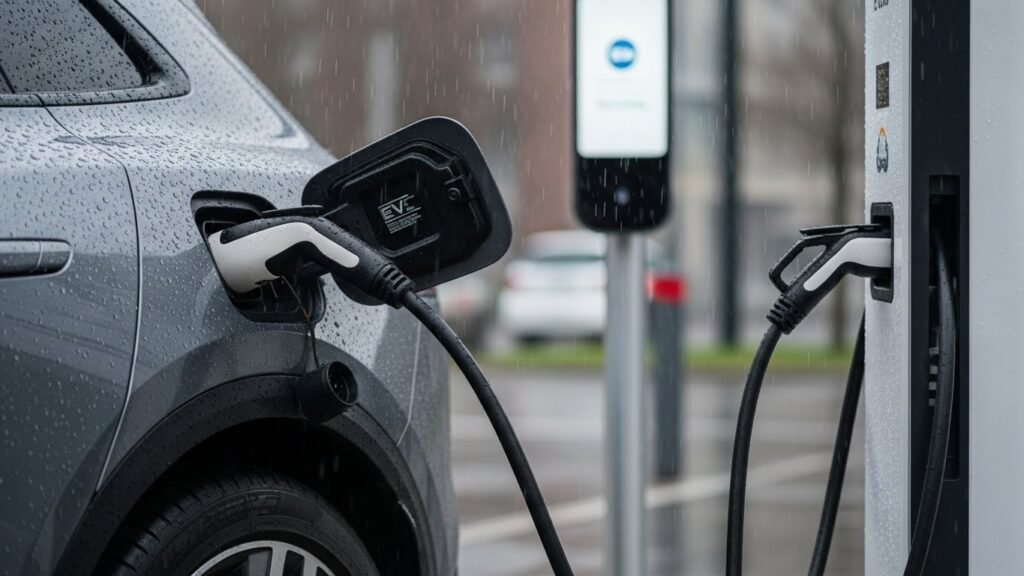
Charging in rain or adverse weather conditions is a concern many electric vehicle (EV) owners have, especially when it comes to ensuring their safety and the longevity of their vehicles. While electric cars, such as Tesla and other EVs, are designed to handle various weather conditions, it’s important to understand the safety measures, best practices, and risks involved when charging in rain or during storms. In this article, we’ll explore how charging in rain works, its safety precautions, and the steps to ensure that your EV remains in optimal condition during wet and extreme weather conditions.
Charging EVs in Rain and Lightning
General Safety for Charging in Rain
Charging in rain is generally safe if you follow some basic guidelines. Modern electric vehicles and charging systems are designed with moisture protection to ensure the safety of users during wet conditions.
- Weather-Resistant Equipment:
EV charging systems, including Tesla’s Wall Connectors and public charging stations, are built with weather-resistant materials, including waterproof casings and weatherproof connectors. These materials prevent rain from causing electrical issues. - Moisture Detection and Automatic Shutdown:
Many modern EV chargers have built-in moisture detection systems. If any moisture or water intrusion is detected around the charging port, the system automatically halts charging. This safety mechanism prevents electrical shocks or equipment damage. - Waterproof Charging Components:
The charging cables and plugs are typically waterproof and insulated. This feature prevents rain from making contact with any exposed electrical parts and allows safe charging even in the rain. - Secure Connections:
Charging only occurs once the connector is securely attached to the vehicle’s charging port. This ensures that no electricity will flow unless the connection is verified to be safe and moisture-free.
Charging EVs in Lightning Storms

Charging during lightning storms can be a bit nerve-wracking, but it is generally safe when proper precautions are taken.
- Surge Protection:
Most modern charging stations, including Tesla Superchargers and home Wall Connectors, are equipped with surge protection to handle power surges caused by lightning. The surge protector ensures that the electric vehicle is safe even when there’s a risk of lightning striking nearby. - Faraday Cage Effect:
The metal body of the vehicle acts like a Faraday cage, which means if lightning strikes the vehicle, the electrical current will be safely redirected around the car and into the ground, protecting both the vehicle and the passengers. - Automatic Power Cutoff:
During lightning storms, EV chargers automatically cut power when a surge is detected. This immediate shutdown helps prevent damage to the vehicle’s high-voltage battery pack and other electrical components.
What to Do if a Charging Handle or Cable Gets Wet
When charging in the rain, there’s always a chance that the charging handle or cable could get wet. Here’s what you should do:
- Dry It Thoroughly:
If the charging handle or cable gets exposed to water, dry it off completely before plugging it in. Even though most charging equipment is weather-resistant, it’s still important to ensure no moisture is inside the connectors. - Check for Moisture in the Port:
Before plugging in, check that there is no water in the vehicle’s charging port. Most EVs have moisture detection, but it’s always a good idea to visually inspect the area for standing water. - Avoid Puddles and Standing Water:
Do not stand in puddles or water when plugging or unplugging the charging equipment. This minimizes the risk of electrical shock or short circuits.
Charging EVs in Extreme Weather Conditions
Charging During Snow and Extreme Cold
Cold weather and snow can affect battery performance, but modern EVs are built to handle these conditions effectively.
- Impact of Cold Weather on Charging:
In very cold conditions, charging speed may decrease as the battery temperature drops. Cold temperatures slow down the chemical reactions in the battery, causing charging to take longer. - Battery Preconditioning:
Many EVs, including Teslas, have preconditioning features that warm the battery before charging, optimizing charging speed even in cold weather. Preconditioning helps maintain optimal battery performance and speeds up the charging process in cold conditions. - Snow and Ice:
Charging in snow and ice is safe as long as the charging port and cables are kept clear of any buildup. Snow and ice may prevent the connectors from forming a secure connection, so it’s important to ensure they are dry and clean before plugging in.
Charging During Floods and Heavy Rain

Flooding presents a serious challenge, but EVs are designed to be more resilient to water than traditional vehicles.
- Sealed Battery Packs:
EVs feature sealed battery packs and connectors, making them more water-resistant than conventional cars. The sealed design helps protect against water intrusion, which is important when driving or charging during rainy or flooded conditions. - Wading Depth and Flooding:
While EVs are more resistant to water than gasoline vehicles, it’s important to know the maximum wading depth for your EV. Avoid driving through deep floodwaters that could potentially damage the battery pack or electrical systems. - Charging in Flood-Prone Areas:
If the charging station is flooded, avoid using it. If water levels rise near the charging port, disconnect the charger immediately to avoid electrical hazards.
Lightning Safety and Charging

Charging During Lightning Storms
While charging during a lightning storm is generally safe, it’s essential to take the following precautions:
- Surge Protection for Home Chargers:
Install surge protectors to ensure that the home charger is protected from lightning-induced power surges. This will prevent damage to your EV’s electrical system. - Public Charging Stations and Lightning:
Public charging stations usually come with built-in surge protection, but if you’re in an area prone to frequent lightning, consider using a backup surge protector to further safeguard your EV.
EV Safety in Thunderstorms
- Charging Under Shelters:
If possible, charge your EV under shelter to avoid direct exposure to storm conditions. While rain-resistant and weatherproof, charging equipment will last longer and function better when protected from the elements. - Using Tesla Superchargers and Other Public Stations:
Tesla Superchargers and other public EV chargers are designed for outdoor use and have built-in weather-resistant features. Always make sure the connectors are dry before use, and avoid charging in extreme weather conditions unless it’s absolutely necessary.
Safety Tips and Recommendations for Charging in Bad Weather
Use Surge Protectors for Home Charging
- Install Surge Protectors:
Surge protectors safeguard your home charging equipment from lightning strikes and power surges. Ensure that all home charging setups have a surge protector in place.
Keep Charging Equipment Dry
- Weatherproof Enclosures:
When charging in rain, ensure that your charging equipment is in a weatherproof enclosure. Use covers for charging ports or cables when not in use. - Dry Connectors and Charging Handles:
Always ensure that the connectors are dry before plugging them into your vehicle, especially if they have been exposed to rain or snow.
Inspect Equipment for Damage
- Check for Wear and Tear:
Regularly inspect your charging cables and connectors for any visible damage, especially after exposure to wet or extreme weather conditions. Replace damaged equipment immediately to ensure safety.
Use Certified, Weather-Resistant Equipment
- Weather-Resistant Chargers:
Always use certified chargers and cables that are designed for outdoor and wet conditions. Tesla’s Wall Connector and other certified chargers are designed to meet the required safety standards for charging in all weather conditions.
Charging in Rain: Lesser-Known Considerations
How EVs Handle Moisture
- While the exterior and battery pack of EVs are sealed against moisture, it’s important to maintain a dry connection for optimal charging. The charging ports are equipped with seals to prevent water ingress, but moisture can still lead to performance issues over time if not properly addressed.
- Charging in High Humidity: High humidity levels can also affect the performance of charging equipment. While rain directly impacts safety concerns, humidity can cause long-term wear and tear on the charging connectors. It’s advisable to store charging equipment in a cool, dry place when not in use.
- Impact of Puddles on Charging Equipment: Standing water or puddles near charging stations may cause issues with connectors, making it harder for the system to detect a secure connection. Puddles around public charging stations may also lead to increased risks of electrical faults, especially if the equipment is not regularly maintained.
Additional Features in Charging Equipment for Weather Protection
Weather-Resistant Connectors

- Many manufacturers, including Tesla, design connectors with special seals to protect the internal components from water and dust. These connectors meet strict IP (Ingress Protection) ratings, which ensure they remain operational in harsh weather.
Charging Equipment with IP Rating
- Charging stations, including home chargers and public EV chargers, often come with an IP rating. This rating indicates the level of protection the charging equipment provides against the ingress of water and dust. Look for chargers with at least an IP65 rating, which is the minimum for safe outdoor use.
Use of Rubber and Plastic Insulation
- Charging cables and connectors are coated with high-quality rubber or plastic insulation to prevent water from coming into contact with electrical components. This insulation ensures a safe charge, even in wet conditions.
Tesla’s Charging Systems and Weather Adaptability
Tesla Wall Connector Design
- Tesla’s Wall Connector is specifically designed for outdoor use. It features robust construction, a weatherproof case, and an IP rating that protects against rain, snow, and dust. This makes it one of the safest options for charging during adverse weather conditions.
Supercharger Stations in Extreme Weather
- Tesla Superchargers are built to handle extreme weather conditions, including snow, ice, and heavy rainfall. These stations are designed to work without fail, but drivers should ensure that they do not use a damaged connector or leave equipment exposed to heavy snow or standing water.
Charging EVs in Lightning
Surge Protection in Public Charging Stations
- Public charging stations often include built-in surge protection, but it’s essential to verify the quality and reliability of the station. Some older or lower-quality stations might not have adequate protection, making it necessary for drivers to use personal surge protection devices.
Safety Mechanisms in Charging Equipment
- Charging stations use sophisticated software that monitors electrical performance and detects fluctuations that could indicate a potential surge. When a surge is detected, the system instantly cuts off the power supply, preventing any damage to the car or charger.
Tesla Supercharger’s Surge Protection Features
- Tesla Superchargers have extensive surge protection that can detect even the slightest irregularity in power flow caused by lightning. Once the system detects a surge, it will immediately halt charging, ensuring that no damage occurs to the EV’s high-voltage battery pack.
Risks of Charging EVs in Flood-Prone Areas
Flooding and Battery Protection
- Flooding poses a significant risk to the EV’s battery if water makes contact with the high-voltage battery pack. However, EVs are designed with sealed battery compartments to prevent water intrusion, making them less vulnerable to short circuits compared to traditional vehicles.
Floodwater and Charging Ports
- Even though the battery pack is sealed, charging ports are still susceptible to water ingress. It’s crucial to inspect the charging port regularly to ensure there’s no water accumulation before plugging in.
Disconnecting the Charger During Flooding
- If your vehicle is charging in a flooded area, it’s best to disconnect the charger immediately to avoid water reaching any sensitive components. In areas prone to flooding, always monitor the weather and move your vehicle to higher ground when possible.
Preconditioning Your EV in Bad Weather
What is Preconditioning?
- Preconditioning is the process of heating or cooling the battery before charging, which helps maintain optimal battery temperature and speeds up charging times, especially in cold or snowy weather.
Why Preconditioning Matters for Cold Weather Charging

- In extremely cold conditions, batteries can become sluggish, reducing charging speeds. Preconditioning helps maintain an ideal temperature for charging, ensuring faster and more efficient power transfer.
How Tesla Handles Preconditioning
- Tesla vehicles use preconditioning features to warm the battery before you plug in the charger. This feature can be activated remotely via the Tesla app, ensuring that the car is ready to charge efficiently when you arrive at a charging station.
Preconditioning in Rain and Humidity
- Although preconditioning is more commonly used for cold weather, it can also help mitigate the effects of high humidity or heavy rain, which may cause slower charging speeds or performance issues due to moisture exposure.
Using Certified Chargers for Safe Charging
Why Use Certified, Weather-Resistant Chargers?
- Certified chargers are built to meet industry safety standards and come with the necessary weatherproofing and surge protection features. Always opt for chargers that are listed as weather-resistant and rated for outdoor use to ensure that they remain operational during adverse weather conditions.
Tesla’s Certified Charging Equipment
- Tesla’s Wall Connector and mobile connectors are designed to meet rigorous standards for outdoor use. When choosing a charger, ensure it is certified for both safety and environmental factors.
Third-Party Certified Chargers
- Many third-party EV charger manufacturers also offer certified chargers designed for outdoor use, equipped with weatherproof seals and safety mechanisms. Always check the manufacturer’s specifications to ensure they meet the required standards.
Managing Charging in Wet Conditions: Best Practices
Store Charging Equipment Properly
- When not in use, keep charging cables and connectors stored in dry, safe locations. This reduces the risk of moisture exposure and prolongs the life of the equipment.
Use Outdoor Covers for Charging Stations
- If your home charger is exposed to the elements, consider using an outdoor cover designed to shield it from rain and snow. This will help prevent moisture from entering the charging port or cables.
Regular Inspection and Maintenance
- Regularly inspect your charging equipment for any signs of wear, corrosion, or damage caused by exposure to weather conditions. Replace any damaged parts immediately to maintain safe charging practices.
Impact of Charging in Wet Weather on Vehicle Battery
Moisture and Long-Term Battery Health
- While occasional charging in the rain does not pose a significant risk to battery health, consistent exposure to moisture can lead to long-term degradation of the battery’s performance. Ensuring that the charging port and connectors are dry can help prevent moisture from affecting the vehicle’s internal components.
Waterproof Battery Packs
- The high-voltage battery packs in most modern EVs are designed to be waterproof and resistant to environmental factors, including rain. However, prolonged exposure to water, especially in extreme conditions like flooding, could still cause damage to sensitive internal systems.
Final Thoughts: Charging EVs in Rain, Lightning, and Extreme Weather
Electric vehicles are equipped with advanced safety features that make charging in rain, lightning, and other extreme weather conditions relatively safe. However, following best practices, such as using surge protectors, ensuring connectors are dry, and using weather-resistant chargers, will help ensure that your EV remains safe and fully charged no matter the weather. Always stay mindful of your surroundings and ensure your equipment is well-maintained to keep your EV charging efficiently and securely.
Frequently Asked Questions (FAQs)
Is it safe to charge an EV during a thunderstorm?
Yes, it is generally safe to charge an EV during a thunderstorm. Charging stations, including Tesla Superchargers and home chargers, are built with surge protection to handle power fluctuations caused by lightning. However, it’s important to ensure the charging equipment is properly installed and maintained.
Can I charge my EV in heavy rain?
Yes, you can safely charge your EV in heavy rain, provided that you are using weather-resistant charging equipment. Modern EVs and chargers are designed to withstand wet conditions, and many come with features like waterproof connectors and moisture detection systems that halt charging if needed.
What happens if water enters the charging port?
If water enters the charging port, the system will typically detect the moisture and stop charging to prevent electrical issues. It’s important to dry the charging port and connectors before use. If you notice any damage, contact your charging equipment provider for inspection or replacement.
Can I use a regular outlet to charge my EV in the rain?
Using a regular outlet in the rain is not recommended unless the outlet is housed in a weatherproof enclosure. Standard household outlets are not designed for outdoor use in wet conditions and may expose you to the risk of electrical shock or fire if moisture enters the outlet.
Are all public charging stations weatherproof?
Not all public charging stations are equally weatherproof. While most newer charging stations are built with weather-resistant materials, it’s a good idea to check the station’s specifications or use charging stations that are explicitly rated for outdoor use, especially in areas prone to heavy rain or storms.
Can moisture affect the battery performance during charging in the rain?
Moisture generally does not directly affect the battery’s performance. However, if water intrudes into the vehicle’s charging port or connectors, it can cause issues with the charging process, leading to slower charging speeds or interruptions. Make sure all connections are dry before starting the charge.
How do I know if my EV charger is weather-resistant?
Look for the charger’s Ingress Protection (IP) rating, which indicates its resistance to water and dust. For outdoor charging, a charger with at least an IP65 rating is recommended. This rating ensures that the charger is fully protected from dust and can withstand low-pressure water jets, like rain.
What should I do if the charging cable gets exposed to rain?
If the charging cable gets exposed to rain, make sure it is completely dry before using it. While the cable itself is typically weather-resistant, any water in the connectors or plugs can affect the charging process or lead to potential electrical hazards. Always store the charging cable in a dry place when not in use.
Can charging during snow or freezing temperatures damage the EV?
Charging during snow or freezing temperatures may slow down the charging process but will not damage your EV. Modern EVs have systems in place to protect the battery, and preconditioning the battery before charging can help improve efficiency. However, extreme cold can reduce battery performance temporarily.
Is it okay to leave my EV plugged in during a storm?
Yes, it is safe to leave your EV plugged in during a storm, as long as you are using weather-resistant charging equipment. Tesla Wall Connectors and Superchargers, for example, are built to handle storm conditions. However, avoid using a damaged charger or connector that has been exposed to excessive moisture.
Can charging in wet conditions cause an electrical shock?
It is highly unlikely to receive an electrical shock if you are using a certified, weather-resistant charger. Modern EV chargers and vehicles are designed with multiple safety mechanisms, such as moisture detection, automatic power cut-off, and waterproof seals. However, always ensure that the equipment is in good condition and avoid standing in puddles while charging.
How do I prevent water damage to my charging port?
To prevent water damage to your charging port, ensure the following:
- Keep the charging port closed when not in use.
- If you’re using a home charger, ensure the equipment is installed in a sheltered area.
- If you’re using public chargers, avoid plugging in if you see excessive water or puddles around the charging port.
- Wipe the charging port dry before plugging in.
Does charging an EV during a flood affect the vehicle?
It is recommended not to charge your EV during a flood, especially if water levels rise around the charging port. While the battery pack is sealed, charging equipment and electrical components may still be vulnerable to water exposure, leading to potential short circuits or damage.
What is the Faraday cage effect, and how does it protect EVs during lightning?
The Faraday cage effect refers to the process by which the metal body of an EV acts as a protective shield against electrical currents, such as those from a lightning strike. When lightning strikes the vehicle, the current flows around the outside, keeping the occupants inside safe from electrical shock.
Can I use a surge protector with a public charging station?
While some public charging stations may already have built-in surge protection, using an additional surge protector for extra safety can be beneficial, especially in areas prone to frequent lightning or power surges. Always ensure the surge protector is rated for high-voltage equipment.
What is the best way to protect my EV charger from rain and storms?
To protect your EV charger from rain and storms:
- Use chargers that are designed for outdoor use with a high IP rating (IP65 or higher).
- Install the charger under a cover or sheltered area to minimize exposure to water.
- When not in use, store the charger cables and connectors in a dry, safe location.
How can I tell if my EV charging equipment is safe for outdoor use?
Check the product specifications for an Ingress Protection (IP) rating. For safe outdoor use, the charger should have an IP rating of at least IP65, which ensures it is protected against rain, dust, and splashes of water.